
A beach wheelchair for sale becomes fleet-ready when its design, supplier evidence, delivery condition, maintenance path, and operating fit all match a documented coastal program. Buyers often see a promising product image yet lack clear answers about soft-sand routes, turning space, attendant handling, storage, spare parts, or receiving checks. That gap can move hidden work onto resort, municipality, rental, distributor, or recreation staff after an order arrives. A better approach starts with the real route and follows each requirement through product review, supplier records, delivery, and release into service. This guide gives B2B teams a practical way to compare a beach wheelchair for sale without inventing performance figures or relying on vague sales language.
For a connected planning step, compare beach wheelchair maintenance with all-terrain beach wheelchair.
For broader destination-level context, consult the UN Tourism accessibility publications and guidelines. Apply local requirements and current product documents to the specific project.
What route evidence should buyers collect before ordering?
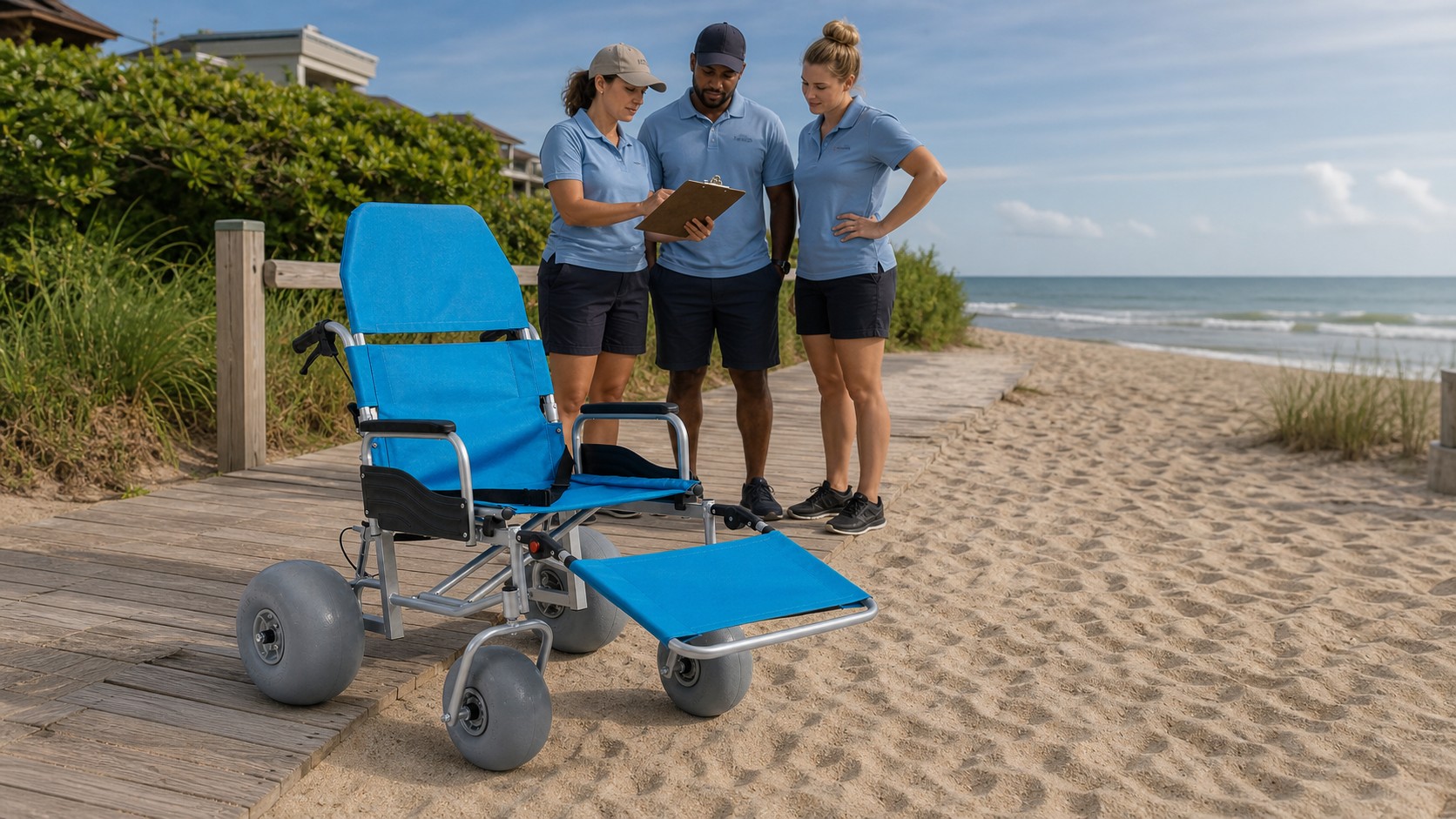
A beach wheelchair for sale should be matched against a recorded route that covers surface type, slope, width, turning space, handoff points, rinse access, and storage access. A chair selected from a studio image may behave differently across boardwalk gaps, packed sand, dry loose sand, wet sand, ramps, gates, and service corridors. Buyers need a route record that shows where attendants start, where guests transfer, where pauses occur, and where equipment returns after use.
Map the operating route
Here’s the practical test: walk the complete route with operations, accessibility, and maintenance staff before comparing models. Mark narrow points, sharp turns, loose sections, changing tides, drainage areas, and places where a chair cannot be parked. The all-terrain beach wheelchair application page offers useful context for discussing mixed coastal surfaces without replacing a site review.
- Record every surface and handoff.
- Measure clear width and turning areas.
- Name transfer, pause, rinse, and storage points.
- Note seasonal or event-related route changes.
Key Takeaway: Route evidence turns a broad product search into a site-specific buying brief.
| Route item | Buyer record |
|---|---|
| Surface | Type, length, and change point |
| Access | Width, slope, gate, and turn |
| Operations | Transfer, pause, rinse, and storage |
This route map shows which product questions deserve priority.
How should wheel design match sand and surface changes?
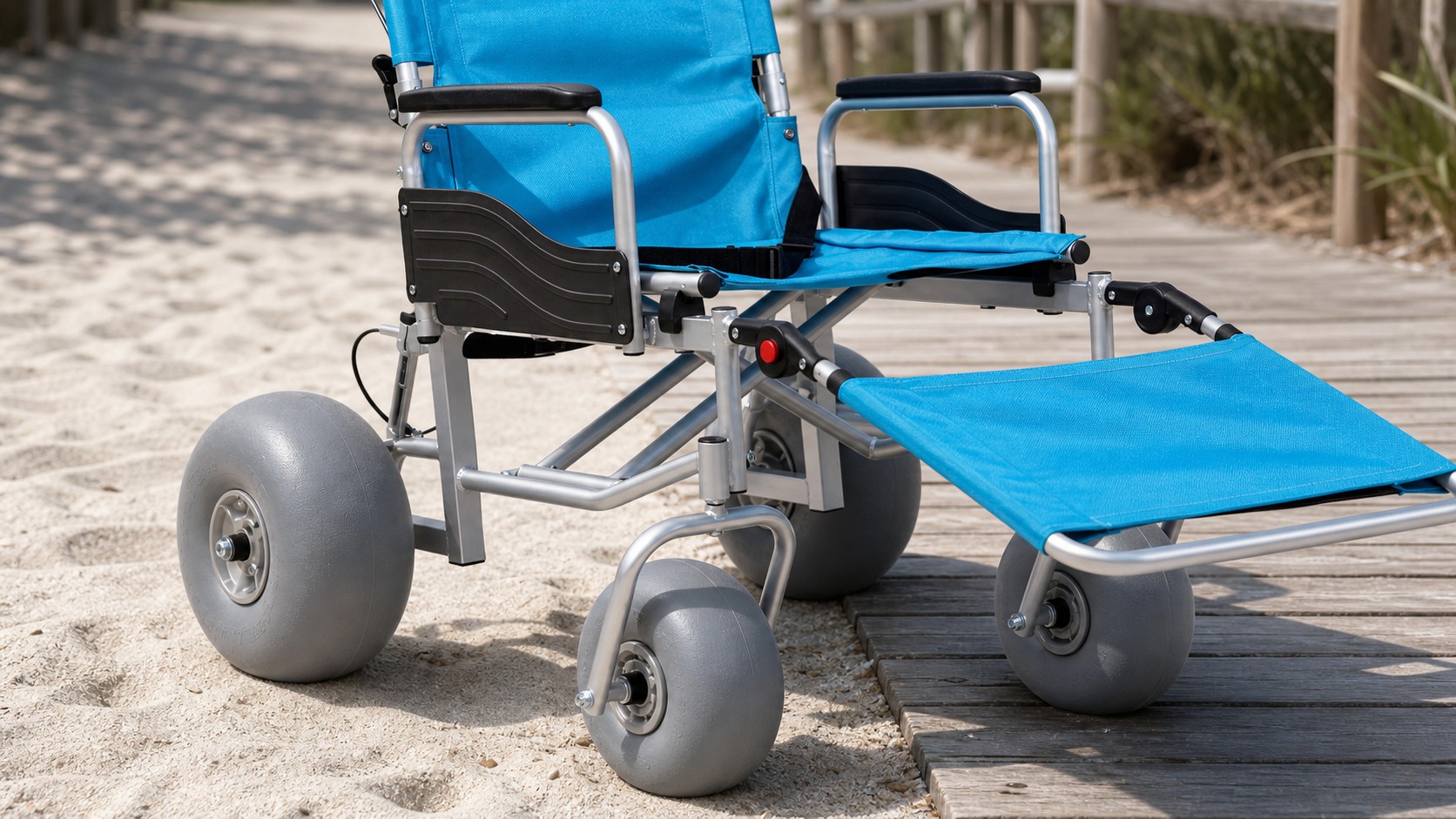
A beach wheelchair for sale needs a wheel layout that matches soft sand and every firm-surface handoff in the planned route. Wide low-pressure wheels may spread load across loose material, yet wheel count, diameter, steering method, axle layout, and tire care still shape handling. Buyers should not infer performance from wheel size alone. They should request model guidance, review a representative chair, and document how attendants change direction or cross surface boundaries.
Review wheel behavior on site
The field question: can trained staff move, stop, turn, and reposition the chair along each route segment under the supplier’s approved method? A controlled review should use an empty chair before any guest process. Staff can note drag, wheel scrub, clearance, turning demand, and contact near frame parts without claiming a universal result.
- Confirm wheel count and installed orientation.
- Review axle retainers and visible hardware.
- Ask how tire condition should be checked.
- Record limits for paved or abrasive surfaces.
Key Takeaway: Wheel selection depends on route behavior and documented care, not appearance alone.
| Wheel topic | Evidence to request |
|---|---|
| Layout | Drawing and installed reference |
| Surface use | Approved route guidance |
| Care | Inspection and replacement method |
Observed handling should be written beside supplier instructions.
What frame and seating details need a hands-on review?
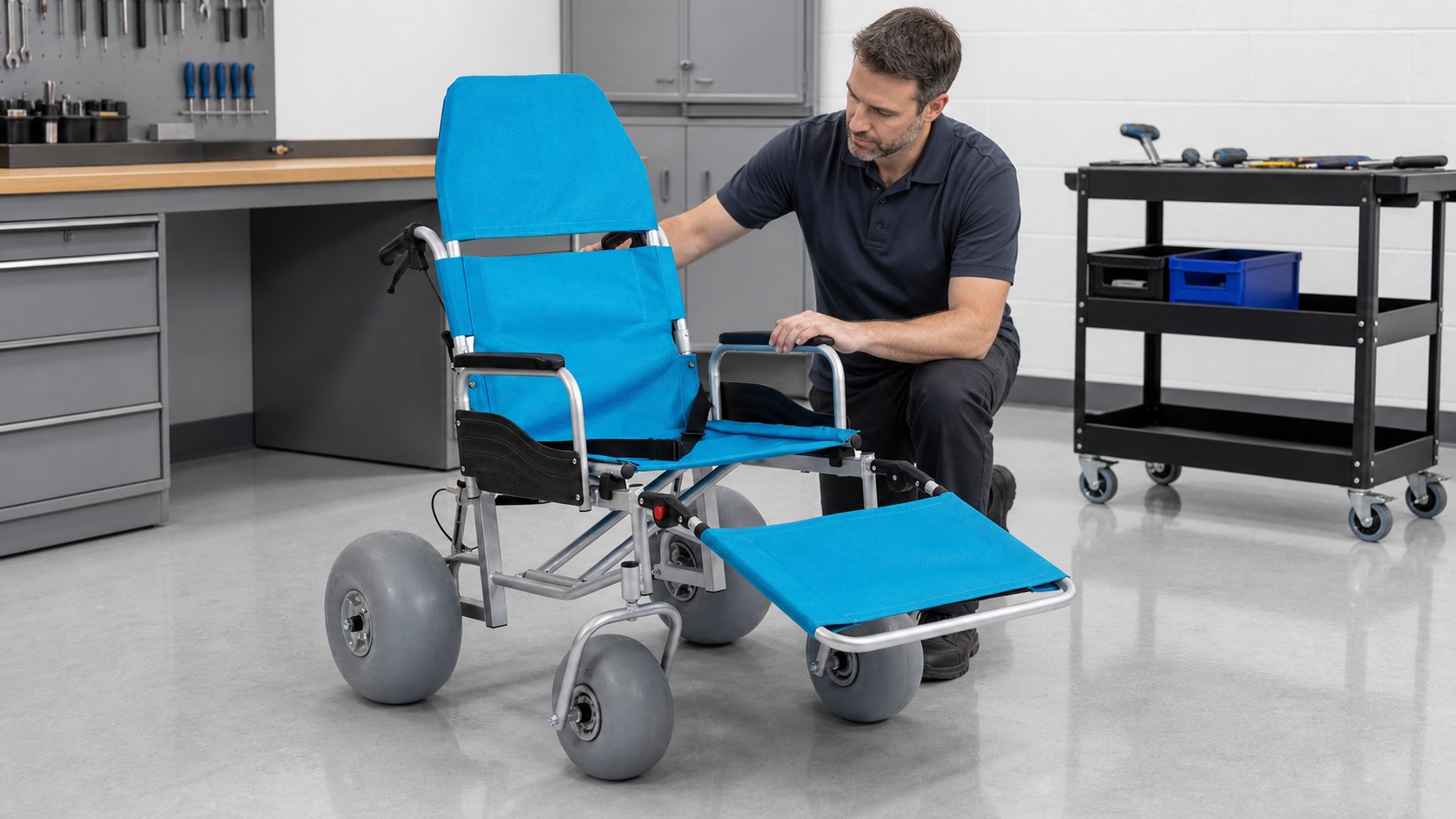
A beach wheelchair for sale needs a hands-on frame and seating review because photos may hide joint layout, attachment points, fabric support, armrest movement, foot support, handle reach, and cleaning access. Buyers should trace how a guest is supported and how an attendant controls the chair. Materials and finishes also need supplier documentation suited to the intended coastal setting, followed by a care plan that staff can actually perform.
Trace support and control points
A useful review: start at push handles, follow frame tubes and joints, then check seat, back, arm supports, foot support, straps, and accessory mounts. Look for pinch areas during approved adjustments. Ask which parts staff may remove and what tools or training apply. Never assume a similar-looking part from another model can be substituted.
- Check handle position and grip condition.
- Review frame joints and exposed fasteners.
- Inspect seat fabric, seams, and attachments.
- Confirm foot and side supports match drawings.
Key Takeaway: A load-path review links product construction with guest support and attendant control.
| Component group | Review focus |
|---|---|
| Controls | Handles and approved adjustments |
| Structure | Tubes, joints, fasteners, and mounts |
| Supports | Seat, back, arms, foot area, and straps |
The hands-on record makes later delivery checks more precise.
Which dimensions and limits should a buyer verify?
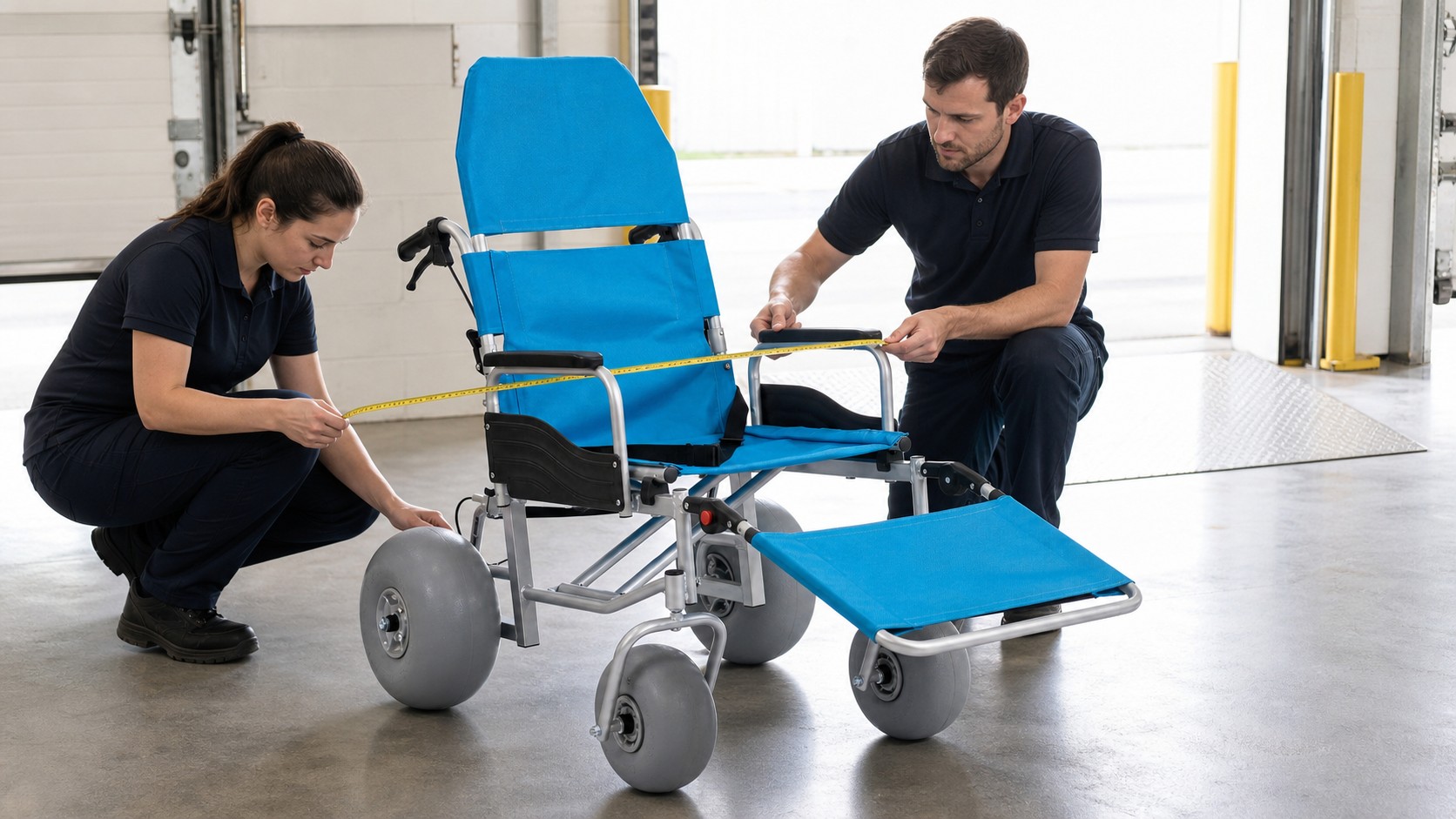
A beach wheelchair for sale should come with model-specific dimensions, user limits, chair mass, packaging data, turning guidance, seat measurements, and storage needs that buyers can verify against their route and operating policy. Values differ between products, so this article does not supply substitute numbers. Procurement teams should request current documents and resolve conflicts between a web page, quotation, drawing, manual, and label before approval.
Build a model-specific data sheet
The document check: place every requirement beside its source and revision date. The beach wheelchair user manual can help teams frame their document request, while the selected model’s own materials must govern. Record units clearly and avoid converting values without review.
- Capture seat, chair, package, and storage dimensions.
- Record stated user and equipment limits.
- Note wheel removal or folding dimensions where relevant.
- Resolve mismatched figures with written supplier confirmation.
Key Takeaway: Verified model data prevents an attractive chair from failing a route, door, vehicle, or storage check.
| Data group | Source to retain |
|---|---|
| Dimensions | Current drawing or manual |
| Limits | Label and controlled product document |
| Packaging | Quotation or packing specification |
Source control matters as much as the number itself.
How can teams compare attendant handling and transfers?
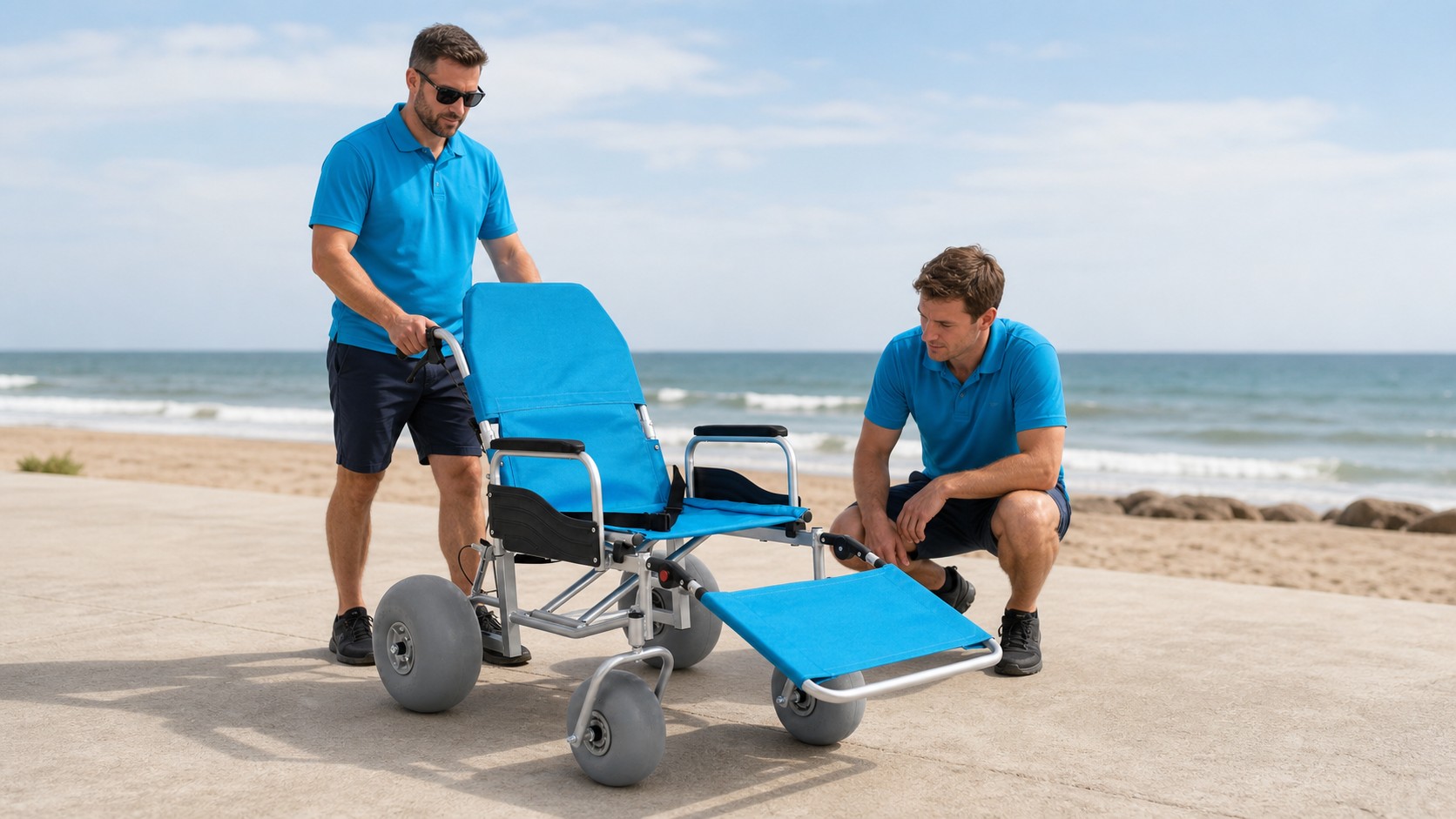
A beach wheelchair for sale should be compared through approved attendant handling and transfer procedures that fit staffing, route conditions, guest communication, and local policy. Product suitability cannot be declared from an empty-chair push test alone. Teams need a controlled process for parking, stabilizing, positioning, communicating, transferring, starting movement, stopping, and returning to a transfer point.
Run a controlled handling review
The safe sequence: review supplier instructions with the people who will operate the service, then test only the permitted actions in a firm, managed area. Use a training plan rather than improvising with a guest. Record staff reach, hand positions, line of sight, wheel clearance, and any task that requires another role.
- Define who may prepare and operate the chair.
- Document parking and stabilization steps.
- Review communication before any movement.
- Record conditions that pause or cancel service.
Key Takeaway: Handling fit comes from a documented service process, not a single product feature.
| Operating stage | Review question |
|---|---|
| Setup | Can staff follow each approved step? |
| Transfer | Is the managed area suitable? |
| Route | Are roles and stop points clear? |
A written review separates product fit from unsupported assumptions.
What supplier documents should arrive before approval?
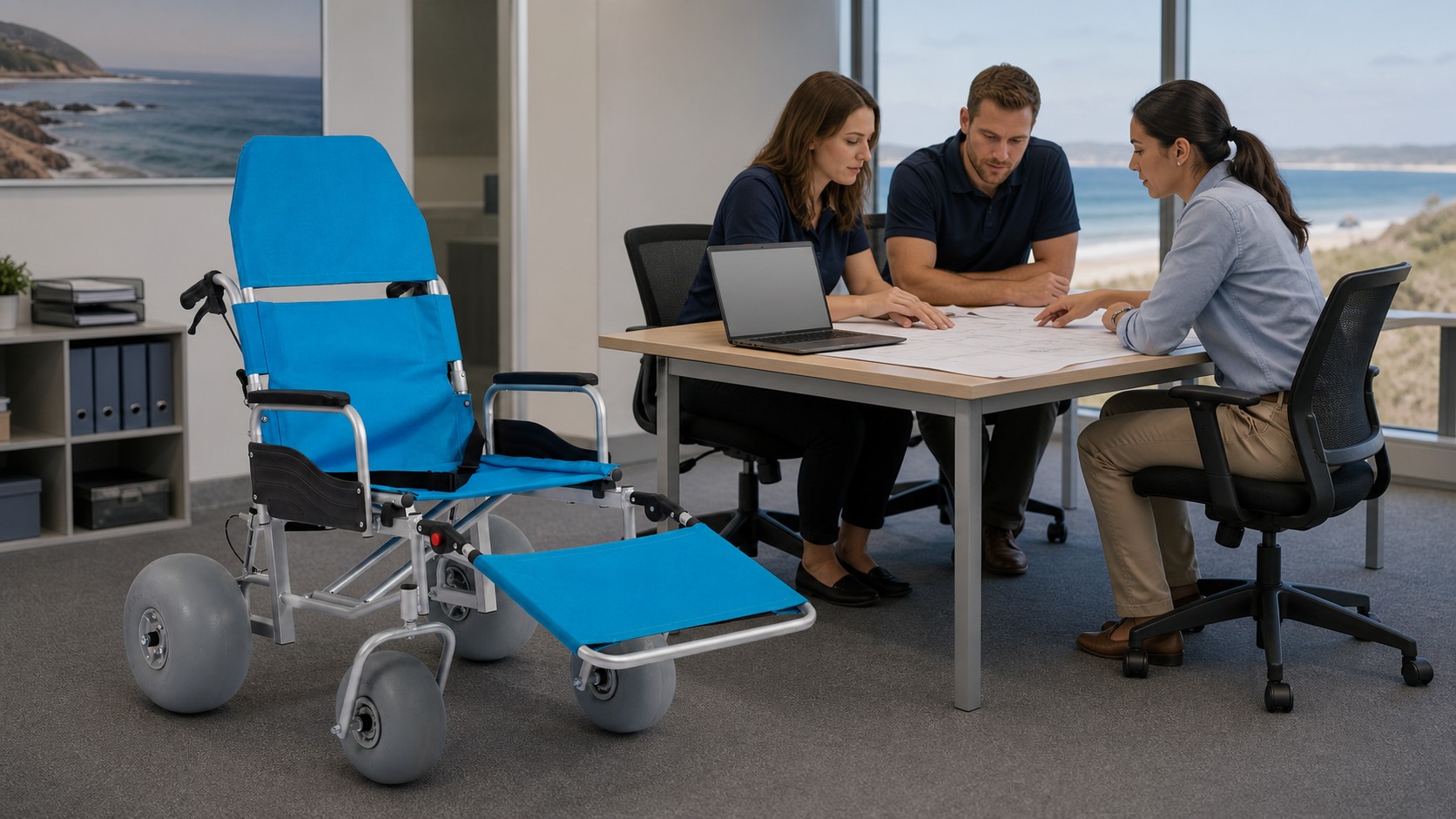
A beach wheelchair for sale should be backed by current product identification, drawings, instructions, inspection guidance, cleaning methods, parts information, warranty terms, packaging data, and support contacts before approval. Buyers should request evidence tied to the quoted model and configuration. Generic brochures may help orientation but cannot settle a model-specific question about assembly, limits, care, or replacement parts.
Request evidence before purchase
The buying question: can another team member identify the exact chair and operate its document set without relying on a salesperson’s memory? Build a document register with file name, revision, date, model, language, owner, and open questions. Ask for clarification in writing when records conflict.
- Match every document to model and configuration.
- Retain assembly and pre-use inspection guidance.
- Review cleaning, storage, and parts instructions.
- Record support channels and response ownership.
Key Takeaway: Controlled supplier evidence makes product claims reviewable and supports later fleet work.
| Document | Buying use |
|---|---|
| Drawing | Route, storage, and configuration review |
| Manual | Setup, operation, inspection, and care |
| Parts record | Service planning and identification |
Missing records should remain visible in the approval log.
How should delivery inspection protect the fleet?
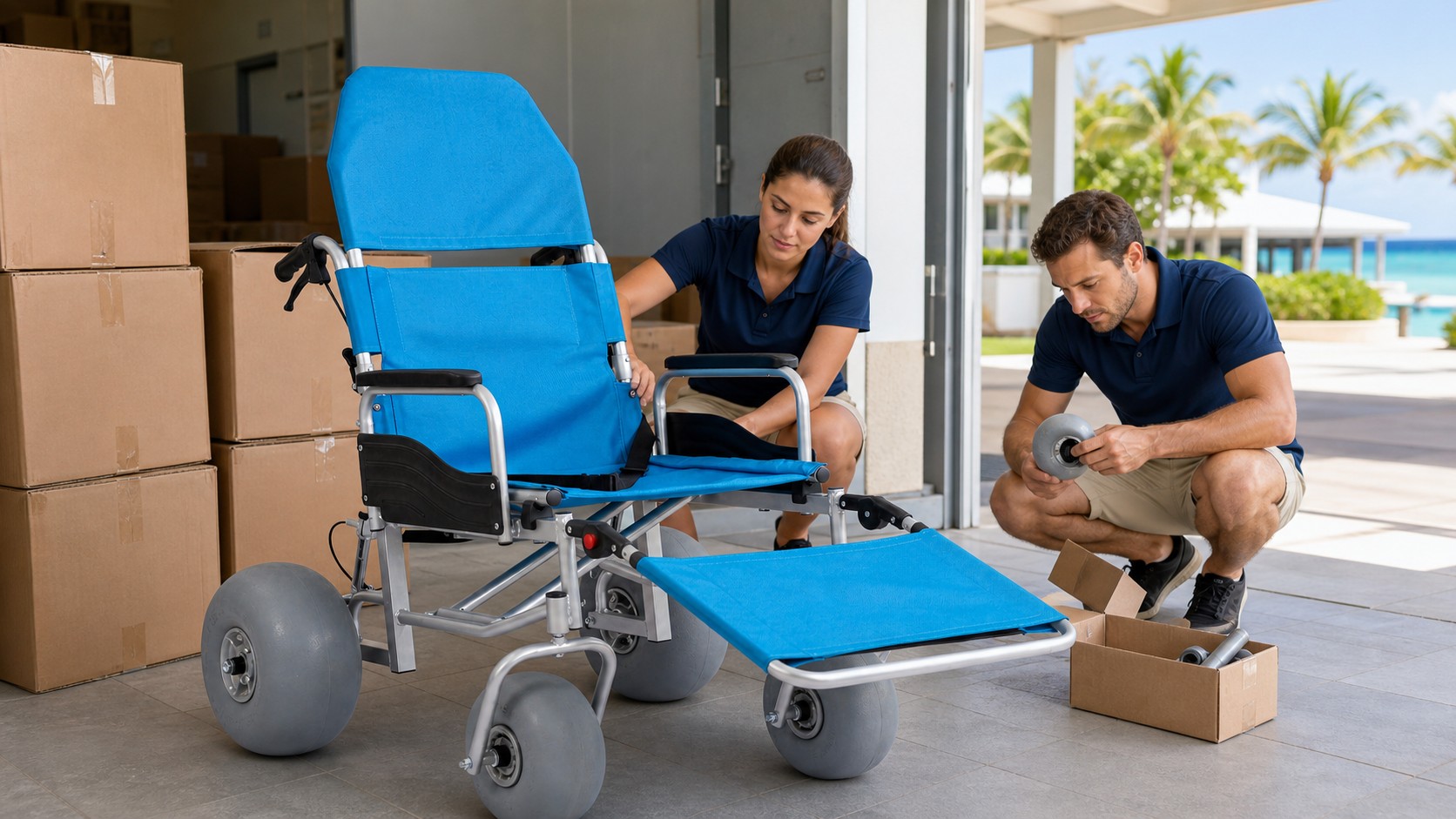
A beach wheelchair for sale should pass a documented receiving inspection before it joins ready stock. Shipping condition, package count, model identity, wheel and frame condition, supplied parts, labels, manuals, and ordered configuration all need review. A rushed unpacking process can lose small parts, miss transit damage, or mix records between chairs.
Use a documented receiving check
The receiving rule: quarantine each delivered chair until the order, package, product, and records agree. Photograph package condition before opening where policy permits. Compare visible parts with the ordered configuration and supplier assembly instructions. Staff should not correct damage or substitute missing parts without an approved path.
- Match purchase order, label, and model record.
- Count packages, wheels, supports, and accessories.
- Record visible damage or missing items.
- Release equipment only after required checks pass.
Key Takeaway: Receiving inspection creates a clean boundary between delivery and fleet service.
| Receiving state | Action |
|---|---|
| Matched and undamaged | Continue approved setup |
| Missing or unclear | Hold and contact supplier |
| Damaged | Isolate and document evidence |
The receiving file becomes the starting record for each chair.
What maintenance support belongs in the buying decision?
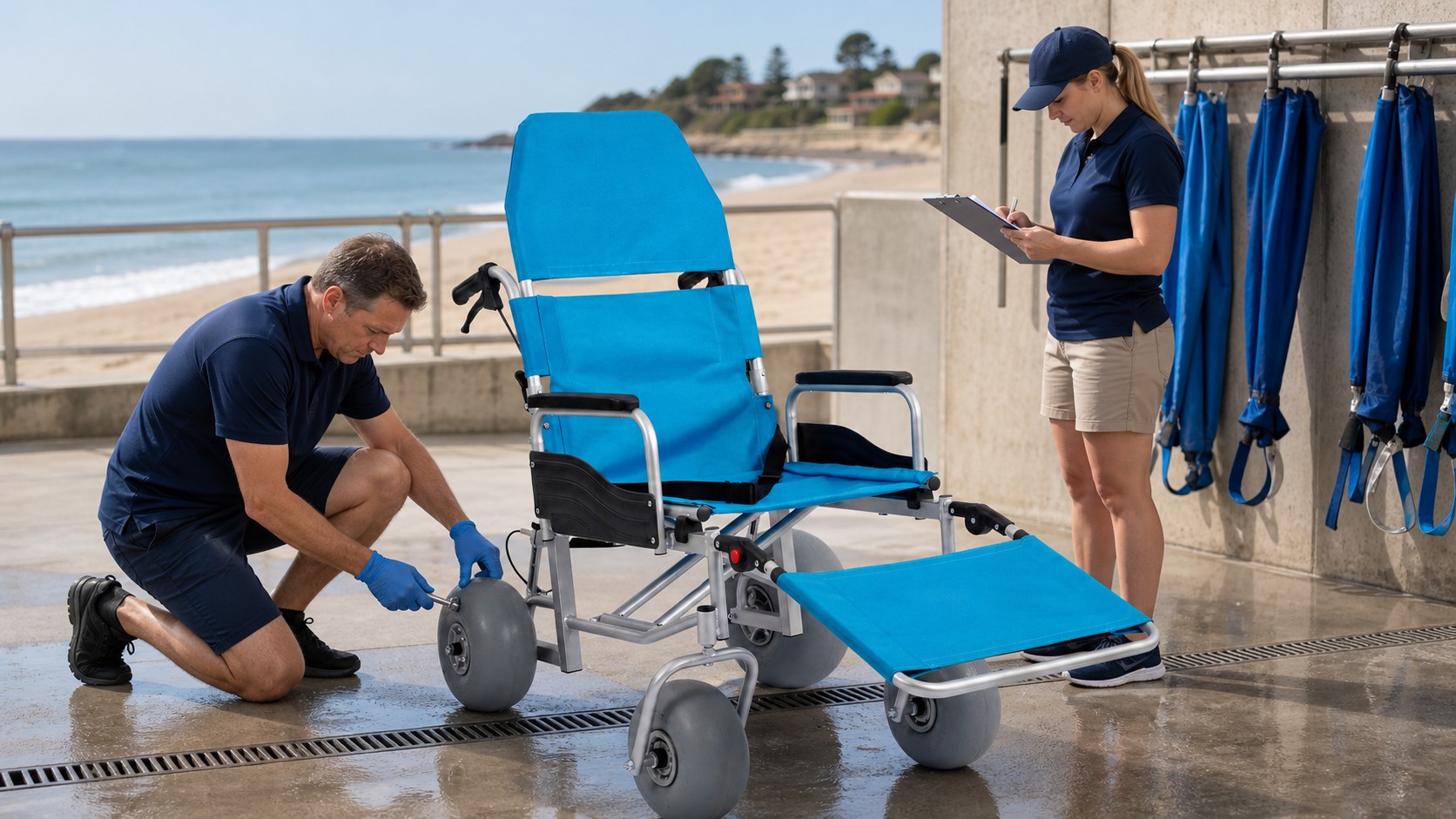
A beach wheelchair for sale needs a maintenance path covering pre-use checks, sand removal, rinsing where specified, drying, storage, fault isolation, parts, qualified repair, and return-to-service authority. Buyers should compare the work required after every use, not only the purchase event. A fleet can lose availability when care steps, common parts, or repair channels remain unclear.
Connect care with supplier support
The ownership test: ask operations and maintenance staff to review product documents before approval. Identify tasks they may perform, materials they may use, and faults that require qualified service. Request part references and a support route for technical questions. Avoid promises about service speed unless written terms support them.
- Map daily, periodic, and event-driven checks.
- List approved cleaning and drying methods.
- Record parts references and service authority.
- Define ready, hold, and service status.
Key Takeaway: Maintenance support belongs in product fit because it controls daily availability and record quality.
| Support area | Evidence |
|---|---|
| Routine care | Checklist and approved method |
| Parts | Identifiers and ordering path |
| Repair | Authority, contact, and release steps |
Ownership work should appear beside product features in the comparison.
How can buyers compare ownership work without fake data?

A beach wheelchair for sale can be compared without fake data by listing observable tasks, required records, facility needs, training roles, supplier evidence, and unresolved questions instead of inventing costs or performance claims. Buyers may later add verified internal labor, freight, parts, or service figures under their own finance process. The early comparison should remain neutral and traceable.
Use a neutral comparison sheet
The honest method: separate confirmed evidence from estimates and unknowns. Give each statement a source. A checkmark should mean the requirement passed, not merely that a brochure mentioned it. Keep unresolved entries open until a responsible owner accepts or closes them.
- Compare route fit and handling evidence.
- List cleaning, storage, and inspection work.
- Record facility, staffing, and training needs.
- Label every estimate and unknown clearly.
Key Takeaway: A source-based comparison supports a defensible choice without invented savings or performance figures.
| Entry type | Treatment |
|---|---|
| Confirmed | Cite current evidence |
| Estimate | Name owner and basis |
| Unknown | Keep open for response |
Clear uncertainty is more useful than a polished unsupported score.
What makes a procurement record ready for sign-off?
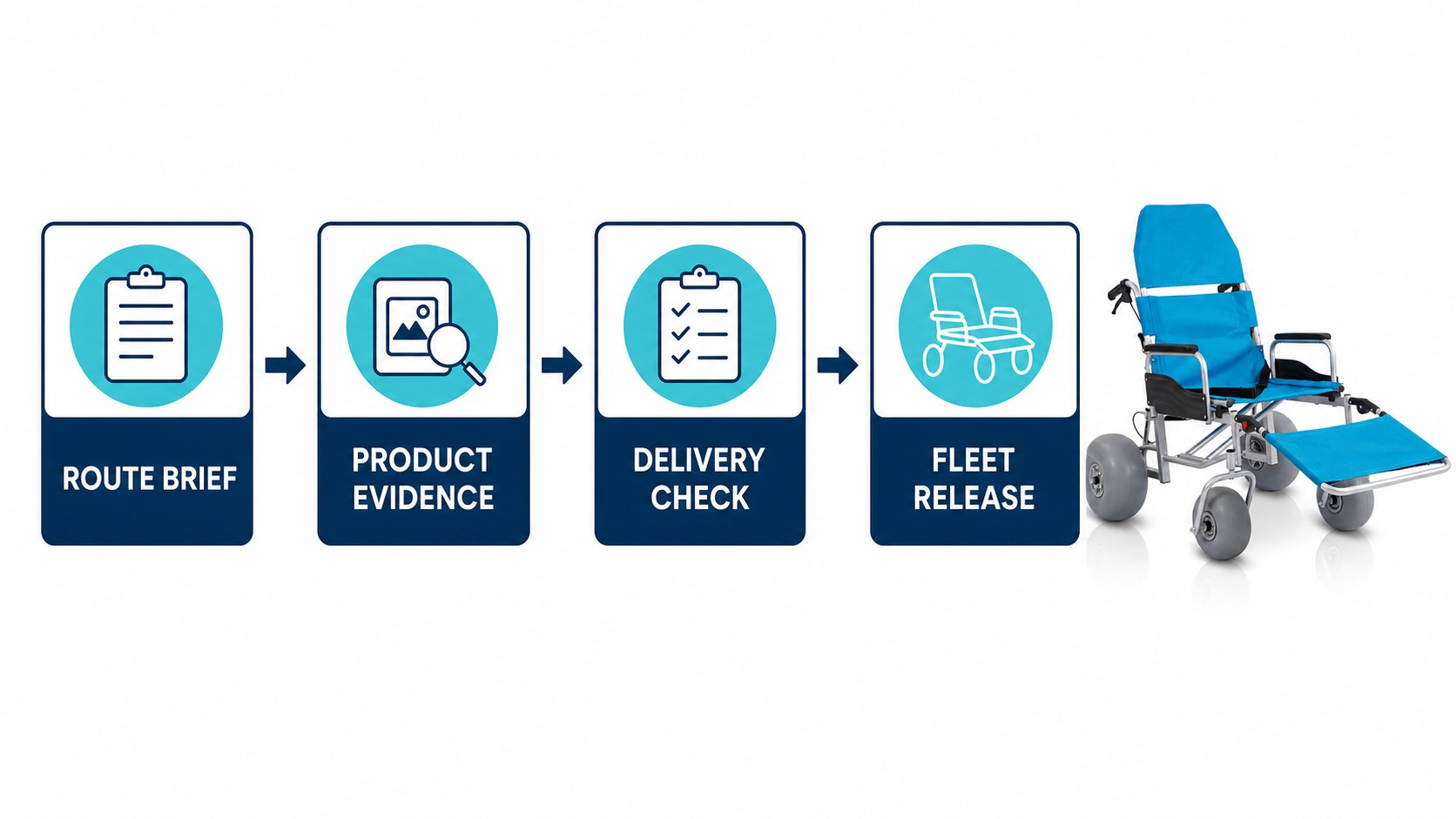
A beach wheelchair for sale procurement record is ready for sign-off when route requirements, product identity, supplier evidence, handling review, dimensions, limits, delivery checks, maintenance support, open risks, and approval owners are connected in one traceable file. A signature should confirm that required evidence was reviewed, not that every chair works for every beach.
Close the evidence trail
The decision point: summarize why the chosen configuration fits the named program and list any operating conditions that remain. Attach documents rather than copying isolated claims into a spreadsheet. Name who approves procurement, operations, maintenance, accessibility review, and release after delivery.
- Link route records with selected configuration.
- Attach current supplier documents and responses.
- Record open risks and assigned owners.
- Define receiving and service-release gates.
Key Takeaway: Sign-off works when evidence, conditions, and ownership remain visible after purchase.
| Decision gate | Required output |
|---|---|
| Product fit | Route and handling match |
| Supplier fit | Document and support record |
| Fleet release | Delivery and setup approval |
This process flow keeps a buying decision usable during operations.
Closing note: A fleet-ready buying decision connects route evidence, wheels, frame and seating, dimensions, handling, supplier documents, receiving checks, maintenance support, neutral comparison, and sign-off. Buyers can adapt this framework to a resort, public beach, rental service, distributor portfolio, or recreation program while letting current model documents govern every chair-specific action. For help discussing a sourcing brief and the evidence your team needs, contact us today with your route, fleet role, storage setting, and document questions.
FAQ
Can I compare beach wheelchairs from product photos alone?
No. Photos help identify layout and visible features, but route fit, limits, handling, instructions, parts, and service support need current evidence.
Fleet evidence to compare
What’s the best proof that a chair fits soft sand?
Use supplier guidance plus a controlled review on the intended route under approved procedures. Record conditions rather than claiming one result applies everywhere.
How do I know if supplier documents match my quotation?
Check model, configuration, revision, date, and named options. Ask for written clarification when any detail differs.
Can I approve a chair before planning maintenance?
No. Cleaning, inspection, storage, parts, fault control, and service authority affect whether a fleet can keep equipment ready.
What’s the best way to compare ownership work?
Use a source-based sheet that separates confirmed facts, internal estimates, and open questions. Keep every unresolved item assigned to an owner.