
A beach wheelchair for adults becomes practical when its seating, support components, route fit, staff method, care process, storage space, and supplier records align with one documented beach program. Buyers often see a tall blue back, wide gray tires, a folding frame, and a large foot support, yet a photograph cannot confirm dimensions, user fit, handling steps, component limits, or service requirements. Resorts, municipalities, rental operators, distributors, and recreation teams need a review that connects visible form with current model documents and local site evidence. This article answers ten procurement questions without inventing capacity figures, certifications, medical benefits, prices, stock, or customer outcomes.
The next useful comparisons are beach wheelchair parts and beach wheelchair safety checklist.
For broader destination-level context, consult the UN Tourism accessibility publications and guidelines. Apply local requirements and current product documents to the specific project.
What should adult-use planning define before buying?
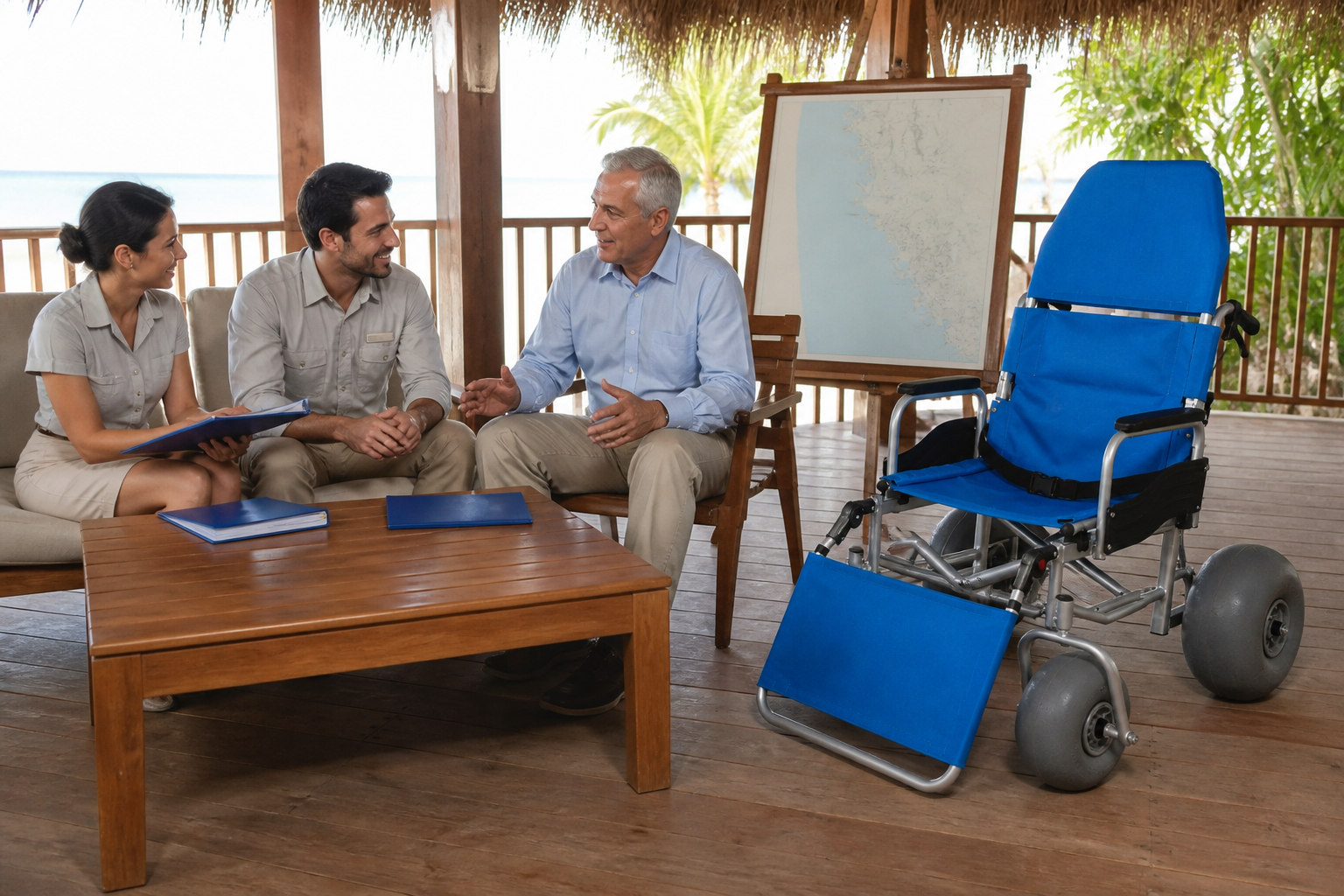
A beach wheelchair for adults should be selected from a written brief that defines service scope, route, chair role, staff duties, handoffs, care, transport, and storage. Adult use does not describe one body size or one operating method. Public beaches, hotels, rental desks, and recreation programs may serve different visitors through different transfer and support policies. The buying team should record what it can verify, which questions belong with a supplier, and which guest-specific decisions remain under local policy or qualified guidance. This keeps product copy separate from clinical advice and turns a broad search into a reviewable specification.
Turn service needs into a written buying brief
Here’s the planning rule: write each need as an operational question. Name the beach zone, approach route, staffing model, pickup method, chair storage, cleaning station, and return process. Add model dimensions and component records only after receiving current documents. If one answer changes the planned service, give it an owner and due date. Avoid filling gaps with a favorable assumption merely because a chair looks sturdy or roomy in a photograph.
- Name service locations and chair roles.
- Map handoffs from storage through return.
- Separate user policy from product evidence.
- Track open questions before approval.
Key Takeaway: Adult-use planning starts with a documented service method rather than a product label.
| Review area | Working record |
|---|---|
| Program scope | Location, route, handoff, and return |
| Chair record | Model, dimensions, parts, and instructions |
| Decision | Match, question, change, or hold |
A written brief exposes missing evidence before a purchase reaches approval.
Which seating dimensions need written confirmation?
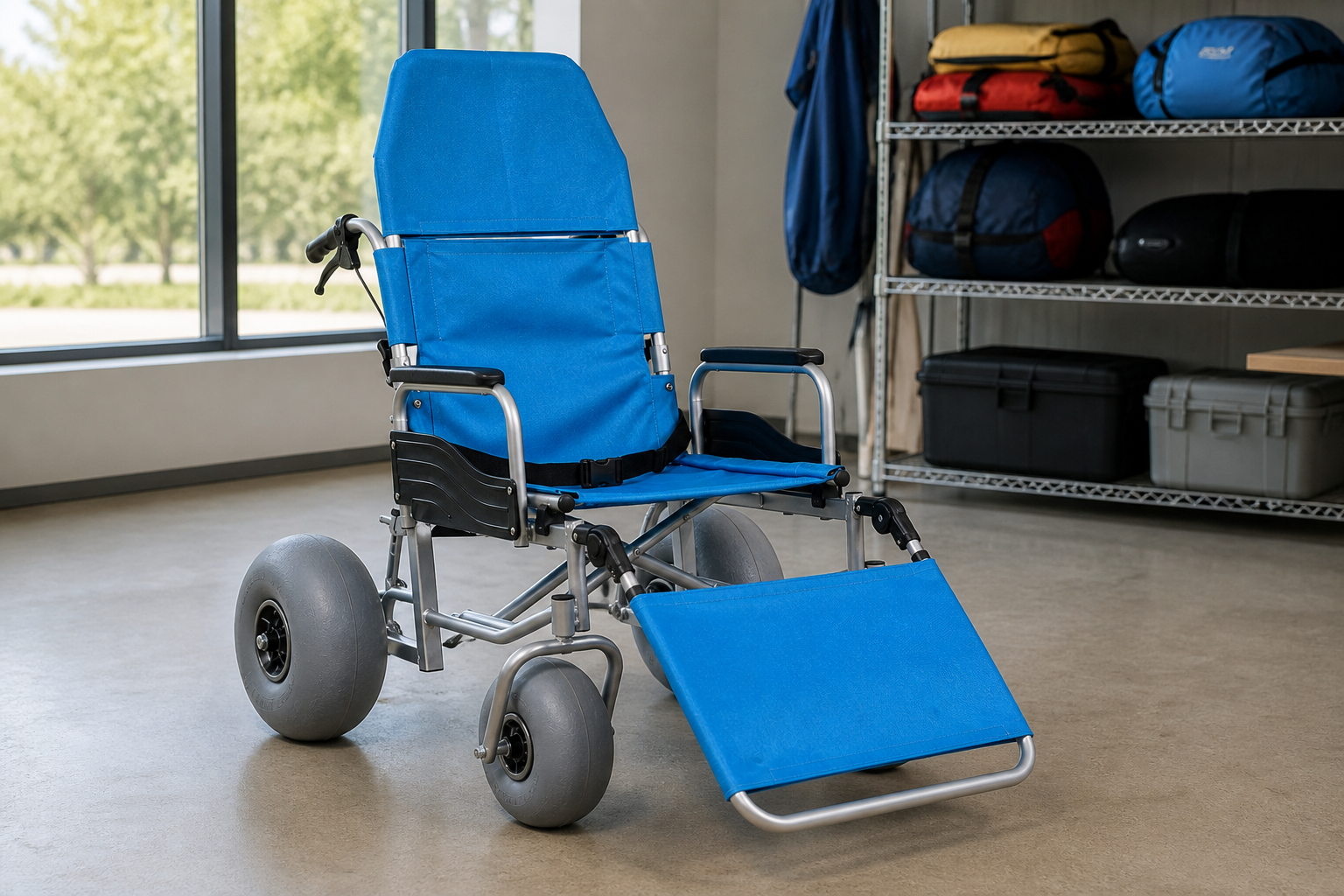
A beach wheelchair for adults needs written confirmation of seat, back, arm, belt, and foot-support dimensions for the exact quoted configuration. Visible blue fabric may show the seating form, but it cannot supply reliable measurements or attachment details. Ask for current drawings that identify seat width and depth, back form, arm spacing, belt placement, side guards, fabric attachment, foot-support position, and any approved options. Review these values beside transfer space, doorway width, storage geometry, cleaning access, and staff hand positions without turning dimensions into a promise about comfort or medical fit.
Use model drawings for contact and clearance checks
What changes the buying answer: match every dimension with its source, model name, option code, and revision. The current all-terrain chair page can frame product category questions, while the quoted drawing remains the configuration record. Mark unclear attachment points or support surfaces for supplier response. Where a program handles user-specific positioning, keep that decision inside its own approved process rather than adding an unsupported recommendation to a purchasing article.
- Record seat, back, arm, and foot areas.
- Identify fabric and belt attachment points.
- Compare chair dimensions with site clearance.
- Match every figure with a revision.
Key Takeaway: Seating review depends on current model drawings, not visual estimates.
| Review area | Working record |
|---|---|
| Contact area | Seat, back, arms, belt, and foot support |
| Source | Current drawing and option identity |
| Site check | Transfer, route, care, and storage clearance |
This record keeps size questions separate from unsupported user outcomes.
How should foot support and belts be reviewed?
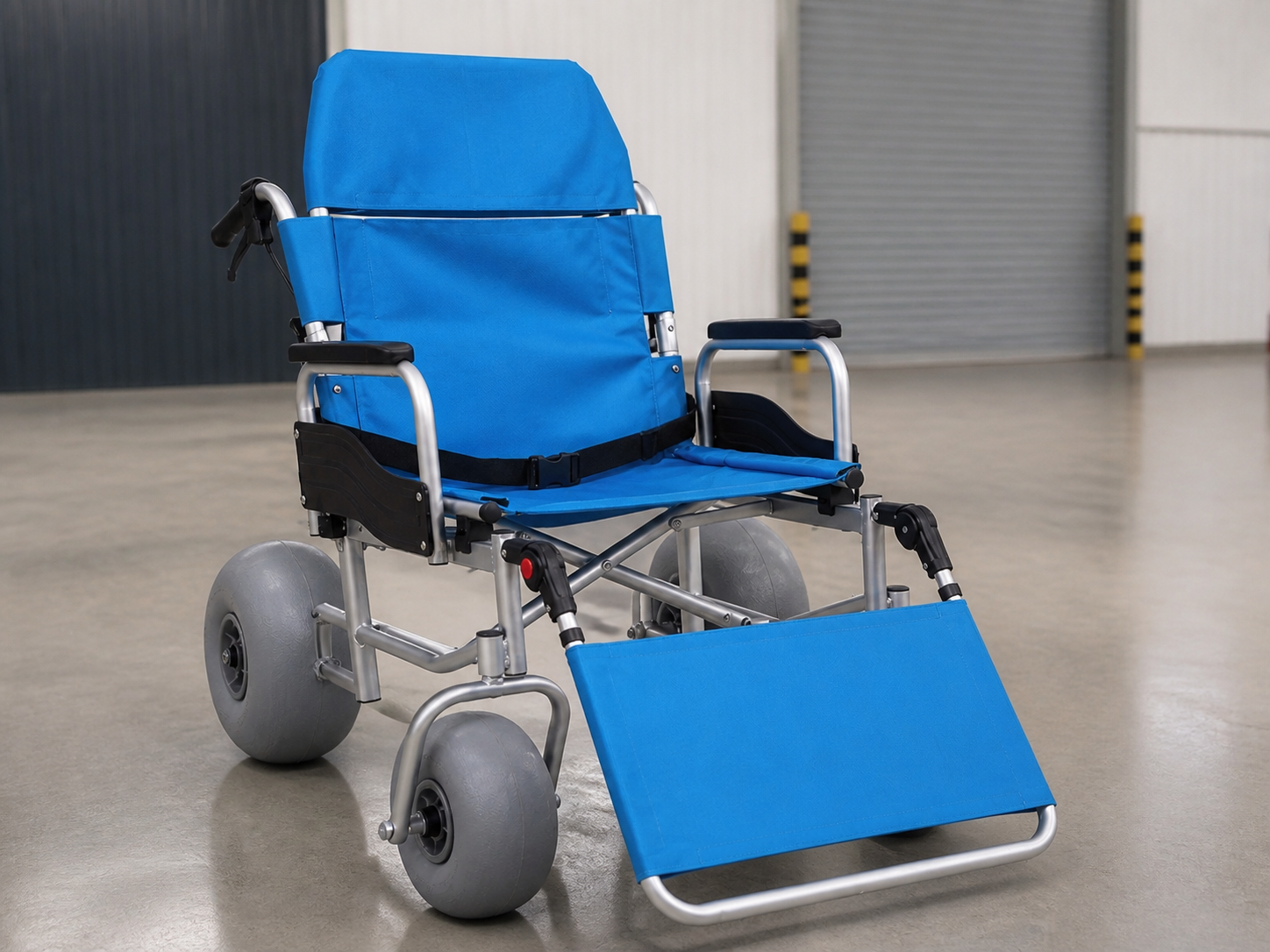
A beach wheelchair for adults should have its foot support, waist belt, armrests, side guards, and related hardware reviewed as one documented component set. The reference chair uses a broad blue foot support on a rounded silver frame plus a black waist belt and padded armrests. Buyers still need exact part identity, adjustment method, attachment points, inspection steps, replacement references, and service boundaries. A visible belt does not establish restraint suitability, and a large foot surface does not establish fit. Each component belongs with the current supplier instructions and the program’s approved transfer and support procedure.
Match every support component with current instructions
The useful component check: follow the user manual resource for operating context while requiring model-level instructions for the quoted chair. Ask how staff confirm attachment, position, clearance, fabric condition, fasteners, and ready status. Record which work may be completed locally and which work belongs with an approved service contact. Do not swap a belt, foot support, or arm component between chairs because the pieces appear similar.
- Confirm exact component and chair identity.
- Record attachments and inspection points.
- Use approved setup and service boundaries.
- Keep substitutes outside ready stock.
Key Takeaway: Support components remain part of a controlled chair configuration.
| Review area | Working record |
|---|---|
| Component | Foot support, belt, arms, and side guards |
| Control | Identity, attachment, inspection, and replacement |
| Status | Ready, question, service, or hold |
A component-set review blocks casual substitutions during busy operations.
What transfer space belongs in the site plan?
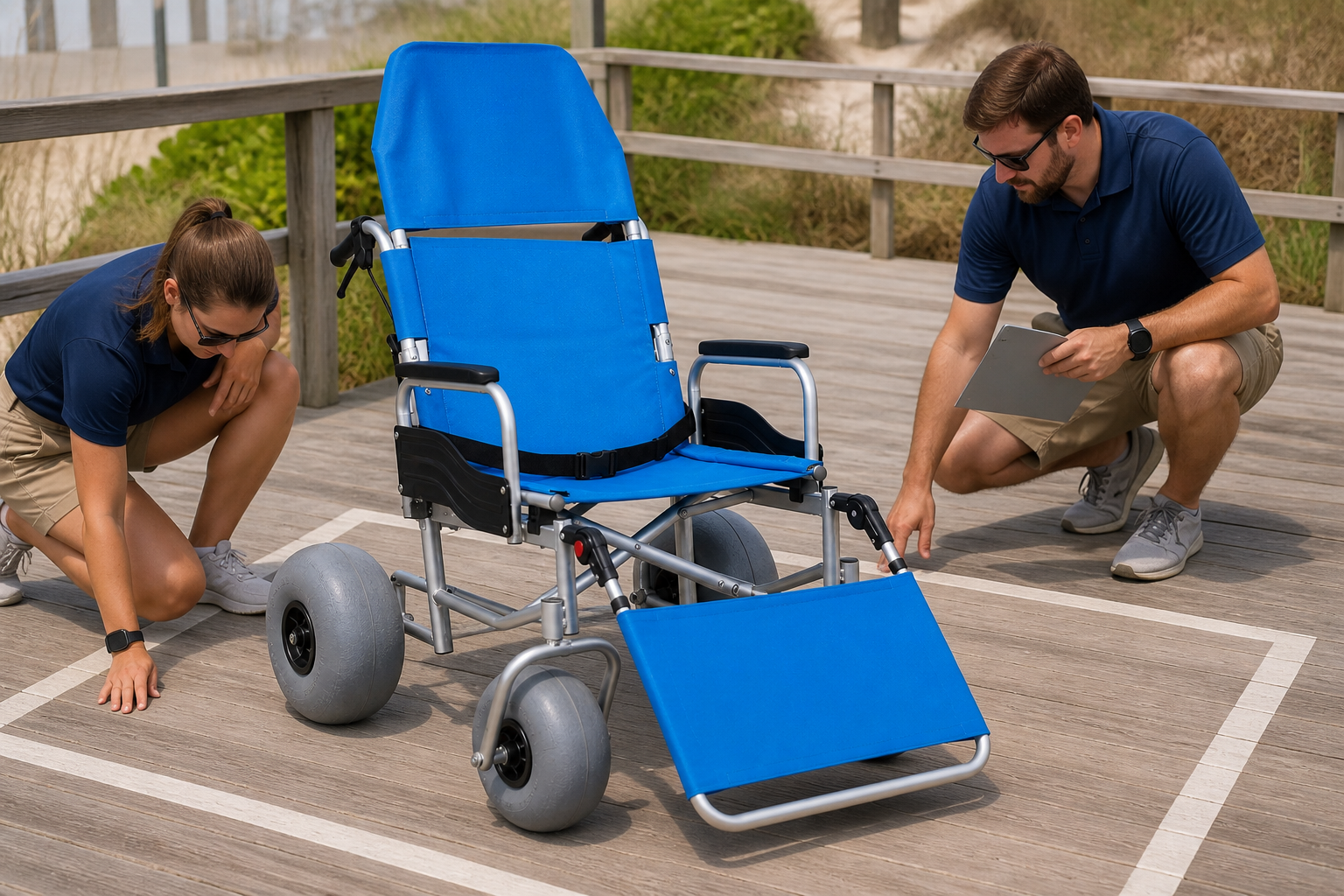
A beach wheelchair for adults needs transfer space planned around the exact chair, approved local method, staff positions, route boundaries, and stop points. The site plan should identify firm approach surface, chair placement, turning area, nearby barriers, foot-support clearance, arm access, staff standing zones, privacy needs, and a clear route after handoff. A generic open patch of sand does not qualify as a documented transfer area. Teams should use current chair dimensions and local policy, then involve qualified guidance where a person’s support needs fall outside routine operations.
Check chair and route clearances as one system
This is where layout matters: place an empty chair in the proposed area and rehearse approach, positioning, pause, departure, and return. Check whether the blue foot support, larger rear tires, smaller front tires, push handles, and staff positions remain clear of edges or passing traffic. Record the accepted layout with date and route identity. Repeat the review after construction, furniture changes, seasonal barriers, or a new chair configuration.
- Mark firm approach and chair position.
- Keep staff and foot-support zones clear.
- Rehearse the route with an empty chair.
- Review every layout change.
Key Takeaway: Transfer space works only when chair geometry and local method stay connected.
| Review area | Working record |
|---|---|
| Layout point | Approach, position, turn, and departure |
| Clearance | Foot support, wheels, handles, and staff |
| Review trigger | Route, furniture, season, or model change |
The rehearsal turns a floor plan into observable site evidence.
How does route terrain affect product selection?
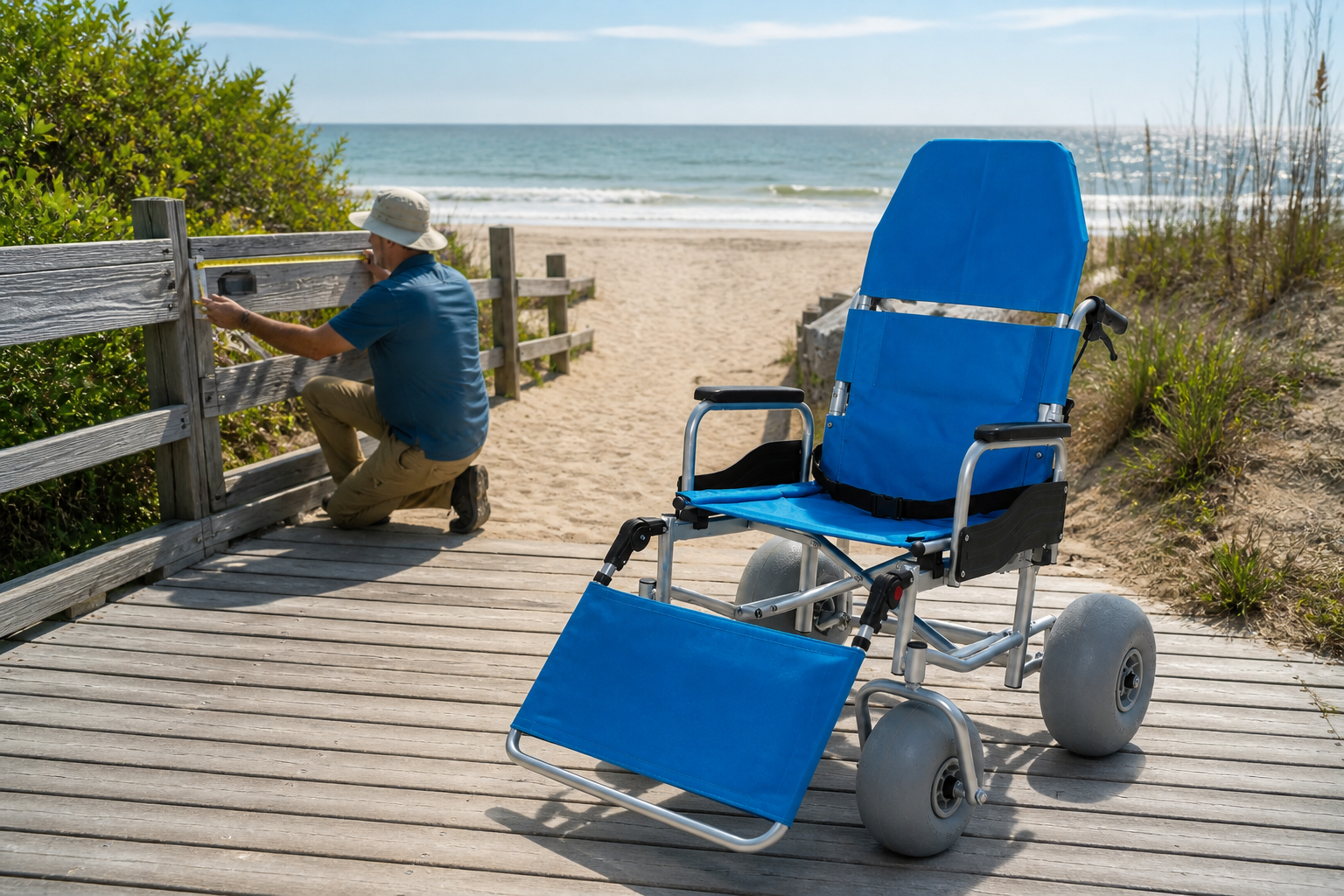
A beach wheelchair for adults should match a documented route covering storage doors, ramps, boardwalks, gates, firm approaches, loose sand, damp sand, turning zones, and return. Route terrain affects which wheel layout, chair width, push position, foot-support clearance, staff method, and care process need written confirmation. Fixed features such as width, slope, seams, and turns should be recorded separately from changing conditions such as crowds, debris, weather, or seasonal barriers. A product category cannot answer whether one local route supports one chair under one approved operating method.
Audit every surface and handoff before purchase
The route test is simple: walk the complete service loop and record every surface change before comparing products. The portable beach use page offers planning context, while local measurements control the actual brief. Where trials are permitted, use an empty chair under current instructions and record only observed results. Do not turn a local pass into a broad claim for every beach or every user.
- Map storage, approach, sand, and return.
- Measure gates, turns, slopes, and seams.
- Record fixed and changing conditions separately.
- Link observations with chair and route identity.
Key Takeaway: Route evidence gives product features a real operating context.
| Review area | Working record |
|---|---|
| Route area | Evidence to capture |
| Fixed | Width, slope, turn, seam, and surface |
| Changing | Crowd, debris, weather, and closure |
A route audit replaces broad terrain language with testable questions.
What should staff handling practice cover?
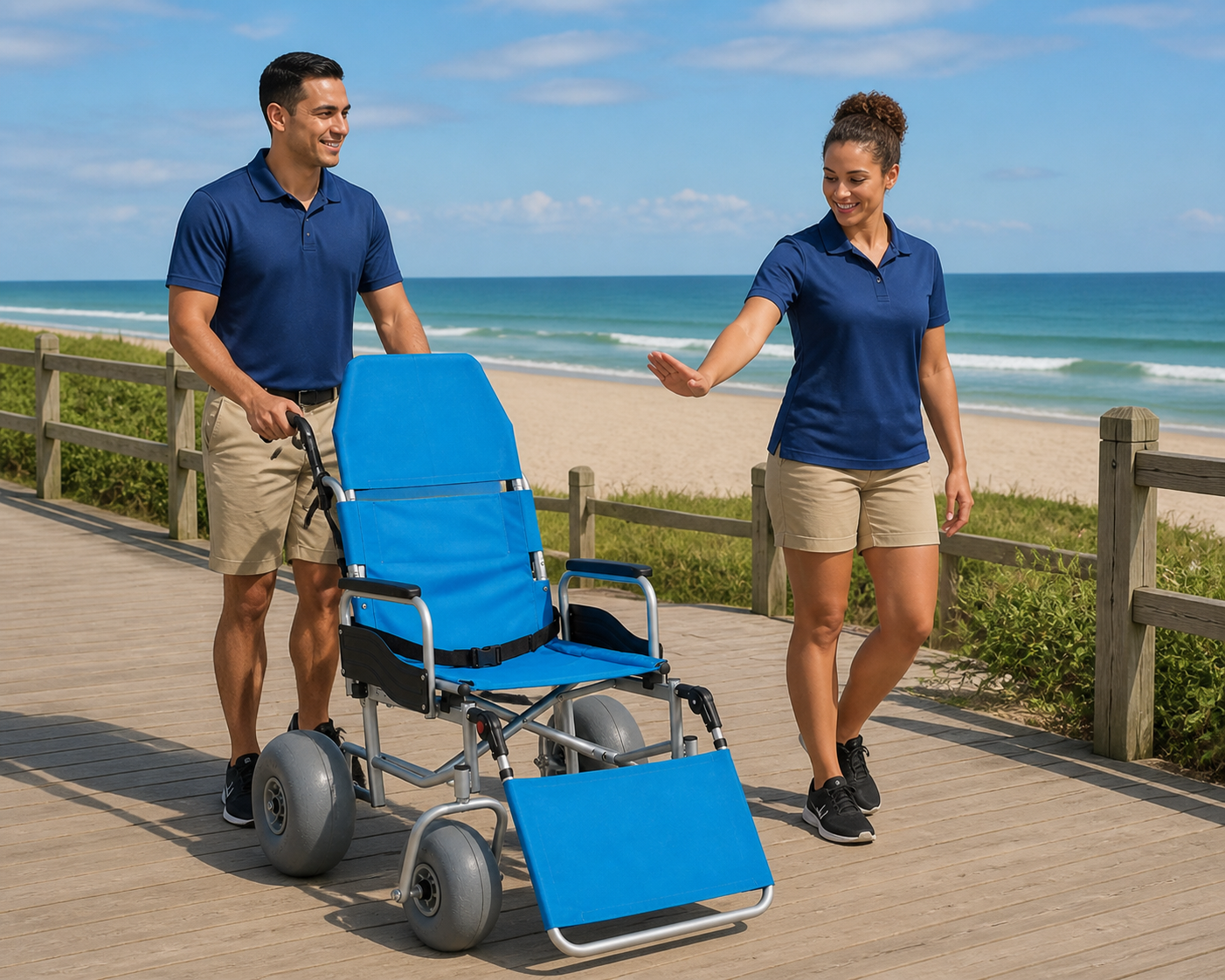
A beach wheelchair for adults needs staff practice covering chair identity, inspection, setup, grips, route movement, turns, pauses, stop signals, return, care, and hold status. Practice should follow current instructions and local procedure rather than a generic pushing lesson. Staff need a shared method for checking the folding frame, larger rear tires, smaller front tires, blue seating, belt, armrests, foot support, and handles before movement. The team should also know who can pause a handoff, how a route change gets reported, and how an uncertain chair leaves ready status.
Rehearse movement and stop signals with an empty chair
The useful rehearsal: run the complete service loop without a rider, then repeat under approved supervised conditions if local policy calls for it. Give each person a role and use plain start, pause, stop, and return signals. Record the chair, route, instruction revision, date, and questions. A practice session should expose gaps for correction; it should not become a claim that one exercise proves safe operation in every condition.
- Confirm chair and instruction identity.
- Practice grips, turns, pauses, and stops.
- Assign route and handoff roles.
- Record questions and hold conditions.
Key Takeaway: Staff practice supports consistency when it follows one chair and one route record.
| Review area | Working record |
|---|---|
| Practice stage | Identity, setup, route, return, and care |
| Signal | Start, pause, stop, and change |
| Record | Chair, route, revision, date, and owner |
The empty-chair loop reveals operational gaps before guest service.
Which supplier records support a buying decision?
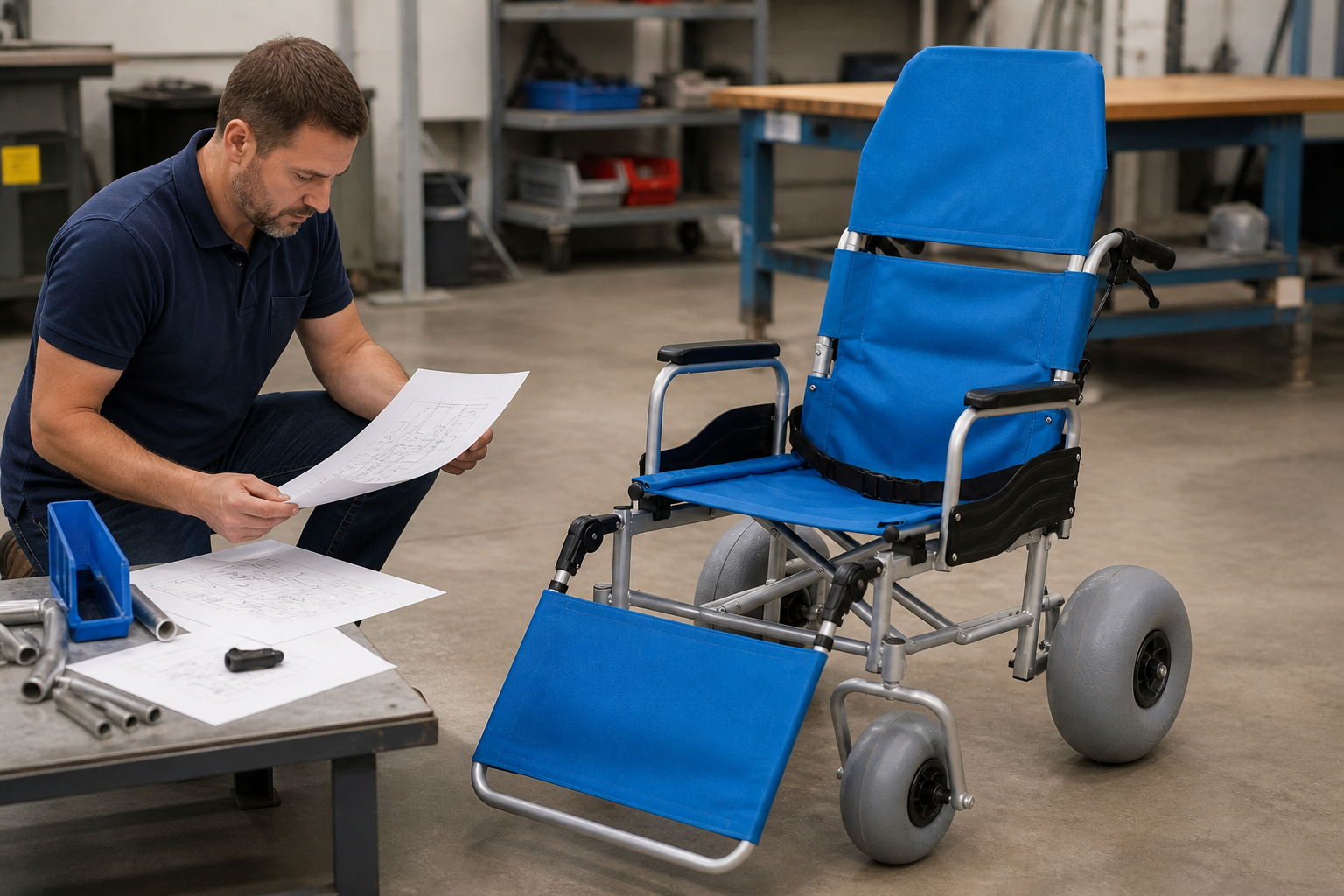
A beach wheelchair for adults needs current supplier records for model identity, dimensions, components, setup, handling, inspection, care, storage, parts, packaging, and service contacts. Buyers should ask which revision applies to the exact chair and options in the quote. Drawings should identify the folding frame, wheel arrangement, seating panels, belt, armrests, side guards, foot support, handles, and visible hardware. Instructions should state who may complete setup or service work and how a chair moves between ready and hold states. A catalog image or generic brochure cannot replace this record chain.
Match every answer with model and revision
Here’s the document test: ask whether receiving, operations, care, and purchasing teams can complete their tasks without guessing. Match each document with model, option, quote, revision, and source date. Track unanswered questions rather than writing your own performance figure or compatibility statement. Keep claims about capacity, life span, certification, and outcomes out of the brief unless exact current evidence supports them for the quoted configuration.
- Confirm model, options, and revision.
- Request setup, use, care, and storage records.
- Identify parts and service contacts.
- Assign every unresolved question.
Key Takeaway: Supplier records should let every team work from the same chair identity.
| Review area | Working record |
|---|---|
| Document | Drawing, instructions, parts, and service |
| Identity | Model, option, quote, and revision |
| Gap | Question, owner, source, and due date |
A complete document chain reduces guesswork across departments.
How should receiving and setup be controlled?
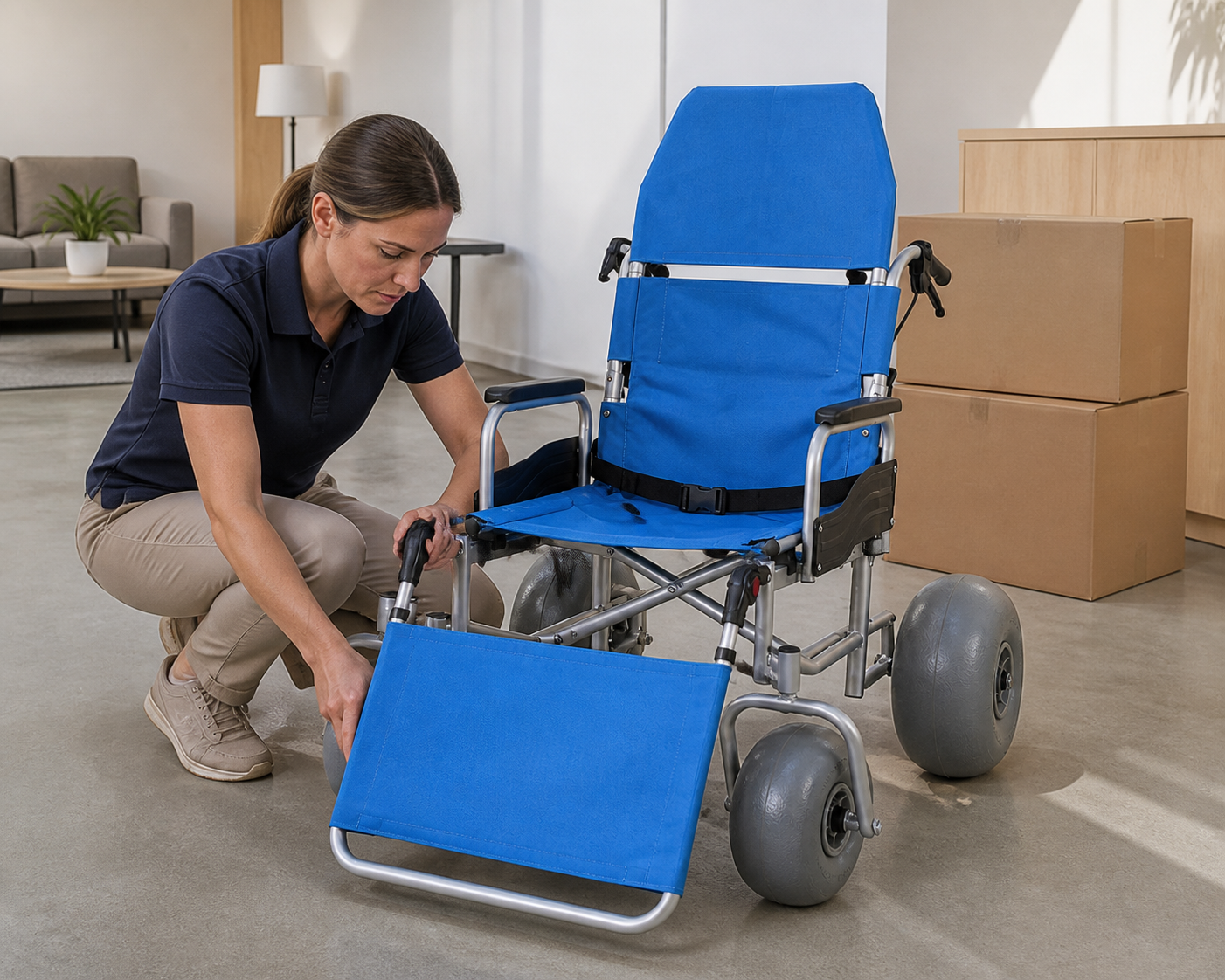
A beach wheelchair for adults should pass identity, package, component, visible-condition, setup, empty-chair, care, and release checks before service. Receiving staff need clear space and current instructions to inspect the silver folding frame, cross braces, wheel count and size pattern, hubs, blue fabric, black belt, armrests, side guards, handles, brake levers, foot support, and supplied hardware. Any missing item, damage, unclear step, or configuration mismatch should move that unit to hold. An opened carton or completed assembly does not establish ready status.
Move each chair through check, hold, and ready states
The handoff rule: separate delivered, checking, hold, and ready states in both physical space and records. Keep loose hardware with the matching chair, photograph concerns under local policy, and ask the named supplier contact about unresolved steps. Do not force folding parts, substitute fasteners, or borrow components from another chair. Close receiving with a named release decision and a location for the accepted records.
- Match delivery with order and model.
- Inspect every named component.
- Follow current setup instructions.
- Record ready or hold status.
Key Takeaway: Receiving ends with documented release rather than completed unpacking.
| Review area | Working record |
|---|---|
| State | Delivered, checking, hold, or ready |
| Evidence | Identity, condition, components, and setup |
| Closeout | Named release and record location |
Visible states keep an unchecked chair outside service.
What care and storage capacity should buyers plan?
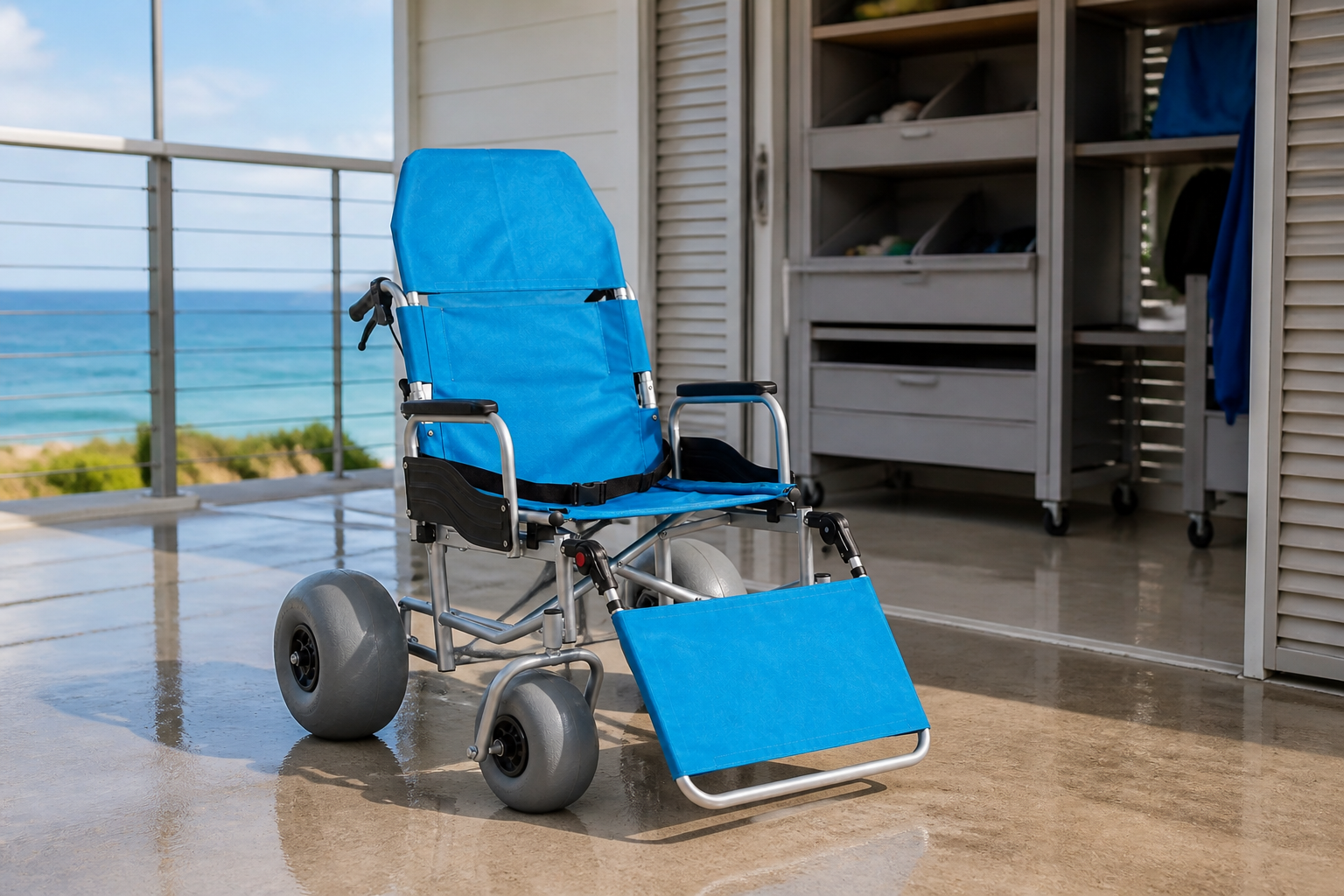
A beach wheelchair for adults needs care and storage capacity planned for sand removal, approved cleaning, drying, inspection, status control, and protected retrieval. Buyers should review the supplier method for frame tubes, folding joints, blue fabric, belt, armrests, side guards, balloon tires, hubs, axles, handles, and foot support. The facility needs enough room to separate returned, cleaning, drying, hold, service, and ready chairs. Enclosed storage should follow current guidance for orientation, support points, airflow, wheel clearance, and fabric protection rather than relying on unused floor area alone.
Connect cleaning, drying, inspection, and bay space
The capacity rehearsal: move an empty chair through return, cleaning, drying, inspection, status marking, storage, and retrieval. Record the people, tools, water access, drainage, drying position, bay dimensions, and time evidence used by the local team. Keep wet or held units outside ready space. If the proposed bay presses on tires, fabric, frame, or foot support, revise the layout before ordering a fleet quantity.
- Map the full care sequence.
- Separate wet, hold, service, and ready states.
- Protect fabric, frame, wheels, and foot support.
- Rehearse storage and retrieval.
Key Takeaway: Care capacity belongs in the buying decision before equipment arrives.
| Review area | Working record |
|---|---|
| Care | Clean, dry, inspect, and release |
| Bay | Orientation, airflow, spacing, and status |
| Capacity | People, tools, route, and retrieval |
A rehearsal shows whether facility capacity matches the planned service.
How should buyers compare practical fit?
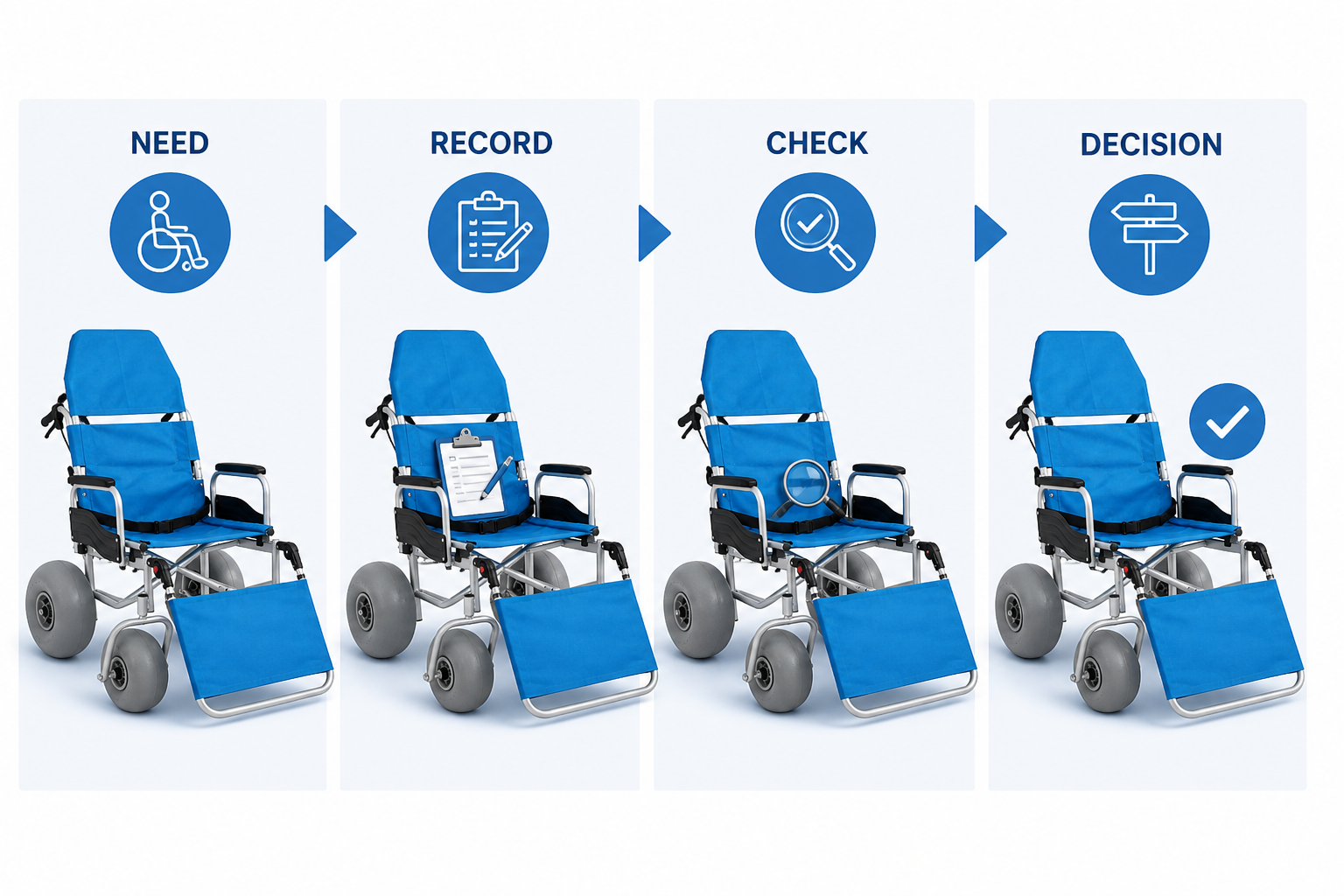
A beach wheelchair for adults fits a program when route evidence, model records, staff practice, care capacity, storage, transport, and service support align. Buyers should compare evidence quality rather than broad adjectives. Link each operating need with a chair feature, current source, local check, unanswered question, owner, and decision. Any statement about capacity, stability, durability, comfort, or user outcome belongs with exact supporting evidence. Missing evidence should create a question or hold state rather than a favorable score based on appearance or marketing language.
Use an evidence chain without unsupported claims
The decision view: use one page with NEED, RECORD, CHECK, and DECISION stages. Apply the same fields to every supplier response so a polished photo cannot outweigh weak documentation. Review the chain whenever chair options, routes, storage, staff duties, or care facilities change. Keep commercial terms in controlled purchasing records and keep medical decisions outside general product copy.
- Link each need with a model feature.
- Name the source and local check.
- Give gaps an owner and hold state.
- Review changes before approval.
Key Takeaway: Practical fit comes from aligned evidence rather than unsupported product language.
| Review area | Working record |
|---|---|
| Need | Route or operating requirement |
| Record | Model source and local check |
| Decision | Match, change, question, or hold |
The chain makes a buying choice easier to review later.
Closing Notes
Practical adult-use planning links seating dimensions, foot support, belt and arm details, transfer space, route conditions, staff practice, receiving, care, storage, and current model records. Keep every decision tied to written supplier evidence and a local route check. To discuss a documented coastal equipment brief, contact us today with your route, storage setting, transport method, care station, and staff handoffs.
Frequently Asked Questions
Can I choose an adult beach chair from photos alone?
No. Photos identify visible form, while current drawings, instructions, parts records, and a route-based review support a buying decision.
What’s the best seat size for every adult program?
No single size fits every program. Compare documented chair dimensions and support features with permitted user needs, transfer space, and local policy.
How do I know if the foot support fits our workflow?
Check the exact component drawing and instructions. Then rehearse setup, route clearance, transfer space, care, and storage with an empty chair.
Can staff change belts or supports between models?
Not without approved records. Use only parts and configurations identified for that chair and route any uncertainty through the named supplier channel.
What’s the best evidence for a purchase review?
Use a linked record covering route need, model feature, source document, local check, open question, owner, and buying decision.