
The best beach wheelchair storage plan protects the documented chair configuration, separates clean and returned equipment, supports drying and inspection, controls removable parts, and gives staff a clear release record. A narrow closet may hide a chair from guests, yet it can also block inspection, trap moisture, mix status labels, or force staff to move unrelated items before service. Resorts, municipalities, rental teams, hotels, and distributors need more than a spare floor area. They need a location linked with the route, care station, door clearances, support instructions, and retrieval workflow. The questions below build that plan without inventing environmental limits, maintenance intervals, product life, prices, or facility outcomes.
Before finalizing this workflow, review beach wheelchair for resorts alongside beach wheelchair weight capacity.
For broader destination-level context, consult the UN Tourism accessibility publications and guidelines. Apply local requirements and current product documents to the specific project.
Where should coastal teams locate the storage bay?
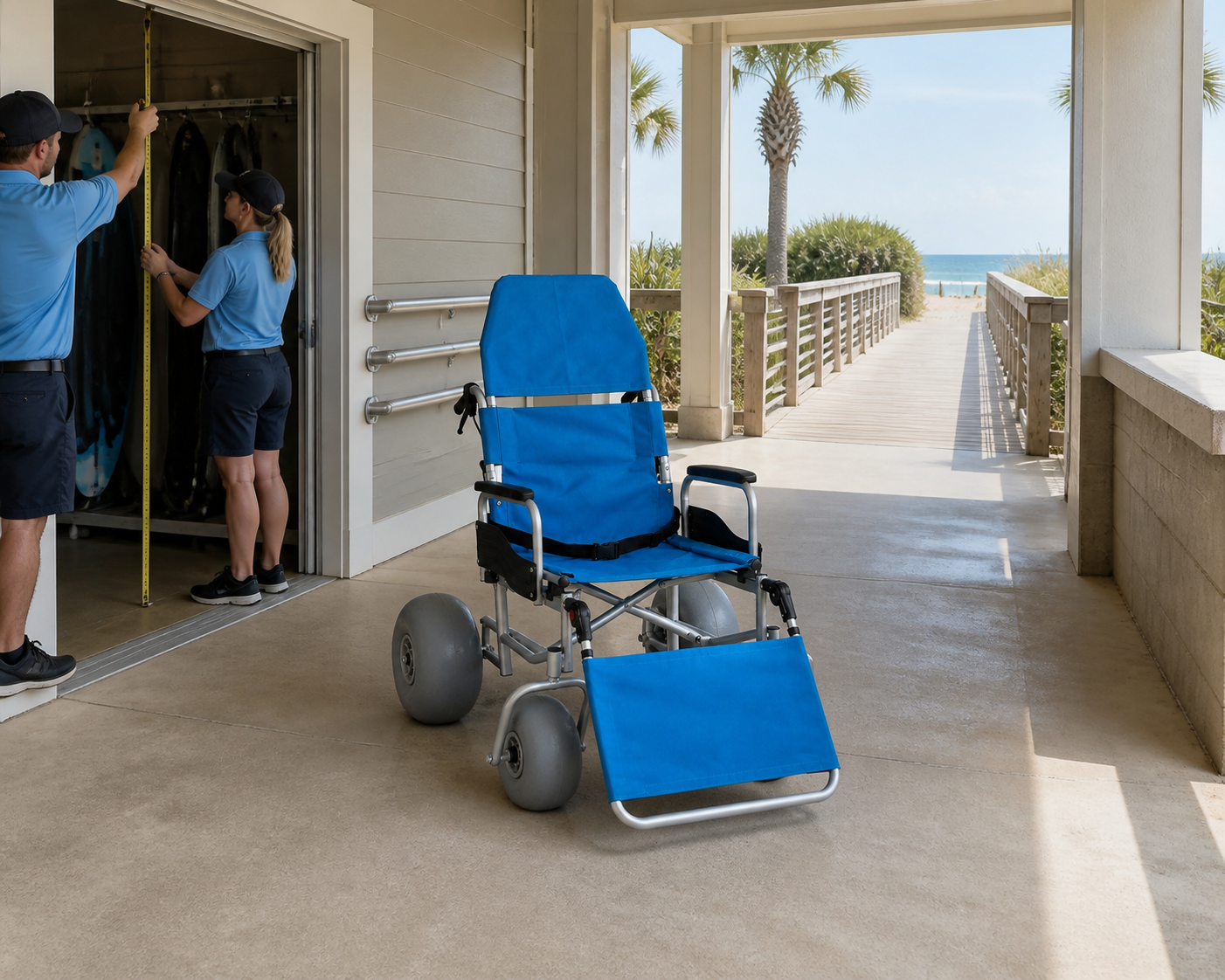
Beach wheelchair storage should sit on a workable path between receiving, guest handoff, beach access, return, care, and inspection areas. The review connects location access with staff routes, door control, security policy, drainage rules, and the portable travel application. A product image may show a clean room close to the shoreline, but it cannot confirm door clearance, retrieval time, route conflicts, care access, or authorization. Record the chair path, door and turn measurements, access roles, care link, return link, and alternate location with one owner and review date.
Connect the bay with the full service route
Map the real movement path: Walk an empty chair from the bay to each service point and back. Note every narrow turn, shared corridor, ramp, key handoff, and space conflict. Compare the observation with current model documents and the local operating plan. Place a mismatch on hold until the named source answers it. Keep chair identity, route identity, document revision, decision, and owner in one record so later handoffs do not depend on memory.
- Trace receiving, service, return, care, and storage paths.
- Measure doors, corners, ramps, and turning areas.
- Record access control and after-hours roles.
- Identify a stop point for a blocked route.
Key Takeaway: A storage location works only when the exact chair can reach each required service point under the operating plan.
| Review area | Working record |
|---|---|
| Path | Receiving, service, return, care, and bay |
| Access | Door, turn, ramp, key, and staff role |
| Decision | Match, route change, or location change |
The route walk reveals facility problems before staff must solve them during a guest request.
How much clear space should the bay provide?
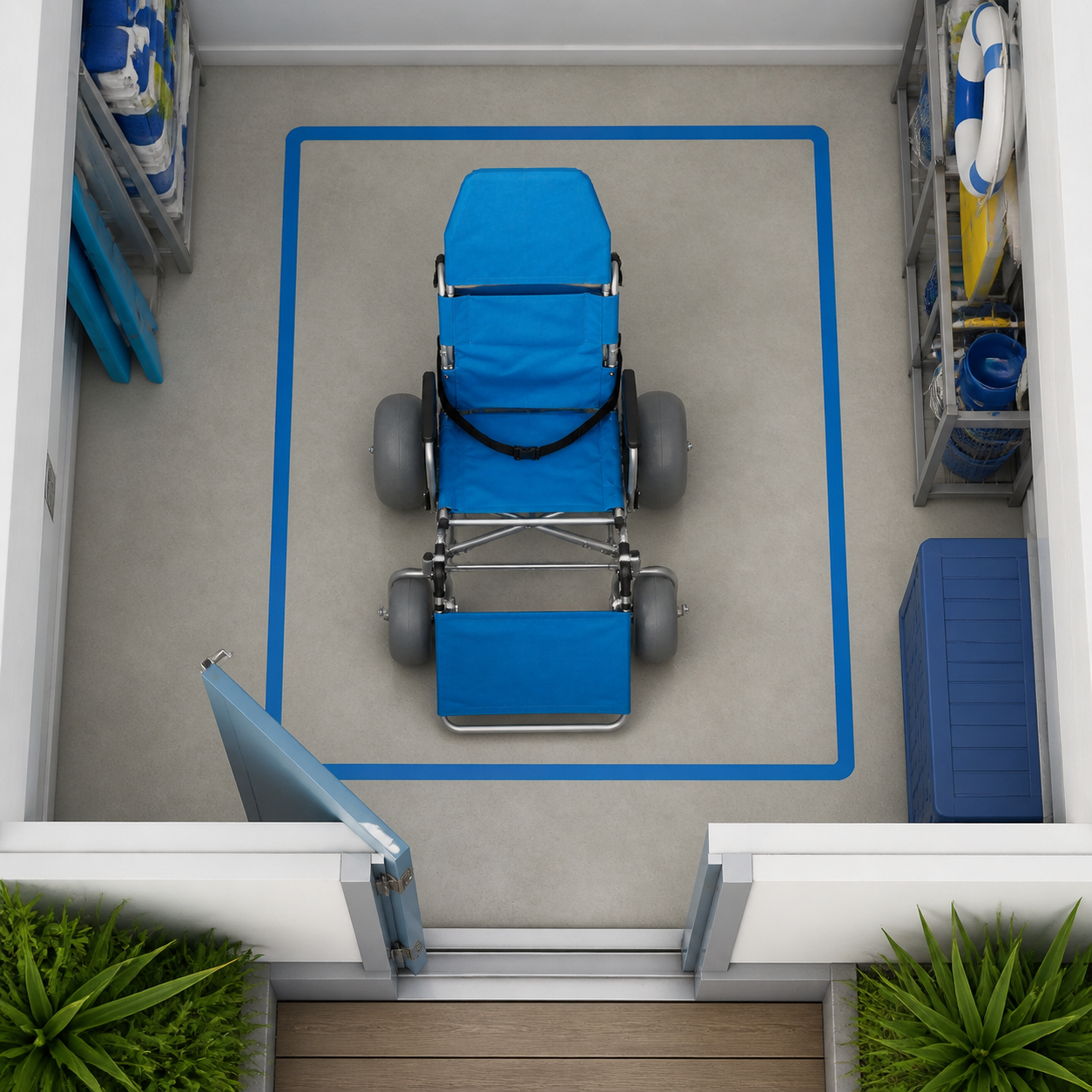
Beach wheelchair storage needs clear space based on verified chair dimensions, door swing, turning room, inspection access, placement method, and removal path. The review connects the exact unfolded or approved stored configuration with local building and workplace rules. A product image may show a folded frame or compact wheel layout, but it cannot confirm usable clearance, safe staff movement, inspection access, or space for approved supports. Record chair length, width, height, stored state, door swing, turn area, staff position, and neighboring equipment with one owner and review date.
Measure the exact chair and every staff task
Do not copy a generic footprint: Mark the chair outline and work zones on the floor during a controlled empty-chair review. Confirm that staff can place, inspect, identify, and remove it without shifting another unit. Compare the observation with current model documents and the local operating plan. Place a mismatch on hold until the named source answers it. Keep chair identity, route identity, document revision, decision, and owner in one record so later handoffs do not depend on memory.
- Use current dimensions for the quoted configuration.
- Include door, turn, placement, and retrieval space.
- Keep inspection points visible and reachable.
- Recheck space after any layout change.
Key Takeaway: Clear-space planning must follow the exact chair and real staff tasks rather than a general product category.
| Review area | Working record |
|---|---|
| Dimension | Chair in approved stored state |
| Work zone | Place, inspect, identify, and remove |
| Conflict | Door swing, aisle, neighboring equipment, or access |
The floor review turns a room estimate into a repeatable placement and retrieval check.
What conditions should the storage area control?
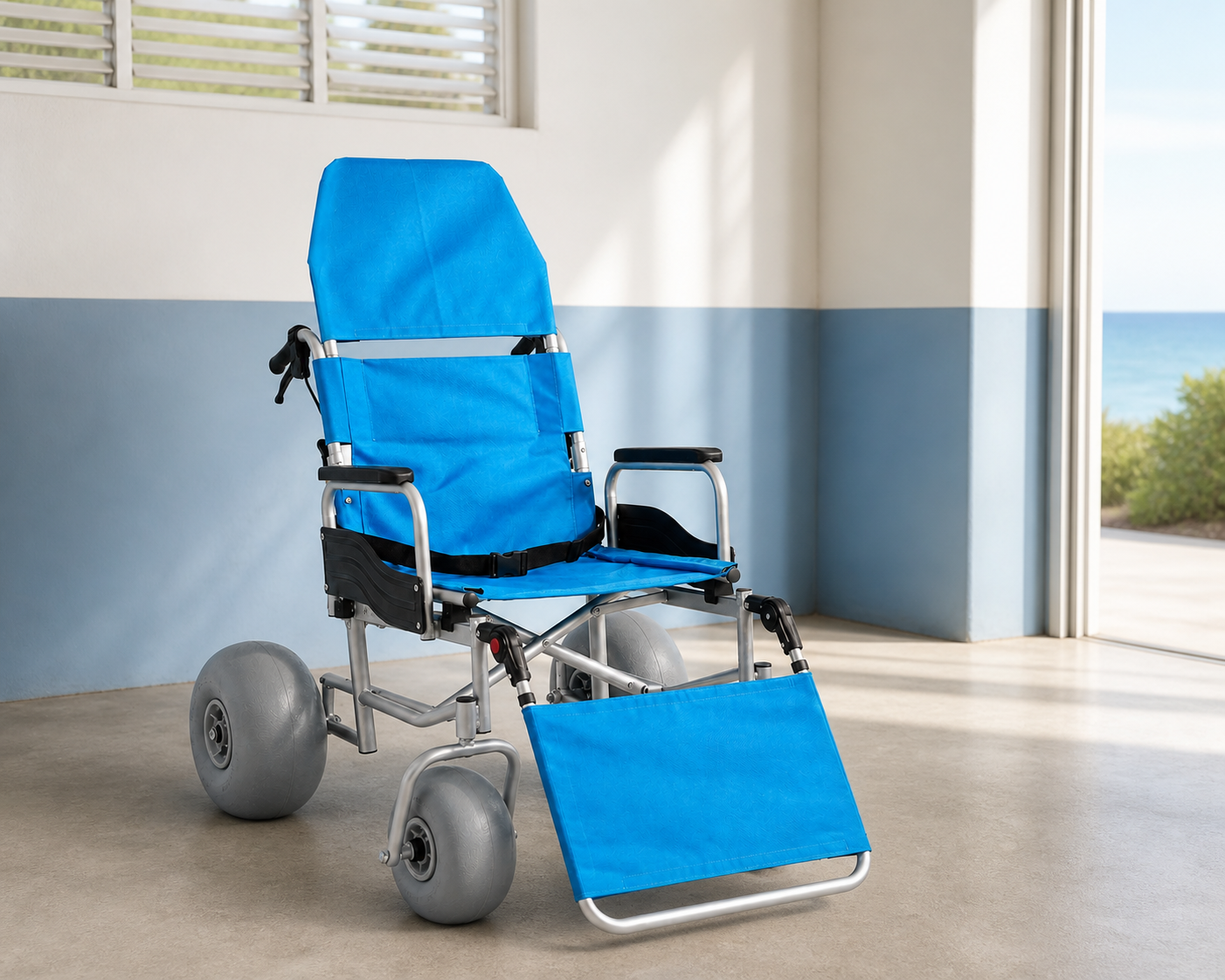
Beach wheelchair storage should control only the conditions named by current chair instructions and local facility policy, including cleanliness, dryness, access, and damage risks. The review connects supplier storage guidance with building conditions, care completion, pest control, security, and inspection routines. A product image may show a roof, walls, vents, lights, and a clean floor, but it cannot confirm acceptable temperature, humidity, water exposure, sunlight, chemical contact, or storage duration. Record named condition, source, check method, review timing, exception, owner, and chair status with one owner and review date.
Use supplier instructions and facility records
Treat a room feature as a question: Ask which conditions apply to frame, fabric, tires, hubs, handles, belt, and foot support. Use facility data where available and escalate technical gaps to the supplier. Compare the observation with current model documents and the local operating plan. Place a mismatch on hold until the named source answers it. Keep chair identity, route identity, document revision, decision, and owner in one record so later handoffs do not depend on memory.
- Request the current storage and care instructions.
- List moisture, light, chemical, impact, and access risks.
- Match each risk with a local control and owner.
- Place affected equipment on hold after an exception.
Key Takeaway: Storage conditions belong in a source-linked control record rather than a visual guess about the room.
| Review area | Working record |
|---|---|
| Condition | Source and local control |
| Chair area | Frame, fabric, tires, hubs, and supports |
| Exception | Hold, inspect, document, and escalate |
The condition register shows which room controls are verified and which still need a technical answer.
How should clean and returned chairs be separated?
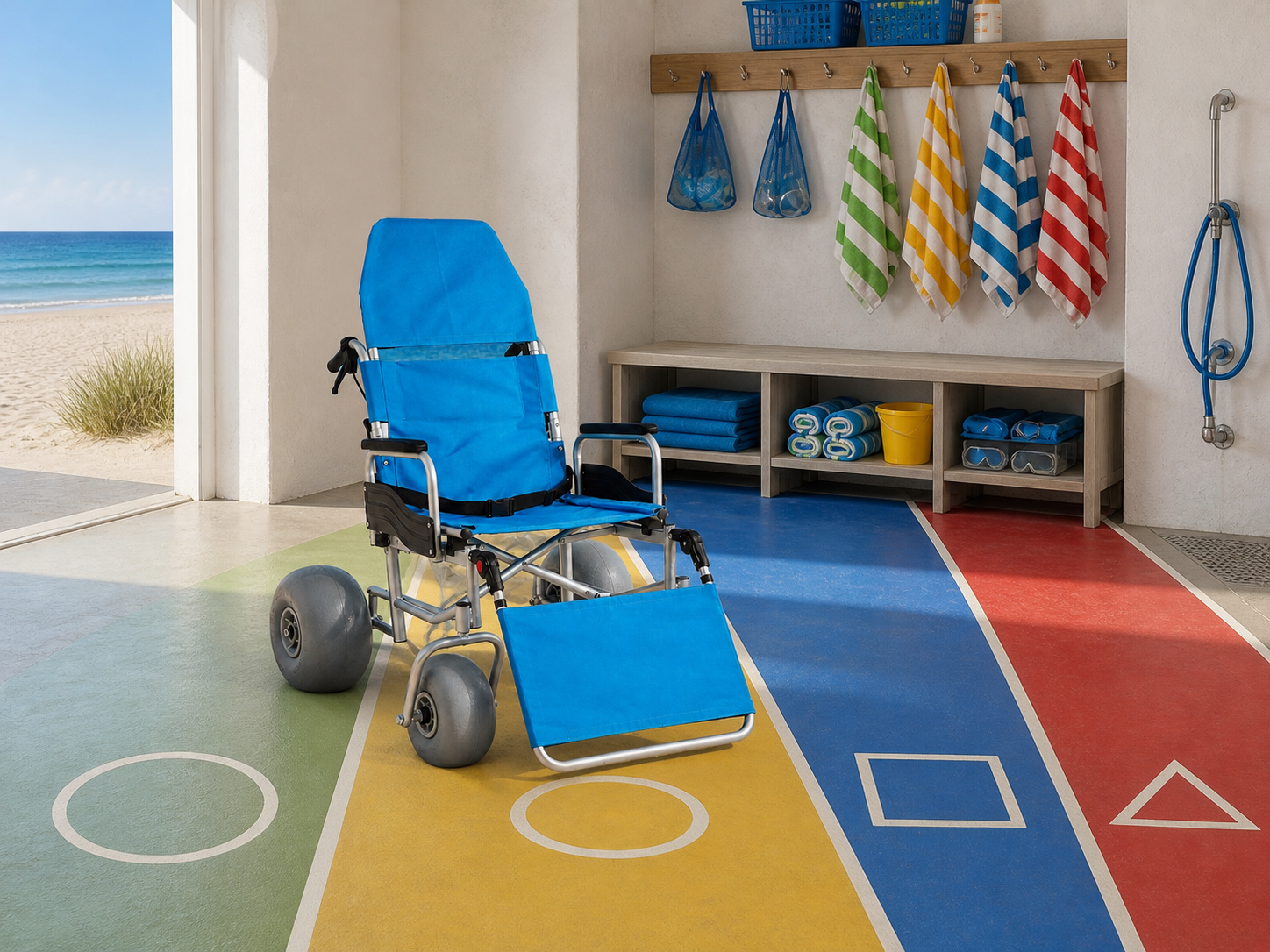
Beach wheelchair storage should separate returned, cleaning, drying, ready, hold, and service states through a written workflow and visible placement rules. The review connects the return path, care station, inspection point, ready bay, and the user manual page. A product image may show two chairs placed in different corners, but it cannot confirm which unit is clean, checked, released, incomplete, or awaiting action. Record chair identity, state, location, last action, next action, owner, and release authority with one owner and review date.
Make equipment status visible at a glance
Status must not depend on memory: Create distinct zones or another controlled method that staff can read without moving equipment. Keep a chair out of the ready area until care and inspection are recorded. Compare the observation with current model documents and the local operating plan. Place a mismatch on hold until the named source answers it. Keep chair identity, route identity, document revision, decision, and owner in one record so later handoffs do not depend on memory.
- Define returned, cleaning, drying, ready, hold, and service states.
- Give each chair one visible current state.
- Keep wet or unchecked units away from ready units.
- Record the person authorized to release status.
Key Takeaway: Visible state separation stops an unchecked chair from entering the ready fleet.
| Review area | Working record |
|---|---|
| State | Meaning |
| Returned | Care work has not closed |
| Drying | Inspection remains open |
| Ready | Care, check, and location recorded |
The zone map lets a new shift identify each chair without an informal explanation.
What support method should storage teams verify?
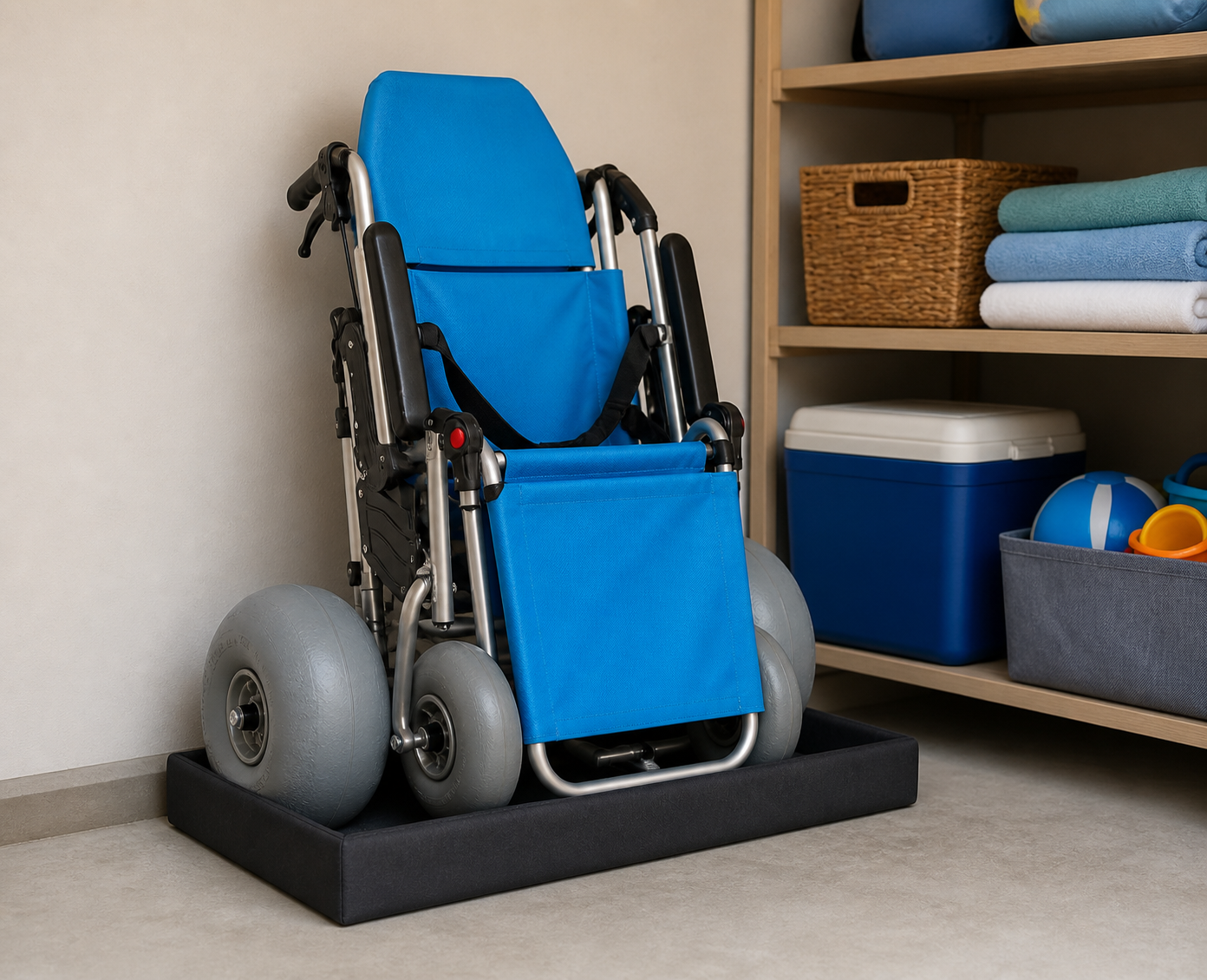
Beach wheelchair storage needs the approved support and folding method for the exact frame, wheels, seat fabric, handles, belt, and foot support. The review connects chair geometry with supplier instructions, approved contact points, removable components, and retrieval work. A product image may show a folding cross-brace and wide soft tires, but it cannot confirm permitted lifting points, resting surfaces, wheel removal, fabric pressure, or stacked placement. Record stored state, support points, prohibited contact, removable part method, lifting role, and inspection after retrieval with one owner and review date.
Confirm frame, wheel, fabric, and folding instructions
Support the chair through its own records: Ask the supplier to identify approved placement, folding, lifting, and component handling. Do not hang, stack, clamp, or load the chair through an improvised method. Compare the observation with current model documents and the local operating plan. Place a mismatch on hold until the named source answers it. Keep chair identity, route identity, document revision, decision, and owner in one record so later handoffs do not depend on memory.
- Confirm the approved stored configuration.
- Identify frame and wheel support points.
- Record removable-part and lifting steps.
- Check the chair after every retrieval.
Key Takeaway: A verified support method protects the known configuration and keeps storage work repeatable.
| Review area | Working record |
|---|---|
| Stored state | Unfolded, folded, or documented component state |
| Support | Approved frame, wheel, or floor contact |
| Retrieval | Lift, move, inspect, and release method |
The support record prevents a compact room plan from creating an unapproved load or contact point.
How should removable parts and records stay together?
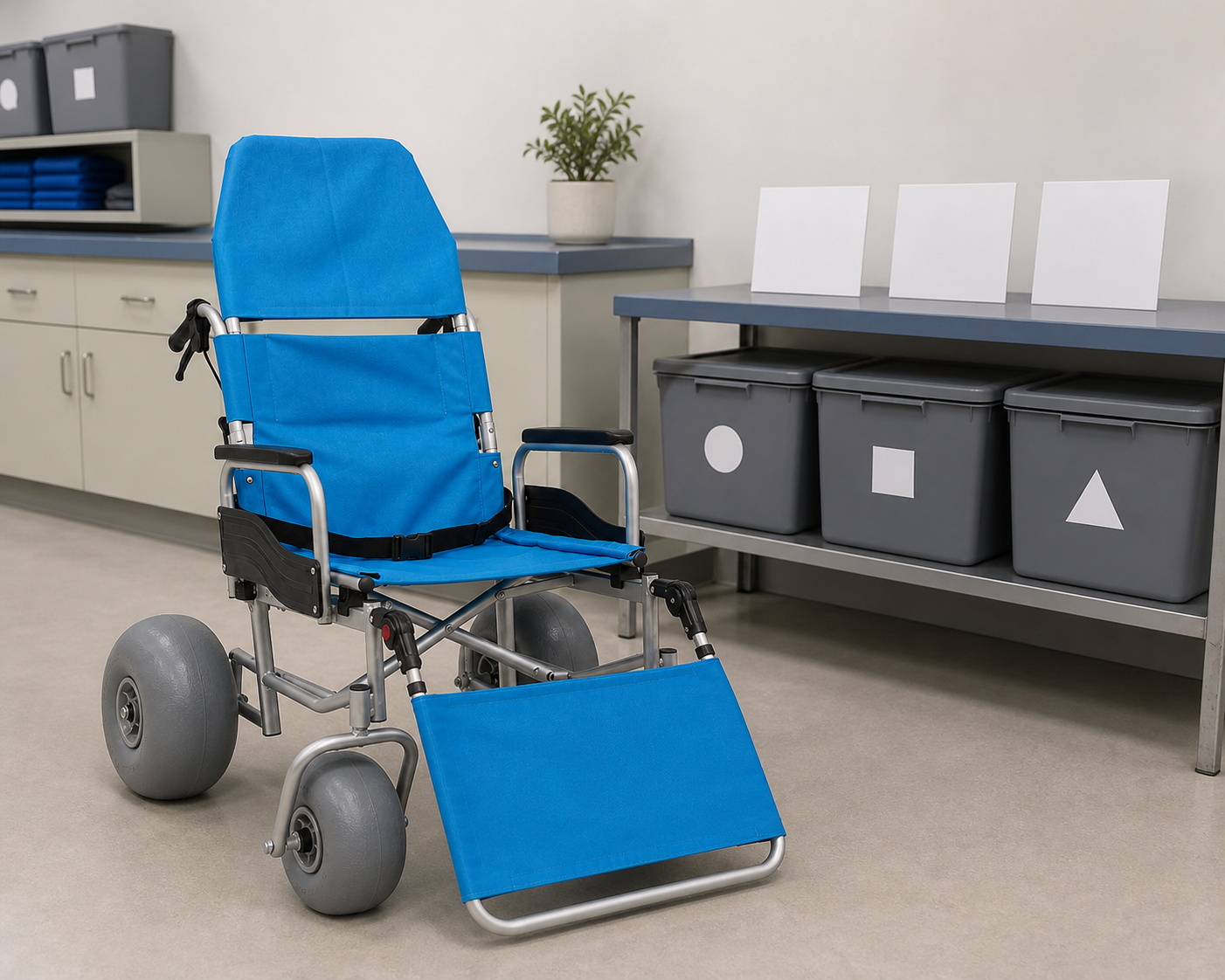
Beach wheelchair storage should keep approved removable parts, tools, instructions, and status records linked with the exact chair configuration. The review connects wheel or support removal procedures with parts control, revision control, and shift handoffs. A product image may show similar tires, fasteners, belts, foot supports, or hardware on a shelf, but it cannot confirm model compatibility, service status, ownership, or permitted substitution. Record chair ID, part ID, model link, removal reason, condition, storage place, source instruction, and return status with one owner and review date.
Link every item with one chair identity
A shared bin is not a configuration record: Use labeled containers or another controlled identification method and keep parts from held or serviced chairs out of ready inventory. Verify compatibility before reassembly. Compare the observation with current model documents and the local operating plan. Place a mismatch on hold until the named source answers it. Keep chair identity, route identity, document revision, decision, and owner in one record so later handoffs do not depend on memory.
- Identify each removable item and its chair link.
- Store hardware through a controlled container method.
- Keep current instructions with the configuration record.
- Record removal, return, fault, and service status.
Key Takeaway: Parts control preserves chair identity across storage, service, and later setup.
| Review area | Working record |
|---|---|
| Item | Identity and chair link |
| State | Ready, removed, hold, or service |
| Record | Reason, source, owner, place, and return action |
The linked record lowers the chance that a similar-looking part moves to the wrong chair.
What should happen before a chair enters storage?
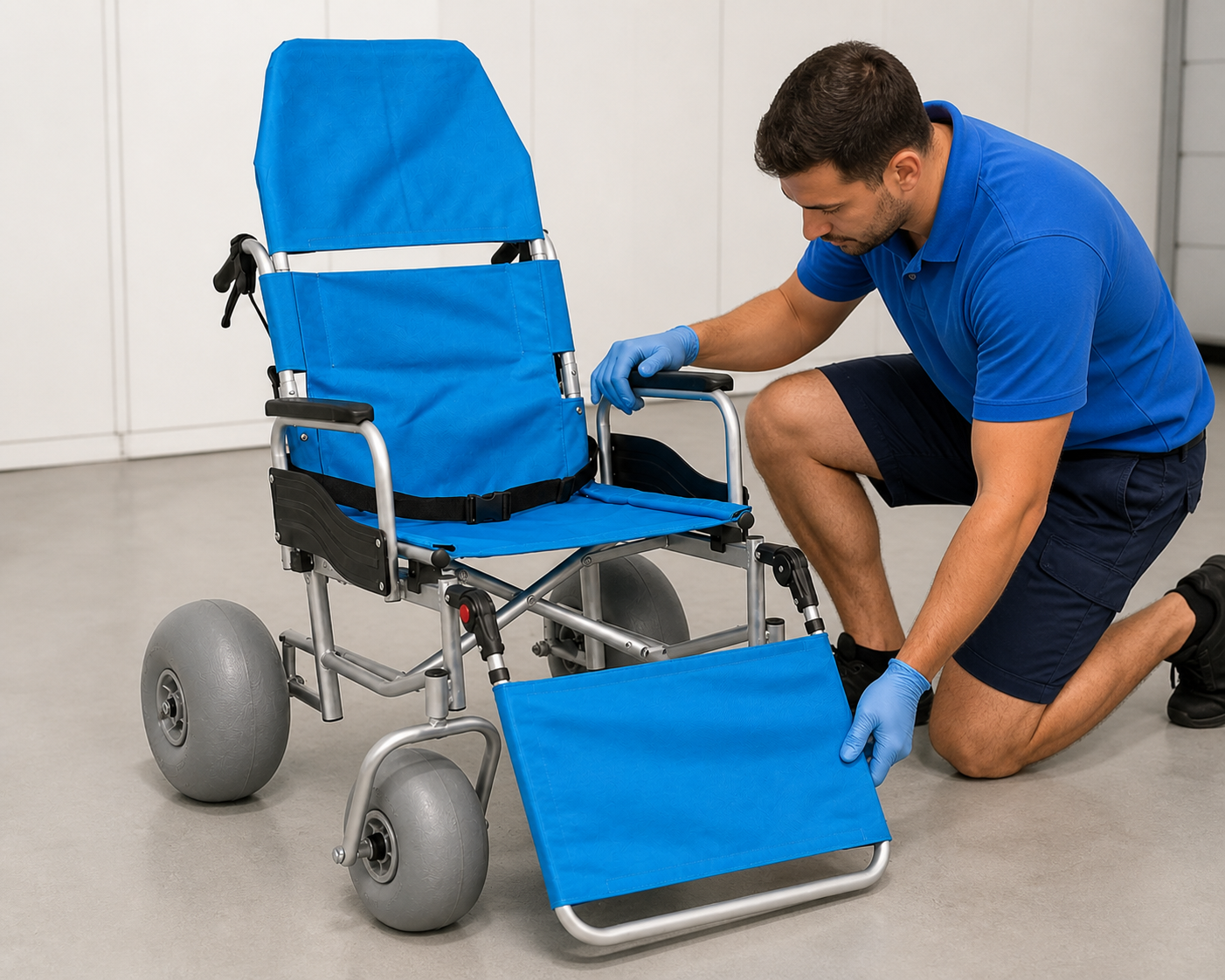
Beach wheelchair storage should receive a chair only after return status, stated cleaning, drying, inspection, fault review, and placement readiness are recorded. The review connects the return workflow with the applications overview. A product image may show a chair that looks clean after a quick rinse, but it cannot confirm hidden moisture, trapped sand, loose hardware, fabric condition, wheel condition, or completed inspection. Record return time, care source, completed steps, drying status, inspection points, fault decision, and storage release with one owner and review date.
Close return, care, drying, and inspection work
A clean appearance is not a closed record: Follow the current care sequence across tires, hubs, frame, seating, belt, handles, and foot support. Place any uncertain chair in a non-ready state. Compare the observation with current model documents and the local operating plan. Place a mismatch on hold until the named source answers it. Keep chair identity, route identity, document revision, decision, and owner in one record so later handoffs do not depend on memory.
- Record the return and chair identity.
- Complete stated cleaning and drying steps.
- Inspect every named component in good light.
- Release to storage or route to hold and service.
Key Takeaway: Pre-storage work ends with a recorded state and location, not with a visual impression.
| Review area | Working record |
|---|---|
| Return | Chair identity and incoming status |
| Care | Cleaning, drying, and inspection record |
| Decision | Ready storage, hold, or service |
The gate keeps wet, damaged, or unchecked equipment out of the ready bay.
How should staff release a chair from storage?
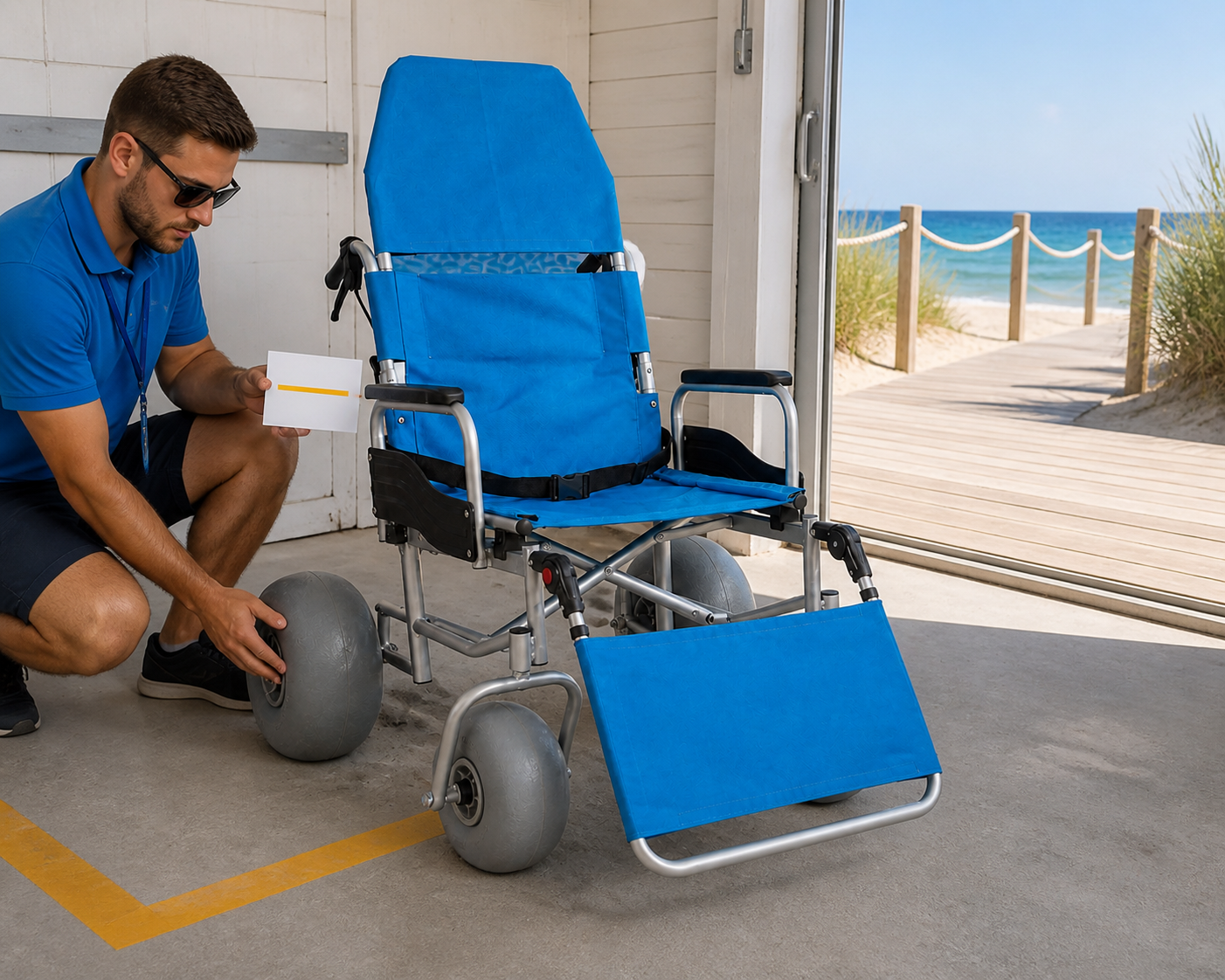
Beach wheelchair storage should release a chair through identity, status, condition, configuration, route, and handoff checks tied to the planned service. The review connects the ready bay with booking records, current route status, staff roles, chair instructions, and a clear exit path. A product image may show a clean chair in a marked location, but it cannot confirm current readiness, complete parts, new damage, route availability, or assigned staff. Record chair identity, prior status, visible check, component check, route check, staff handoff, and release time with one owner and review date.
Use a retrieval-to-service check
Retrieval creates a new operating state: Remove the chair through the approved method, inspect it after storage, match all parts, and confirm the route before it leaves the bay. Compare the observation with current model documents and the local operating plan. Place a mismatch on hold until the named source answers it. Keep chair identity, route identity, document revision, decision, and owner in one record so later handoffs do not depend on memory.
- Match the chair with the service request.
- Check status, condition, and complete configuration.
- Confirm staff, route, and handoff readiness.
- Record release or return the chair to hold.
Key Takeaway: Storage release connects a ready record with the current route and staff plan.
| Review area | Working record |
|---|---|
| Release check | Required record |
| Chair | Identity, status, condition, and parts |
| Service | Route, staff, handoff, and time |
The check prevents yesterday's ready status from replacing a current review.
What inspection log should storage teams keep?
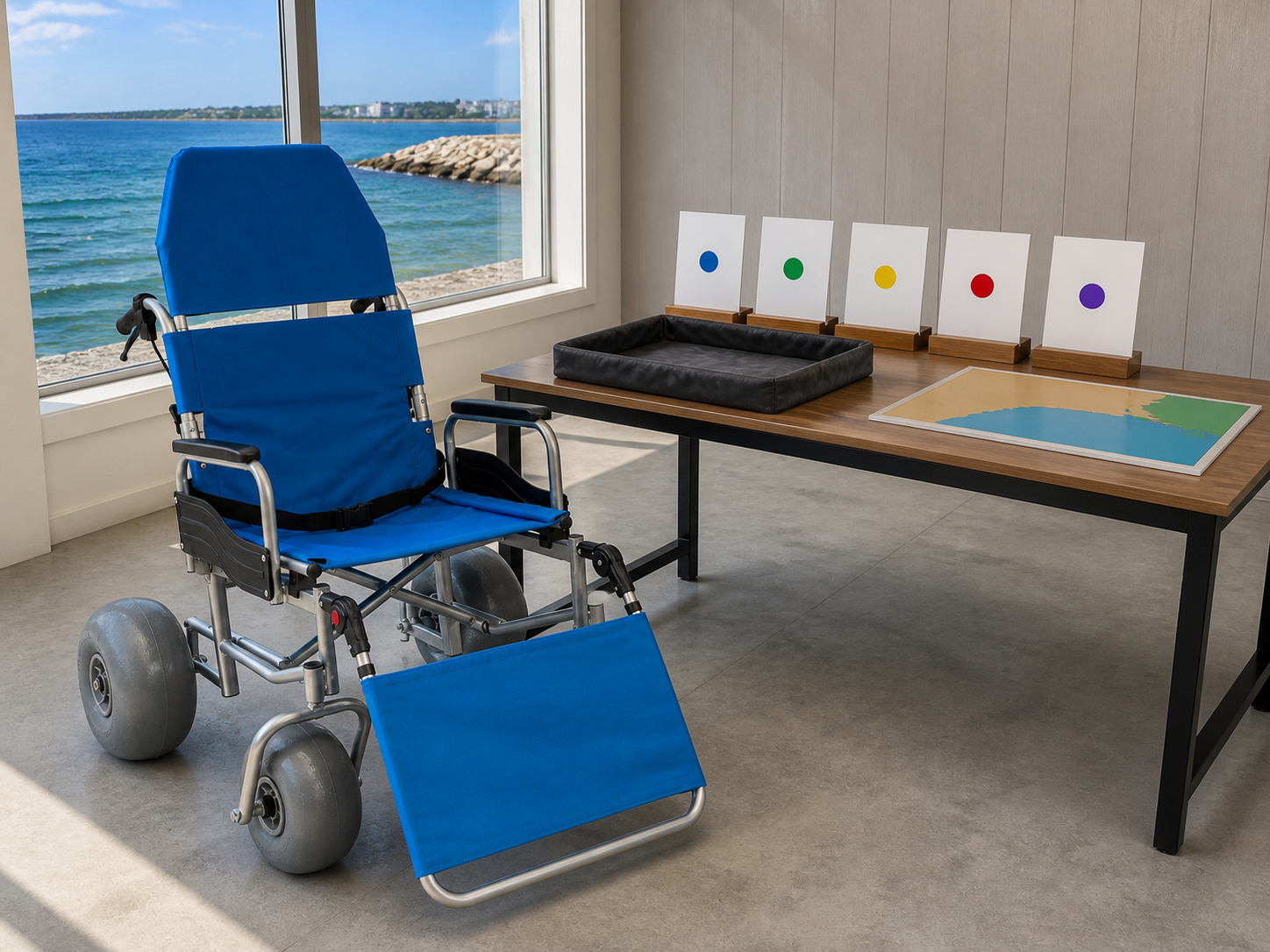
Beach wheelchair storage needs a chair-level log for location, state, care completion, condition, removable parts, faults, actions, owners, and release decisions. The review connects daily shift work with management checks, facility records, and chair-level history. A product image may show a tidy room and chairs placed in neat rows, but it cannot confirm which chair was checked, what changed, who acted, or whether a fault remains open. Record date, chair identity, state, location, check result, part movement, fault, action, owner, and release with one owner and review date.
Use a chair-level history rather than a room note
Write for the next shift: Keep entries short, factual, and linked with source records. Review repeated faults or location conflicts through the correct technical or facility owner. Compare the observation with current model documents and the local operating plan. Place a mismatch on hold until the named source answers it. Keep chair identity, route identity, document revision, decision, and owner in one record so later handoffs do not depend on memory.
- Record each placement, move, hold, and release.
- Link care and inspection with chair identity.
- Track removable parts and service actions.
- Close every fault with a source and decision.
Key Takeaway: A chair-level log makes storage status traceable across staff and service cycles.
| Review area | Working record |
|---|---|
| Log field | Purpose |
| Identity and place | Find the exact chair and parts |
| State and action | Know what happened and what remains open |
| Owner and release | Know who decides the next step |
The log pattern shows whether failures come from room layout, workflow, care, parts, or technical questions.
How can teams map the storage workflow?
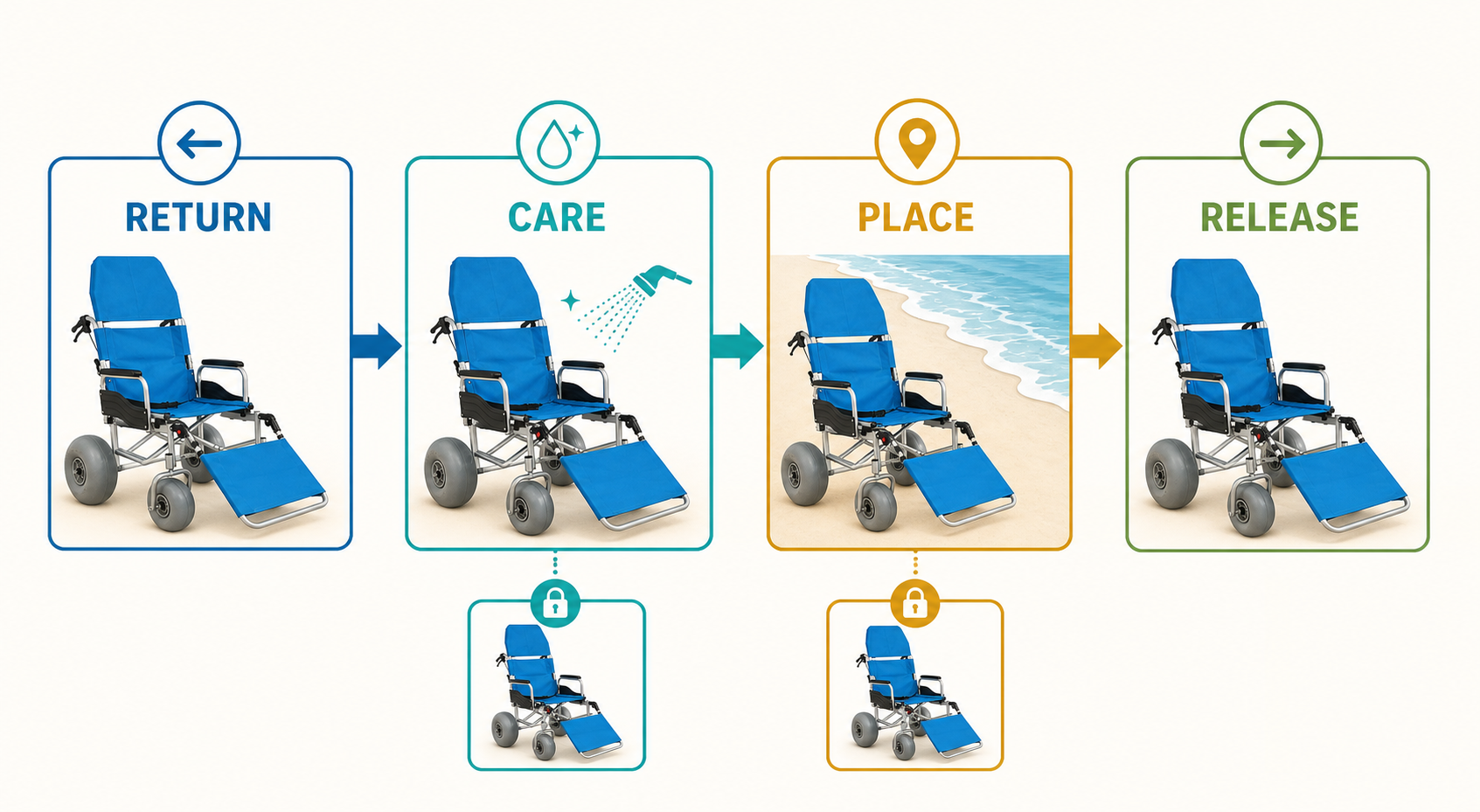
Beach wheelchair storage works best when return, care, drying, inspection, placement, retrieval, and release states follow one visible decision flow. The review connects the full chair cycle with facility space, staff ownership, supplier instructions, and hold rules. A product image may show a clean chair moving between rooms, but it cannot confirm which state applies, what evidence closes it, or who may release the next step. Record state, entry condition, required action, source, exit evidence, exception, owner, and next state with one owner and review date.
Create a return-to-release decision flow
Use one-way status logic: Start at return, route the chair through care and inspection, place it in the correct bay, and require a new release check before service. Send any exception to hold. Compare the observation with current model documents and the local operating plan. Place a mismatch on hold until the named source answers it. Keep chair identity, route identity, document revision, decision, and owner in one record so later handoffs do not depend on memory.
- Receive and identify the returned chair.
- Complete care, drying, and inspection.
- Place in ready, hold, or service storage.
- Retrieve, recheck, and release for service.
Key Takeaway: A visible workflow keeps chair state, room location, and release authority connected.
| Review area | Working record |
|---|---|
| Return | Identify and set incoming state |
| Care | Clean, dry, inspect, and record |
| Place | Ready, hold, or service bay |
| Release | Retrieve, check, route, and approve |
The map gives every shift a clear next action without relying on verbal memory.
Closing Notes
A sound storage plan connects location, clear space, conditions, care status, support method, parts control, release checks, inspection logs, and a visible workflow. Tie every facility decision to local measurements and current chair instructions. To review a storage and handling brief, contact us with your chair configuration, route, care station, storage room, and staff roles.
Frequently Asked Questions
Can I store a beach chair in any dry room?
No. The room also needs verified access, chair support, status separation, care workflow, parts control, and retrieval space.
What’s the best position for a stored chair?
Use the stated supplier method. Confirm support points, folding state, wheel position, removable parts, and required clear space for the exact chair.
How do I know if the storage bay is large enough?
Measure the exact configuration. Check the door, turning area, placement space, inspection access, and removal path without relying on a catalog photo.
Can returned and ready chairs share one bay?
Only with a controlled separation method. Staff must be able to identify status without moving or guessing.
What’s the best storage record for a fleet?
Use a chair-level log. Record location, status, care completion, inspection, parts, faults, owner, and release decision.