
A beach walker can make soft-sand routes safer when a coastal team pairs wide balloon wheels with a mapped path, trained staff, clear rest points, and a repeatable inspection routine. A standard walker may stop at the boardwalk because narrow wheels dig into loose sand. A purpose-built beach walker spreads contact across a broader area and gives a guest a stable hand position while an attendant remains nearby.
That change helps resorts, municipalities, rental operators, and adaptive recreation teams offer a more predictable route from hard ground toward managed beach zones. The equipment alone does not define a sound program. Route condition, guest fit, staff judgment, cleaning, storage, and supplier service all shape daily results. This guide turns those concerns into a practical B2B workflow that a coastal access team can adapt without relying on invented performance figures or medical promises.
For a connected planning step, compare beach mat maintenance with lightweight beach wheelchair.
For broader destination-level context, consult the UN Tourism accessibility publications and guidelines. Apply local requirements and current product documents to the specific project.
How Does a Beach Walker Work on Soft Sand?
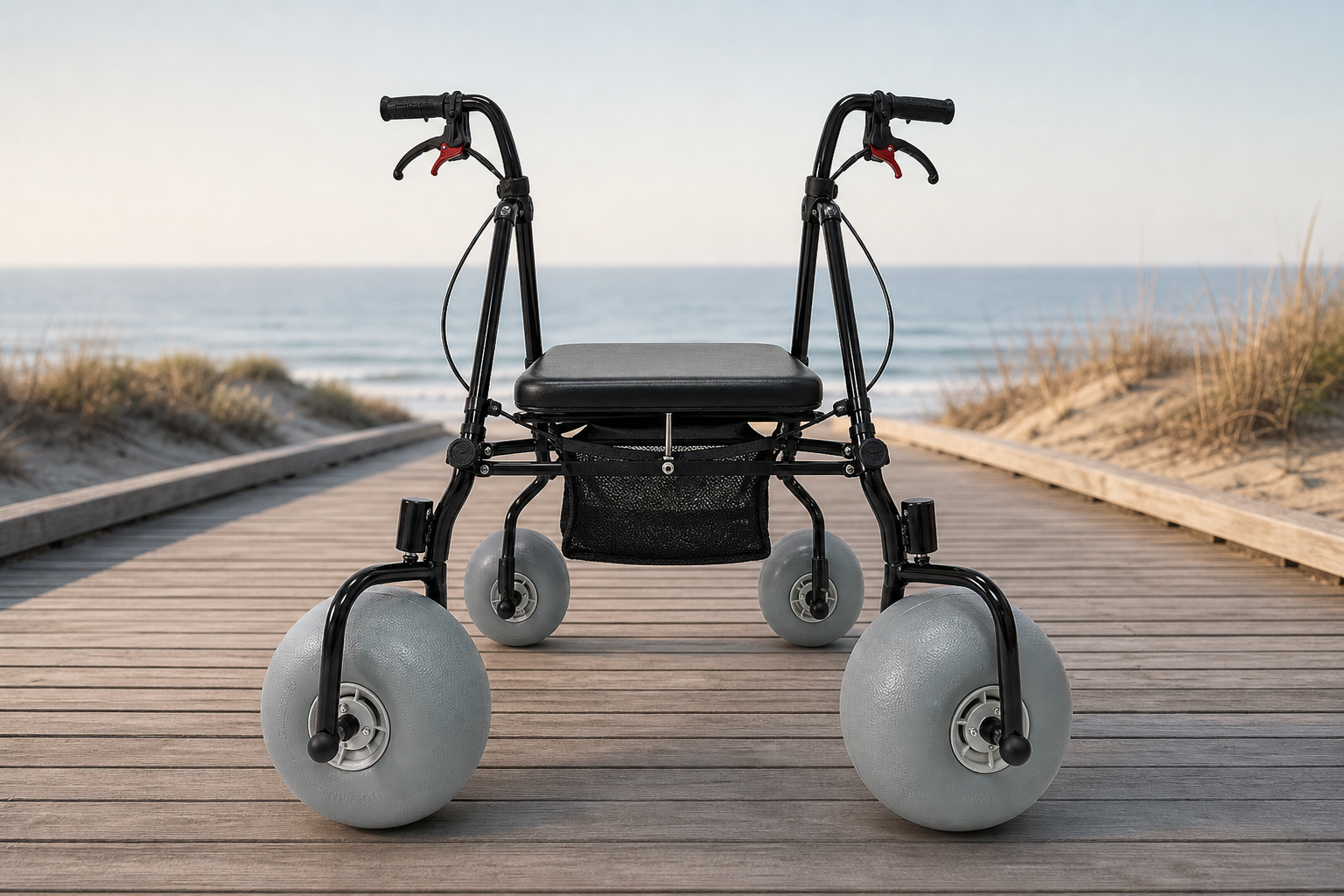
A beach walker works on soft sand by spreading load across wide balloon wheels while its frame gives the guest and attendant controlled hand positions. Narrow casters tend to cut into loose grains, which raises rolling resistance and interrupts a steady walking rhythm. Wide wheels present a broader contact patch, so the unit can move through a managed sand corridor with less digging. The seat also creates a planned rest option when staff have confirmed a level stopping point.
Wide Wheels and Managed Movement
Here’s the practical point: wheel shape helps, yet route management still decides whether a beach walker fits the setting. Staff should use smooth turns, avoid abrupt side loads, and keep pace matched to guest comfort.
- Start on firm ground so staff and guest can check hand position.
- Enter loose sand through a wide, straight surface handoff.
- Pause before turns, slopes, or crowded route sections.
- Use the seat only on a level area chosen in advance.
Key Takeaway: A beach walker can reduce wheel sink on a managed route, but a trained attendant and a suitable surface remain part of every trip.
| Route element | Practical response |
|---|---|
| Loose dry sand | Use a straight, short corridor |
| Firm surface handoff | Confirm steering and hand position |
| Turn area | Choose broad, level space |
| Rest area | Stop on firm, even ground |
Use this table to match equipment movement with the route conditions staff can actually control.
Which Route Conditions Suit a Beach Walker?
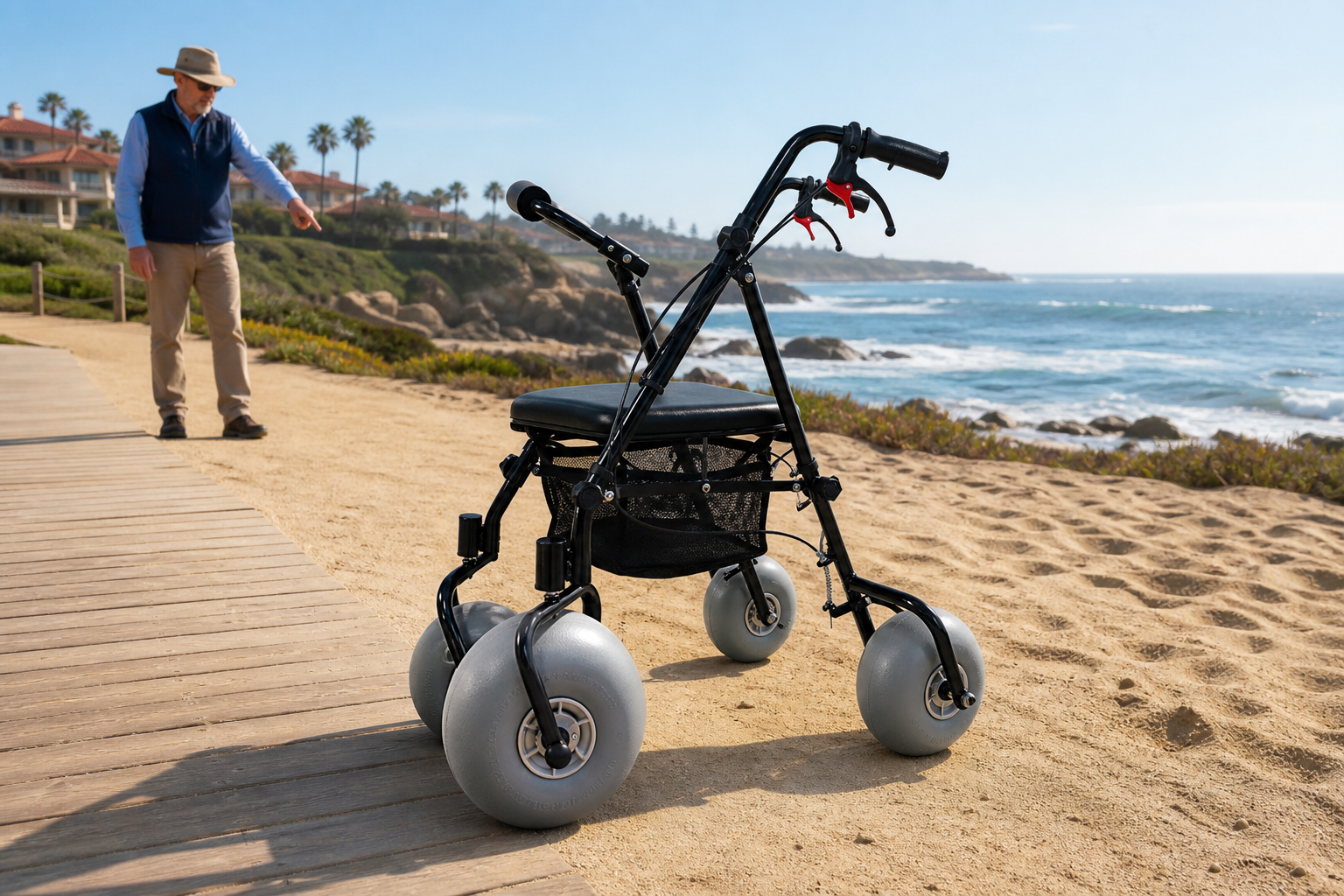
A beach walker suits a route that has a firm starting area, a visible sand corridor, manageable gradients, room for broad turns, and planned stopping points. A long dune crossing with deep ruts, sharp side slopes, or no rest zone may demand a different access method. Teams can review a related senior care beach walker project to see how equipment choice sits within a wider service plan.
Route Fit Before Daily Opening
What changes on the ground? Tide, wind, grooming, foot traffic, and maintenance vehicles can alter a route between shifts. A quick opening walk gives staff current information instead of relying on yesterday’s map.
- Look for ruts, debris, pooled water, and narrowed passages.
- Check that a staff member can walk beside or behind the unit.
- Keep the route away from vehicle lanes and active setup work.
- Mark an alternate return path when the main corridor becomes busy.
Key Takeaway: A beach walker fits routes that remain visible, wide, and manageable for both guest and attendant during the full operating window.
| Condition | Program response |
|---|---|
| Firm boardwalk | Good staging and orientation area |
| Compacted sand | Suitable route handoff when kept clear |
| Deep loose sand | Shorten exposure and add staff review |
| Side slope | Redirect toward a flatter line |
Use these route signals during every opening check rather than treating beach terrain as fixed.
How Should Teams Map a Safer Coastal Route?
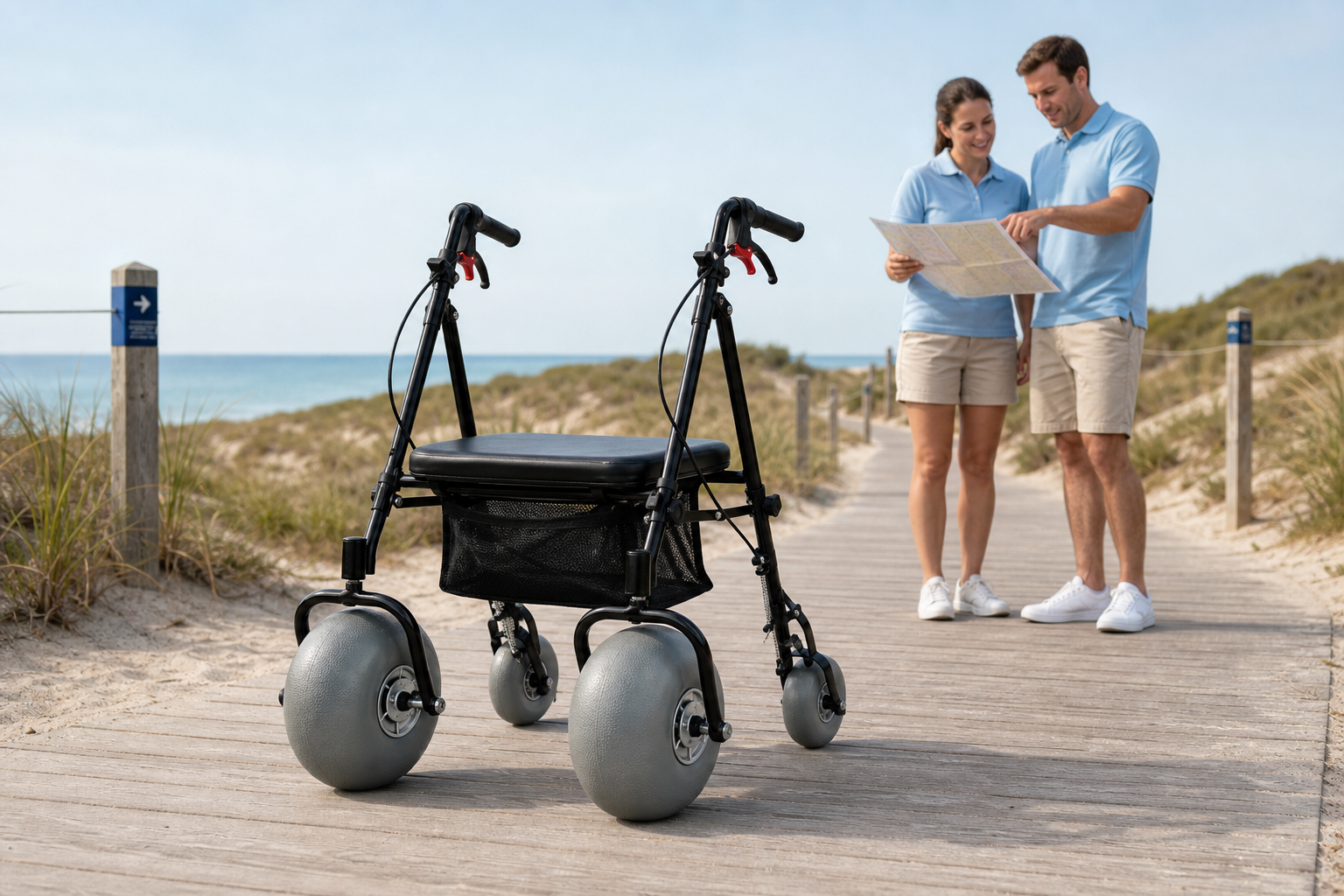
A beach walker route should be mapped from parking or reception through each surface change, rest point, turnaround, and return option. The map does not need complex software. A clear sketch, named checkpoints, and staff ownership can give an operating team a shared route picture. The beach walker senior care application can also help buyers frame route planning around real service environments.
A Route Map Staff Can Use
Keep this in view: a map only helps when staff can apply it during a busy shift. Use plain checkpoint names and place the longest sand segment where an attendant can request help without leaving the guest.
- Name the starting area, sand entry, rest zone, turnaround, and return line.
- Record surface changes without adding unverified load or speed claims.
- Assign a staff contact for route closure or cleanup.
- Review where two mobility devices can pass without conflict.
Key Takeaway: A usable beach walker map links surfaces, staff roles, and stopping points in one short operating reference.
| Map checkpoint | Staff question |
|---|---|
| Staging area | Is there clear space for fit checks? |
| Sand entry | Is the surface handoff straight and visible? |
| Rest zone | Is the ground level and uncluttered? |
| Return path | Can staff exit without reversing far? |
Use the checkpoint questions during a route walk, then adjust the map when conditions change.
What Product Features Matter for Daily Programs?
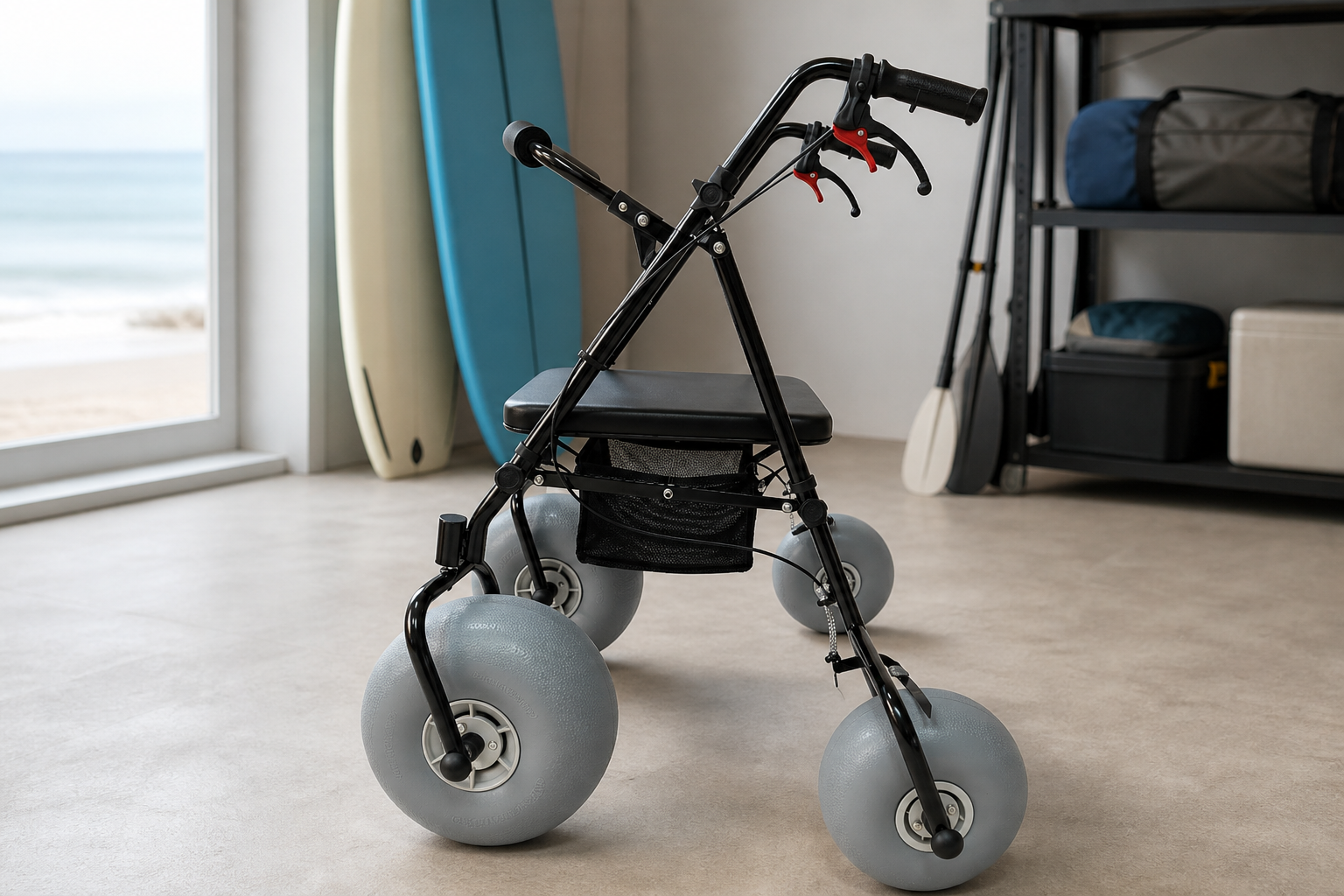
A beach walker for daily programs needs a frame staff can inspect, wide wheels suited to the planned surface, stable handles, a usable seat, and parts that can be cleaned without complicated disassembly. Buyers should compare how those components work together rather than choosing from a single feature claim. A broad product category view on the beach wheelchairs page can help teams separate walking aids from seated mobility options.
Features Tied to Staff Tasks
The useful detail is this: every feature creates a staff task. A folding joint needs a visual check. A seat needs a clean, level rest zone. A pouch needs an item policy so loose objects do not interfere with movement.
- Review handle shape and attendant reach.
- Check wheel attachment points and visible hardware.
- Confirm the seat surface can be wiped and dried.
- Ask how replacement parts are identified and ordered.
Key Takeaway: The right beach walker feature set is the one a team can inspect, operate, clean, and store through its normal staffing pattern.
| Feature | Daily staff task |
|---|---|
| Wide wheels | Check surface and attachment points |
| Folding frame | Confirm joints are fully set |
| Seat | Use only at a planned rest zone |
| Storage pouch | Keep contents light and secured |
Use the task column to turn product comparison into an operating decision rather than a brochure comparison.
How Can Staff Fit the Beach Walker to Each Guest?
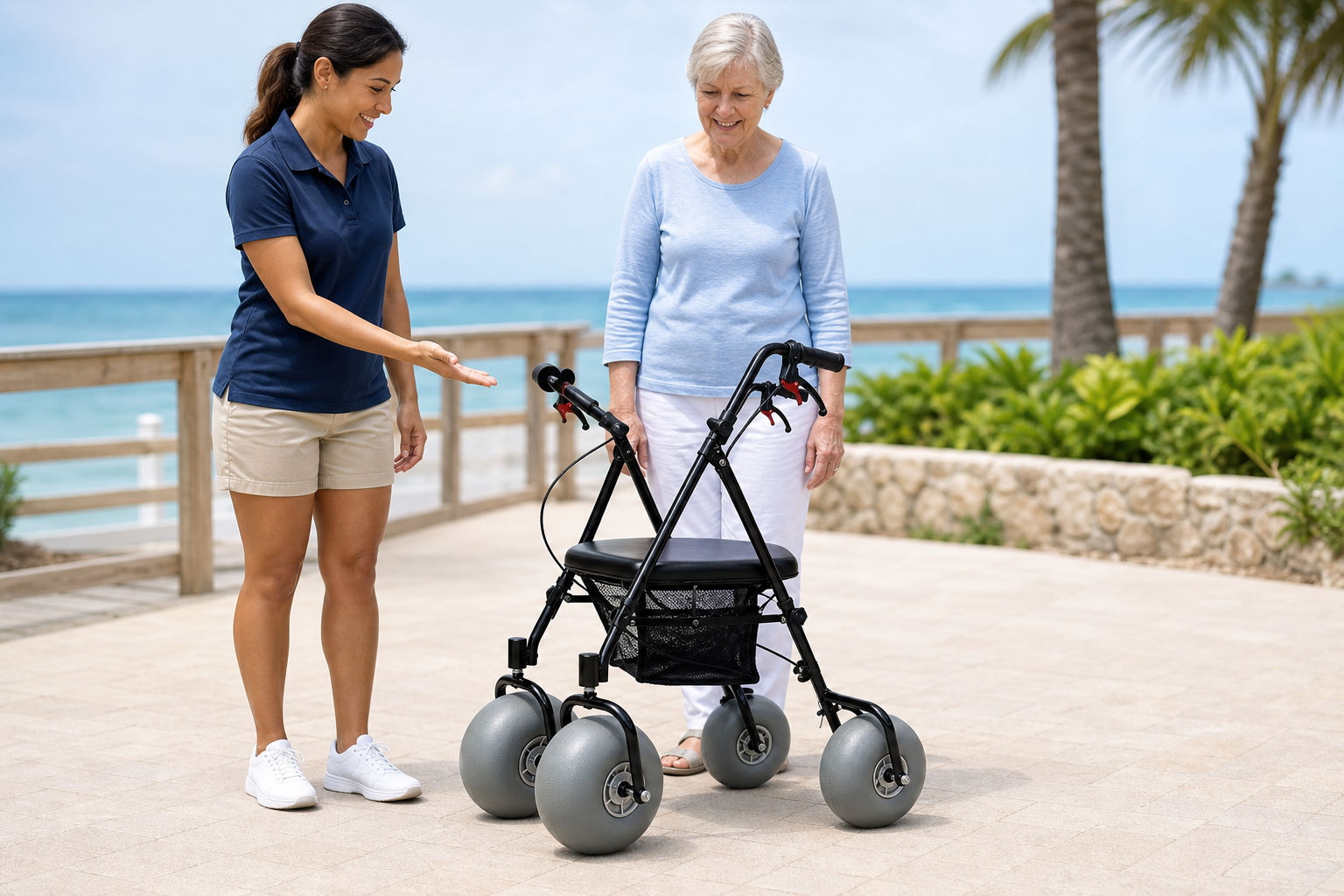
A beach walker should be fitted on firm ground by checking handle position, standing space, step clearance, turning comfort, and the guest’s ability to follow staff directions. Staff should never treat one setup as suitable for every person. A brief conversation can establish goals, preferred pace, rest needs, and any concerns that should send the guest back to a caregiver or qualified professional for guidance.
A Calm Fit Conversation
Why does that matter? Guests may arrive with different mobility patterns, footwear, fatigue levels, or familiarity with beach terrain. A calm orientation gives staff a chance to stop before loose sand if the setup feels wrong.
- Ask where the guest wants to travel and how long they expect to be out.
- Check that hands rest comfortably without forced shoulder position.
- Practice starting, stopping, and turning on a firm surface.
- Agree on a simple verbal cue for pauses and route changes.
Key Takeaway: Beach walker fit begins with a firm-ground practice session and a shared decision about pace, route, and stopping cues.
| Fit point | Observable check |
|---|---|
| Hand position | Grip feels natural and controlled |
| Standing space | Steps clear the frame |
| Turning | Guest and staff move together |
| Rest plan | Stop cue is agreed before travel |
Use observable checks and guest feedback; do not replace professional advice with a generic setup rule.
What Should a Pre-Use Inspection Cover?
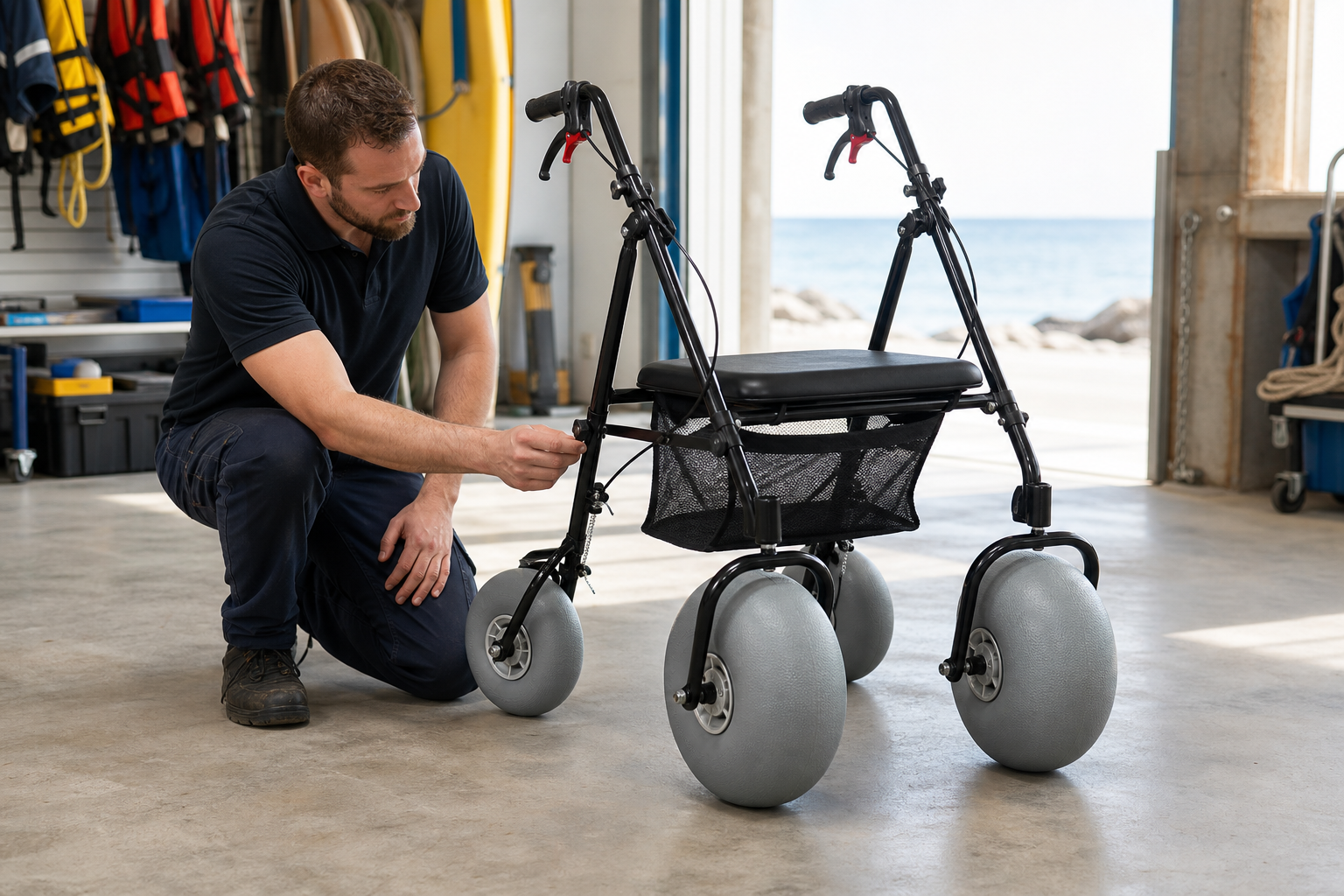
A beach walker pre-use inspection should cover frame joints, wheel attachment, visible damage, handle security, seat condition, loose items, sand buildup, and route readiness. The check should happen before the guest enters the staging area. That timing gives staff space to remove a unit from service without creating pressure to accept a questionable condition.
A Short Repeatable Check
Here’s the practical point: a checklist works best when each item has a clear pass or stop outcome. Vague wording can lead two staff members toward different decisions.
- Confirm the frame is open and seated in its intended operating position.
- Spin and inspect each wheel for visible obstruction or damage.
- Check handles, seat, pouch, and fasteners for loose or torn parts.
- Remove the unit from service when staff cannot confirm a secure condition.
Key Takeaway: A repeatable beach walker inspection protects consistency by giving staff a clear reason to proceed, pause, or remove equipment from service.
| Inspection area | Pass signal | Stop signal |
|---|---|---|
| Frame | Fully set and stable | Joint movement or visible damage |
| Wheels | Attached and unobstructed | Loose part or trapped debris |
| Seat and handles | Clean and secure | Tear, movement, or contamination |
| Route | Open and visible | Closure, rut, or blocked passage |
Use this table as a training prompt, then align wording with the manufacturer’s manual and local policy.
How Can Operators Manage Rest and Transfer Points?
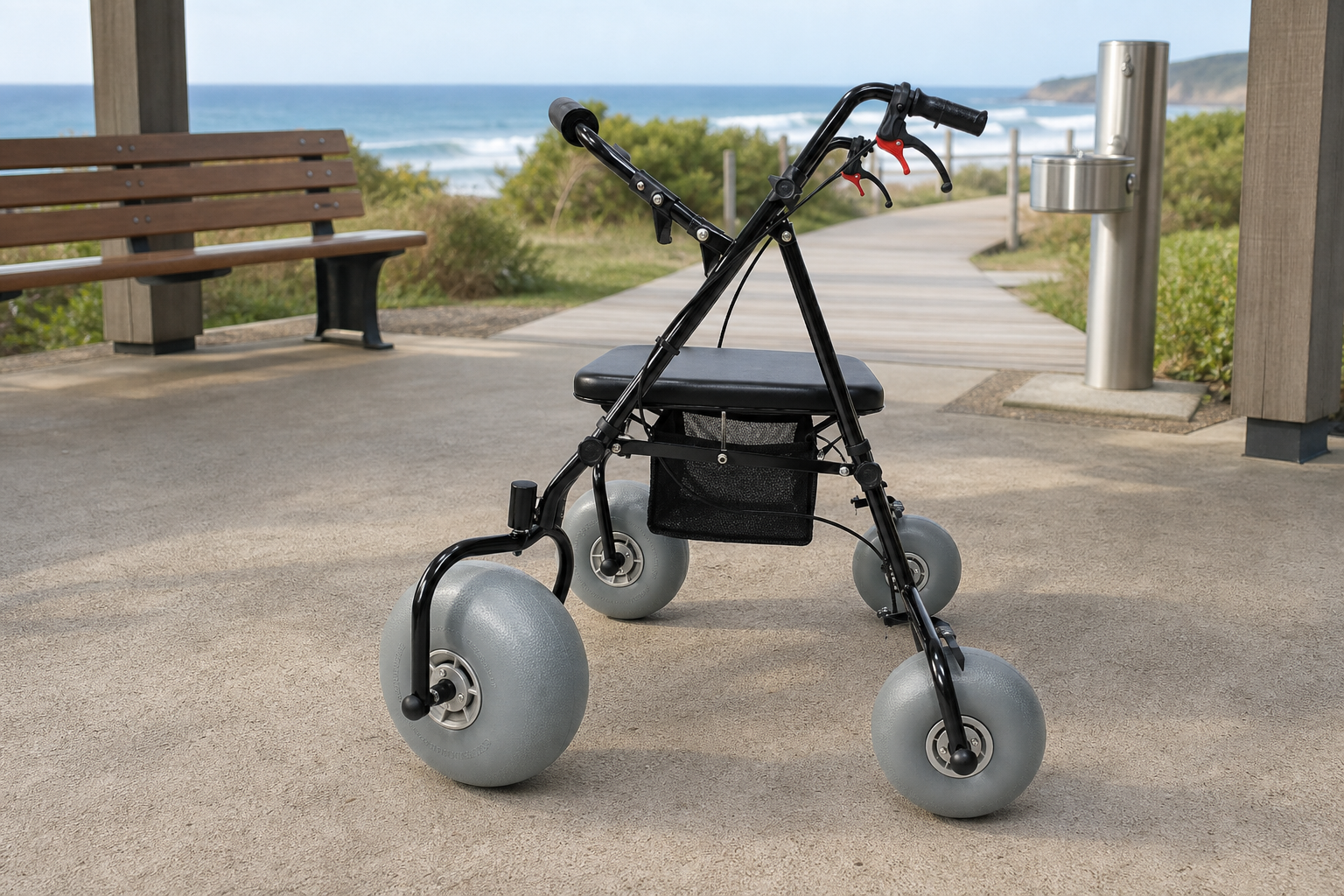
A beach walker program should place rest and transfer points on firm, level ground with clear staff access and enough room for a broad turn. A seat can offer a pause, yet it should not turn an uneven sand patch into an improvised rest zone. Teams need a route design that keeps stopping places predictable and away from vehicle lanes, crowded entrances, or water movement.
Rest Zones as Part of Route Design
What changes on the ground? A shaded rest zone can become crowded near midday, while a clear morning turnaround may narrow after rental equipment arrives. Staff should verify availability before departure.
- Keep rest zones near communication access when practical.
- Leave space for an attendant to stand without blocking the route.
- Avoid transfers on loose sand unless a qualified plan calls for them.
- Use a return option that does not depend on one busy turnaround.
Key Takeaway: Rest points make beach walker routes more predictable when they sit on firm ground and remain clear through the operating period.
| Rest-zone feature | Operating value |
|---|---|
| Level surface | Stable pause and easier positioning |
| Shade | More comfortable waiting area |
| Clear perimeter | Room for attendant movement |
| Return access | Faster response to route changes |
Use the table during site setup, then confirm that each zone remains available before a guest starts.
What Cleaning and Storage Routine Protects the Fleet?
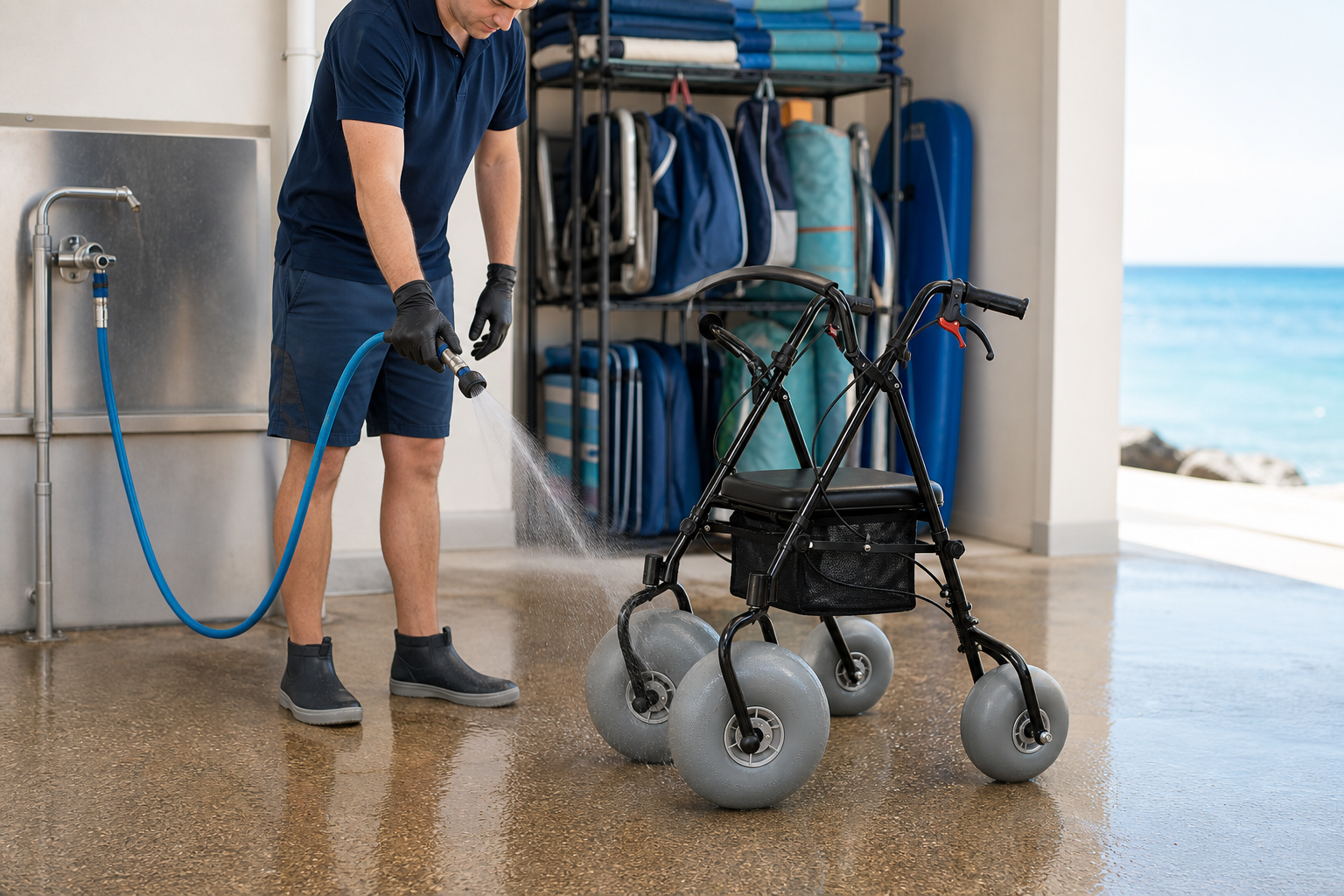
A beach walker cleaning routine should remove loose sand, use approved fresh-water care where the manual allows, dry surfaces, inspect joints, and store the unit in a clean ventilated area. Salt, moisture, and trapped sand can interfere with moving parts or hide wear. The beach wheelchair user manual page gives teams a useful place to align local procedures with product instructions.
From Return Desk to Storage Bay
The useful detail is this: cleaning and inspection belong in one handoff. If one person rinses equipment and another stores it without a condition note, a loose part may reach the next shift.
- Brush or rinse away sand according to product guidance.
- Dry the seat, frame, handles, pouch, and wheel areas.
- Record damage or unusual movement before storage.
- Keep serviceable and held units in clearly separate locations.
Key Takeaway: A beach walker fleet stays easier to manage when cleaning, condition reporting, and storage happen as one documented return process.
| Return step | Staff action |
|---|---|
| Sand removal | Clear visible buildup |
| Drying | Remove moisture before storage |
| Condition note | Record damage or held status |
| Storage | Separate ready and held equipment |
Use this sequence to reduce missed handoffs without claiming a fixed service life.
How Should Buyers Compare Suppliers and Service Plans?
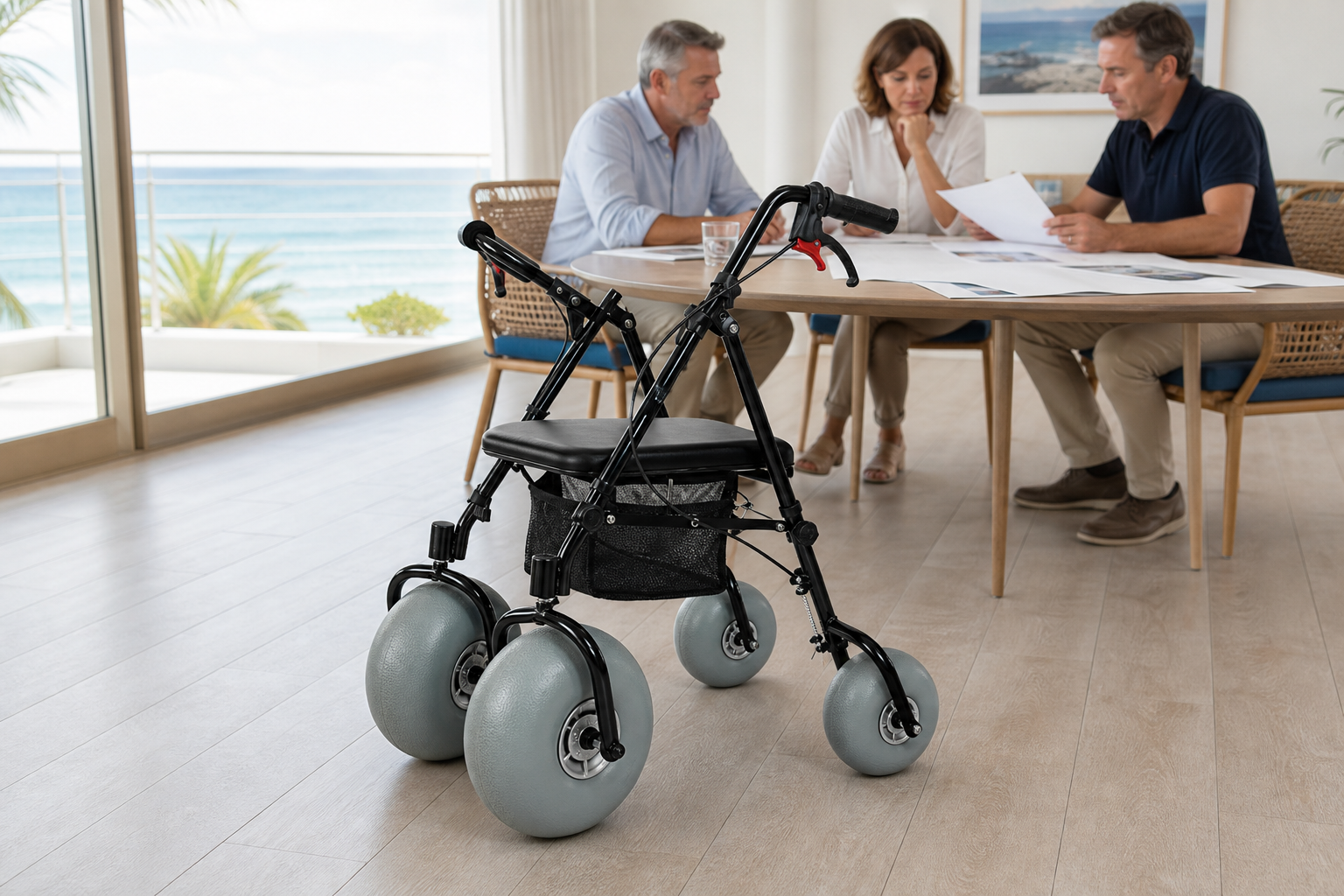
A beach walker buyer should compare route fit, product documentation, replacement-part access, packaging, staff training materials, communication, and after-sale response. Price alone cannot show how a supplier will handle a missing part, damaged shipment, setup question, or seasonal fleet review. Procurement teams can use the site’s supplier selection overview as a starting structure while requesting written answers for their own project.
Questions That Reveal Service Fit
Keep this in view: clear supplier answers are easier to compare than broad promises. Ask each vendor for the same documents and response format.
- Request current setup, inspection, cleaning, and storage guidance.
- Ask how media, spare parts, and packaging are identified.
- Confirm who handles technical questions after delivery.
- Compare lead communication without assuming stock or delivery dates.
Key Takeaway: A beach walker purchase works better when procurement scores product fit and service workflow together.
| Review area | Evidence to request |
|---|---|
| Route fit | Product details tied to intended surfaces |
| Documentation | Current operating and care guidance |
| Parts | Identification and ordering process |
| Service | Named communication path |
Use one scorecard across suppliers so the buying discussion stays tied to daily program work.
Closing Note: A safer soft-sand program comes from matching equipment, route, staff, guest fit, inspection, and care. If your team is planning a new fleet or reviewing an existing route, contact us today with your site conditions and operating goals.
Which Beach Walker Questions Do Buyers Ask Most?
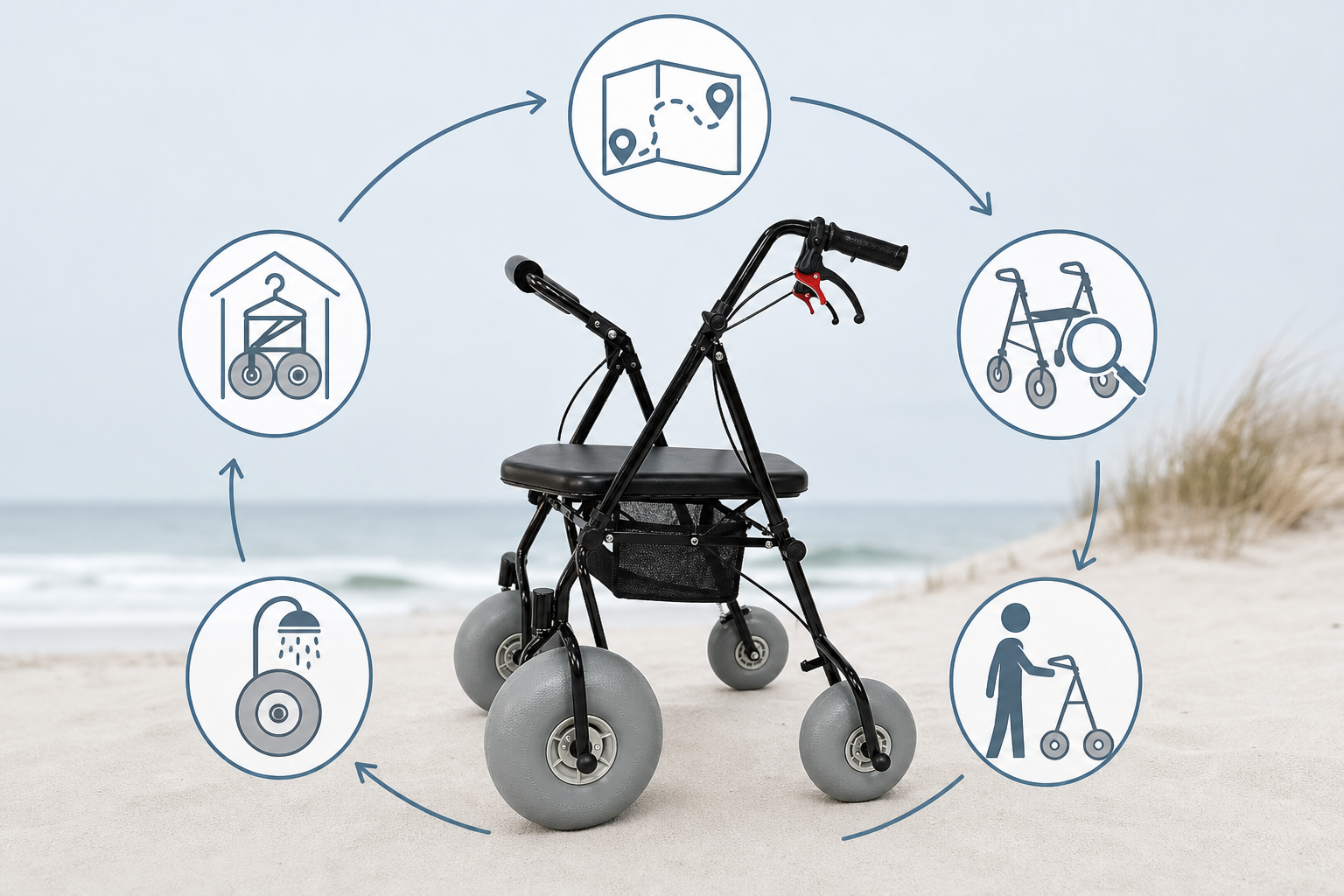
Beach walker buyers usually ask about route fit, staffing, rest use, cleaning, and selection evidence before they commit to a program.
Can I use a beach walker on every type of sand? No. Wide balloon wheels can work well on managed soft-sand routes, but deep ruts, steep side slopes, debris, or unstable surface changes may call for a different route or device.
What’s the best starting point for staff training? A firm-ground orientation is the best starting point. Staff can practice inspection, fit, starts, stops, broad turns, rest cues, and return procedures before adding loose sand.
How do I know if our route is wide enough? Check whether the guest, device, and attendant can move without brushing obstacles or blocking other users. A site walk during normal operating conditions gives the most useful answer.
Can I use the seat anywhere along the route? No. The seat should be used only where staff have confirmed firm, level ground and enough surrounding space for controlled positioning.
What’s the best way to compare beach walker suppliers? Use one written scorecard covering route fit, documentation, parts, packaging, training materials, and after-sale communication.