
Beach Mat Route Planning planning starts with a named route, a clear operating purpose and evidence that matches local conditions. The U.S. Access Board outdoor developed areas guide provides route-planning context, while responsible local authorities still decide what applies to each beach.
Related planning resources cover beach mat maintenance and beach accessibility site assessment.
Also, staff should keep one dated site record. This record should name one decision owner. Short notes make handoffs easier to audit.
An accessibility beach mat creates a better route when planners connect an accessible arrival point with a useful beach destination through a mapped, maintained, and clearly managed path. Buying a roll of matting does not solve gaps at parking, ramps, boardwalk edges, loose sand, dunes, seating areas, or the seasonal shoreline. Public agencies, resorts, event teams, and nonprofit operators need a route plan that covers site review, product fit, anchoring, installation, inspections, removal, and storage. This article explains how to plan an accessibility beach mat without relying on invented performance data or a one-size-fits-all layout. Product instructions, local access rules, environmental controls, permits, and qualified site review should guide every final placement decision.
1. What should a beach mat route planning plan cover?
Use this beach mat route planning record to compare route limits, inspection duties and supplier evidence before approving wider deployment.
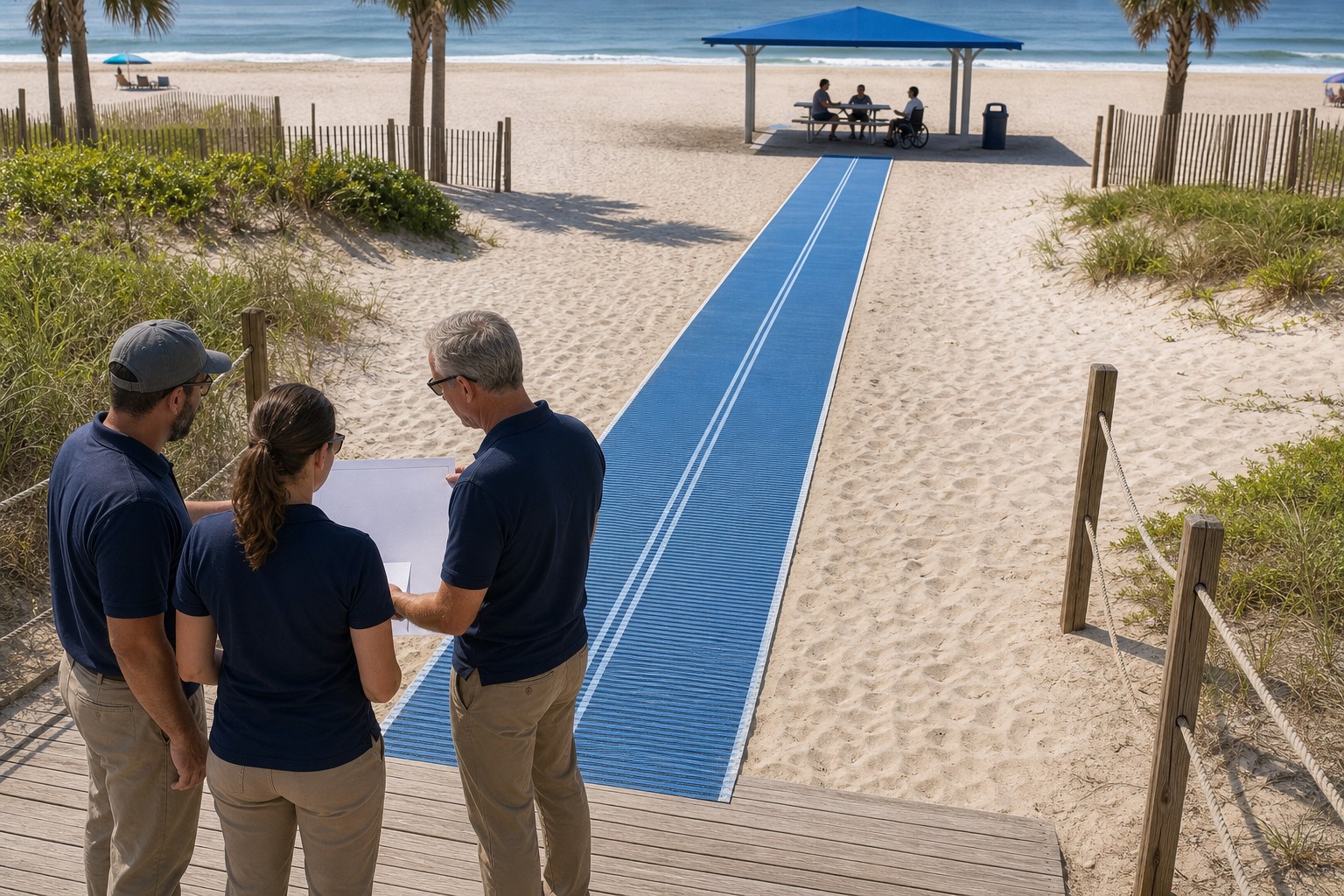
However, An accessibility beach mat route should solve a specific gap between an existing accessible path and a beach activity people want to reach. Planners need to name the users, origin, destination, operating season, and daily management responsibility. A vague goal such as “make the beach accessible” is hard to measure and may leave a mat ending at a location with no shade, seating, turning space, or service.
Meanwhile, staff can record this check before opening the route.
Write a route purpose statement
Here’s the practical point: describe the trip a visitor should be able to make. The public beach accessibility application page can help teams frame discussions around resorts, municipalities, and managed recreation sites.
- Name the route origin and intended beach destination.
- List mobility devices and visitor groups considered in the site review.
- State the season, event period, or daily service window.
- Assign responsibility for opening, inspection, and closure.
Key Takeaway: A route purpose statement keeps planning tied to a real visitor trip.
| Planning question | Route decision |
|---|---|
| Where does the trip begin? | Accessible arrival point |
| What should visitors reach? | Named beach activity or zone |
| Who manages the route? | Assigned operating team |
Use the purpose statement to screen every later layout choice.
How should planners select route start and end points?
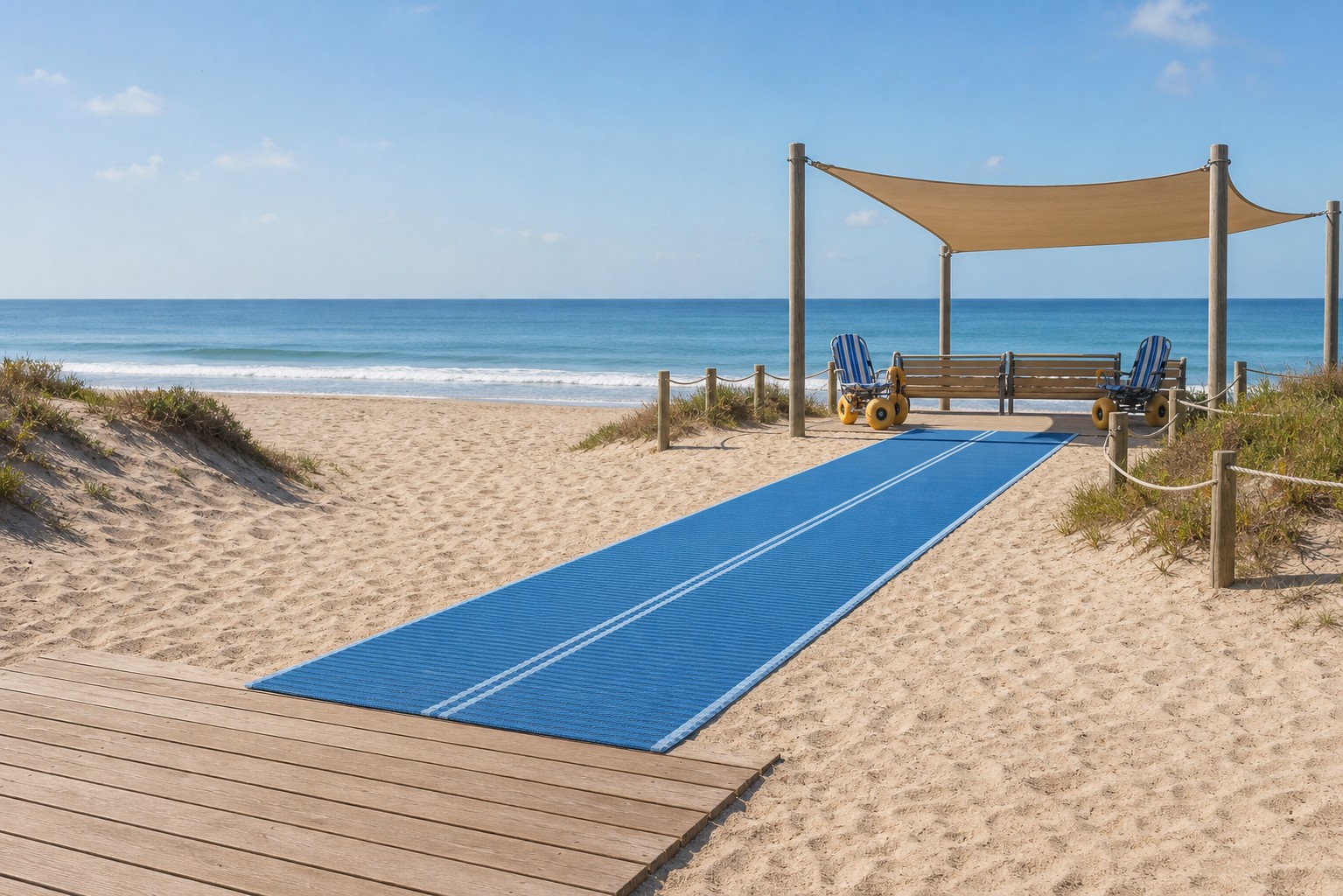
For example, Planners should select accessibility beach mat start and end points that connect usable infrastructure with a stable, meaningful destination. The start should not create a lip, gap, blocked drain, or conflict with public movement. The end should support the intended activity while respecting tides, protected areas, maintenance access, and product placement guidance.
Meanwhile, the duty lead can keep this result with the site log.
Map the full visitor trip
A useful checkpoint: walk from accessible parking or reception through every doorway, curb, ramp, boardwalk, and sand edge. A mat cannot repair an inaccessible gap that appears before its start. At the destination, review turning, seating, shade, companion space, and a safe return route.
- Mark every surface change before the mat begins.
- Photograph and measure connection points for supplier review.
- Identify a useful destination that remains manageable.
- Keep emergency, maintenance, and public circulation routes open.
Key Takeaway: Strong endpoints connect the mat with infrastructure and a managed beach activity.
| Endpoint | Review focus |
|---|---|
| Start | Flush connection and clear approach |
| End | Useful destination and return space |
| Nearby area | Circulation, services, and closures |
A good line on a map must also work as a complete visitor trip.
What surface and slope conditions require review?
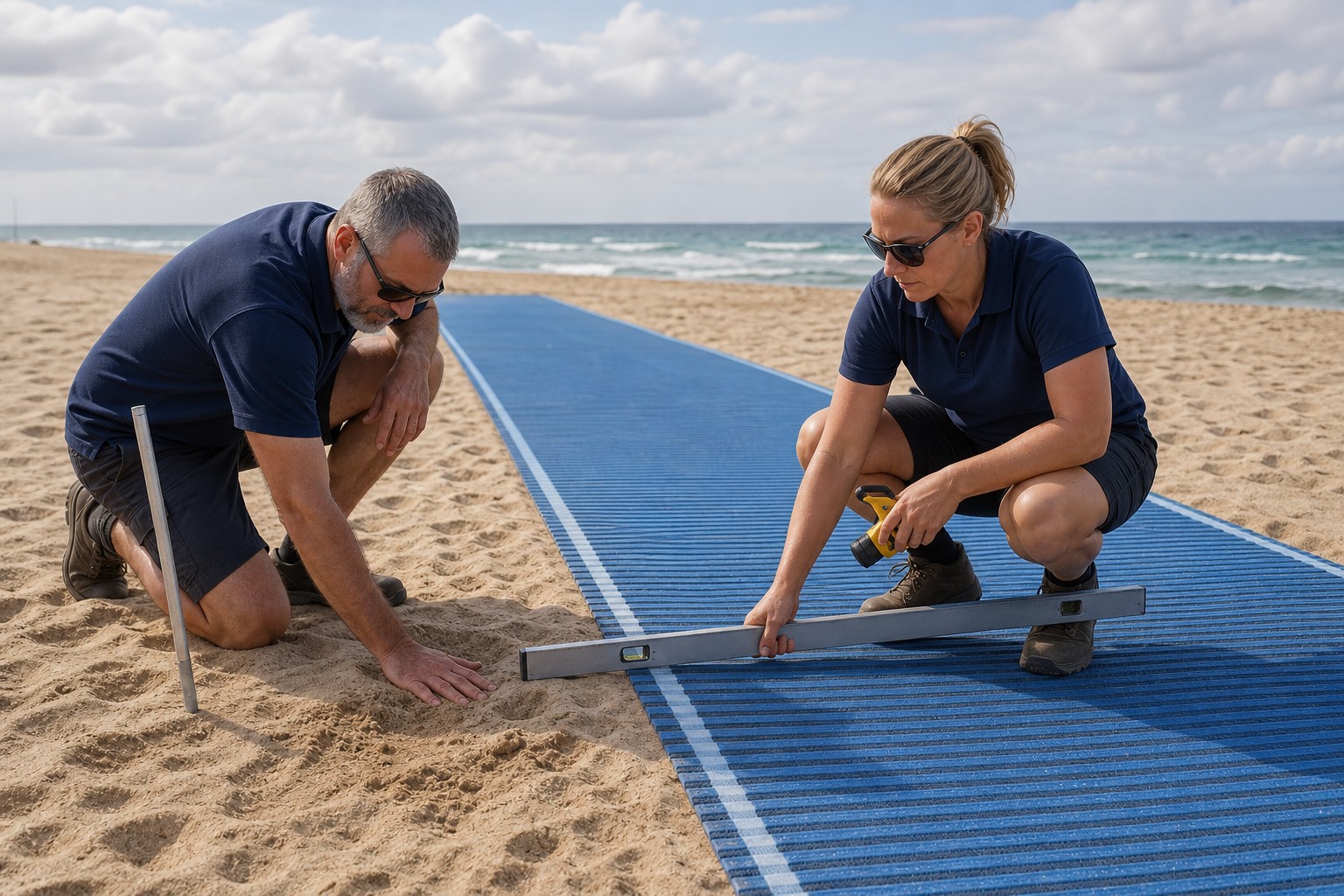
Meanwhile, Accessibility beach mat planning requires review of sand firmness, slope changes, washouts, drainage, buried debris, vehicle tracks, and connection surfaces. Conditions may differ across the route and may change after wind, rain, tide movement, grooming, or heavy use. Product documentation and a qualified site review should determine which preparation method fits each segment.
In practice, one short record makes the next handoff easier.
Divide the route into condition zones
The working rule is simple: do not describe an entire beach with one surface note. Divide the path into short zones such as boardwalk edge, dry loose sand, compact sand, dune crossing, and managed destination. Record what changes, how often staff inspect it, and what condition closes the route.
- Note soft pockets, cross slopes, ruts, and low drainage areas.
- Review how beach grooming or service vehicles cross the route.
- Mark places where sand may build on top of the mat.
- Set a clear inspection and closure response for each zone.
Key Takeaway: Condition zones turn a changing beach into manageable inspection areas.
| Zone record | Example field |
|---|---|
| Surface | Loose, compact, mixed, or hard connection |
| Change trigger | Wind, rain, tide, grooming, traffic |
| Staff response | Clear, repair, redirect, or close |
Zone records help crews focus attention where change is most likely.
How should teams plan route width and passing space?
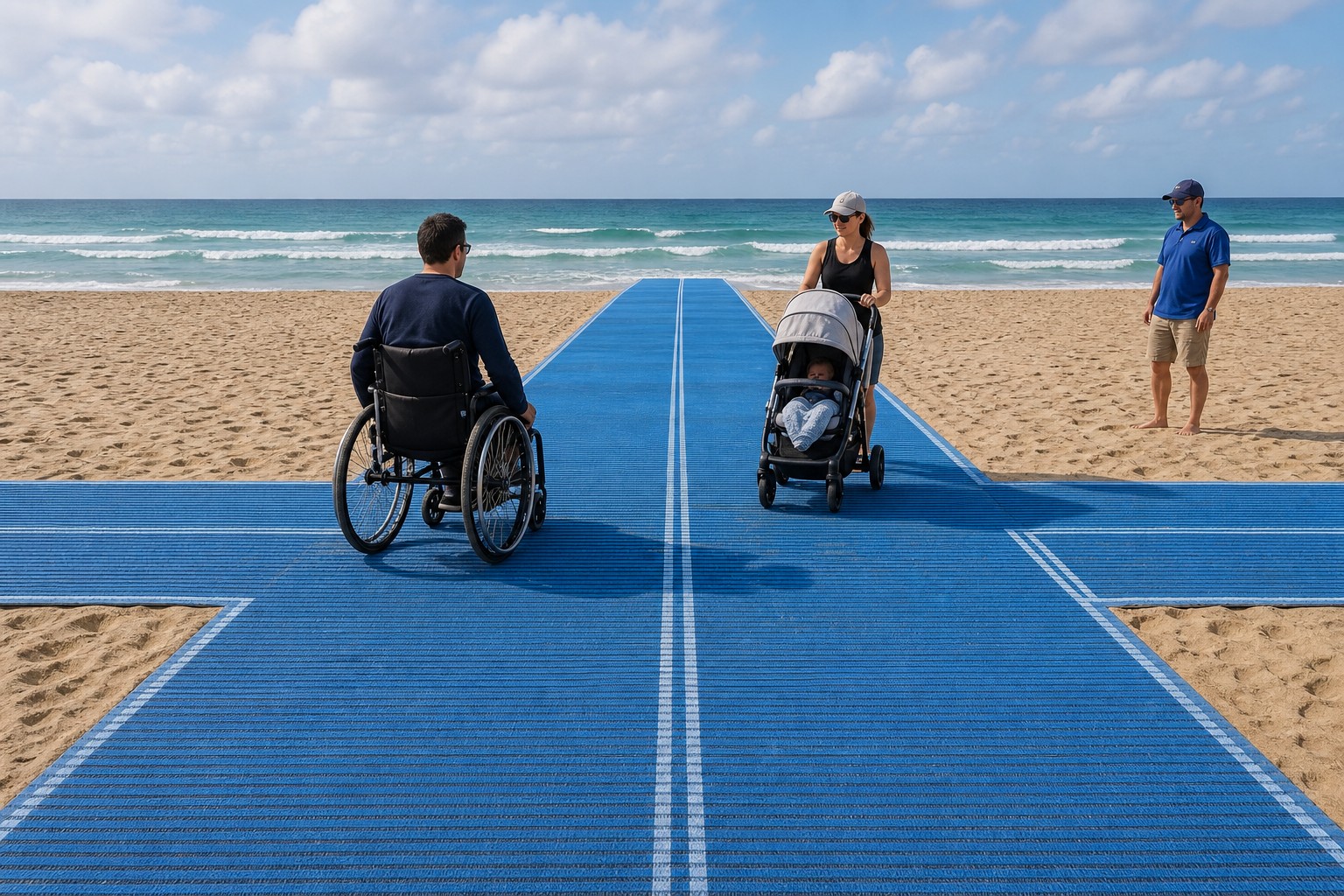
As a result, Teams should plan accessibility beach mat width and passing space using applicable local requirements, product specifications, expected mobility devices, companion movement, and site constraints. A generic width copied from another project may not match local rules or the selected mat. Planners should document the governing requirement and test the layout with representative devices before opening.
As a result, crews can see whether work may continue.
Design for movement rather than minimum material
The key question: can visitors enter, move, turn where planned, pass when needed, and return without leaving the managed route? Review bottlenecks at gates, boardwalk connections, furniture, signs, and the destination. Supplier drawings should match the actual layout rather than a sales illustration.
- Record the local rule or project criterion used for width.
- Provide turning or passing areas where the route plan calls for them.
- Keep edges visible and free from furniture or stored gear.
- Test planned movements before public opening.
Key Takeaway: Route geometry should support the planned trip, not merely cover a strip of sand.
| Movement need | Layout response |
|---|---|
| Entry | Clear connection without a blocking edge |
| Passing | Planned space at managed locations |
| Turning | Defined area at the destination |
Movement testing gives planners evidence that drawings alone cannot provide.
How should planners respond to dunes and shifting shorelines?
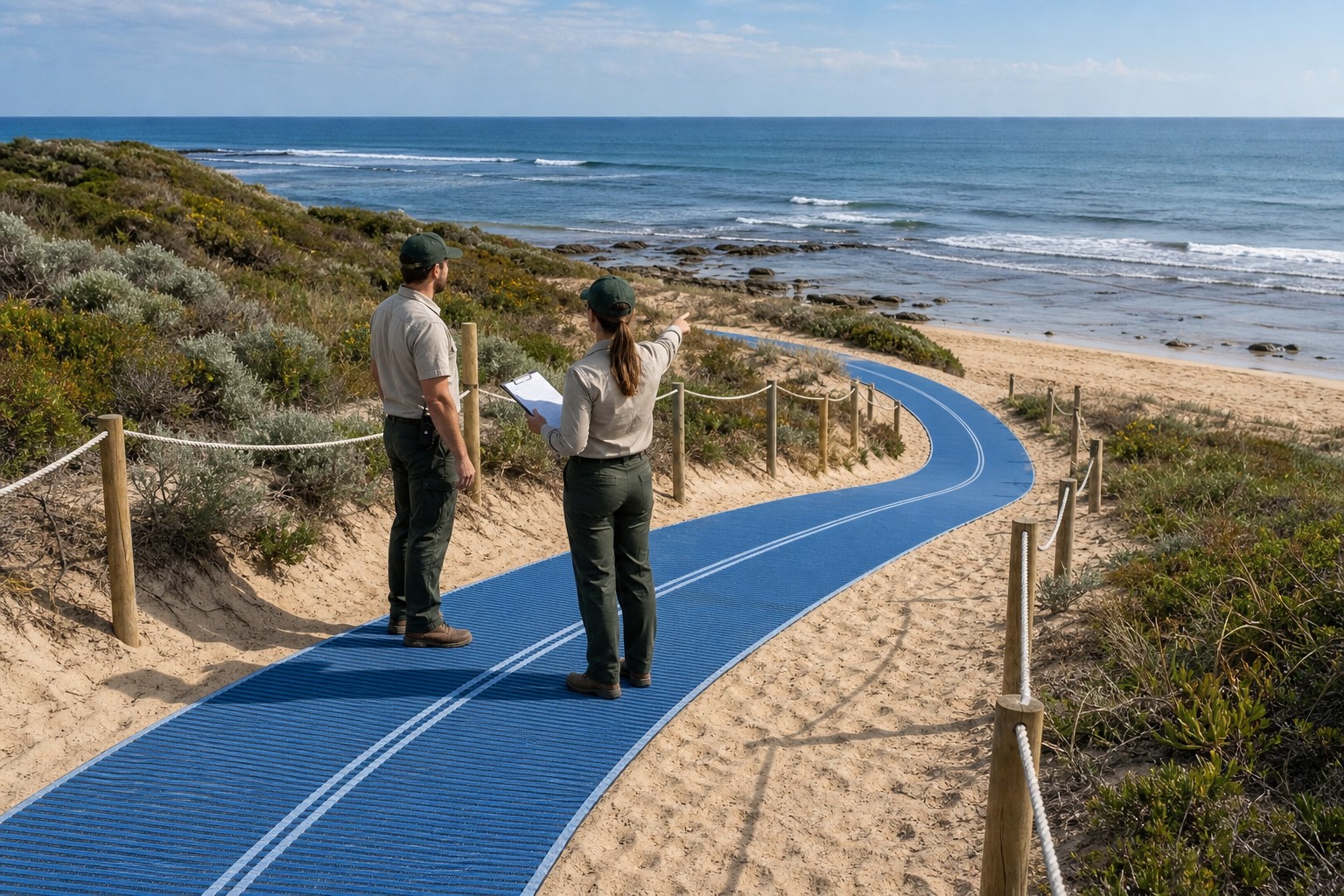
In practice, Planners should route an accessibility beach mat around protected dunes and manage shoreline change through local environmental guidance, permits, site monitoring, and movable endpoints where permitted. A direct path may not be allowed or sustainable. The plan should state who may adjust the route, what approval is needed, and which conditions require removal or closure.
Still, unresolved evidence should remain visible to the next shift.
Build change into the seasonal plan
Here’s what crews need: a marked base layout plus approved adjustment rules. The beach mat installation project shows how seasonal, event, and longer-term operating models can frame project discussions. Local authorities and environmental specialists remain the source for site decisions.
- Mark protected or no-entry areas on crew drawings.
- Track shoreline and sand changes at defined inspection points.
- Set approved adjustment limits and escalation contacts.
- Plan removal before forecast conditions exceed site controls.
Key Takeaway: A coastal route needs a managed change process rather than an informal daily relocation.
| Coastal change | Planned response |
|---|---|
| Sand buildup | Clear under approved maintenance method |
| Route edge movement | Inspect and correct within approved limits |
| Protected-area conflict | Close and contact the responsible authority |
Seasonal resilience comes from clear authority and documented limits.
What anchoring plan fits seasonal or event use?

Still, An accessibility beach mat anchoring plan should follow the selected product instructions, local approvals, soil or sand conditions, route duration, edge treatment, and expected site exposure. Event use may require a different approved method from a seasonal installation. Crews should never improvise stakes, fasteners, or buried anchors that the supplier and site authority have not accepted.
Then, the named owner can close or escalate the issue.
Match hardware with documented conditions
A practical safeguard: ask the supplier to identify every approved connector, anchor, edge part, and tool in writing. Map where each component belongs. The installation record should also show which crew member checked tension, alignment, seams, and exposed hardware.
- Use only documented components and placement methods.
- Keep a parts count for each route segment.
- Inspect seams, edges, anchors, and trip points after setup.
- Define the condition that triggers tightening, repair, or closure.
Key Takeaway: Anchoring is a documented product-and-site decision, not a field improvisation.
| Anchoring record | Required detail |
|---|---|
| Component | Supplier name or part reference |
| Location | Route segment and placement point |
| Check | Alignment, security, and exposed edges |
Hardware records support consistent setup across crews and events.
How should crews stage installation and removal?
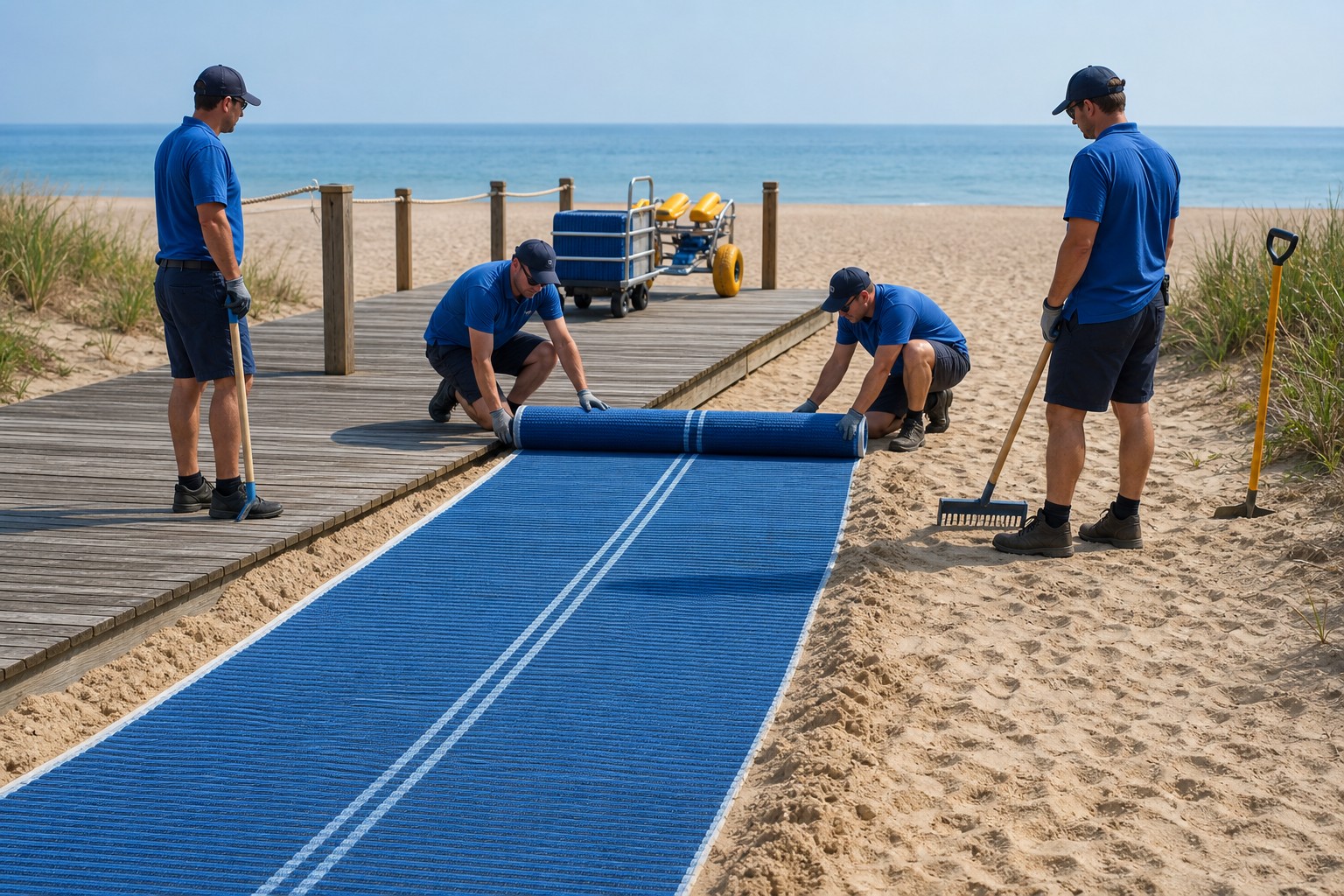
Then, Crews should stage accessibility beach mat installation and removal through a sequenced work zone, assigned roles, correct handling equipment, protected public routes, and a final walk-through. The plan should cover delivery, unloading, route preparation, rollout, connection, anchoring, inspection, opening, closure, cleaning, and packing.
Even so, local authority decisions remain separate from product claims.
Use a crew sequence and hold points
The useful rhythm: pause at defined hold points before the next task begins. A route should not open until connections, edges, alignment, anchors, signage, and circulation have passed the recorded check. Teams can compare logistics topics with this mat transport and event deployment article.
- Control the work zone and keep the public outside it.
- Move rolls or panels with the supplier-approved method.
- Inspect each completed segment before extending the route.
- Photograph the approved layout before opening.
Key Takeaway: Hold points make installation quality visible before visitors enter the route.
| Work stage | Hold-point check |
|---|---|
| Connection | Flush, aligned, and unobstructed |
| Mid-route | Seams, edges, and circulation |
| Destination | Turning space, signs, and closure limits |
A staged sequence helps different crews produce the same route.
What inspection and cleaning routine supports daily use?
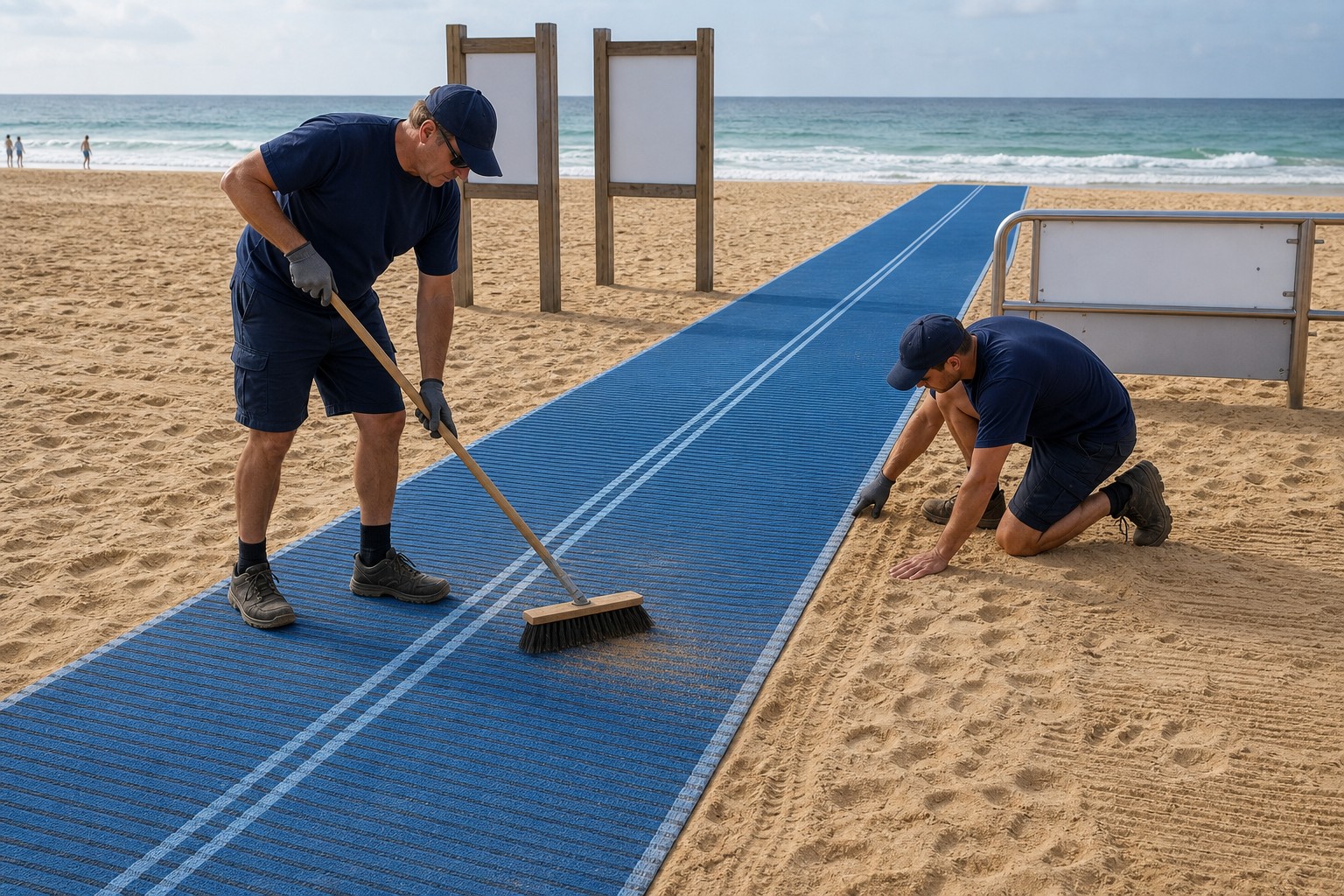
Even so, An accessibility beach mat needs an inspection and cleaning routine covering connections, edges, seams, anchors, surface debris, sand buildup, drainage, damage, route obstructions, and destination space. Frequency should match local conditions and the operating plan. Staff also need authority to close a segment when a defect cannot be corrected at once.
At that point, staff can update visitors with a dated message.
Connect checks with a visible status
Here’s the service rule: visitors should never have to guess whether a route is open. Use opening, periodic, and closing checks that feed one clear status at reception, the beach entrance, and online where applicable. Cleaning methods must follow product guidance and local environmental rules.
- Clear approved debris and sand buildup without damaging material.
- Check for lifted edges, loose seams, exposed hardware, or tears.
- Keep wheelchairs, carts, signs, and furniture off the route.
- Tag and isolate damaged sections before repair.
Key Takeaway: Inspection records should lead directly to an open, restricted, or closed route status.
| Check result | Staff action |
|---|---|
| Pass | Record and open |
| Correctable issue | Fix, recheck, then open |
| Unresolved issue | Restrict or close under the plan |
Status communication is part of maintenance rather than a separate task.
How should a mat route connect with beach wheelchairs?
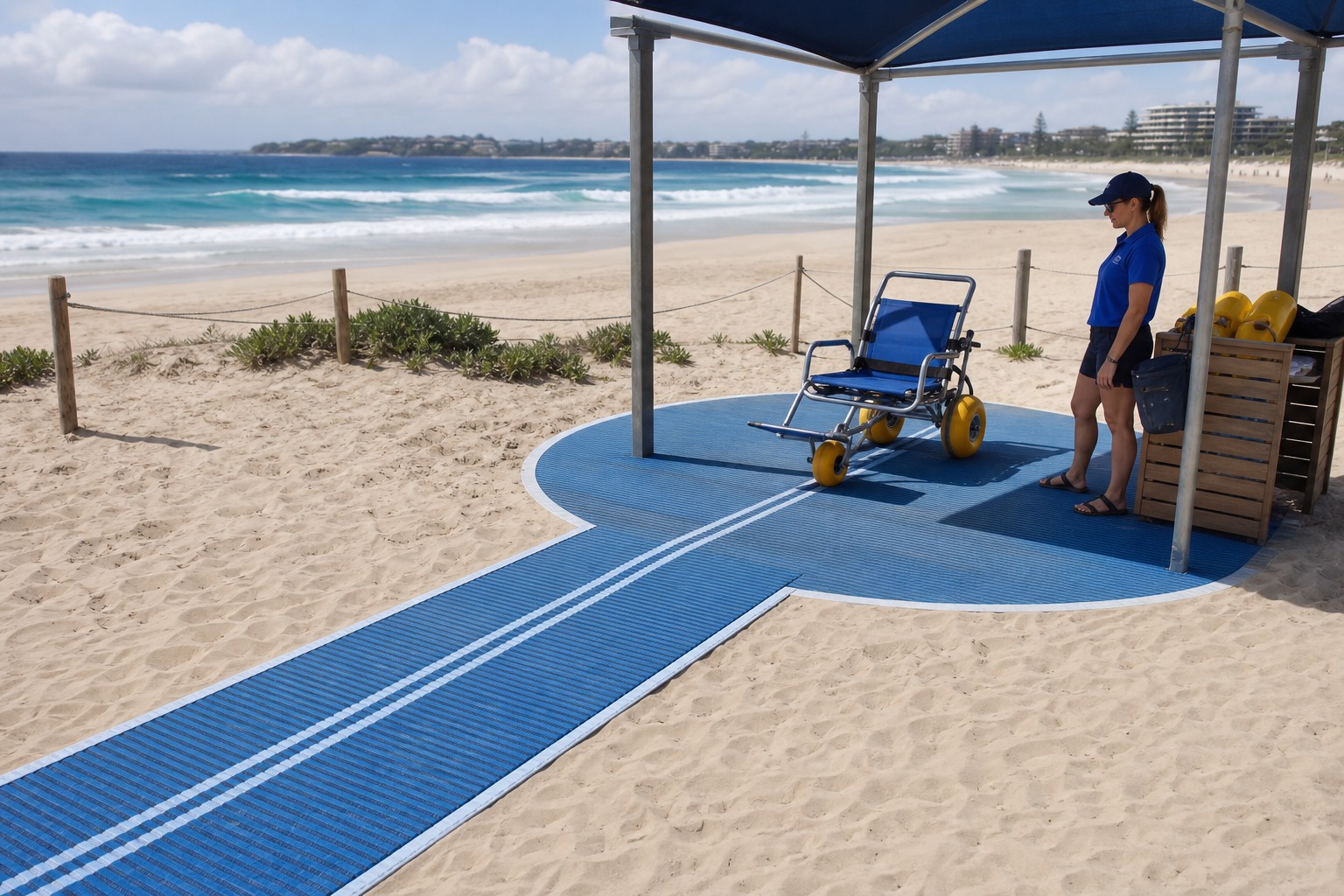
At that point, An accessibility beach mat route should connect with beach wheelchair services through a clear transfer or pickup point, compatible route geometry, shared operating hours, and coordinated staff communication. A mat may support many mobility devices, while a beach wheelchair may continue beyond the route under its own approved use. The boundary between those services needs a planned handoff.
For that reason, the review should end with one named action.
Design one joined mobility service
A strong operating question: what happens when a visitor reaches the mat endpoint? Provide seating, turning, companion space, booking information, and staff contact where the plan requires them. Keep stored chairs and waiting guests from blocking the route.
- Mark wheelchair pickup, return, and waiting locations.
- Align service hours and route-status messages.
- Train staff on the handoff between personal devices and site equipment.
- Record route or equipment closures in one shared channel.
Key Takeaway: The mat endpoint should connect visitors with a useful service rather than an unexplained stop.
| Handoff element | Planning response |
|---|---|
| Pickup | Signed and clear of circulation |
| Transfer | Managed space under local procedures |
| Return | Staff contact and storage path |
Joined planning makes mat and chair services easier to understand.
What should buyers compare before ordering a beach mat?
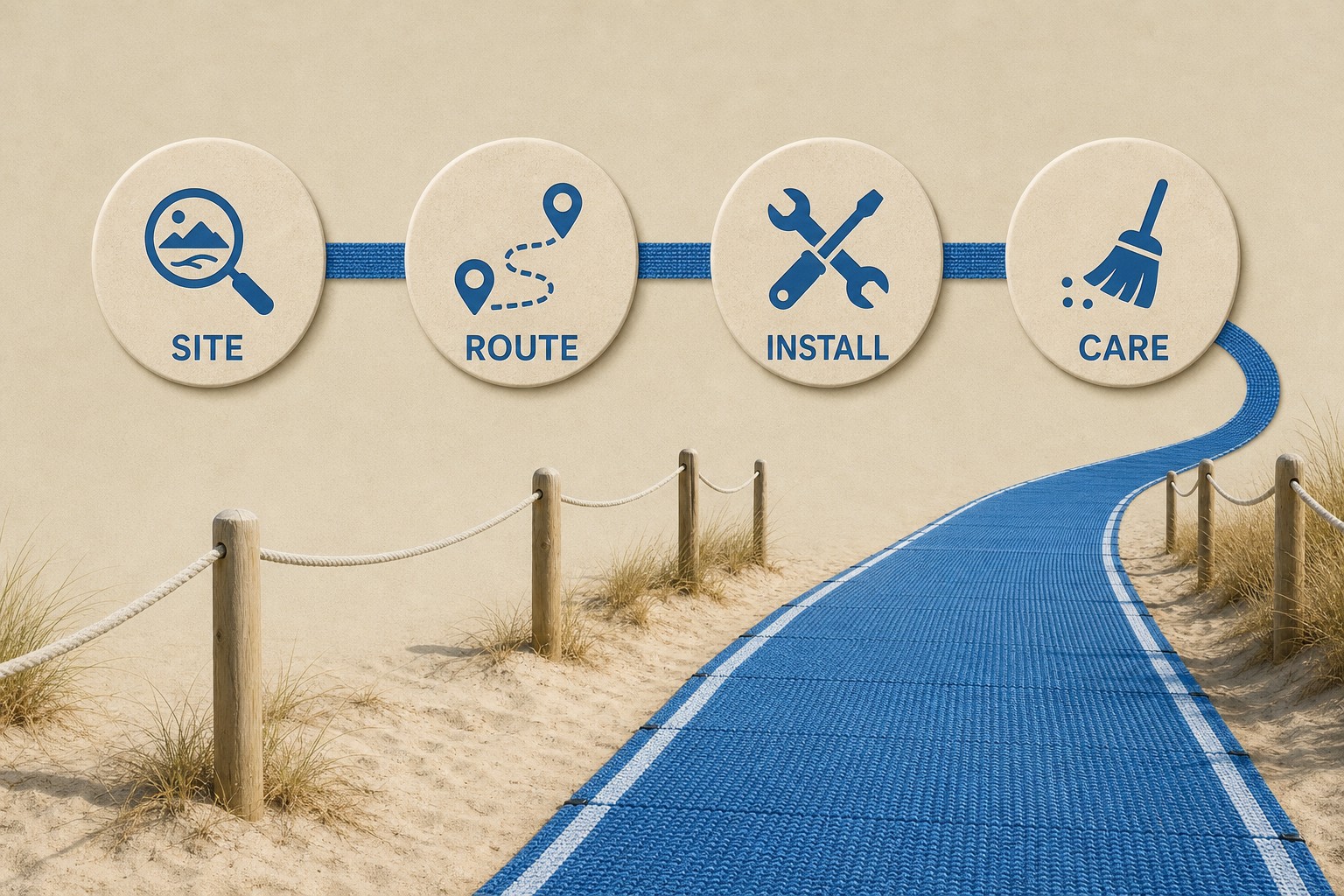
For that reason, Buyers should compare an accessibility beach mat against route dimensions, surface zones, installation model, approved anchoring, crew capacity, storage, cleaning, repair, parts, documentation, and supplier support. Product color or a single site photo cannot prove fit. Procurement should begin with the mapped route and written operating plan.
However, teams should retest the route after material changes.
Request evidence for the whole ownership cycle
The buying discipline: leave any unsupported field blank until the supplier answers in writing. Ask for product specifications, approved use, connection and anchor details, installation guidance, care methods, packing dimensions, replacement sections, warranty terms, and support contacts.
- Match material quantities with the approved route drawing.
- Compare handling and storage needs with crew resources.
- Review repair methods and availability of matching sections.
- Confirm documentation and training materials before award.
Key Takeaway: A defensible purchase links supplier evidence with a specific route and operating model.
| Comparison area | Supplier evidence |
|---|---|
| Route fit | Dimensions, connections, approved layout |
| Field work | Installation, anchors, cleaning, repair |
| Ownership | Packing, parts, warranty, support |
This flow turns a product choice into a traceable route decision.
Closing note: A useful accessibility beach mat route starts with a real visitor trip and continues through endpoints, surface zones, movement space, coastal change, anchoring, crew staging, inspections, wheelchair handoffs, and procurement evidence. Bring operations, facilities, access advisers, environmental contacts, and supplier documentation into one route review. For help discussing product options around your mapped site, contact us with the route length, surface notes, operating period, storage plan, and installation model.
FAQ
Can I place an accessibility beach mat anywhere on the sand?
No. Product instructions, local access rules, environmental controls, permits, protected areas, shoreline conditions, and site management all shape placement.
Additional operating check 20
What’s the best endpoint for an accessibility beach mat?
The best endpoint supports a named activity and a managed return. It should provide the planned turning, companion, seating, or service space without entering an unapproved coastal zone.
How do I know if my route is wide enough?
Check applicable local requirements and product specifications, then test planned movements with representative mobility devices before opening.
Can I leave a seasonal mat in place during severe weather?
Only if local controls and product guidance permit it. Your operating plan should state forecast triggers, removal responsibility, and route closure communication.
What’s the best way to compare mat suppliers?
Use the same route drawing and ownership checklist for every supplier. Compare documented fit, installation, anchors, cleaning, repair, packing, parts, warranty, and support.