
A lightweight beach wheelchair can make fleet work easier by reducing awkward handling steps, simplifying vehicle loading, and giving mobile teams a repeatable setup routine across coastal sites. A resort or rental operator may move equipment between storage, reception, vehicles, boardwalks, and managed sand zones several times per shift. Those handoffs can become slow when a chair has no defined lifting points, pack plan, or inspection record.
A purpose-built lightweight beach wheelchair gives buyers a product category designed around portable beach access, yet sound operations still depend on staff roles, vehicle space, route fit, guest setup, cleaning, and supplier service. This guide focuses on those B2B decisions. It does not assume a weight figure, certification, clinical outcome, or service life that has not been verified. Instead, it shows how a coastal team can turn product characteristics into a clear fleet workflow from storage bay through return inspection.
Before finalizing this workflow, review beach walker alongside all-terrain beach wheelchair.
For broader destination-level context, consult the UN Tourism accessibility publications and guidelines. Apply local requirements and current product documents to the specific project.
Why Does Low Carry Weight Change Fleet Work?
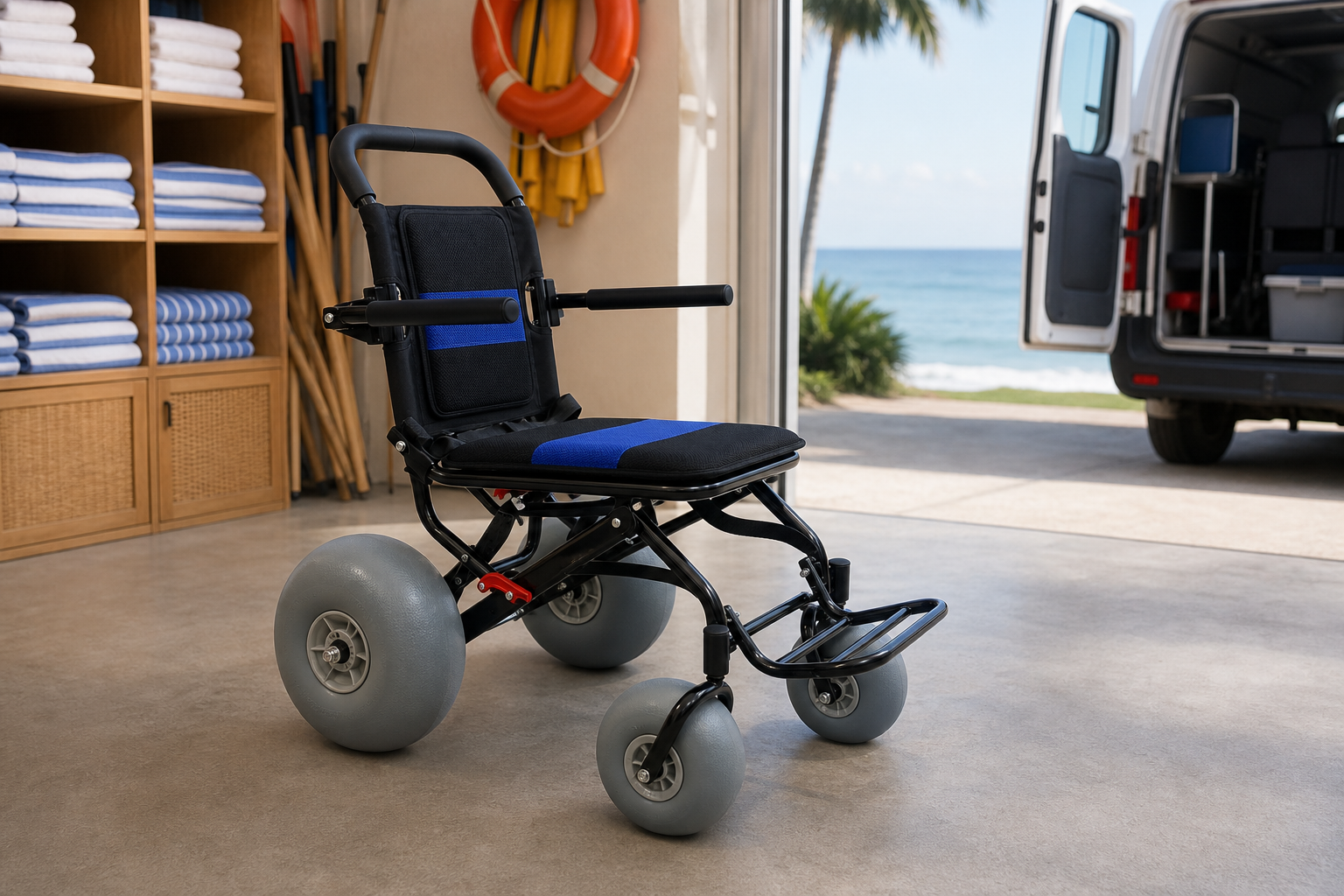
A lightweight beach wheelchair changes fleet work by making short equipment moves easier to plan around staff, carts, doorways, and vehicle bays. Low carry weight alone does not make every lift suitable. Teams still need clear grip points, unobstructed paths, agreed staffing, and a rule that stops movement when a staff member cannot control the chair. The operational gain comes from fewer improvised handoffs rather than from one product number.
Handling as a Defined Task
Here’s the practical point: a chair can be portable while still requiring thoughtful movement. Staff should know who leads, where parts are held, and where the chair will be set down before it leaves storage.
- Clear the route between rack, cart, doorway, and vehicle.
- Identify stable frame areas shown in product guidance.
- Keep loose accessories secured before movement.
- Pause when floor conditions, crowding, or reach feel uncertain.
Key Takeaway: A lightweight beach wheelchair makes handling more predictable when each move has a destination, a clear path, and an agreed staff role.
| Handling stage | Team action |
|---|---|
| Storage pickup | Confirm ready status and clear floor space |
| Short carry | Use approved frame areas and steady pace |
| Set-down | Choose a level surface with wheel clearance |
| Handoff | Share condition and accessory status |
Use the stages to remove rushed decisions from routine equipment movement.
How Should Teams Plan Vehicle Loading?
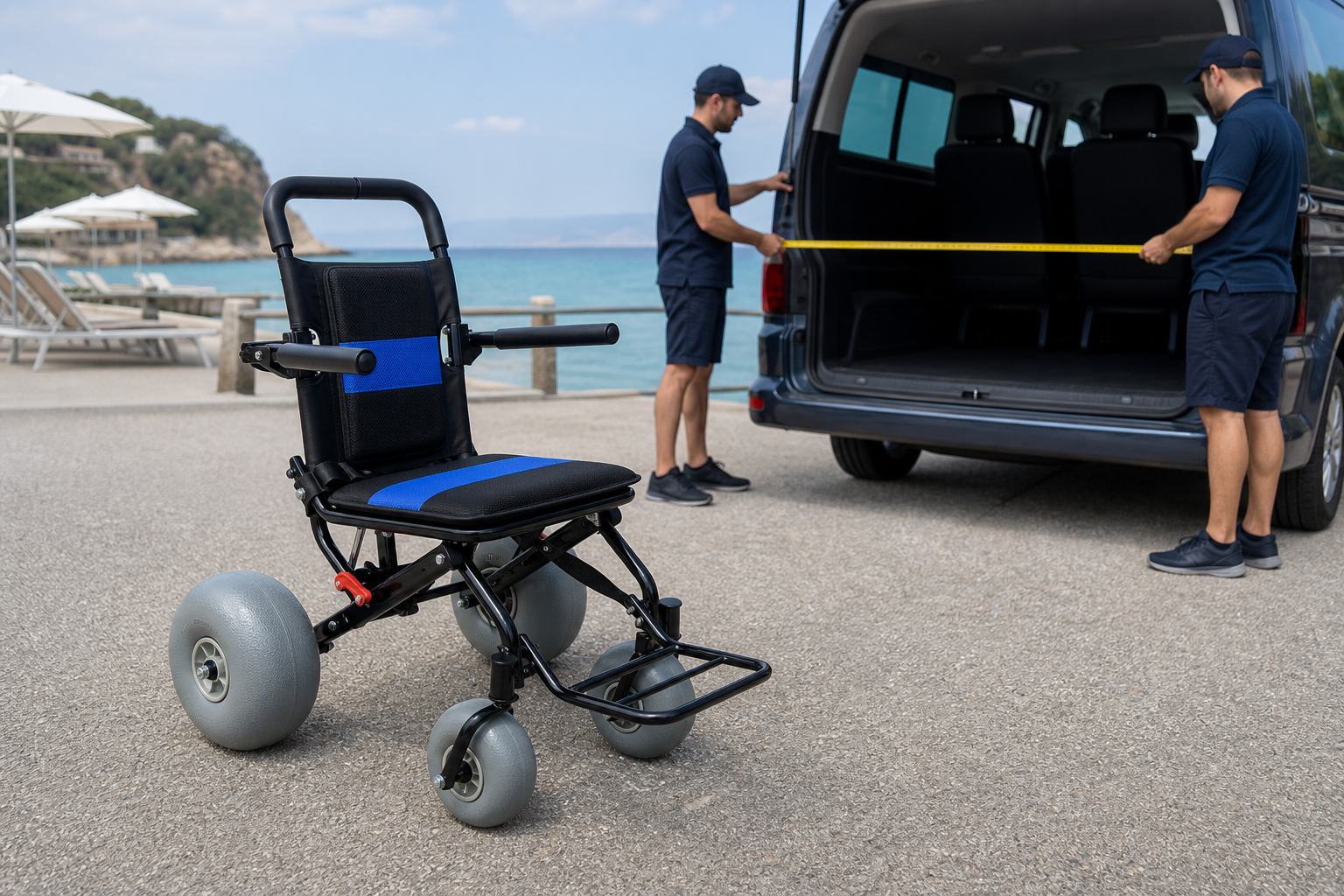
A lightweight beach wheelchair should be loaded through a written pack plan that covers cargo dimensions, access path, chair orientation, wheel clearance, restraint points, and unload order. Staff should measure the actual vehicle and packed product rather than relying on a generic “portable” label. A related lightweight travel project shows how transport planning can sit within a broader access service.
A Pack Plan That Works Both Ways
Why does that matter? A chair that fits into a vehicle may still create delays if staff must remove unrelated gear before unloading it. Pack order should follow route order.
- Place the chair where staff can reach it without climbing over equipment.
- Protect wheels, upholstery, frame joints, and accessories from contact damage.
- Keep inspection tools and cleaning supplies in a separate secured container.
- Leave the return space available for a chair that may be damp or held for review.
Key Takeaway: Vehicle fit depends on measured space, safe restraint, and unload order, not on a portability claim alone.
| Pack question | Written answer |
|---|---|
| Where does the chair sit? | Defined cargo position |
| What is removed or folded? | Only documented components |
| How is movement controlled? | Approved restraint method |
| What unloads before the chair? | Route-ready items only |
Use the pack plan during training and after any vehicle or product change.
Which Folding Features Reduce Setup Time?
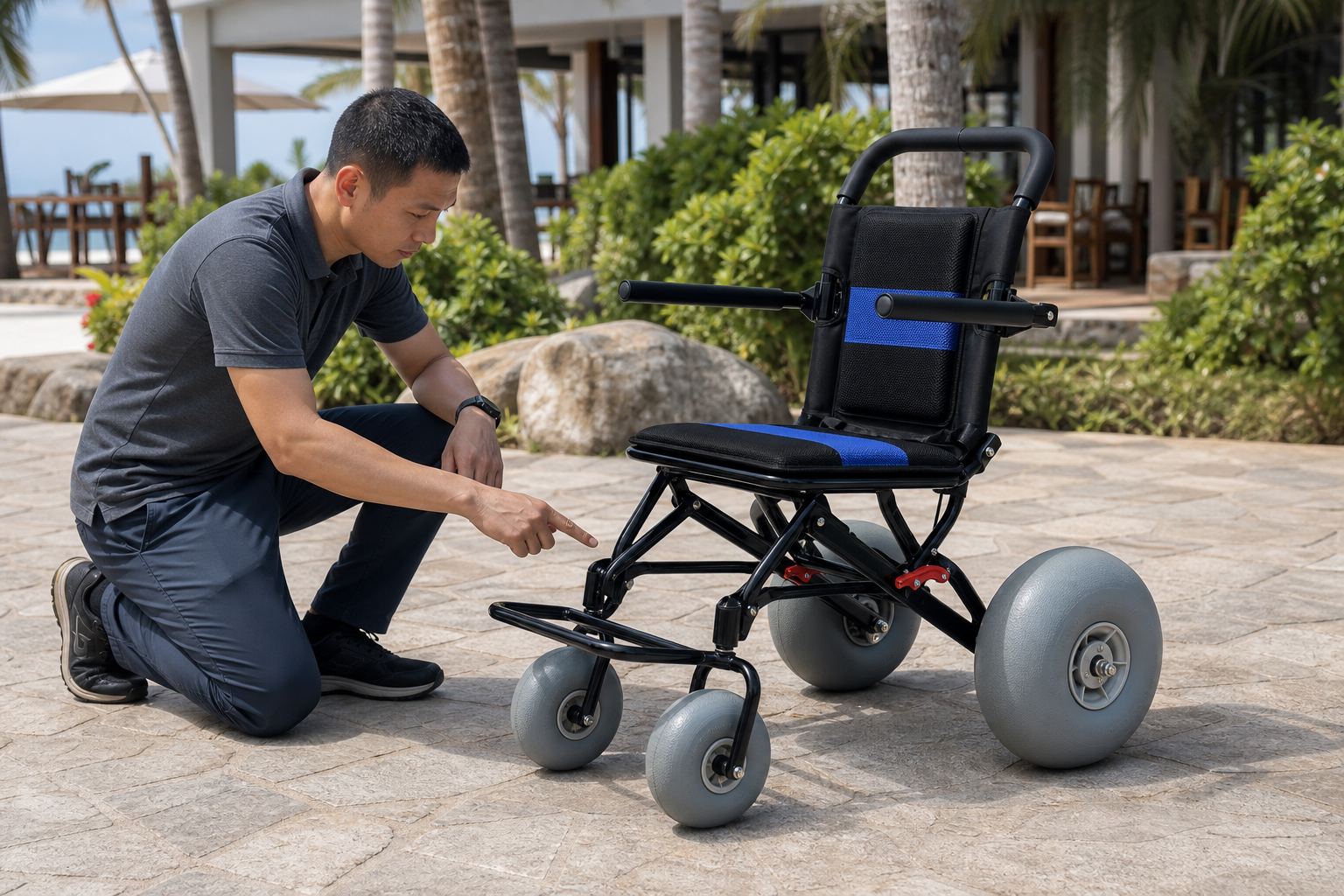
A lightweight beach wheelchair reduces setup time when folding joints, removable parts, and locking points are visible, easy to check, and documented in a short sequence. Fast setup should never mean skipping a frame check. Staff need to see that each joint sits in its intended operating position, each wheel or accessory remains secure, and no strap or fabric panel is trapped.
Setup Without Guesswork
The useful detail is this: the best setup sequence uses the same order at storage, vehicle, and beach staging areas. Repetition makes unusual resistance or misalignment easier to notice.
- Open the frame only through documented movement points.
- Attach or position parts in the order stated by product guidance.
- Check wheel seating, footrest area, handles, seat, and visible fasteners.
- Move the chair a short distance on firm ground before guest use.
Key Takeaway: A lightweight beach wheelchair saves staff time when the folding sequence remains simple, visible, and identical across locations.
| Setup point | Check |
|---|---|
| Frame | Fully open and stable |
| Wheels | Secure and unobstructed |
| Seat and back | Clear, clean, and correctly placed |
| Handles and footrest | Ready for the planned operating position |
Use this table beside product instructions rather than replacing them.
What Route Conditions Suit a Lightweight Model?
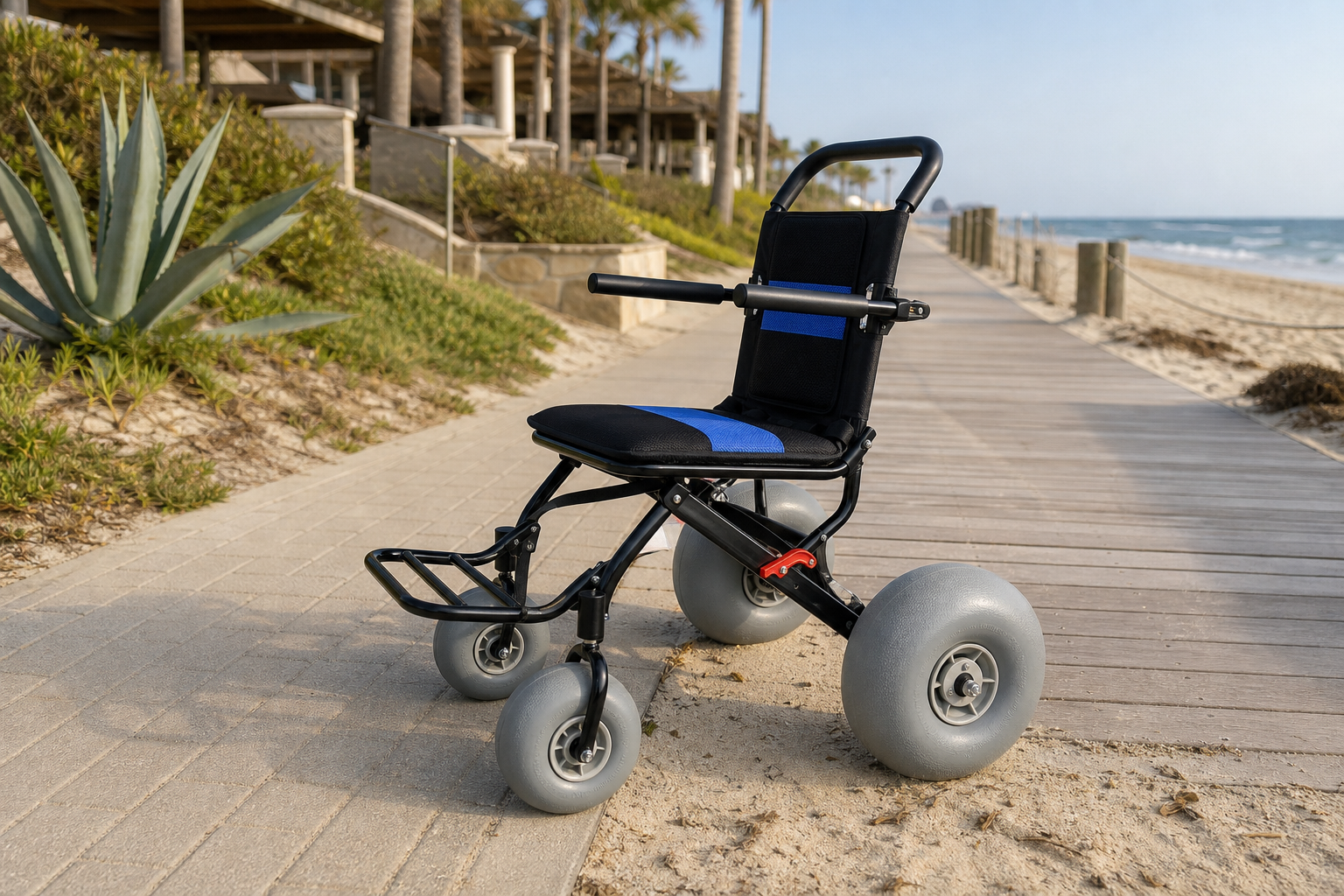
A lightweight beach wheelchair suits routes where staff can move from a firm staging area through boardwalks, managed surface changes, and planned sand corridors without sharp side slopes or blocked turning space. Portability does not automatically mean the chair fits every beach surface. The portable beach wheelchair application can help operators place product choice within a site-specific route plan.
Match the Chair to the Daily Route
What changes on the ground? A route can feel simple at opening and become crowded, rutted, or narrowed later. Mobile teams need a current route note for each site.
- Mark the firm setup area and sand entry.
- Identify any incline, tight gate, curb, or narrow boardwalk section.
- Confirm where staff can turn without reversing a long distance.
- Create a return option when weather or maintenance changes the main path.
Key Takeaway: A lightweight beach wheelchair works best when portability is paired with a short, reviewed route that suits the chair and staffing plan.
| Surface | Route response |
|---|---|
| Paved staging | Setup and guest orientation |
| Boardwalk | Controlled approach with clear width |
| Compacted sand | Managed surface handoff |
| Deep loose sand | Shorten route or review another option |
Use the route response column during each site opening check.
How Can Staff Match Seat Fit and Attendant Reach?
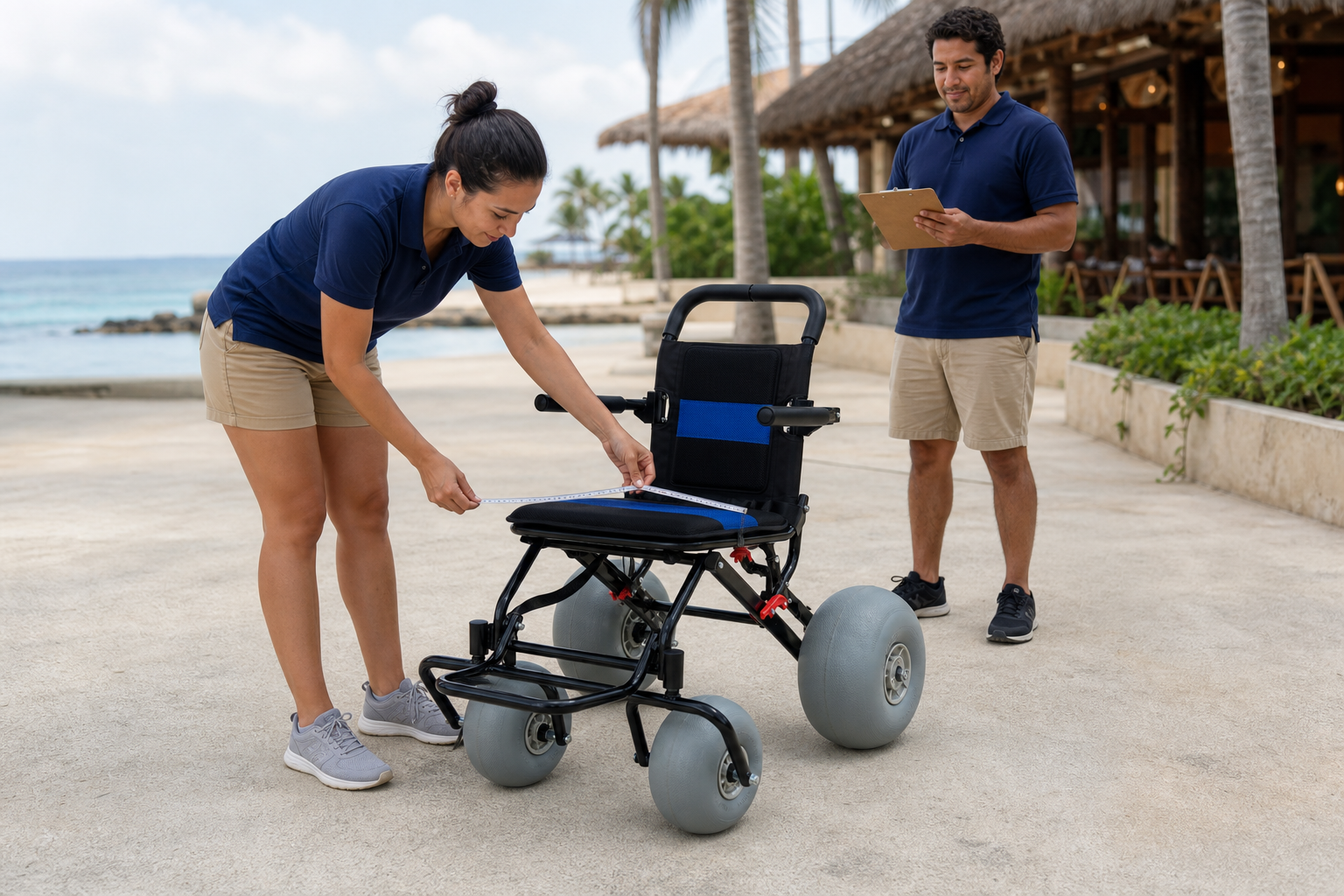
A lightweight beach wheelchair should be matched through a firm-ground check of seat space, back position, foot placement, arm position, attendant reach, route goal, and communication cues. Staff should not infer fit from appearance alone. Guest feedback and any applicable professional guidance remain part of the decision, especially when posture, transfer method, or health concerns sit outside the operator’s training.
A Shared Setup Conversation
Keep this in view: a travel-focused fleet may serve people with different preferences at each stop. A short setup conversation creates a clear pause before sand travel.
- Ask about destination, expected duration, and preferred pace.
- Check that the guest sits within the intended seat and foot areas.
- Confirm the attendant can reach handles without leaning or twisting.
- Practice starts, stops, and broad turns before leaving firm ground.
Key Takeaway: Fit is a joint decision based on guest feedback, observable position, attendant control, and the planned route.
| Fit area | Staff observation |
|---|---|
| Seat and back | Guest position remains centered and comfortable |
| Feet | Placement stays within the intended area |
| Attendant reach | Handles can be controlled naturally |
| Communication | Pause and stop cues are understood |
Use observable signs and guest comments; refer questions beyond staff scope to an appropriate professional.
What Should a Pre-Trip Check Cover?
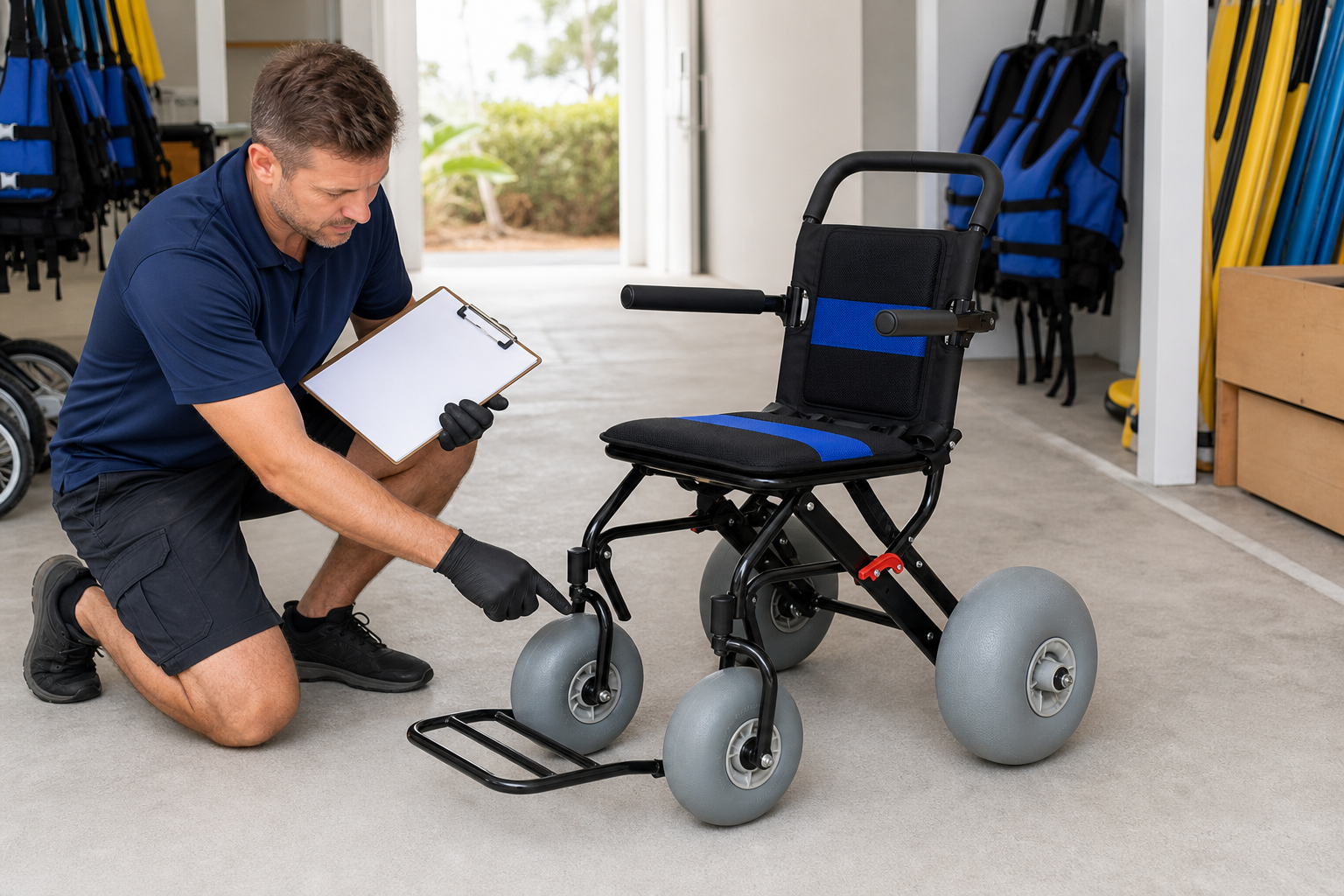
A lightweight beach wheelchair pre-trip check should cover frame position, wheels, fasteners, seat, back, handles, footrest, restraints if supplied, loose accessories, cleanliness, vehicle pack status, and destination route conditions. The check belongs before loading, not after arrival. Early review gives the team time to hold a unit without disrupting a guest appointment.
One Check Before Every Departure
Here’s the practical point: a vehicle trip adds vibration, contact, and extra handoffs. Staff need a departure record that links chair condition with destination and driver.
- Confirm all required parts are present and correctly positioned.
- Look for visible damage, unusual movement, trapped fabric, or debris.
- Match the chair ID with the route and booking record.
- Hold the unit when staff cannot confirm a secure condition.
Key Takeaway: A pre-trip check ties product condition, vehicle pack, and destination route into one go-or-hold decision.
| Check area | Go signal | Hold signal |
|---|---|---|
| Frame and wheels | Secure and unobstructed | Movement, damage, or missing part |
| Seat and handles | Clean and stable | Tear, looseness, or contamination |
| Pack plan | Restraint and clearance ready | Contact risk or blocked unload |
| Route note | Open and current | Closure or unknown condition |
Use one checklist across the fleet so staff decisions stay consistent.
How Can Resorts Organize Multi-Site Transport?
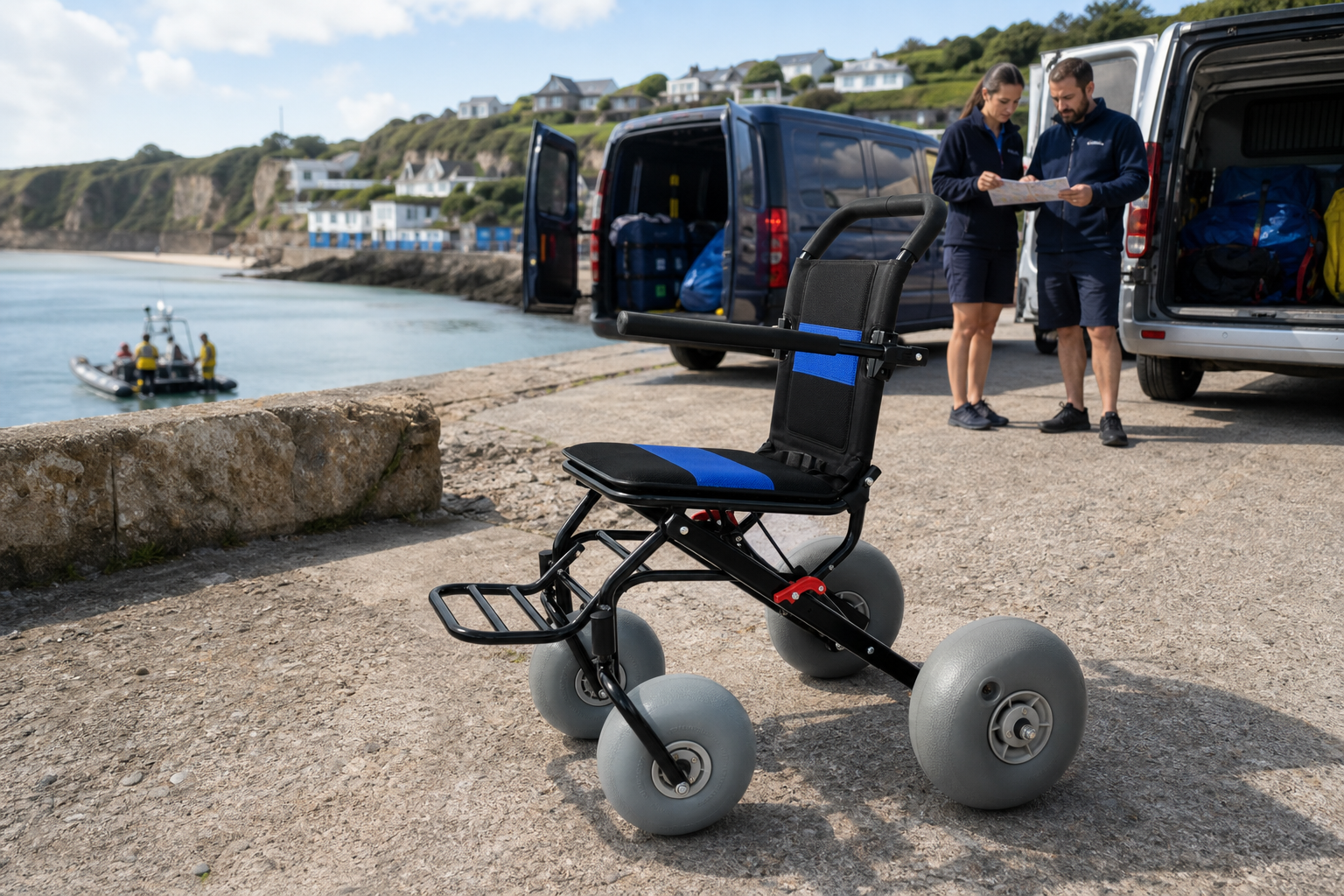
A lightweight beach wheelchair fleet can serve several sites when dispatch records connect each chair, vehicle, route, staff member, cleaning status, and return time. Mobile operations become difficult when equipment changes location without a shared record. A simple manifest can show where a unit is going and whether it is ready, held, in transit, or awaiting return care.
A Dispatch Board With Clear Status
What changes on the ground? A route closure or late return can affect another site. Dispatch staff need a way to move a booking without losing equipment history.
- Assign a chair ID and current status.
- Record destination, vehicle, driver, route contact, and expected return.
- Keep ready and held units separate in both records and storage.
- Close each trip only after return care and condition review.
Key Takeaway: Multi-site fleet work stays manageable when every chair has one visible status from departure through return.
| Fleet status | Meaning |
|---|---|
| Ready | Clean, checked, and available |
| Assigned | Matched to a route and trip |
| In transit | Under driver responsibility |
| Held | Waiting for review or service |
Use status names consistently across dispatch, storage, and cleaning teams.
What Cleaning Routine Fits Mobile Fleets?
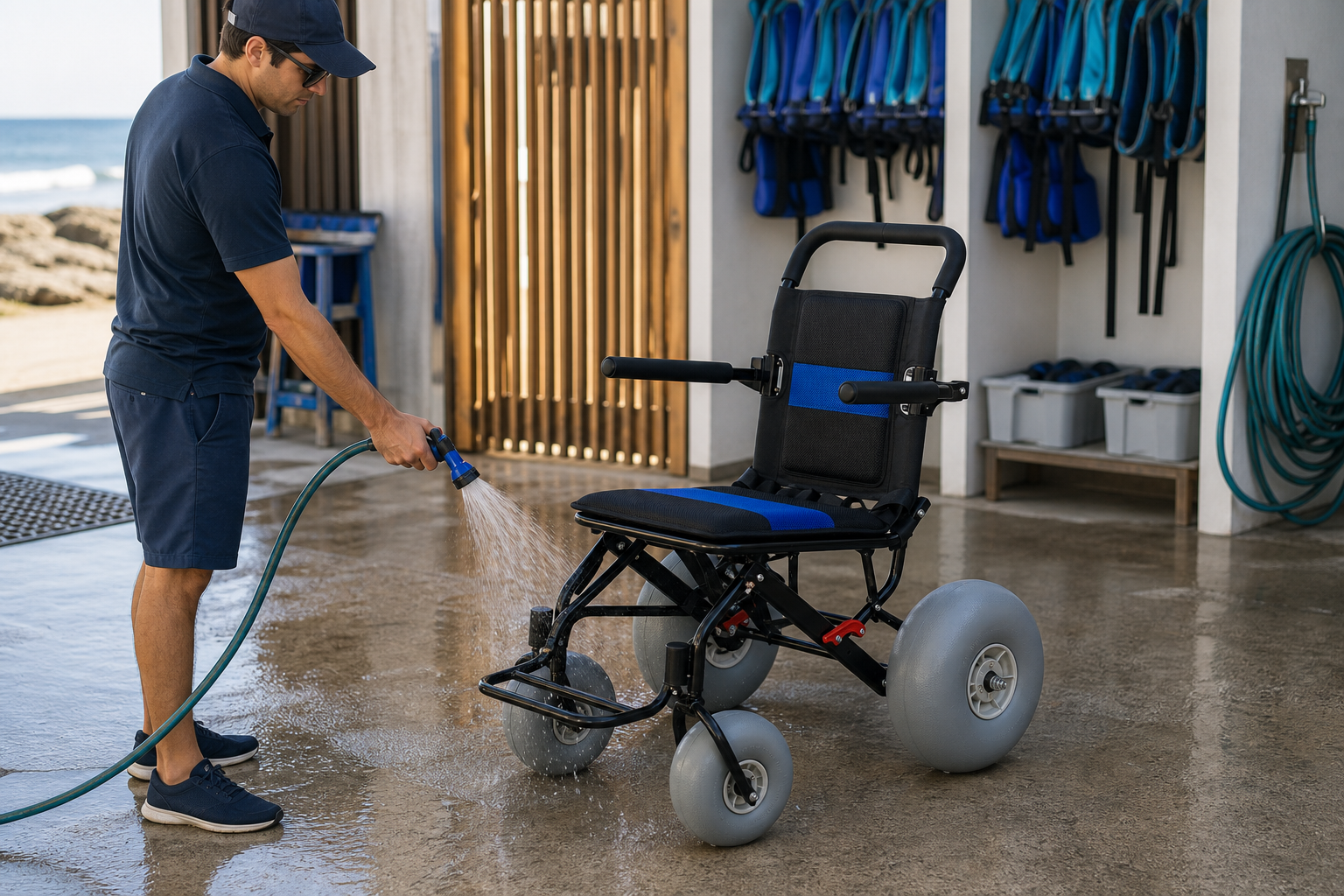
A lightweight beach wheelchair cleaning routine should remove loose sand, follow approved fresh-water care, dry fabric and frame areas, inspect joints and wheels, record condition, and separate any held equipment before storage or transport. Mobile fleets need special attention at the return handoff because a damp chair may move directly toward a vehicle or another site. The user manual resource can help teams align local care steps with current product guidance.
Return Care Before Repacking
The useful detail is this: cleaning is also a condition check. Staff can spot trapped sand, torn fabric, loose hardware, or unusual wheel movement while the chair is still in a service area.
- Remove sand and moisture using approved methods.
- Dry seat, back, handles, frame joints, wheels, and footrest.
- Record damage before parts are folded or packed.
- Move held units away from ready inventory.
Key Takeaway: Mobile fleets need a return-care gate before a chair reenters storage, a vehicle, or another route.
| Return action | Result |
|---|---|
| Sand removal | Clear access to visible parts |
| Drying | Cleaner pack and storage conditions |
| Condition record | Traceable service decision |
| Status update | No mix between ready and held units |
Use the sequence after every trip without claiming a fixed maintenance interval.
How Should Buyers Compare Pack Size and Service?
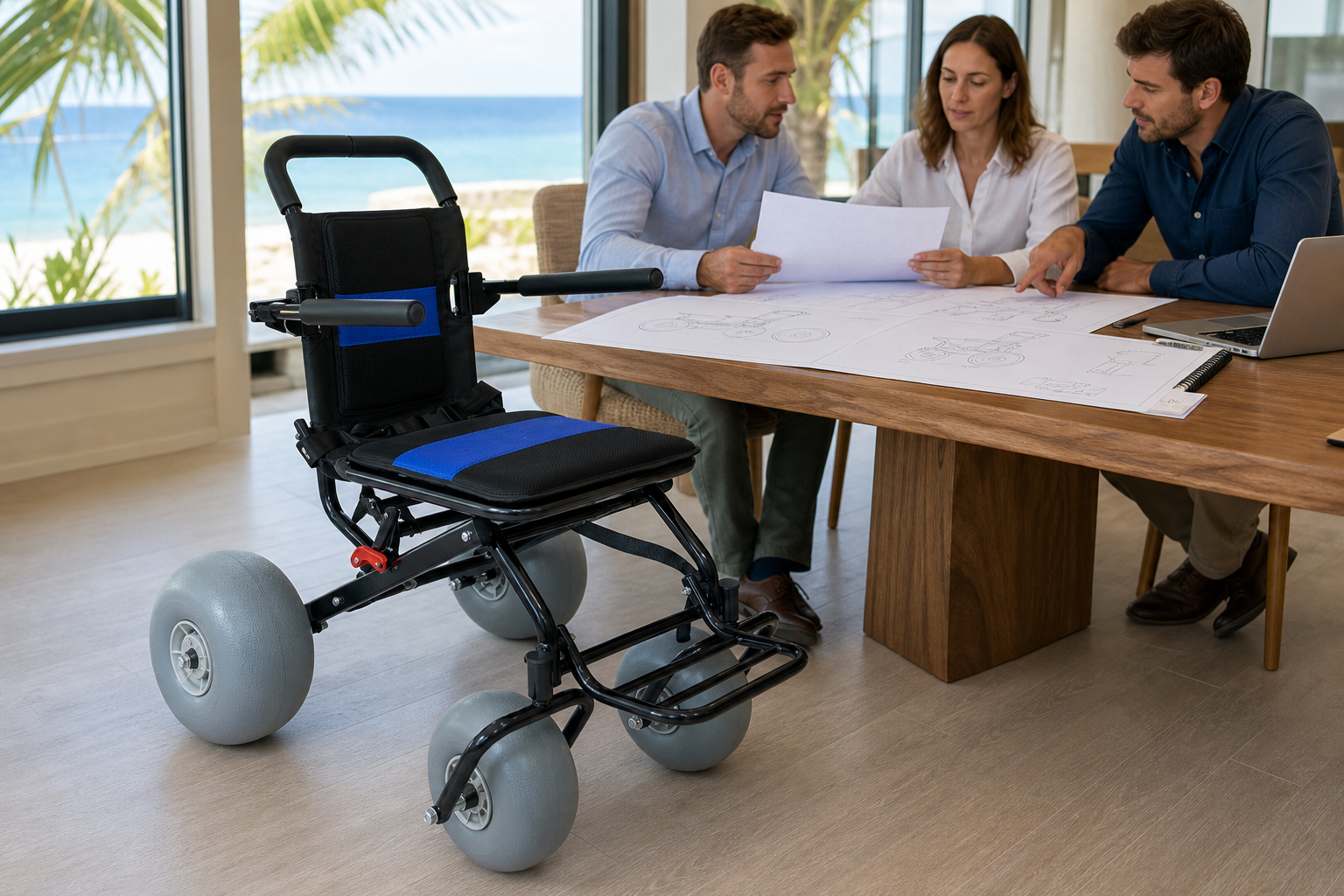
A lightweight beach wheelchair buyer should compare packed dimensions, real vehicle fit, setup sequence, parts access, documentation, packaging, training materials, and after-sale communication. A compact product can still create fleet friction when replacement parts lack clear identification or setup information arrives in an unusable format. Procurement should request evidence tied to its own vehicle, storage, and route workflow.
Buying Questions Tied to Fleet Work
Why does that matter? Product choice affects drivers, route staff, cleaners, storage teams, and purchasing. One shared scorecard keeps those roles in the decision.
- Request current packed and operating dimensions.
- Ask which parts move, fold, or detach during transport.
- Review packaging, spare-part identification, and service contacts.
- Confirm how technical questions are handled after delivery.
Key Takeaway: A lightweight beach wheelchair belongs in a fleet only when product portability and supplier service both fit daily work.
| Review area | Evidence |
|---|---|
| Pack size | Current product dimensions and vehicle trial |
| Setup | Written sequence and component list |
| Parts | Identification and ordering path |
| Service | Named response channel |
Use the scorecard across shortlisted suppliers and keep assumptions out of the comparison.
Closing Note: Easier fleet work comes from connecting handling, packing, route fit, guest setup, dispatch, cleaning, and service. If your team wants to review a mobile beach-access plan, contact us today with your vehicle, storage, route, and staffing details.
Which Lightweight Beach Wheelchair Questions Come Up Most?
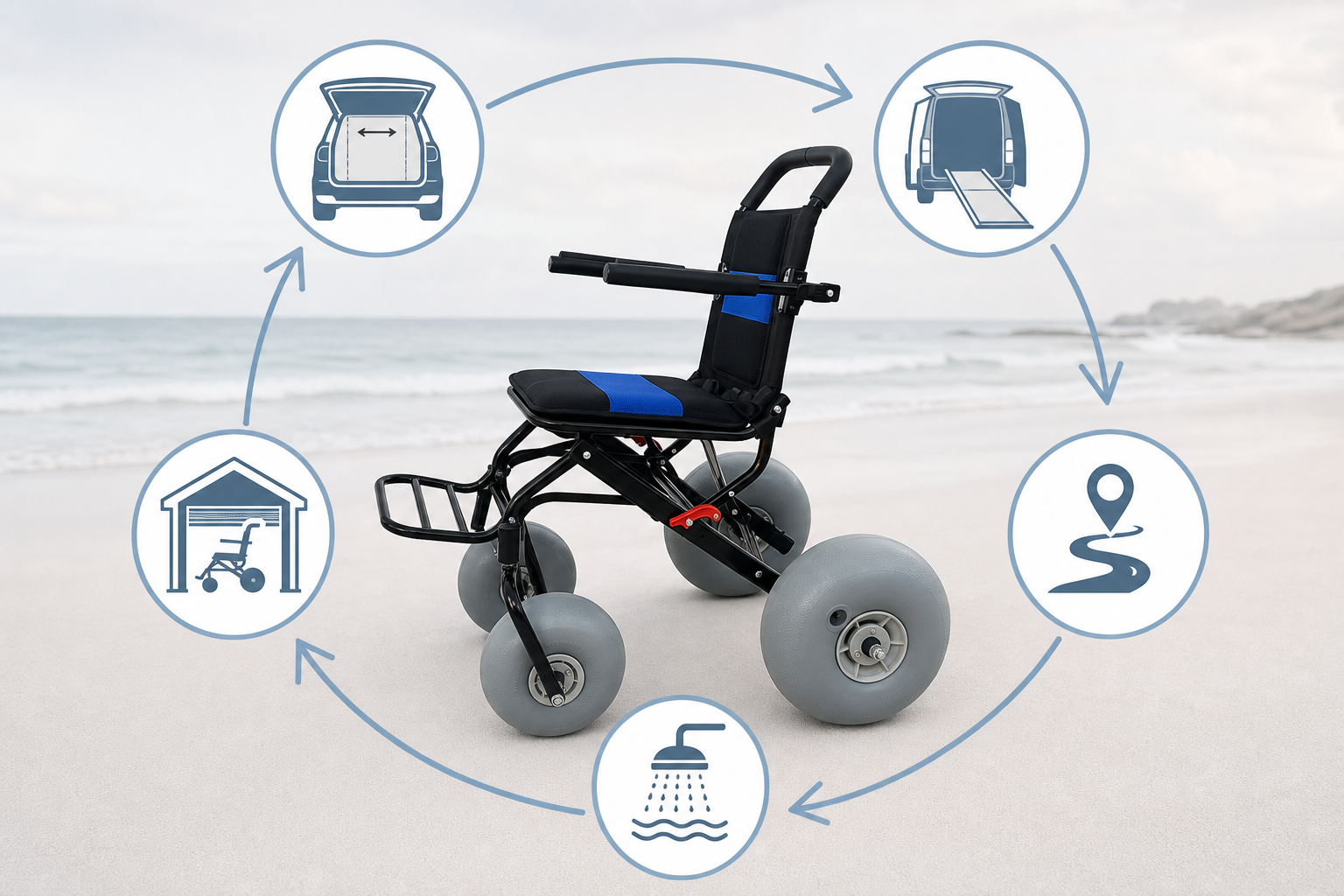
Lightweight beach wheelchair buyers usually ask about vehicle fit, folding, staffing, route limits, and supplier evidence before selecting a fleet.
Can I load a lightweight beach wheelchair into any vehicle? No. Buyers should measure the packed chair and actual cargo opening, floor, restraint area, unload path, and surrounding equipment.
What’s the best way to reduce setup errors? Use one documented sequence at every site. Staff should practice on firm ground and complete the same visible checks after each setup.
How do I know if one staff member can move the chair? Use local handling policy, product guidance, route conditions, and staff judgment. Stop when the person cannot control the movement without awkward reach or unstable posture.
Can I use a lightweight model on deep soft sand? Sometimes, depending on product design and route conditions. A site trial and current route review provide a better answer than a general portability label.
What’s the best supplier evidence for a mobile fleet? Current packed dimensions, component guidance, operating and care documents, parts identification, packaging details, and a named after-sale contact.