
Ask the buyer to finish this sentence before you plan a beach walker demonstration: “We need to see whether our team can …” A rental manager may want to move the walker from a store cupboard to the beach desk. A site supervisor may want to observe the shift from boardwalk to compact sand. Choose one primary question and allow the buyer to repeat the task under the same conditions.
Use a labelled AY-STZ1.0 unit and bring its current manual. The four-wheel design has adjustable handles with brake controls, a folding structure, seat and storage bag. The manufacturer lists 9-inch front and 12-inch rear wheels. Show the parts on the physical walker as the buyer reads the corresponding instructions. Keep optional items on a separate list, with their status in the quotation clearly marked. AY-STZ1.0 manual
First station: let the buyer inspect the empty walker
Put the walker on firm, level ground. Have the demonstrator open and secure it under the manufacturer’s instructions, identify the wheel attachments, show the handle adjustment and perform the instructed brake check. Then invite the buyer’s designated operator to identify the same features. A demonstrator who knows the equipment by touch can easily miss a step that a new seasonal employee needs explained.
Have the buyer inspect clearance around the brake cables, seat and bag while the empty frame is folded and reopened as directed. Ask where the walker would be stored and how the site would move it. The manual’s carton size describes a shipping package. Use measurements of the configured unit for the buyer’s cupboard or vehicle. Folding and transport considerations for fleet selection
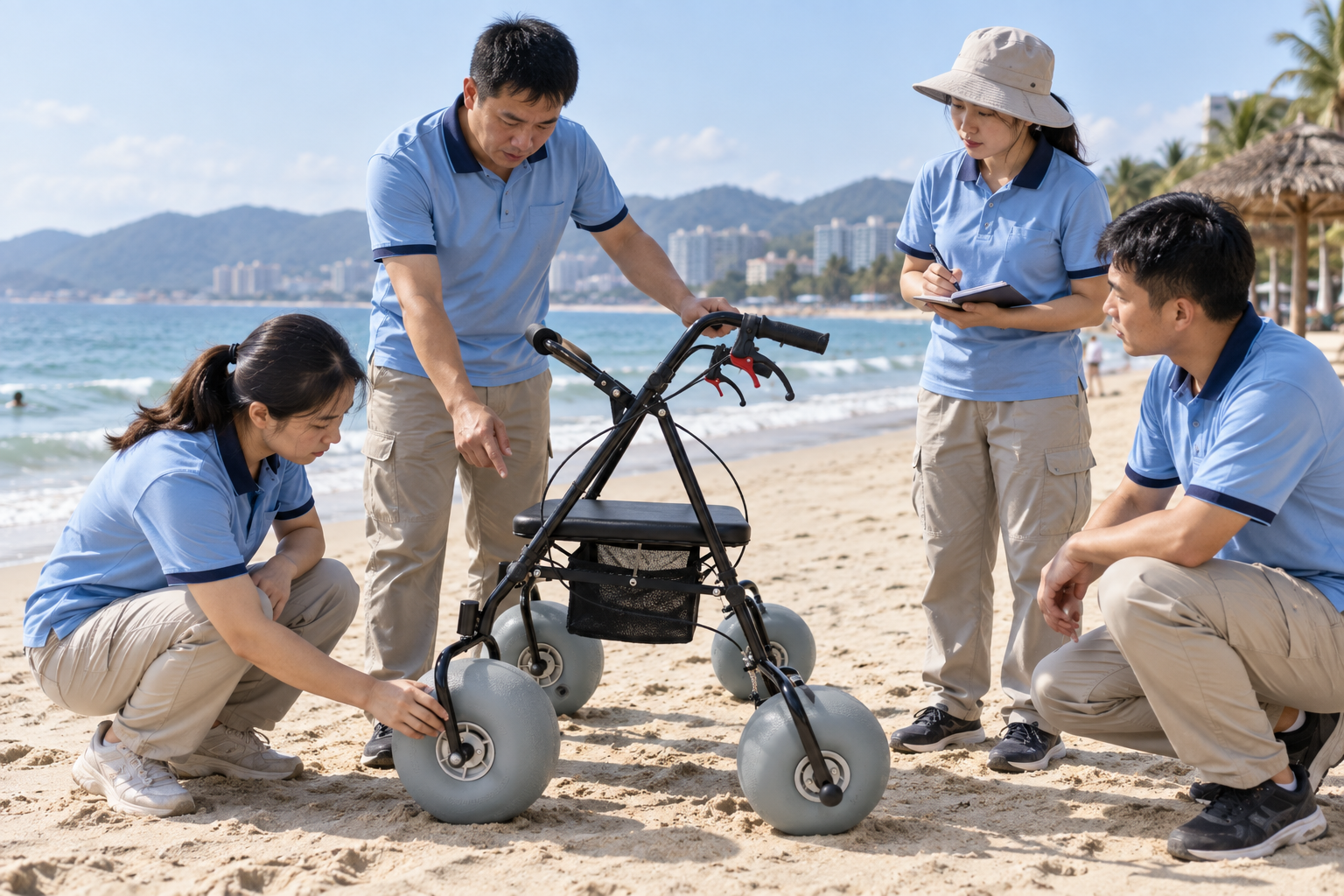
Second station: observe a route feature the buyer cares about
Use a permitted and supervised test area. Mark the transition, stopping place and return direction. Record the surface and conditions before movement. If the demonstration takes place on paving rather than the buyer’s sand approach, explain which questions can be answered there and arrange a representative site trial for those that remain.
| Task at the demonstration | What a buyer can record |
|---|---|
| Approach the agreed transition with the empty walker | Wheel behaviour, the exact spot where it catches or changes direction, and what support would need assessing before visitor use. |
| Repeat the movement on the return | Change in direction, available space and whether the return lip differs from the outward approach. |
| Put the unit back into its allowed storage state | Number of loose items if any, measured envelope, handling steps and any cable or bag interference. |
Named observations have more value than adjectives. “Right front wheel contacted the lip on the return” identifies an issue another person can locate. “Easy on sand” leaves out the surface, operator and direction. Invite potential users to comment using a format that works for them and record their words separately from equipment findings. A trial involving a visitor using the walker requires suitable assessment, consent, equipment readiness and the agreed service arrangements.
Let an unexpected result change the demonstration
A brake fault, uncertain wheel retention or an unsafe transition should end the affected task. Identify the unit and fault, prevent further issue, and explain the next technical step. If a supplier-approved adjustment is made, identify what changed and which checks were repeated. A dealer may still describe other features on an unused display unit while leaving the first result unresolved.
Send the buyer the model and revision, route conditions, tasks completed, photographs they agreed to share, and any items requiring another sample or visit. Distinguish a demonstration observation from the buyer’s formal approval for production. For the latter, use a recorded reference configuration and agreed criteria. Beach walker sample approval