
If a beach walker starts pulling to one side as the front wheels leave the boardwalk, pause as soon as the person has stable support. If they feel they are losing control, ask the companion or site team for help where they are. Ask the person whether they still feel in control and look at where each wheel is running. One wheel may be in a deeper strip of dry sand while the other stays on a firm surface. Persistent drag on firm ground calls for an equipment check before the walk continues.
For older users, the practical question is how the walker behaves over today’s walk, including the return. Before leaving a firm area, identify where the person can turn, rest or ask for help. Confirm that the handle adjustment and both brake controls work as instructed for the walker being used. If this is the person’s first assessment with a new walker, use the soft-sand trial guide.
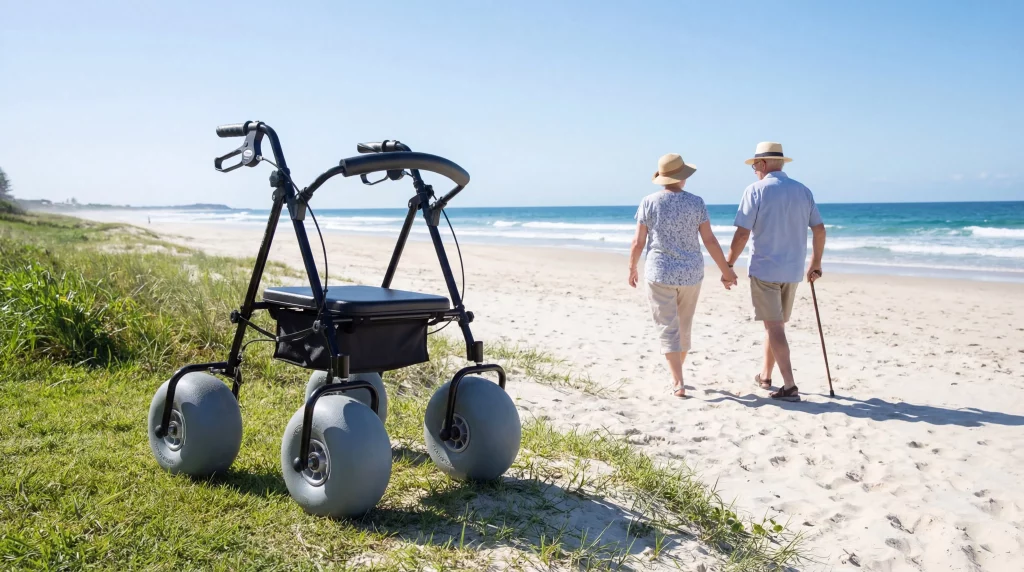
Read the wheels and the surface together
Loose sand can yield under the front wheels and build up ahead of them. A wide tire can spread the load, but a ridge left by beach traffic may still interrupt a turn. A damp strip near the shore can also have a cross slope or be exposed to incoming water. Check whether the chosen route stays within the agreed land-use area.
| What the person or attendant notices | What to check | How to handle the finding |
|---|---|---|
| Both wheels start to sink in a churned-up patch. | Look back at the last firm turning area and inspect the planned return. | Shorten or change the route under the agreed assistance plan. Give the person time to decide whether to continue. |
| One wheel runs in a deeper rut and the frame pulls sideways. | Check the change in sand level and available turning space. | Stop at a supported location. Review the route before attempting another crossing. |
| A wheel continues to rub or track unevenly on a firm surface. | With the user safely supported elsewhere, examine that wheel, its attachment and the brake using the model instructions. | Keep the walker out of use until the cause is understood and corrected. |
| A brake becomes difficult to reach or gives a different response. | Check whether the handle has shifted or a cable appears displaced. | End the walk and arrange an instructed function check. Record the affected side. |
A universal pressure adjustment for dry or wet sand would ignore the tire actually fitted. Use the pressure and checking method supplied for the exact wheel assembly. A thumb test gives no pressure reading. Keep the approved return point within reach if conditions change, particularly where the access mat ends or the route narrows.
Clean and inspect the walker after the beach
The AY-STZ1.0 manual identifies a carbon-steel frame with epoxy paint and a stainless-steel front fork. Its product drawings show the brake levers, folding structure, seat and storage bag. A scratch through the frame coating, grit in a connection and a tire that rubs are three different service findings. Record the component and its location so the next person can inspect the right place. AY-STZ1.0 manual, pages 2–5
- Remove sand using the care method approved for the supplied walker. Pay close attention to the brake cables and handle adjustments. Also look around wheel attachments and folding interfaces where grit can remain after exposed surfaces appear clean.
- Inspect after cleaning. Check the seat fabric for wear, look for coating damage and compare wheel alignment on a firm surface. Record finding and action together, for example, “left rear wheel rubbed after loose sand was removed, unit held for service.”
- Dry and store the identified components. Empty the storage bag, leave accessible surfaces to dry as directed and keep any removed parts with the walker. Obtain current service instructions before applying lubricant or changing a brake adjustment.
For shared equipment, tell the next shift which part of the route caused difficulty and whether the walker itself has been released. “Dry sand at the return turn, choose a shorter walk” is a route observation. “Right brake failed its check” is a reason to hold the equipment. Buyers comparing a replacement can use the senior beach walker selection guide to review reach, wheel configuration and transport requirements.