
When a loaded beach cart starts sinking on a new delivery route, first find out where the problem begins. A change from firm boardwalk to loose sand points to a different question from a wheel that starts rubbing only when the handle turns. Give the buyer the cart ID, existing wheel configuration, cargo as packed and the actual location of the difficulty. That information can rule out an unsuitable wheel before anyone orders samples.
Decide what the replacement has to improve
Ask the operator to walk the outward and return journey. Note soft patches, gates, tight turns, stopping places and unloading space. Check the existing equipment for a fault under its own instructions. A damaged hub or displaced spacer calls for repair assessment. A change in tire size cannot be assumed to fix it.
Choose one question to put to the supplier. It might be whether a wider tire can clear the tub and roll through the sand transition with the normal cargo. For a tight storage entrance, the deciding question may instead be the assembled width across both wheels. Record what would cause the site to reject a proposal even if handling on sand improved.
Reduce the catalogue to a shortlist
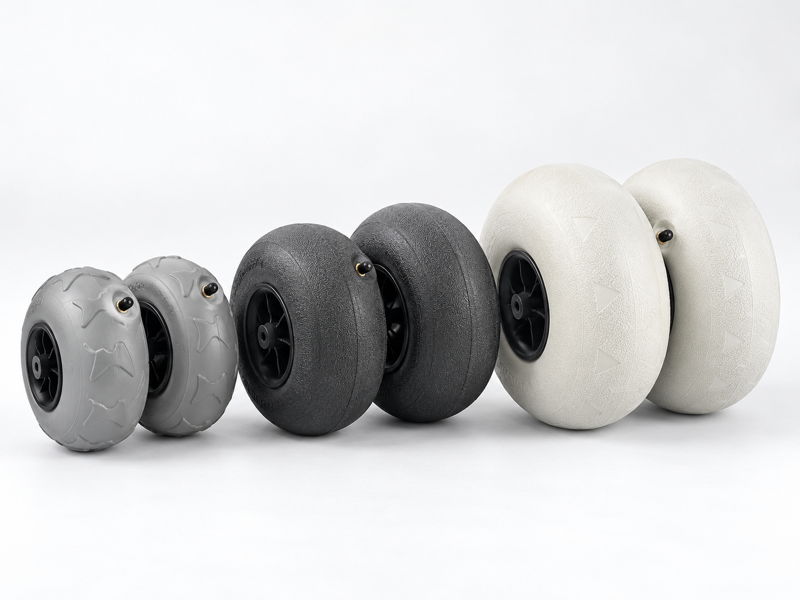
The manufacturer lists inflatable, tubeless beach wheels with plastic hubs in several polyurethane (PU) and polyvinyl chloride (PVC) configurations. The nominal diameter is only the first filter. For example, its 12-inch PU listing measures 315 mm in inflated diameter and 162 mm in width, while its 12-inch PVC listing measures 300 mm by 140 mm. Those are product-specific dimensions. Neither identifies the finished fit on your cart. Manufacturer’s beach balloon wheel specifications
| Ask this question | Send or request this evidence |
|---|---|
| What equipment will carry the wheel? | Cart model and revision, wheel position, original part reference and photographs of both sides of the mount |
| What wheel envelope fits? | Clearance near the tub, frame and moving parts, plus a drawing of the offered inflated tire |
| What locates and retains it? | Axle diameter and usable length, fitted bore or insert, hub length, spacers and retention detail |
| Which loads and conditions are allowed? | Written rating for the complete offered configuration, applicable instructions and the actual site load and route conditions |
A wheel-level figure cannot independently raise the cargo rating of the cart. A wider tire also needs room outside the frame at gates and inside it near the tub. Ask the supplier to reject candidates that fail either constraint and return a drawing for each remaining option. For detailed mounting measurements use the axle-fit worksheet.
Make the sample answer the remaining question
Suppose two quotes meet the mounting requirements, but one wider wheel could foul a side panel through a turn. Have the supplier identify the fitted position and confirm the proposed trial. Inspect the empty cart first. With the appropriate release, assess representative goods within the documented limits on the same route and record where contact, loss of control or cargo movement occurs. Stop if a part rubs or retention is uncertain.
Choose the assembly that meets the named requirement and has comparable delivered cost, parts availability and receiving evidence. Keep the accepted drawing, tire material, hub option, matching hardware and sample result with the order. A repeat purchase can then be made against a configuration the site recognizes. Beach cart sample review