
The features that matter most on a reclining beach wheelchair are documented adjustment, compatible support parts, route fit, and professional assessment. Product photos can look convincing while leaving buyers unsure about adjustment, service boundaries, or water approval. Use model records and written decisions before committing funds.
What Does “Reclining” Mean on a Beach Wheelchair?
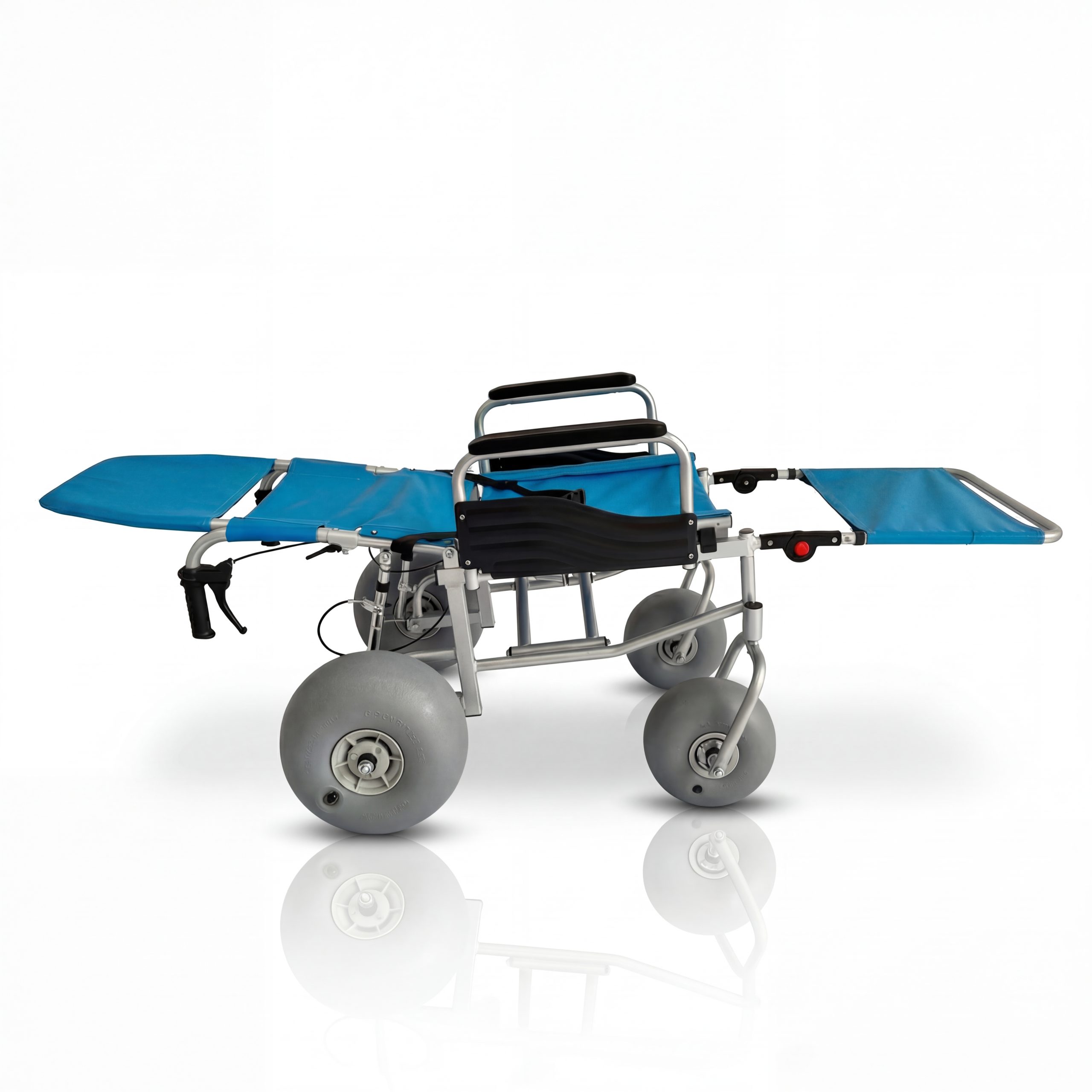
“Reclining” should mean a documented back-support adjustment within a named chair configuration, not simply a backrest that looks angled. A buyer needs to know whether a model changes its back angle, tilts a seat-and-back system, or has a fixed back. Those distinctions affect transfer planning, attendant handling, clearance, and staff records.
Define the adjustment before comparing models
Use plain procurement language. Ask whether back, seat, or complete seating system moves; which parts move with it; and whether a trained attendant or user controls that change. Do not convert a visible hinge, strap, or angled back into a claimed reclining function.
The buying rule is simple: name a moving assembly before asking about comfort or fit.
- Record the exact model, configuration, and revision under review.
- Ask for the current manual, drawing, and adjustment description.
- Separate a fixed back, back recline, seat tilt, and a combined system.
- Ask which staff role may adjust the chair and when a hold applies.
Buyer check: what must the supplier confirm?
| Review point | Evidence to request | Purchase decision |
|---|---|---|
| Moving part | Drawing or manual naming the adjusted assembly | Reject vague “reclining” wording |
| Configuration | Model, revision, and included support parts | Match quote with sample |
| Control | Named operator and stated adjustment method | Plan training before release |
| Boundary | Written limits, warnings, and hold conditions | Escalate unanswered points |
Key takeaway: Place this definition at the top of every request for quote.
Which Support Features Should Buyers Document?
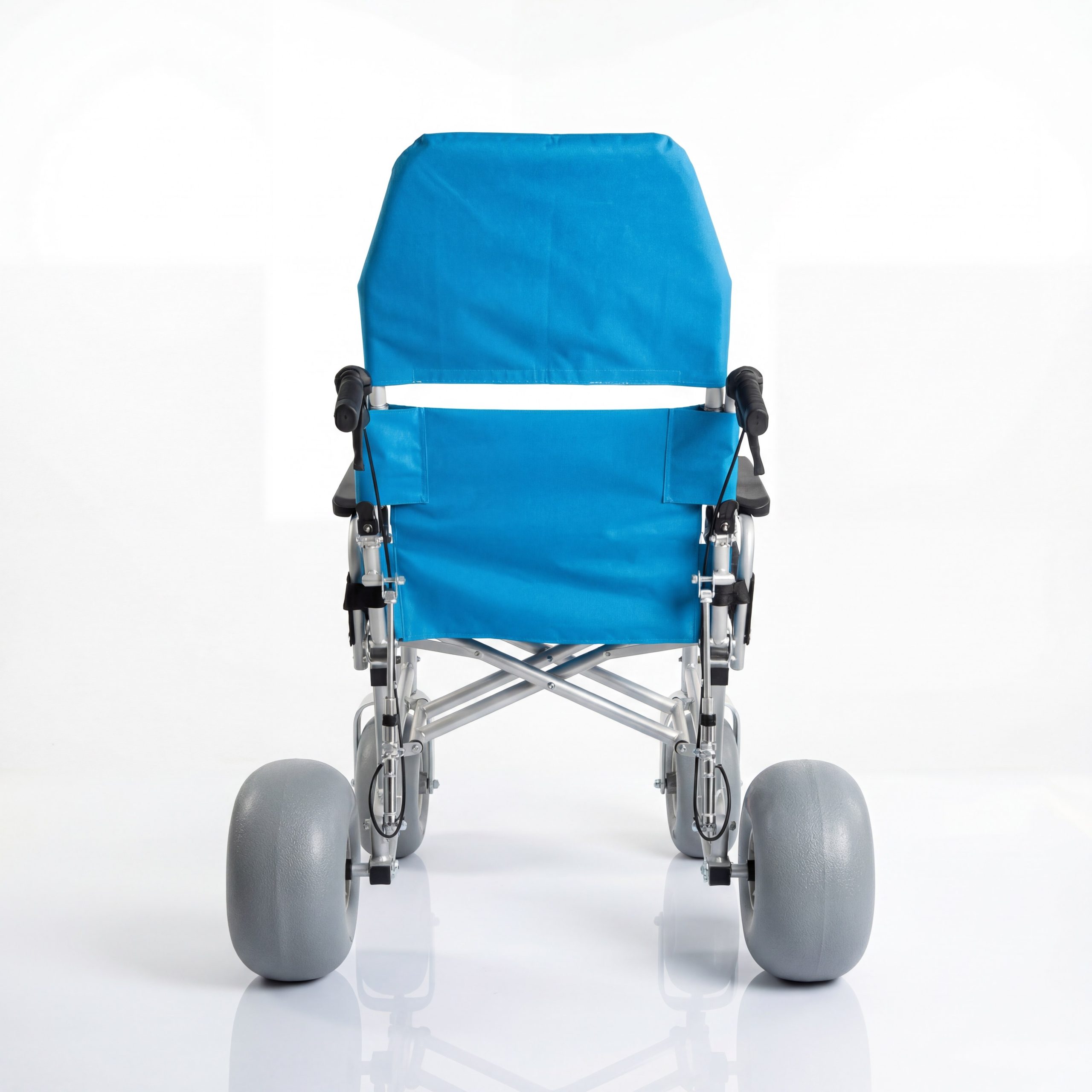
Buyers should document every visible or adjustable contact point affecting seated support, transfer planning, or attendant work.
Build a support inventory
Ask the supplier to identify each contact component by name and configuration. Keep observations separate from suitability decisions made by a qualified professional. A photo can show fabric, rails, handles, and foot support; it cannot establish whether those parts suit a particular person.
The useful record starts at each contact point: describe what staff can see, adjust, clean, and replace.
- Back support: fixed panel, fabric panel, or documented moving back.
- Side support: arm structures, guards, or lateral elements shown in records.
- Leg and foot support: platform, strap, or detachable component identity.
- Restraint or positioning parts: only when supplied and named by the model record.
- Attendant interface: push handles, brake controls, or documented handholds.
For a professional assessment, provide the complete chair record rather than a cropped product image. A qualified assessor can decide whether a configuration matches an individual’s needs and local policy.
Buyer check: can every support part be traced?
| Component | Record needed | Team that uses the record |
|---|---|---|
| Back support | Part identity and adjustment description | Purchasing and trained staff |
| Arm or side support | Included status and attachment record | Receiving and service |
| Foot support | Configuration and care instructions | Operations and assessor |
| Straps or positioning parts | Supplied scope and approved use | Assessor and trainer |
Key takeaway: Request a marked drawing or component list before making a fleet standard.
How Can Buyers Separate Recline, Tilt, and Fixed Backs?
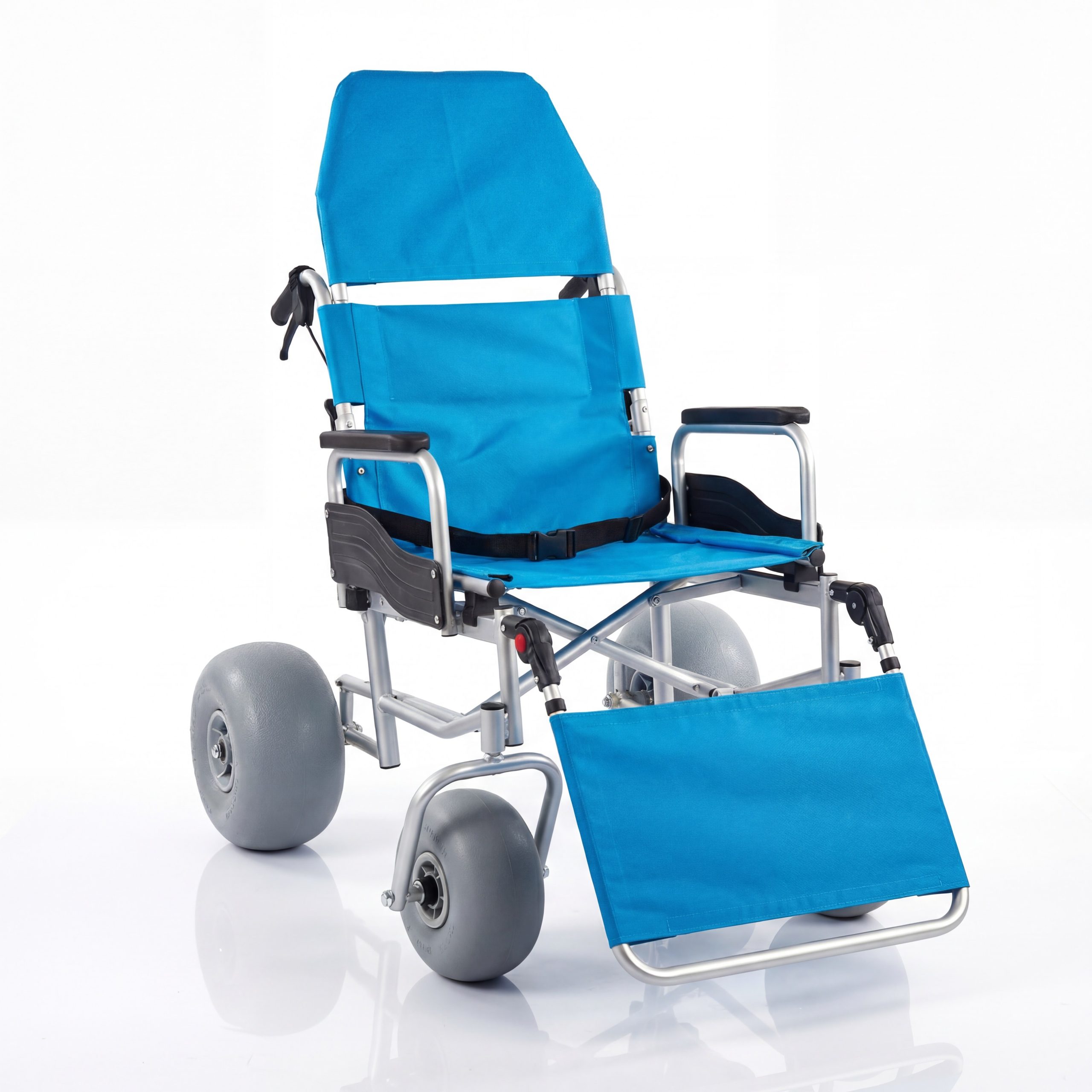
Buyers can separate recline, tilt, and a fixed back by asking which reference plane changes and which support parts move with it. Recline usually describes a back-support change relative to a seat. Tilt may change seat-and-back orientation together. A fixed back offers no documented adjustment even when its fabric slopes in a studio image.
Use a terminology worksheet
Do not ask a sales contact to choose a clinical label. Ask for a mechanical description, then route suitability through a qualified professional.
The practical test sits in paperwork: a named moving part beats a dramatic product angle.
- “Fixed back” means no approved adjustment is documented.
- “Back recline” means the back-support relationship changes as described.
- “Seat tilt” means the seat-and-back relationship follows a documented tilt action.
- “Combined adjustment” means the supplier names both motions and their controls.
- “Unknown” means the team pauses the comparison until records arrive.
This language keeps a product photo from becoming an accidental promise. Describe its visible position, then ask for the configuration record.
Buyer check: what wording belongs in a quote?
| Buyer wording | Supplier response | Safe status |
|---|---|---|
| Back adjustment requested | Name moving assembly and supplied parts | Compare after written response |
| Tilt requested | State whether seat and back move together | Needs configuration confirmation |
| Fixed support acceptable | Identify fixed components and fit review | Review with assessor |
| Photo appears reclined | Explain photo configuration only | Never treat photo as proof |
Key takeaway: Put chosen wording into the purchase brief so photo, brochure, and delivery records stay aligned.
What Route and Transfer Evidence Should Guide Selection?
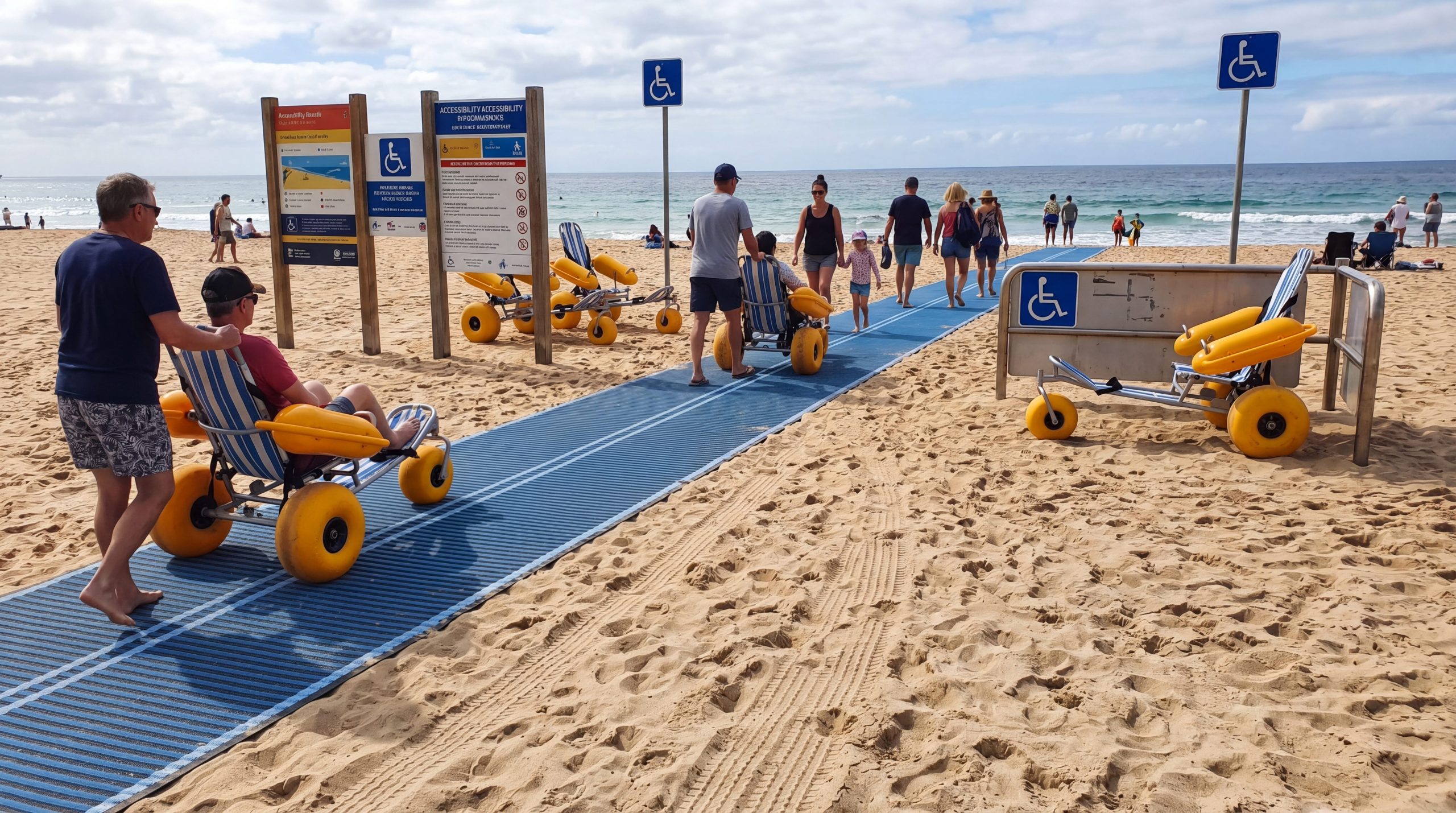
Route and transfer evidence should guide selection before a team chooses a recline feature. A chair may cross firm ground, loose sand, water margins, and storage areas. Each route change brings questions a product image cannot answer.
Map the complete operating path
Invite operations, accessibility, maintenance, and procurement staff into one route review. A professional assessor should address individual seating and transfer needs. Staff planning should address people, space, communication, and approved chair states.
Route evidence changes an answer: a requested feature only matters when it fits a whole handoff.
- Mark firm ground, loose sand, mat edges, wet margins, and storage thresholds.
- Note where an attendant needs room for handles, brakes, or an adjustment.
- Record transfer points and identify who owns each decision.
- Note shade, drainage, cleaning space, and a dry hold area.
- Photograph route context without treating a scene as a performance test.
Use your site’s own access plan and connect it with the accessible beach mat page when planning a path. A mat does not prove every chair or recline configuration works there.
Buyer check: does the route brief answer the handoff?
| Route item | Evidence to capture | Result for selection |
|---|---|---|
| Surface sequence | Site map and observed transitions | Request matching route evidence |
| Transfer point | Space, staff role, and local policy | Route to professional review |
| Adjustment area | Clearance and approved operator | Add training requirement |
| Return path | Cleaning, drying, and hold location | Include lifecycle plan |
Key takeaway: Walk the route with an empty chair when local procedure permits it, then record observations.
How Should a Buyer Request Recline Records?
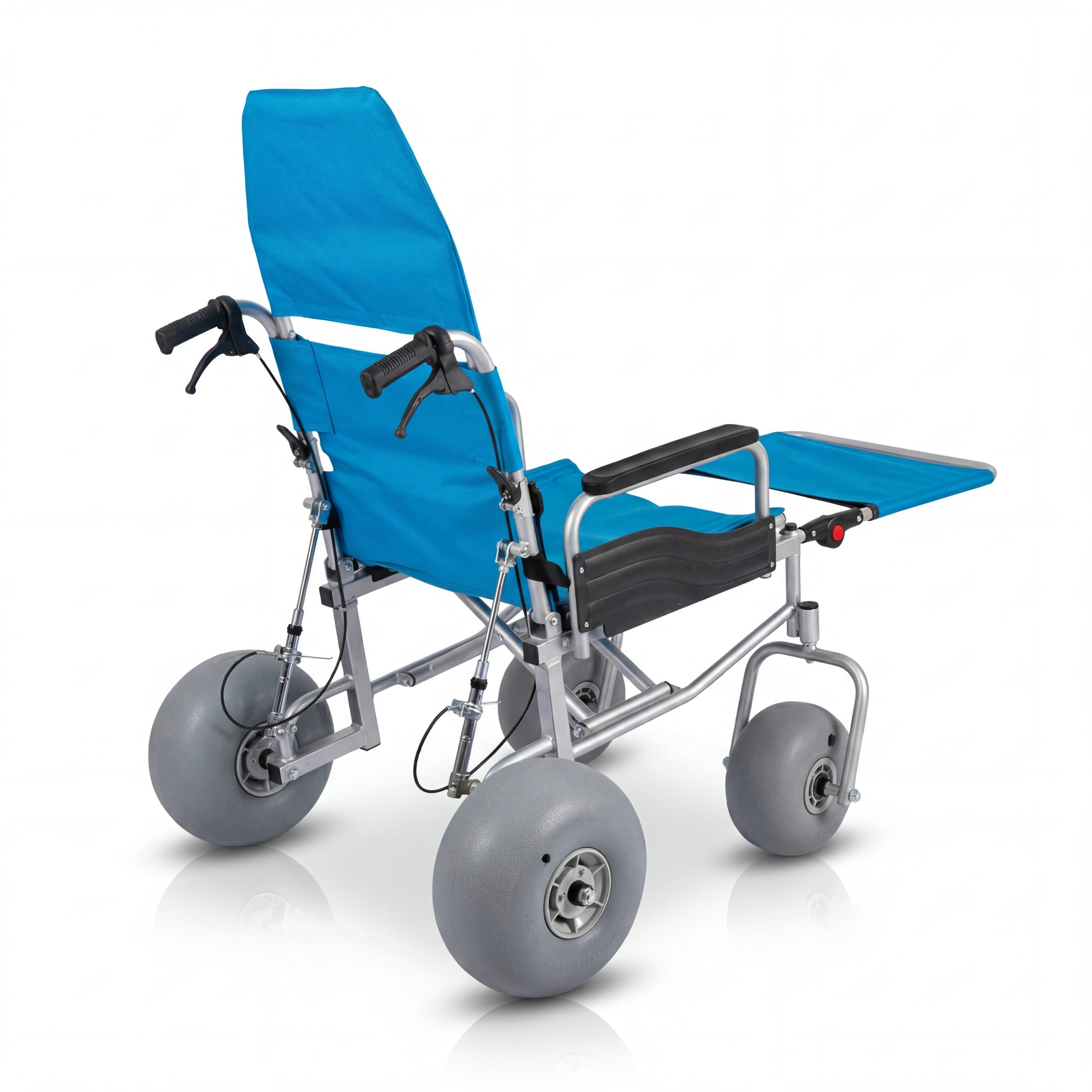
A buyer should request recline records as an evidence pack tied to one model, revision, and supplied configuration. A generic brochure cannot settle support parts or controls.
Ask for a controlled document set
Request documents in a way that a receiving team can reuse. Keep product claims separate from professional suitability decisions, and ask the supplier to mark any item that remains configuration-dependent.
A clean request prevents a messy quote: tie every answer back to the same chair identity.
- Model name, configuration code, and drawing revision.
- Manual pages describing adjustment, controls, and warnings.
- Component drawing showing supports, hinges, handles, and clearances.
- Supplied parts list with optional items marked separately.
- Care, storage, and post-exposure instructions.
- Written approval path for an unusual configuration or water use.
Use the Ary Beach Wheelchair user manual as a document index; current model files control operations. WHO wheelchair provision guidance also places assessment, fitting, training, and follow-up with trained personnel.
Buyer check: does the pack close the evidence gap?
| Document | Question it answers | Hold trigger |
|---|---|---|
| Model drawing | Which frame and supports belong together? | Revision is missing |
| Manual | Who adjusts what, and under which conditions? | Adjustment is vague |
| Parts list | What arrives with the quoted chair? | Optional parts are unclear |
| Care record | What happens after sand or water exposure? | No release method |
Key takeaway: Make written records a quote condition; pause any recline feature without a named configuration.
What Should a Sample Review Cover Before a Quote?
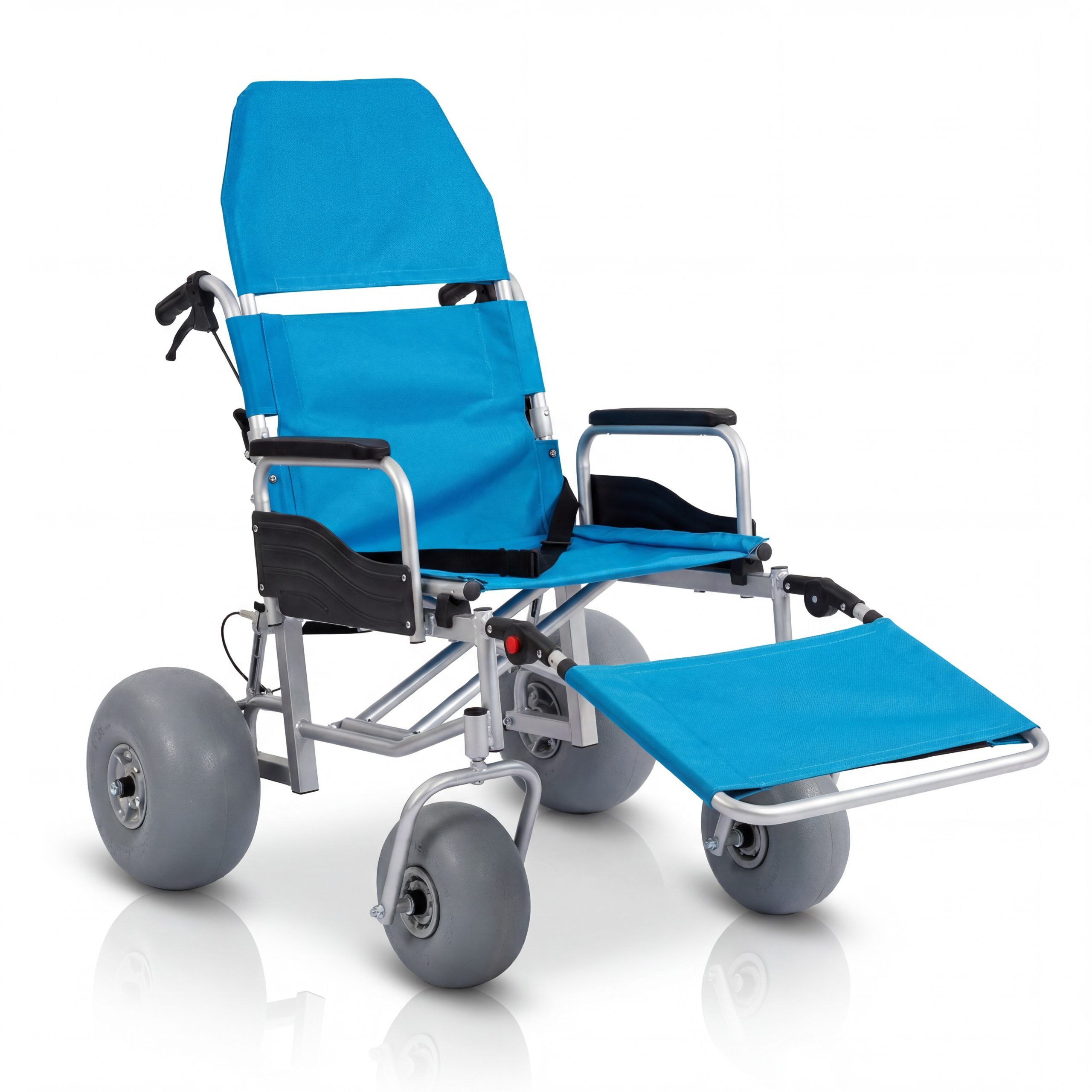
A sample review should cover identity, configuration, adjustment evidence, support parts, route fit, care, and staff handoff before a quote becomes a purchase plan. The review should not turn one sample into proof of universal comfort, capacity, water use, or clinical suitability.
Review an empty chair with named roles
Set a controlled review space with good light. A trained operator can demonstrate documented adjustments. A qualified seating professional should handle individual fit questions.
A sample earns a place in a quote only when its identity stays attached: keep labels, records, and observations together.
- Verify model and configuration against the supplied documents.
- Check visible support parts, fasteners, fabric, wheels, and handles.
- Observe an approved adjustment without inventing a range or angle.
- Note clearance around foot support, frame, and attendant controls.
- Record cleaning, drying, storage, and release tasks.
If a feature cannot be demonstrated under current instructions, mark it as open rather than asking staff to improvise.
Buyer check: what should the review record show?
| Review stage | Record | Decision |
|---|---|---|
| Identity | Model and revision | Proceed only on a matched file |
| Visible condition | Observed parts and damage | Hold unclear items |
| Adjustment | Named operator and documented motion | Do not infer missing limits |
| Handoff | Training and release owner | Add accountable role |
Key takeaway: Use the all-terrain beach wheelchair page for context; use its sample file for exact decisions.
How Do Seat Materials Affect Recline Care?
Seat materials affect recline care through cleaning, drying, attachment, and inspection tasks; they do not prove a therapeutic benefit. Mesh, coated fabric, straps, pads, and frame contacts need model-specific care guidance.
Connect material observations with care records
Describe only what the team can see. Ask the supplier which surfaces may be rinsed, which cleaners are approved, how moisture leaves a frame, and what signs require a hold. Do not turn a seat texture into a pressure-relief claim.
The maintenance boundary matters: a material description is useful only when it leads to a named care action.
- Identify seat, back, strap, pad, and frame contact surfaces.
- Record sand traps, folds, drainage points, and removable parts.
- Ask how staff inspect attachments after cleaning and drying.
- Keep any damaged or uncertain part outside the ready state.
- Give a named release owner authority to return a chair to service.
The lightweight beach wheelchair page may help separate product-family descriptions from a particular quote.
Buyer check: is care linked with release?
| Care point | Evidence needed | Release question |
|---|---|---|
| Fabric or mesh | Approved cleaning and drying method | Is the surface dry and intact? |
| Straps | Attachment and inspection criteria | Are parts present and readable? |
| Frame contact | Sand and moisture review | Is movement or damage visible? |
| Storage | Position, airflow, and status label | Can staff retrieve it cleanly? |
Key takeaway: Ask for one written care-and-release flow with the quote.
When Does Water Use Need Separate Approval?

Water use needs separate written approval for immersion, floating, surf-edge operation, or any change from the documented configuration. A water photo does not approve another model or its recline mechanism.
Keep land and water decisions separate
Floating equipment may use a different frame, buoyant support, wheel arrangement, and operating context. Ask for current instructions, supervision requirements, care after exposure, and written approval for the exact configuration.
Water changes the evidence burden: a shoreline photograph cannot replace a model-specific approval record.
- State whether planned use is dry sand, shallow edge, floating, or unknown.
- Identify the exact chair and any optional buoyant components.
- Ask who may approve water use and who controls release afterward.
- Record rinsing, drying, inspection, and storage requirements.
- Stop when an immersion or recline question remains unanswered.
Use the floating water beach wheelchair page to frame a separate water-equipment review.
Buyer check: does the water request have an owner?
| Proposed use | Required evidence | Status without approval |
|---|---|---|
| Dry beach route | Land-route instructions | Compare within stated scope |
| Shoreline crossing | Surface and supervision guidance | Hold unclear crossing |
| Floating or immersion | Exact model approval and manual | Do not authorize use |
| Post-water return | Care and inspection record | Keep chair on hold |
Key takeaway: Write “water use: approved / not approved / pending” beside every configuration.
How Should Teams Compare Configurations and Service?
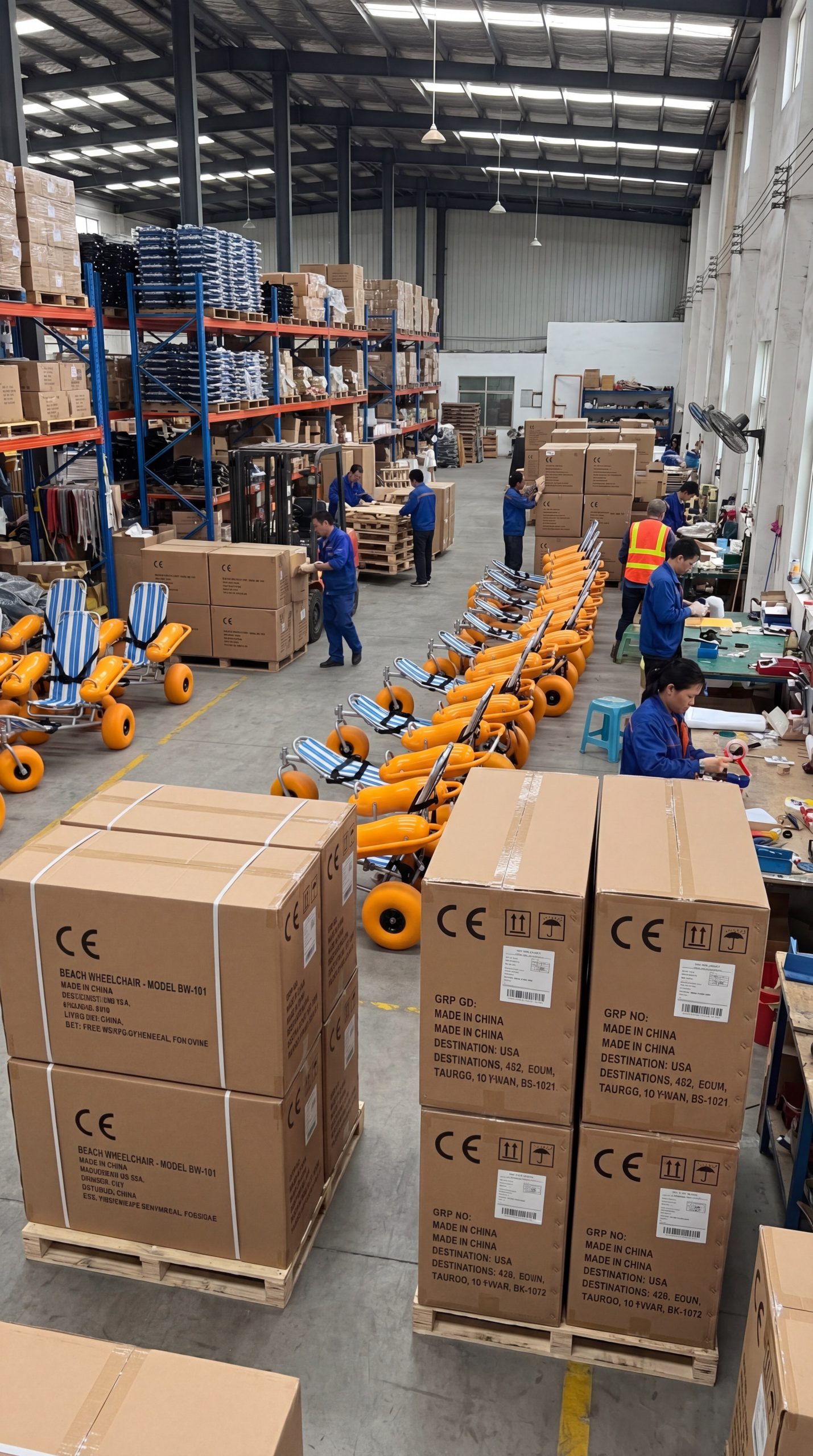
Teams should compare configurations and service as one package: adjustment, support parts, route, operator role, care, training, replacement records, and escalation. A low-friction quote can become costly when staff lack a manual, spare-part identity, or release authority.
Build a lifecycle comparison
Ask every supplier the same practical questions. Keep price and delivery out of a decision table until identity, scope, and evidence are clear. A distributor can then pass one controlled package to its customer without inventing features.
Service ownership decides whether a feature survives actual use: assign every task before approval.
- At receiving, a named owner checks the chair and its configuration.
- During handoff, a trained operator demonstrates the documented adjustment.
- A named approver handles professional assessment or a special configuration.
- After use, a care owner cleans, dries, records damage, and releases the chair.
- Procurement orders an exact replacement or escalates uncertainty.
The projects page can support a project conversation, but a pictured installation does not replace a current quote pack.
Buyer check: can the team own the full loop?
| Lifecycle point | Owner to name | Evidence at handoff |
|---|---|---|
| Purchase | Procurement | Matched quote and revision |
| Fit | Qualified assessor | Documented professional decision |
| Operation | Trained attendant | Current instructions |
| Care and service | Named manager or supplier | Condition and release record |
Key takeaway: Choose a configuration whose tasks your team can own.
What Should Your Purchase Brief Ask For?
Your purchase brief should ask for one named configuration, one evidence pack, one professional-assessment path, and one lifecycle handoff.
Use a copy-ready request
Include route, user, operator, care, documentation, and approval questions. Keep medical decisions with a qualified professional and keep water use outside scope unless written approval arrives.
A small worksheet prevents a large mismatch: send the same questions to every shortlisted supplier.
- Identify the exact chair, revision, and requested seating configuration.
- Define recline, tilt, fixed support, or “not specified.”
- Request drawings, manuals, component lists, and care records.
- Describe route surfaces, transfers, attendant roles, and storage.
- Ask for sample-review steps and post-delivery release ownership.
- Record open points, approval names, and a hold rule.
For product-family questions, use the beach wheelchair catalogue. For a quote or project discussion, contact us with your route notes and requested evidence pack.
Keep the next action concrete
Key takeaway: Do not approve a reclining feature from a photograph alone; request records and name staff ownership before ordering.
Q1: Does an angled back in a photo prove a beach wheelchair reclines? No. It shows one visible position only; a current model record must name the adjustment.
Q2: Can a supplier promise a clinical or pressure-relief result? Not from a product label or photo. Individual suitability requires professional assessment and documented evidence.
Q3: Should a floating chair and a reclining land chair share one approval? No. Treat water use, buoyant parts, supervision, and care as a separate model-specific review.
Q4: What should a resort request before ordering? Ask for the exact configuration, manual, drawing, support list, route evidence, care flow, training owner, and written approval boundaries.
Q5: Can staff adjust a chair without a manual? They should wait for current instructions and named authorization. Guessing can change support, clearance, and release status.