
If a supplier sends a beach cart sample, write the open purchase question on the receiving note. “Can this two-wheel tub deliver our packed maintenance kit through the north gate and park at the tool store?” gives the team a reason to test the sample. “See whether staff like it” leaves no clear basis for accepting a bulk shipment.
Identify the unit before adjusting it
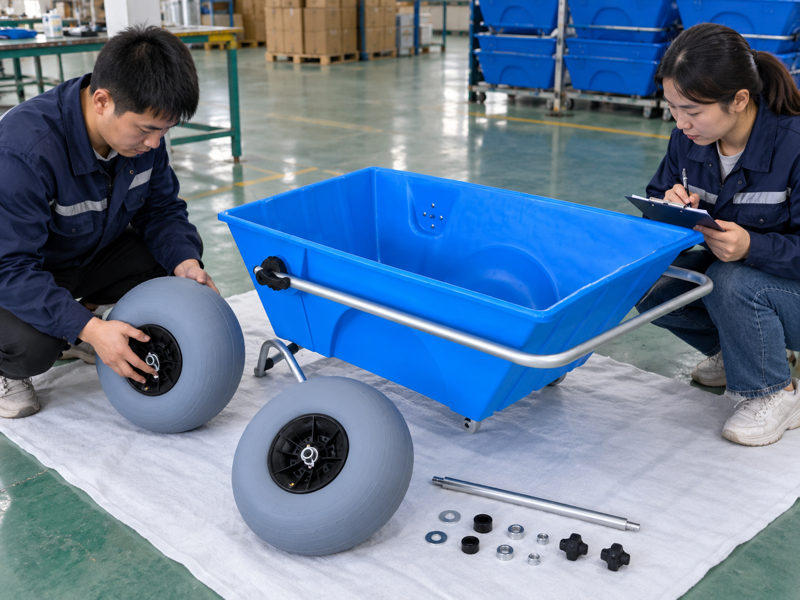
Assign a sample ID, photograph it as delivered and retain its carton marks. Record the supplier, model or drawing revision, tub or deck, wheel and axle assembly, handle, stand or folding lock as applicable, and loose items. Ask the supplier to identify any sample-only components. A preproduction wheel or hand-fitted retainer calls for a separate decision about what will appear on the production order.
Use the correct product reference. The standard two-wheel cargo cart uses a rigid molded tub. A folding cart may have a deck or sling with a different handle and wheel arrangement. Failure to match the approved sample type to the incoming stock makes even a carefully measured test difficult to use.
Run one traceable goods delivery
- At receipt, compare the sample and components with the proposed order drawing. Record a missing fitting or packaging damage before assembly.
- With the cart empty, have authorized staff assemble and inspect it using the supplied instructions. Verify wheel retention, turning clearance, handle attachment and the appropriate parking or locking arrangement.
- With representative cargo, weigh and identify the packed goods. Stay within the documented configuration and the site’s handling assessment. Follow the named route and record the actual surface, clearance at the gate, any shifting and the operator’s ability to stop and unload.
- After return, inspect what changed. Record loosened components, rubbing, cargo damage or difficulty retrieving the empty cart. Give the tester’s observations separately from the buyer’s decision.
Establish a stop condition before the demonstration. Examples include unconfirmed wheel retention, a moving handle attachment or a load that obstructs the operator. Keep people off the cargo area. If the buyer’s question involves vehicle towing, an incompatible accessory or an unknown load limit, obtain the correct product and authorization before considering such use.
Specify exactly what the result approves
Suppose the cart clears the north gate and the cargo stays contained, but the right wheel rubs under the approved representative load. Log the sample ID, side, load position and part reference. Hold that finding and ask the supplier to identify the cause and the proposed correction. If a different hub is fitted, record its revision and recheck retention, frame clearance, usable overall width and the affected route segment. A video of a different empty cart cannot close this sample’s finding.
Use a short disposition such as “Accepted for the named goods route with drawing B and the listed wheel assemblies,” or “Hold for corrected right wheel fit and repeat of the north gate trial.” Identify the person making the decision. Attach the sample record and approved deviations to the order, together with how the supplier must notify the buyer of changes. At receiving, compare actual stock with that record and identify outstanding shipments or substitutions separately.