
Before bringing the first mat section out of storage, take last season’s plan to the beach. Find the actual start of the route, the proposed endpoint and the place where visitors will turn back. Winter sand movement, repairs to a boardwalk or a new concession stand can change the run enough to make the old layout unusable.
A seasonal opening takes place in two stages. The installation crew needs a current layout and a complete, serviceable set of parts. Once the sections are in place, the duty team needs to see which destination the finished route reaches and what it can tell visitors that morning.
Walk the proposed line while the ground is visible
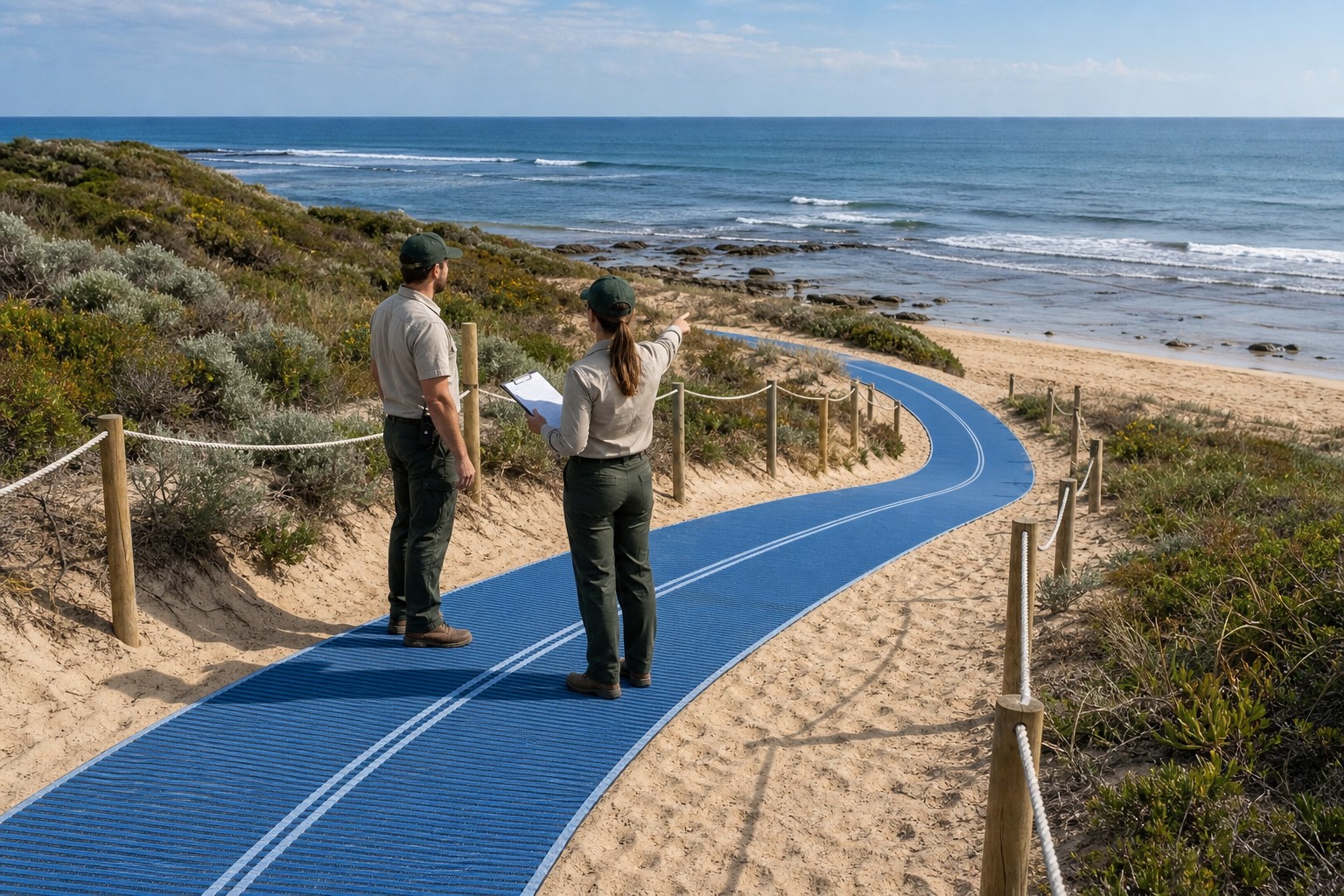
Take last year’s photographs from the same direction where possible. Look for hollows, raised sand, drainage channels and spots where water or debris now gathers. Inspect the entrance and destination as part of the walk. A shifted entrance may leave too little room to approach the first section, and an enlarged seating area may occupy last year’s turning space.
Measure the affected portions of the line. Mark whether an issue needs ordinary site preparation, a change to the layout or review by someone authorised to approve site works. Follow the landowner’s environmental and ground-work requirements, particularly around dunes. A photograph from last season can show that something changed. The current approved detail should tell the crew what to install. Planning temporary matting on shifting dunes
Stage the right kit before the beach gets busy
Use the closeout inventory to identify the sections assigned to this run. Verify the ID and condition of each section with its entry in storage. Open any outstanding repair note. A label marked “check edge before reuse” should lead the crew to that particular edge and its repair decision before loading.
Check the small kits before booking transport. At this point missing small components can stop a full route deployment. Lay out the connection kits and the end and fixing parts called for by the current configuration. A straight run, a branch and a connection to a hard approach can have different components. Inspect the mating features and check versions if replacement sections arrived over winter. Keep incompatible or unidentified pieces aside. The installation lead should be able to point to every required joint on the plan and to the corresponding parts in the staging area.
Plan transport, handling equipment and access to the work area for the actual size and weight of the sections. Rehearse the first connection with the instructions at hand when the system or crew has changed. The manufacturer describes an interlocking modular system, with route length set by section quantity. Obtain the detail and handling instructions for the system actually supplied. Accessible beach mat configuration
Inspect the installed route in travel order
Keep the working area closed during installation. Fit sections, connections and any specified anchors or end pieces according to the approved site layout and product instructions. Have the reviewer begin on the existing approach and follow the direction a visitor will take.
- Enter from firm ground. Check the first section’s support and the whole landing width. Look across both edges of the joint from the approach and on the return.
- Follow each join. Compare connection fit and alignment with the accepted detail. Look at the running surface, lateral edges and surrounding ground for lifting, separation, exposed hardware or loss of support.
- Try the intended movement. Once physical defects are resolved, use the site’s agreed method to review entry, turns and passing with the mobility equipment the program intends to support. Record the equipment and surface conditions. A single trial describes that setup.
- Reach the advertised endpoint. Confirm a usable stopping and return area, including access to any facility promised on the visitor notice. Inspect the route back to the starting point.
Take close and wider photographs for any correction and give each finding a location. When work on one join shifts the neighbouring section, recheck both. A separate guide covers the detailed interface between a ramp landing and the mat. Ramp-to-mat connection checks
Make the opening notice match the route
Suppose a planned route reaches a viewing area, but the last section shifts at the joint and the route cannot be used as drawn. Keep it closed while the crew corrects the fault. A shorter opening is an option only if the site lead accepts a revised endpoint with workable space to stop and return. Update the visitor description to identify that destination before anyone relies on it.
Hand the duty lead the installed route plan, dated check, accepted corrections and any area that remains unavailable. Agree who will look again after sand moves, site work occurs or a visitor reports difficulty. Once the responsible lead accepts the route, update entrance signs, the visitor desk and the website from that same decision. Public opening and pause rules