
At season’s end, each mat section needs a destination in the store and a decision about its condition. A roll labelled only “north beach” gives next year’s crew little help if it contains the section with a torn edge. Mark that section while its route position is still obvious. Someone returning months later should be able to find both the defect and the other sections that remain available.
Close the route before collecting it
Agree the last public use time with the beach desk and the team removing the mat. Check that visitors have finished using the route, including their return journey. Place the closure notice at the point where people choose their route. Update website information, notices and any booking instructions that promise access along the mat. Give a verified alternative if one is open.
Walk the full installed run with the plan before dismantling it. Photograph damaged edges, displaced joins and places where sand has scoured away support. Take a wider photograph showing the affected location. A mark found on the beach and damage found later in transport can require different remedies. Keep those observations distinguishable.
Recover mat sections and hardware as a set
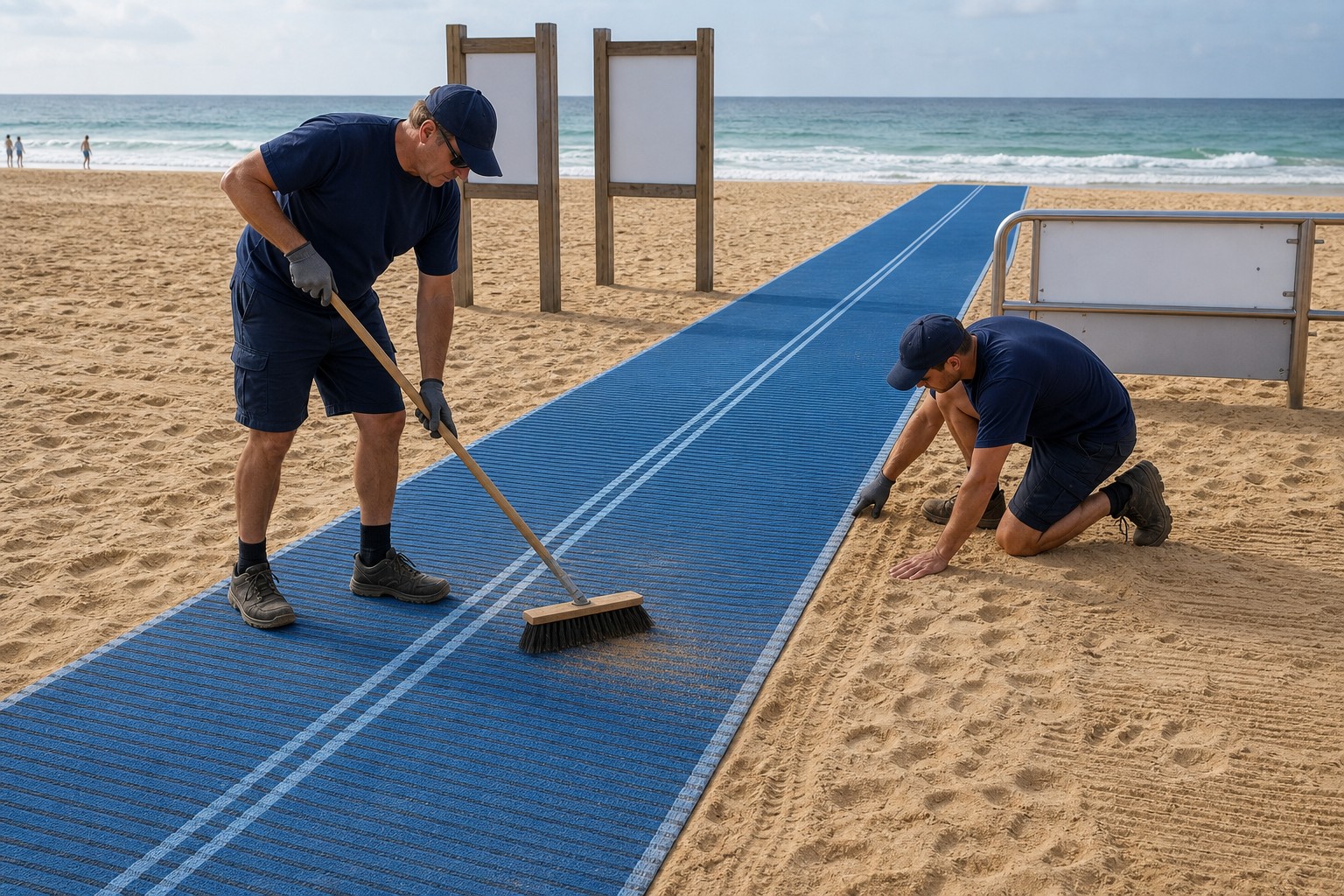
Work through the site-approved removal method and the manufacturer’s instructions. Arrange the staging and transport area so recovered sections can be identified before they join another bundle. Plan how crews will lift and move the actual packages with the handling equipment available at the site. HSE manual handling guidance If a fixing is buried or cannot be removed by the prescribed method, mark the location for the site lead. Keep the affected area controlled while the responsible team resolves the obstruction.
Use the as-installed inventory to count the connectors, end pieces and fixings recovered from each run. Include changes and replacements made during the season. Compare installed hardware separately from spares that stayed in the store. A bag of unused spares can conceal a missing field component if both counts are combined too early.
An example illustrates the difference. If the store holds two unused connector kits and the crew recovers one fewer installed kit than the site drawing requires, the field count still has a shortfall. Establish whether that location was revised, the kit was recovered in another bag, or something remains on the beach. Then update the drawing or resolve the recovery issue.
Sort by condition while the location is still known
Record the section or kit ID, its former route position, your observation and the destination assigned to it. Three destinations keep the sorting decision practical.
| Destination | What belongs there | What the label should say |
|---|---|---|
| Reusable stock after preparation | Identified sections and compatible fittings that pass the applicable condition check | Section ID, route position, preparation completed and storage bay |
| Hold for inspection or repair | A torn edge, damaged connector, distorted section or component of uncertain identity | Exact fault location, photo reference and who will obtain a disposition |
| Withdrawn from use | Items the authorised owner has approved for supplier return, retirement or disposal | Decision, date, quantity and physical location pending removal |
If a component is wet or covered in sand, clean it by the supplied care method and let it dry in the designated preparation area. Reinspect the material and connections once they are visible. Write “awaiting inspection after drying” if necessary. Staff should never have to open a bundle of ready stock to discover which section was awaiting a decision.
Pack for the next person who opens the store
For a system supplied in rolls, use the permitted rolling direction, support and restraint. For sections supplied for stacking, follow the stated stacking orientation and limits. Obtain the packaging and care instructions for the actual material and finished edges. Identify each bundle externally and keep the corresponding hardware in labelled containers. A connector revision that looks much like last year’s part deserves its own clearly marked bin.
Choose a dry, accessible storage position with room to move the actual bundle safely. Protect held items from being drawn into another project. Before leaving the store, give a second crew member an ID from the list and ask them to find the right section, parts and condition note. Correct any label that sends them to the wrong bay.
Hand over what the next season can use
Give the next operating lead a list of reusable stock by section type and route, the held items with their expected decisions, all unresolved count differences, and the location of the approved drawings and instructions. Document time spent on removal and transport while the team can still explain it. Those observations can replace assumptions in the next seasonal estimate. Budgeting for removal and storage
Schedule follow-up for items needing repair or compatible replacement before the next ordering window. When spring planning begins, use the closeout count as the starting inventory and recheck the beach and the stored set before deployment. Opening a seasonal beach access mat route