
A buyer reading a beach mat case study usually wants to know whether a decision at one site will help at another. Start with the decision the account can illuminate. “How the operator kept a route to a viewing area available during patrol season” is a question that records could answer. Claims about increased bookings, visitor independence or lower costs need different evidence.
Before writing, find out which project details the site owner permits you to name, who can confirm the facts and what period the records cover. If you have only a planning drawing and a display photograph, you can describe the proposal or demonstration. Save claims about installation, public use and results for records of the work and service actually delivered.
Reconstruct the trip before and after the work
Identify the entrance, starting surface, destination, usual return, seasonal conditions and user groups the operator intended to serve. Describe the earlier barrier using a dated survey, inspection note, photograph or an attributed visitor account. Record when and how that evidence was gathered. A present-day photograph cannot establish what the route was like before installation.
Then identify the system supplied and the route actually built. State the product or section references where available, installed coverage, joining and end details, and relevant differences from the proposal. Use the supplier’s documents for product facts and the site’s acceptance record for the completed installation. A tender requirement is evidence of what a buyer asked for. It becomes evidence of delivered material only when the accepted order and receiving records support that statement.
| Proposed statement | Evidence that would support it | Limit to include |
|---|---|---|
| A route was installed to a named destination | Dated as-built plan, component record and site acceptance | Name the entrance, endpoint and extent of accepted work. |
| The destination was available during a stated period | Scheduled service hours and dated full, partial or closed intervals | State what hours were unobserved or excluded. |
| A visitor found a particular join easier to cross | Their account, permission and the relevant location and setup | Attribute this experience to that participant and visit. |
| Maintenance work changed | Comparable task and labour records before and after | Describe differences in season, exposure, crew or route length. |
Use public examples for what they actually show
A February 2020 California Coastal Commission staff report on a City of San Diego project described temporary wheelchair mats at some city beaches as available from May to September at the time. The report identified tides, large waves and wind-blown sand as constraints during other months. The seasonal arrangement did not meet the year-round need discussed for that particular site. A case writer can cite that dated record to explain the project’s design question. It supplies neither a present-day opening schedule nor evidence that Ary supplied the mats. California Coastal Commission, City of San Diego staff report, February 2020
A manufacturer or distributor documenting its own project needs evidence of its role as well. Check the contract, order or authorised project correspondence before stating who supplied, installed, inspected or operated the route. Confirm permission to identify the customer. Avoid assigning a project to a supplier because its catalogue contains a similar-looking blue mat.
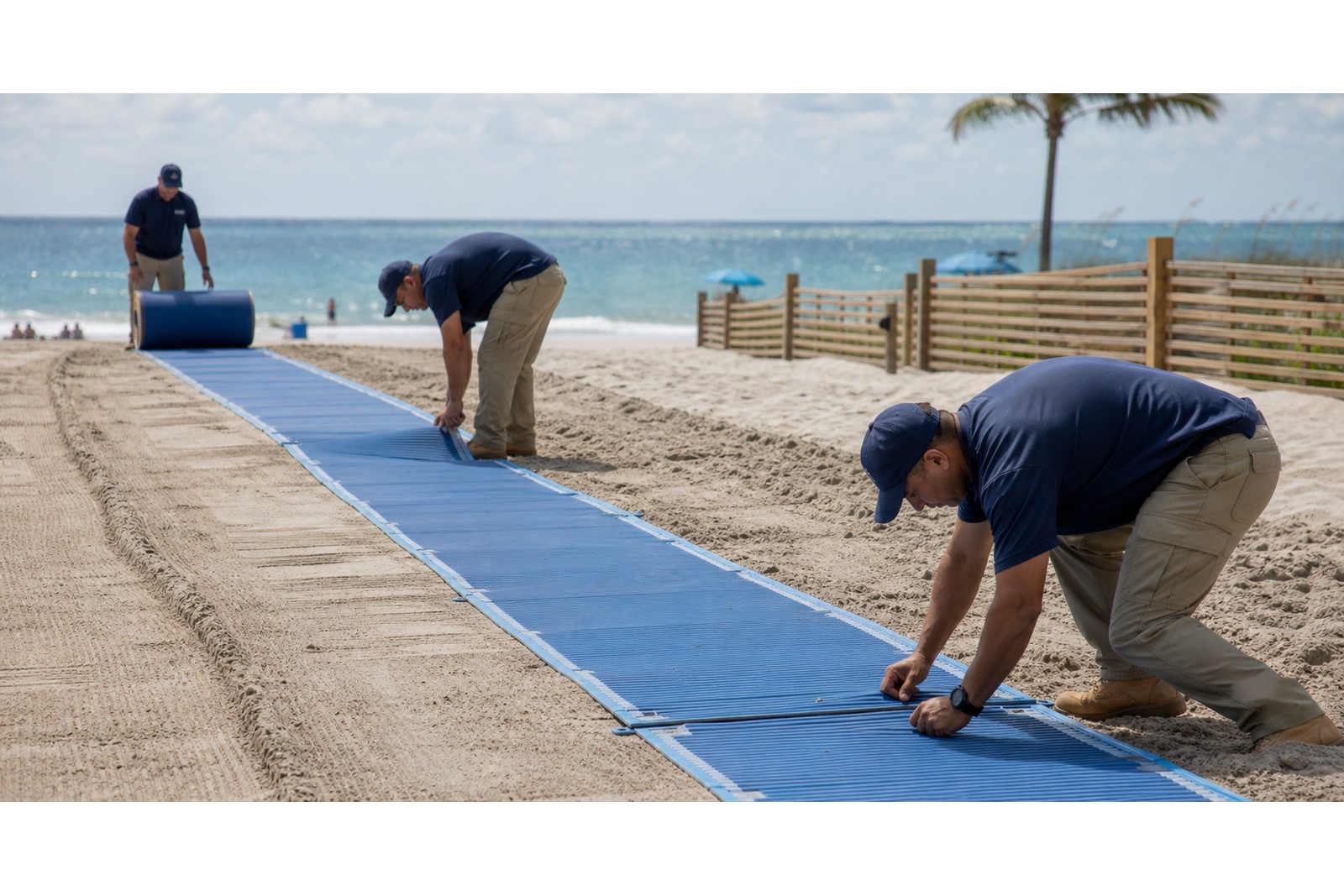
Report results a second person could reproduce
For a hypothetical example of the method, suppose the site scheduled 20 hours of service. Records show 15 hours open to the full viewing area, three hours open only to a shorter resting bay, and two closed hours. Full-destination availability is 15/20, or 75%. Access to at least the shorter verified destination is 18/20, or 90%. These invented inputs illustrate two different measures and must never be presented as a resort’s actual results. Measuring beach mat route availability
Give the reporting period, data source, unit of measurement and known gaps alongside any real result. A new route may have more recorded visits because its observation hours also increased. If the earlier period lacks a comparable count, describe the recorded use during the new period and leave the change unknown.
Close the account with the decision a reader can make and the evidence they would still need locally. A case might explain why one operator stocked compatible end fittings after repeated holds. Another site still needs its own section revision, stock availability, site conditions and maintenance authority before adopting that response.