
When an attendant says the high-back chair caught at the garden entrance, the duty lead has two possible holds to consider. A loose wheel fitting can take one chair out of service. A gate that closes across the only return path can affect every visitor using that entrance. Record the particular hazard and contain its effect before deciding who needs to investigate.
Describe one encounter on the land route
Walk the outward and return legs on the approved land route. Mark gates, changes of surface, corners, stopping places and service crossings. State the direction of travel and the chair configuration when the condition was observed. “Outer edge of the leg support approaches the west post on the return turn” gives the checker more to work with than “narrow gate.”
The AY-ST-V2.0 is a four-wheel high-back model with a reclining backrest and a five-position leg rest. Its manual lists 110 cm overall width and 45 cm seat width. Use the overall dimension to screen an opening. Record the actual setup, usable width and turning space to assess the encounter. A forward support or an attendant’s working space can determine whether the return turn works even where the wheels pass through the gate. AY-ST-V2.0 English manual
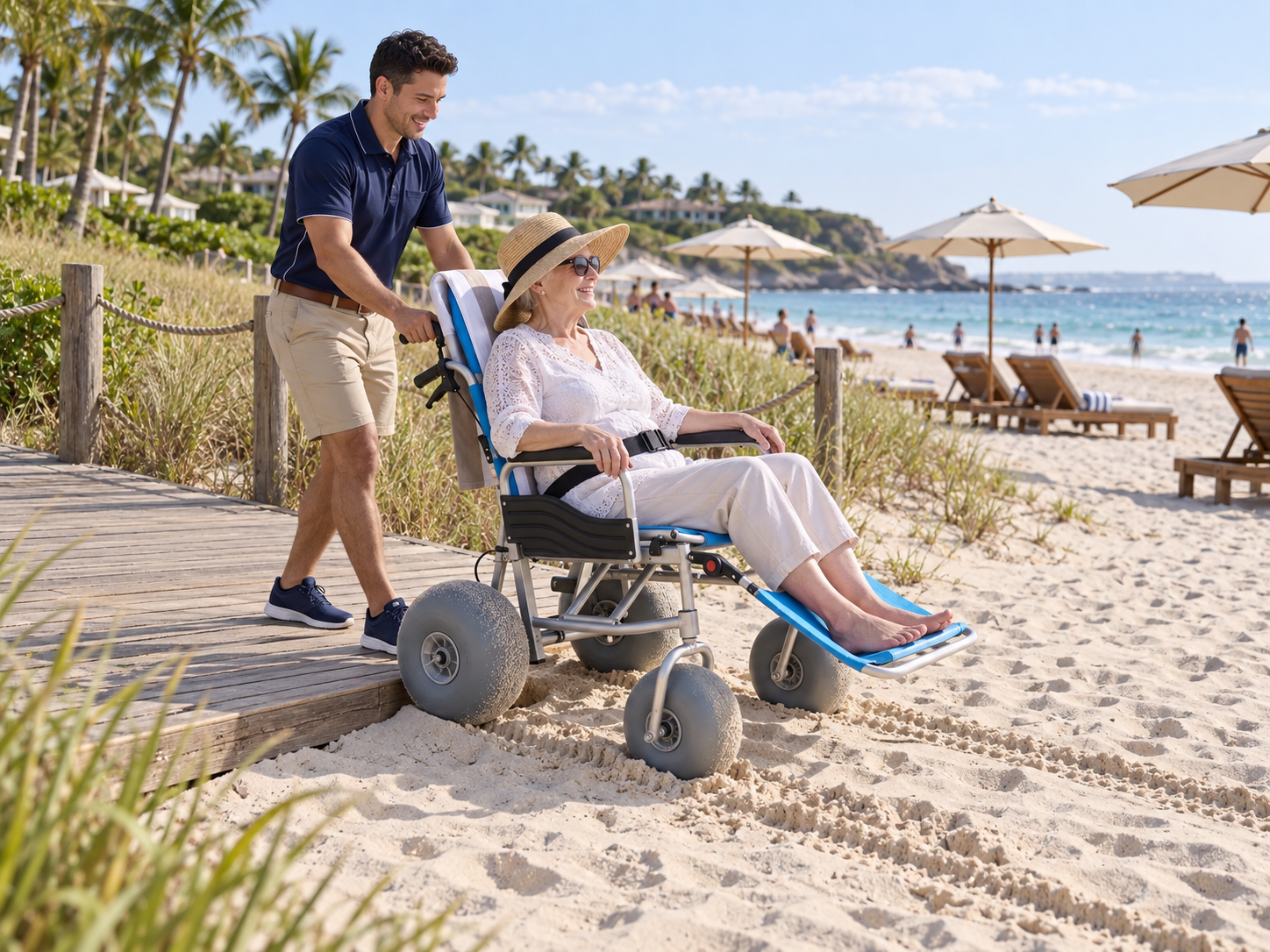
Make the first response match the exposure
| Observation | Immediate decision | Who needs to verify the correction? |
|---|---|---|
| A wheel rubs on the empty pre-use check | Identify and hold that unit. The desk checks whether another released chair suits the booking. | Equipment lead checks the actual wheel, fitting and movement under the model instructions and records release. |
| The return gate has lost working clearance | Hold trips that depend on that gate. Contact staff supporting visitors already out. | Facilities confirms the obstruction is resolved or an alternative route works in both directions. The duty lead updates the desk. |
| Sand loss has exposed the mat-to-path edge | Prevent further use of the affected reach and protect its approaches under site procedures. | The route owner examines support and the corrected transition before the operator reopens that leg. |
| The attendant committed to a return is unavailable | Resolve the existing visitor’s supported return under the site’s procedure and hold conflicting departures. | The supervisor confirms qualified cover, time and receiving point with the visitor and duty staff. |
In the live register, add the asset or reach ID, current controls, who is exposed, the site’s risk rating and the reason for it, action owner, due time and what remains uncertain. Reassess the remaining risk after the correction. A replacement chair may resolve one equipment hold while leaving an independent path restriction in force.
Close the entry against the event that opened it
Suppose a supplier refits a slipping leg rest on chair L-07. Record which position failed and have the authorized person recheck the corrected assembly by the specified method. If that position changes clearance at the gate, repeat the relevant empty route check. A completed work order alone gives the front desk no basis to offer the affected trip.
Keep equipment releases in the pre-use inspection record and route decisions on the land-route plan. Show who closed the entry and when to revisit it, such as after a gate replacement or another occurrence at the same turn. If responsibility passes to facilities or a technician, retain the hold and contact until that party reports back and the duty lead records what service can resume.