
“Beach wheelchairs available” leaves a visitor with a trip to plan and very little to go on. A usable listing tells them where to collect the chair, whether they can reserve it, what destination they can reach on land and where and when it has to come back. Put a working phone number or email beside those details so a visitor can check a change before setting out.
Describe the chair visitors will find
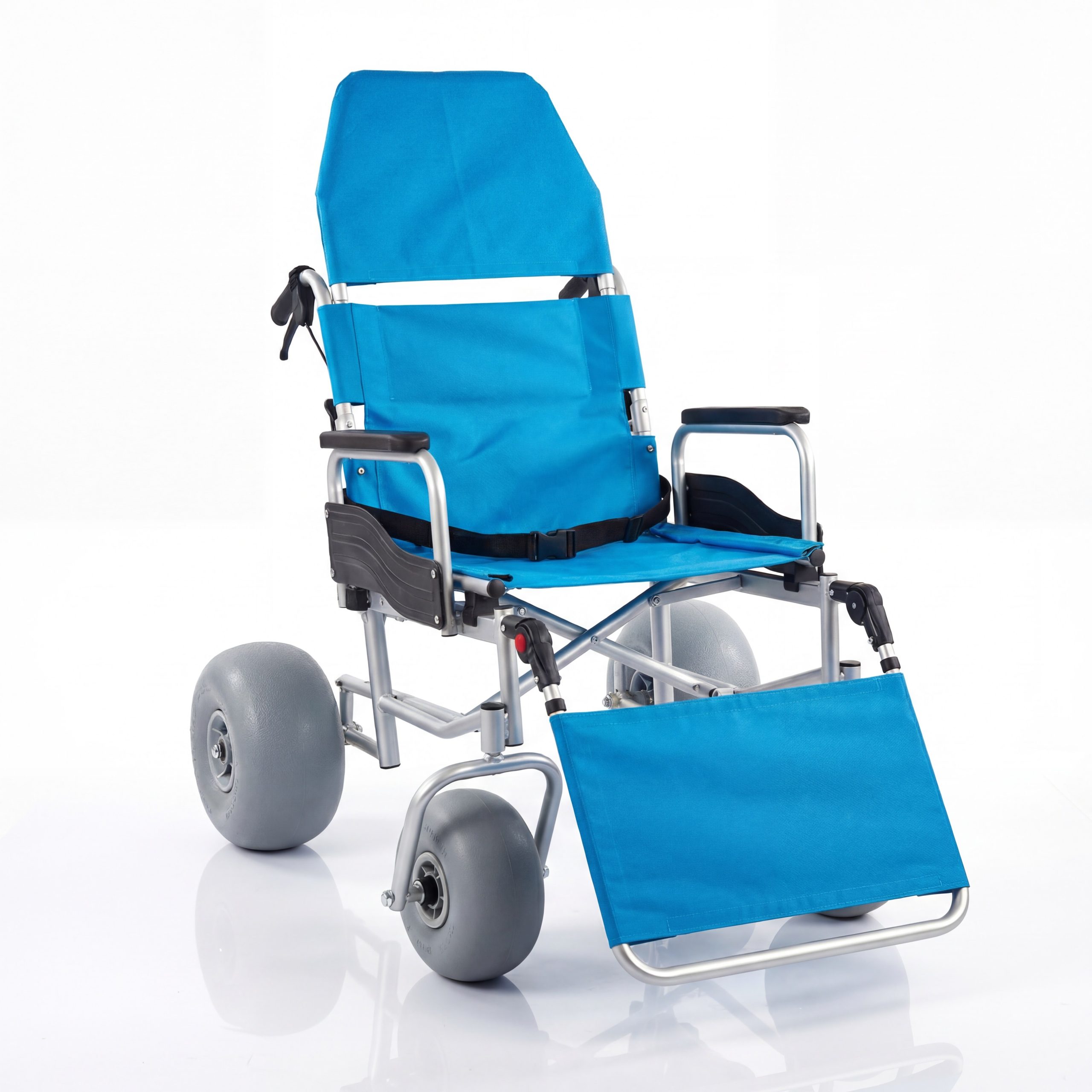
Give the model when known and describe features a borrower can use to judge suitability. For a site lending the AY-ST-V2.0, relevant details include a high back, an adjustable leg support, a 45 cm seat width and a stated 100 kg capacity. The overall width is 110 cm. A guest may need that last measurement to ask about the gate near their accommodation. Describe the chair as a land model for the offered route and say how to discuss any support needs privately. AY-ST-V2.0 manufacturer manual
Name the two ends of the trip. “Collect from the staffed kiosk beside the north car park and return to the same kiosk” is clearer than a pin in the middle of the beach. Explain the surface after the last boardwalk panel, the final checked turning point and whether a staff member can accompany the visitor or a companion needs to be present. Tell borrowers where they can leave their own mobility device if a storage arrangement is available.
A park listing that changes with the season
Cape Hatteras National Seashore lists three visitor centres with beach wheelchair loans throughout the year. It lists additional locations at lifeguarded beaches during its stated summer period. The loan is free and first come, first served. Chairs must be returned by 4 p.m. each day, including when a visitor wants to use one on consecutive days. A family planning two outings therefore needs to return the chair after day one and check availability again. Confirm the current terms directly with the park before travel. National Park Service mobility information for Cape Hatteras
Those details belong to Cape Hatteras. A different operator publishing a reservation service should specify how to request a slot, what counts as confirmation and who can resolve a late arrival. If the nearest beach entrance is staffed only in summer, give the alternative pickup location for the dates shown.
Write the trip as a visitor would use it
Example visitor notice for a fictional site. “Meet at the north kiosk beside the car park. Please wait for our confirmation before travelling for a reserved chair. The loan covers the boardwalk and the dry picnic terrace. Call the kiosk before leaving home if you need pushing assistance or want to arrange storage for your own chair. Return the beach chair to the kiosk by the time on your confirmation. The lower sand path is closed today.”
A real notice needs the site’s own contact details, current date and local times. Give a plain-text route description beside the map or photo. Put any temporary change where visitors book as well as where they collect the chair. If only the lower path has closed, tell visitors what they can still reach and who will announce its reopening. A visitor can then decide whether the remaining trip is worth the journey.