
The beach desk needs to know whether a particular guest can reach a viewing area and get back. The fleet manager also needs to know whether a backlog of chair faults is growing. Those questions belong on the same dashboard only if each retains its own counting unit. Use planned departures for route access, promised collections for return performance and unresolved work orders for repairs.
Count the trip visitors were promised
Choose a reporting period and freeze the planned departures by entrance and destination. Define a usable land trip as one where the operator verified the complete outward and return route for the configured chair. Record any shortened trip separately, even if the guest accepted the change. If a venue cancels the entire day, keep the planned departures and label why they were lost.
For example, suppose a site plans ten departures to the upper viewing area during a week. On eight, the route to that destination and back was verified. On one, fencing leaves only a shorter terrace trip. On another, the only return gate is closed. The result for full-route availability is 8 of 10 planned departures, or 80%. It measures route status at departure. It says nothing yet about whether eight people booked or completed those trips.
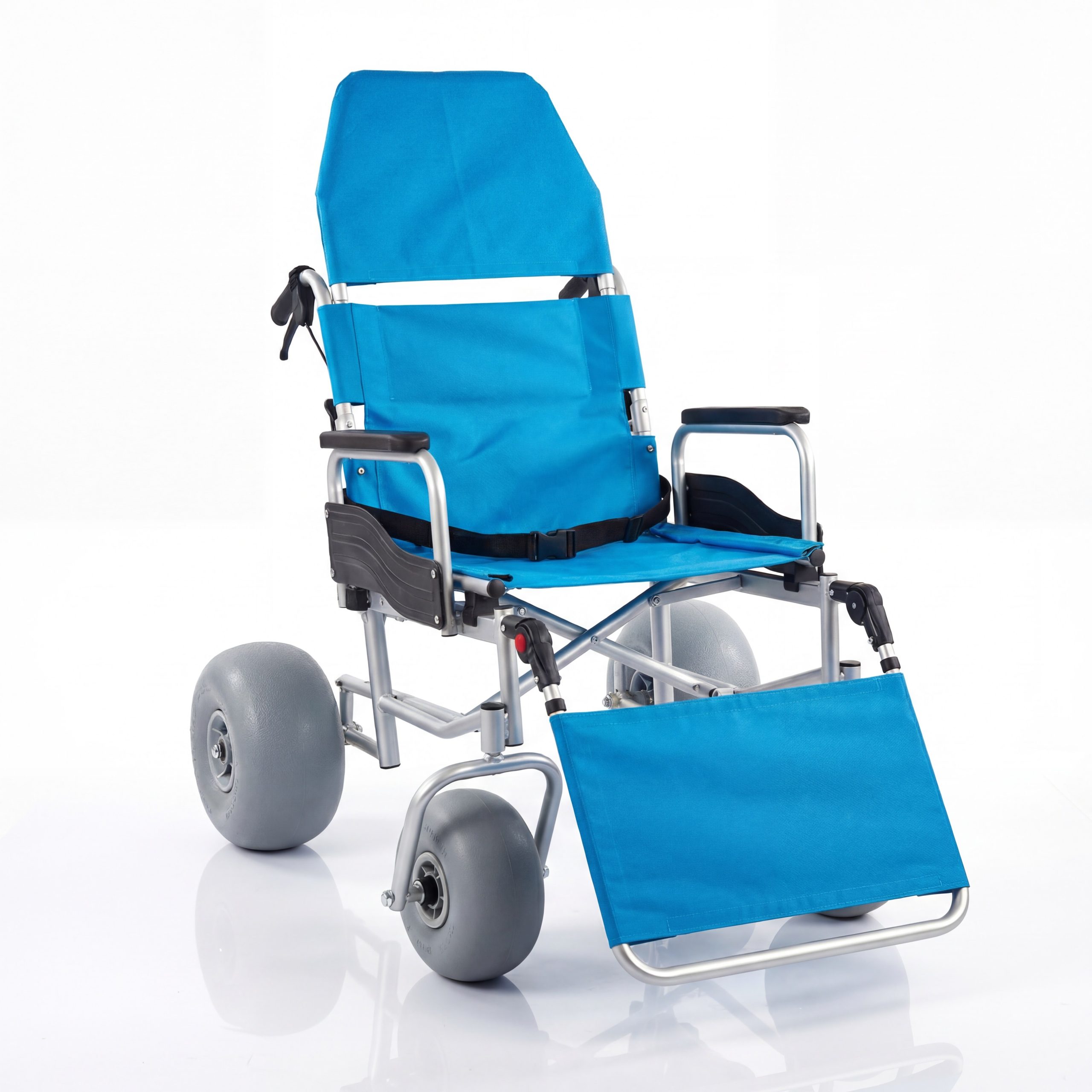
Use the assigned model when assessing the route. The four-wheel AY-ST-V2.0 has a high back and adjustable leg support. Its manual lists 110 cm overall width. Record the route and configuration actually checked, especially at turns and gates. An unavailable chair and an obstructed return are different reasons for a lost booking. Manufacturer’s AY-ST-V2.0 manual
Put a clock on the return commitment
At issue, record the agreed return point, collection window, assigned person and booking reference. Define “on time” against the agreed window and the same event each time, such as the attendant reaching the named collection point. A completed trip with a late collection belongs in the late column.
| Illustrative return record for one week | Count and treatment |
|---|---|
| Promised collections falling due | 12 after removing duplicate booking records |
| Attendant arrived within the agreed window | 9 on time |
| Attendant arrived after the agreed window | 2 late |
| Collection due but outcome unrecorded | 1 unresolved, retained in the denominator |
| Verified on-time share | 9 ÷ 12 = 75%. Show the unresolved case alongside the percentage. |
A returning guest who needs immediate support triggers the site’s operating procedure at once. A weekly report can identify which entrance, shift or overlapping assignment contributed to a late return. Check the underlying handoff before attributing a delay to an attendant.
Reconcile work orders independently of bookings
If Monday starts with five open defects, staff log three new defects and authorized checkers close two, the ending backlog is six. Count unique work orders and keep the asset ID and component position with each. Several defects may belong to one chair. A single overdue defect on the only chair suitable for a booked route can deserve priority over several cosmetic jobs.
Add the age of the oldest unresolved service-affecting defect, its owner and the next verified action. Keep repairs awaiting parts visible. Close a work order after the required check, with the release decision traceable to the maintenance history. For an unresolved obstruction or staffing risk, reference the land-route risk register.
At review, ask which decision the counts support. Eight of ten usable departures may justify changing the gate arrangement. Late returns suggest scheduling work. A growing defect backlog may require a technician or parts order. When comparing sites, add like numerators and denominators and keep each site’s raw counts available for follow-up.