
Look at the last entry for the actual chair before taking it out of its bay. If a visitor reported a support slipping on return, find the authorised work and recheck that resolved it. A chair returned clean may still be held for a mechanical fault. Keep an unresolved unit physically identified and unavailable at the issue desk.
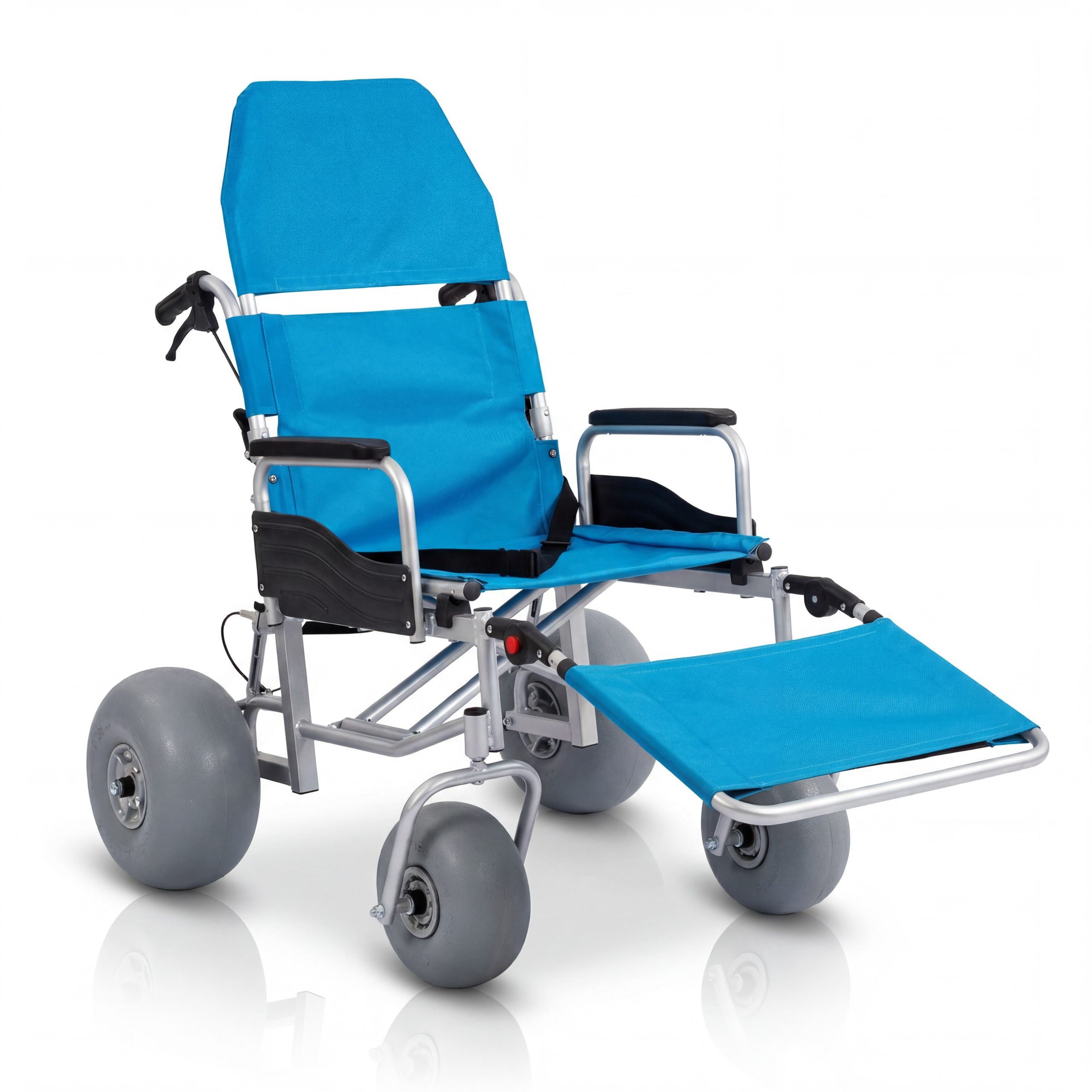
Set the empty chair on firm, level ground with room to inspect both sides. Match the asset and model with the instruction set. For AY-ST-V2.0, the manufacturer shows four inflatable PU wheels, a folding frame, a removable upper backrest, a reclining backrest and five-position leg support. Pages 3–5 identify attachments and controls. Apply the current instructions to the supplied version. AY-ST-V2.0 manufacturer manual
Start at the front and work back on both sides
| Check on the empty unit | What the checker should establish | Example reason to hold |
|---|---|---|
| Front wheel assemblies and forks | Both front assemblies are correct for that position, secured as instructed and clear through the permitted movement. | A fitting is missing, the fork catches or a wheel repeatedly rubs. |
| Rear wheels and attachments | Each wheel and its retention agree with the model reference. Inspect tire and valve condition. | Air loss recurs, the mount appears distorted or retention cannot be confirmed. |
| Frame and folding connections | The frame reaches its documented operating position and accessible connections are engaged. | Movement remains unexplained or an attachment is damaged. |
| Seat, high back and leg support | Fabric and support points are intact, removable components correctly mounted and the selected mechanical settings hold. | A seam has opened at a support point, a back connection shifts or the leg support will not engage. |
| Handles and controls | Check the fitted controls under the model instructions. Observe routing of accessible cables after folding or transport. | A control binds, fails its prescribed check or has a visibly damaged connection. |
The technical table identifies the standard 9 × 4.5-inch front and 12 × 5.5-inch rear tires, with a recommended 2–4 PSI range for those front and rear tires. Check wheel identity before applying that range, and use a gauge suitable for the stated pressure. Confirm the applicable instruction for a different or replacement assembly. Raising pressure to compensate for drag can hide a separate interference fault.
Observe the short empty roll
After the static checks pass, have the designated checker observe a short straight movement, a turn and the applicable brake operation on the firm test area. Watch where a wheel or fitting approaches the frame. Record the side and condition if a symptom appears. “Left front wheel rubs during a right turn after refitting” tells maintenance what to examine.
Where the instructions permit removal of loose debris, complete the authorised task and repeat the affected check. Send damage, uncertain retention or a support that moves out of position to the equipment lead. Keep an occupied trial out of the fault investigation. The person intended to use the chair should never have to establish whether a suspect connection will hold.
Send a release decision to the desk
For a held chair, record the asset, part, observed condition, time and who is following up. Update the physical tag and booking availability together. For a chair that has passed, record the checker and release time, especially after any supports or wheels have been refitted. Recheck the parts disturbed if the unit is subsequently folded or transported again. Transporting and reassembling an empty land chair
Equipment release makes that configuration available for a suitable booking. Before a visitor transfers, the operator still confirms fit, route, assistance and return arrangements. Use the maintenance history for a recurring fault and keep the pre-use check focused on what the desk needs to know about this chair today. Long-term wheelchair care