
Ask the returning attendant where sand accumulated and whether anything rubbed, shifted or failed to engage on the way back. Put the asset ID and the reported symptom on the return note before cleaning. If the problem is visible, take one close photograph and one showing the location on the whole chair. A cleaning worker may remove the evidence that lets a technician reproduce the fault.
The AY-ST-V2.0 has an epoxy-painted carbon-steel frame, stainless-steel fork, inflatable PU wheels, fabric seating, a removable high-back section and adjustable leg support. The manual includes cleaning and maintenance illustrations on page 5. Follow the care instructions for the delivered version. A pictogram showing a rinse does not specify a chemical, pressure setting or disinfectant contact time. AY-ST-V2.0 manual, pages 2–5
Keep the unit identifiable through the wash area
Move the empty chair to the site’s designated care area. Remove personal belongings and account for any loose parts returned with it. If an attachment was removed for transport, keep it and the corresponding fittings under that chair’s ID. An unlabelled support from another unit can resemble the correct part even when its revision differs.
Inspect the tire-to-fork and wheel-to-frame spaces, the lower folding area and the leg support connections. Remove loose sand using the permitted method. Do not operate a stiff adjustment repeatedly to dislodge grit. If a worker cannot reach trapped material without taking a connection apart, refer the task to someone authorised to follow the applicable removal and refitting procedure.
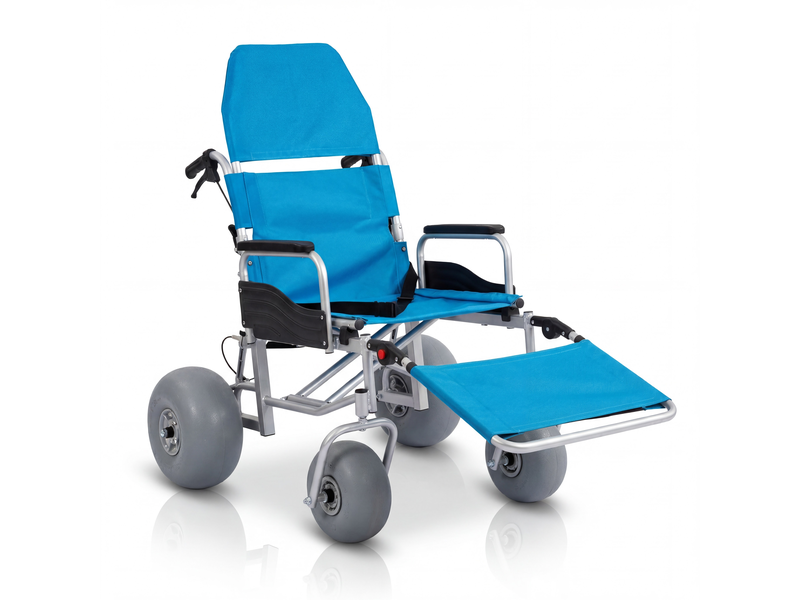
Follow the contact surfaces to the places they meet
Clean the handles and fitted control surfaces, the seat and back fabric, support edges and the front leg-support area using compatible methods. Inspect accessible seams and undersides as the material becomes visible. Look behind the removable upper support and around the mounting area when the instructions permit access. Where the approved method calls for rinsing, allow the water to drain away from the care station under the site’s arrangements.
For shared equipment, have the hygiene lead and supplier resolve compatibility of the site’s cleaning agent with the actual fabric, painted frame, tires and fitted hardware. An unusual contamination event can require isolation and specialist guidance. A visible surface can look clean while a technical issue or hygiene decision remains open.
Dry in a state staff can inspect
Arrange the empty unit and authorised detached pieces in the permitted position for drying. Check fabric folds, the bottom edge of the backrest and contact surfaces that will press together during folded storage. Keep the chair labelled as preparing while damp areas remain. Record a damaged coating, cut tire or loose seat attachment discovered during cleaning and identify the side or location.
Suppose the team removes sand from the right front fork, but the wheel still rubs on firm ground during the authorised empty check. Cleaning is complete at that area. The mechanical finding is still open. Send its location and the original return observation to the technician. Leave adjustments to the person responsible for investigating the rub.
Tell the issue desk what still needs attention
A useful desk entry might read, “Land chair L-04 washed and dry. Upper support refitted. Front-right rubbing still present, maintenance hold.” Use the actual condition and staff authority at your site. When a permitted connection has been disturbed, the authorised checker repeats the relevant checks after refitting and before release.
Store a serviceable chair where staff can retrieve it without loading the backrest, controls or seating with other equipment. Keep held units in their designated place and tell the next shift what must happen before they can be issued. The empty-chair pre-use inspection covers the checks required when a prepared unit returns to the issue desk.