
Illustrative equipment and route image from the Ary Beach collection.
Before accepting a donated beach walker, ask who will hold the key, prepare it, meet the borrower and receive it back at closing. A donor can pay for a new unit while the community group still lacks funded staff time, dry storage or anyone authorised to place damaged equipment on hold. Accept the donation into a defined service with an owner and a realistic operating period.
Talk to potential borrowers about the trips they cannot currently make. A person who can walk with support may want to join friends at a specific picnic area. Someone else may need seated transport. A walker loan and a beach wheelchair loan meet different needs. Use the requested destinations, likely times and available assistance to define the service before deciding how many walkers to seek.
Agree who can accept a donated unit
Name the organisation responsible for the equipment, the person accepting it into the register and the role authorised to release it for borrowing. Record donor or funding reference, asset ID, actual model, condition, included components and current instructions. Obtain the donor’s documentation for a used unit. Put unidentified or incomplete equipment aside while the owner seeks an assessment.
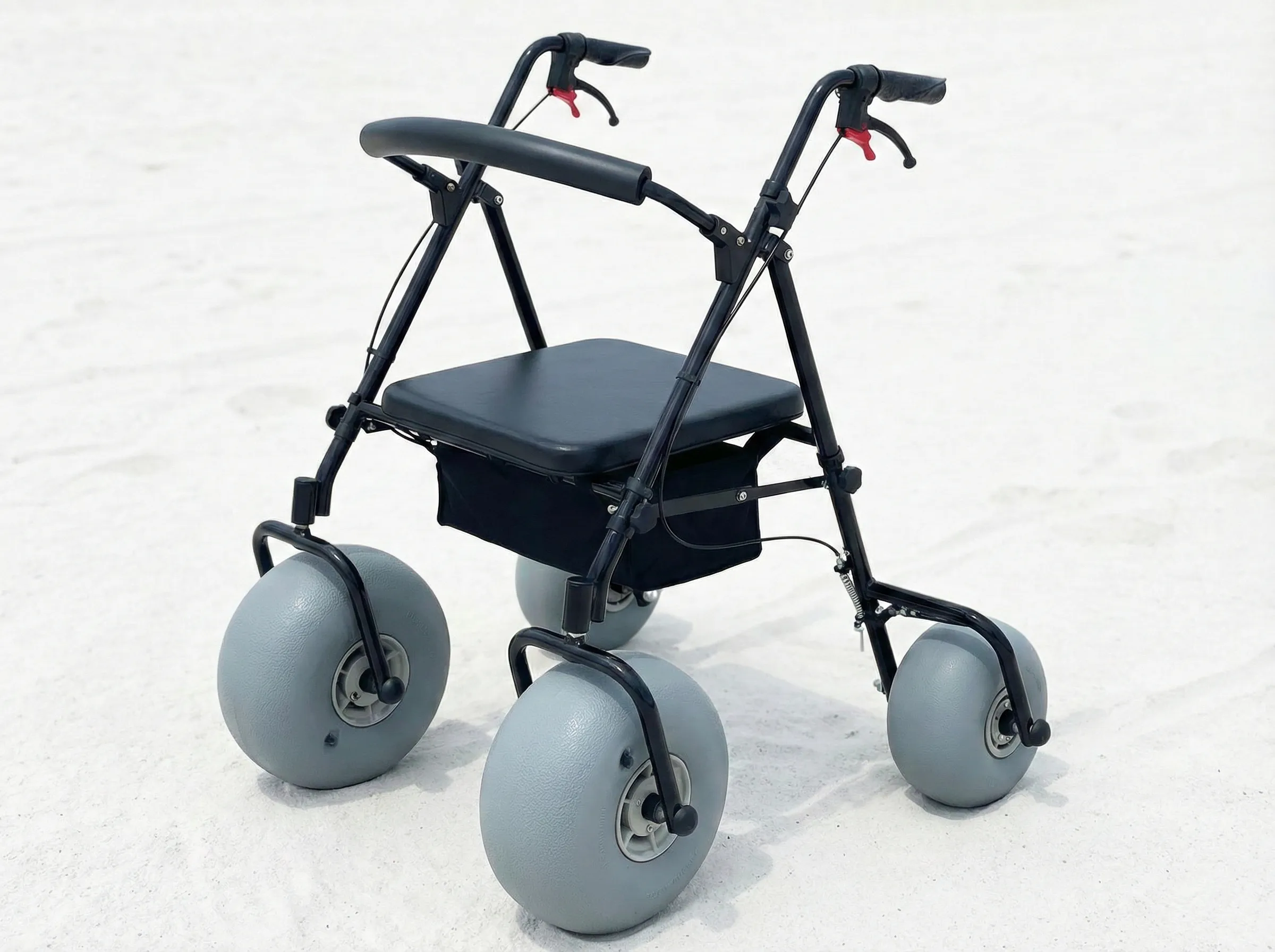
For an AY-STZ1.0, the manufacturer describes a folding four-wheel walker with adjustable handles and brakes, a seat and an under-seat bag. Its technical table lists an epoxy-painted carbon-steel frame and stainless-steel front fork. Match the actual unit to its manual. Ask about inspection, repair support and available compatible parts before the program accepts responsibility for future loans. AY-STZ1.0 manufacturer manual
Give borrowers a fair way to request the service
Publish the entrances and operating days the program covers, how to ask for a walker, how long a loan may run under the local terms and what assistance is available. Offer a way to request a place without relying only on an online form. Ask for contact and visit details relevant to allocation and follow-up. Route personal suitability questions to the appropriate person.
Choose a reservation, walk-in or mixed allocation rule and explain how staff apply it. For example, a community group might reserve some released units in advance and hold another for a walk-in period when enough trained volunteers are present. State when an unclaimed reservation becomes available and how a borrower who needs extra time contacts the desk. The example is a policy choice, not a recommended allocation ratio.
Where demand exceeds supply, keep a consistent waiting list with the request time, suitable service and preferred contact. Record a missed request if the route is closed or assistance unavailable. A shortfall in equipment, a shortage of volunteers and a closure for changing ground conditions need different responses.
Fund the work between loans
| Cost or duty | Question for the first season’s agreement |
|---|---|
| Equipment owner and store | Who holds the asset register, controls keys and provides a dry, accessible storage position? |
| Staff and volunteer cover | Which shifts can actually support handover, return and the agreed route? Who covers absence? |
| Cleaning, inspection and repairs | Who supplies approved care materials, checks reported faults, authorises work and releases a repaired unit? |
| Continued supply | Which budget covers compatible service parts, transport for authorised repairs and future replacement assessment? |
Separate setup and recurring costs. A grant for equipment may cover the walker and initial delivery while leaving routine care, volunteer training and repair freight unfunded. Ask the budget owner to identify the source of those ongoing resources before opening bookings. Spare-parts stock for an AY-STZ1.0 fleet
Give volunteers a practical rehearsal on the actual model and service route. Observe them receiving a borrower, describing the endpoint, explaining permitted use within their role and recording a return. Include a scenario in which a brake fault is reported. The volunteer should be able to identify and hold the walker, contact the supervisor and explain the options for another visit. Staff and volunteer handover practice
Report what the community received
At the end of the funded period, give the governing group the number of requests, completed loans, unserved requests by reason, held-unit days and repair or care costs. Include feedback about a specific barrier or destination where permission to share it has been obtained. Use aggregate figures and keep personal details in the restricted service records.
If borrowers repeatedly request weekend visits while the only staffed shift is a weekday, discuss shift funding before asking for another unit. If sessions are cancelled because the same walker repeatedly needs technical attention, review its history with the responsible technician. The next season’s decision should identify which service will continue, who will deliver it and what funding makes that commitment possible.