
Ask the person returning the walker whether anything changed during the outing before taking it to the cleaning area. Sand around a front fork might explain a scraping sound. A brake that stayed engaged on firm ground needs a service check even if the grit washes away. Record the asset and the symptom while the user or companion can still identify the side and location.
The AY-STZ1.0 manual identifies an epoxy-painted carbon-steel frame, a stainless-steel front fork, a seat, a bag and handles with brake controls. Page 5 illustrates cleaning. Have the current care instructions for the fitted components on hand, including any local infection-prevention requirements for shared equipment. A cleaning illustration does not establish a disinfectant concentration, contact time or immersion procedure. AY-STZ1.0 manufacturer manual
Remove sand where it affects movement
Set the empty walker in the designated cleaning area and take the visitor’s belongings out of the bag. Check the front fork, gaps beside each wheel, the frame’s folding points and the area below the bag. Remove loose sand by a method the supplied instructions permit. Avoid pushing grit into an axle opening or a brake mechanism.
If an area remains obscured, leave the unit awaiting inspection and ask who is authorised to remove the relevant assembly. A person assigned to clean the walker should not undo a brake fitting or change a cable setting to reach a patch of sand. Keep removed, identified components with their own unit when disassembly is authorised.
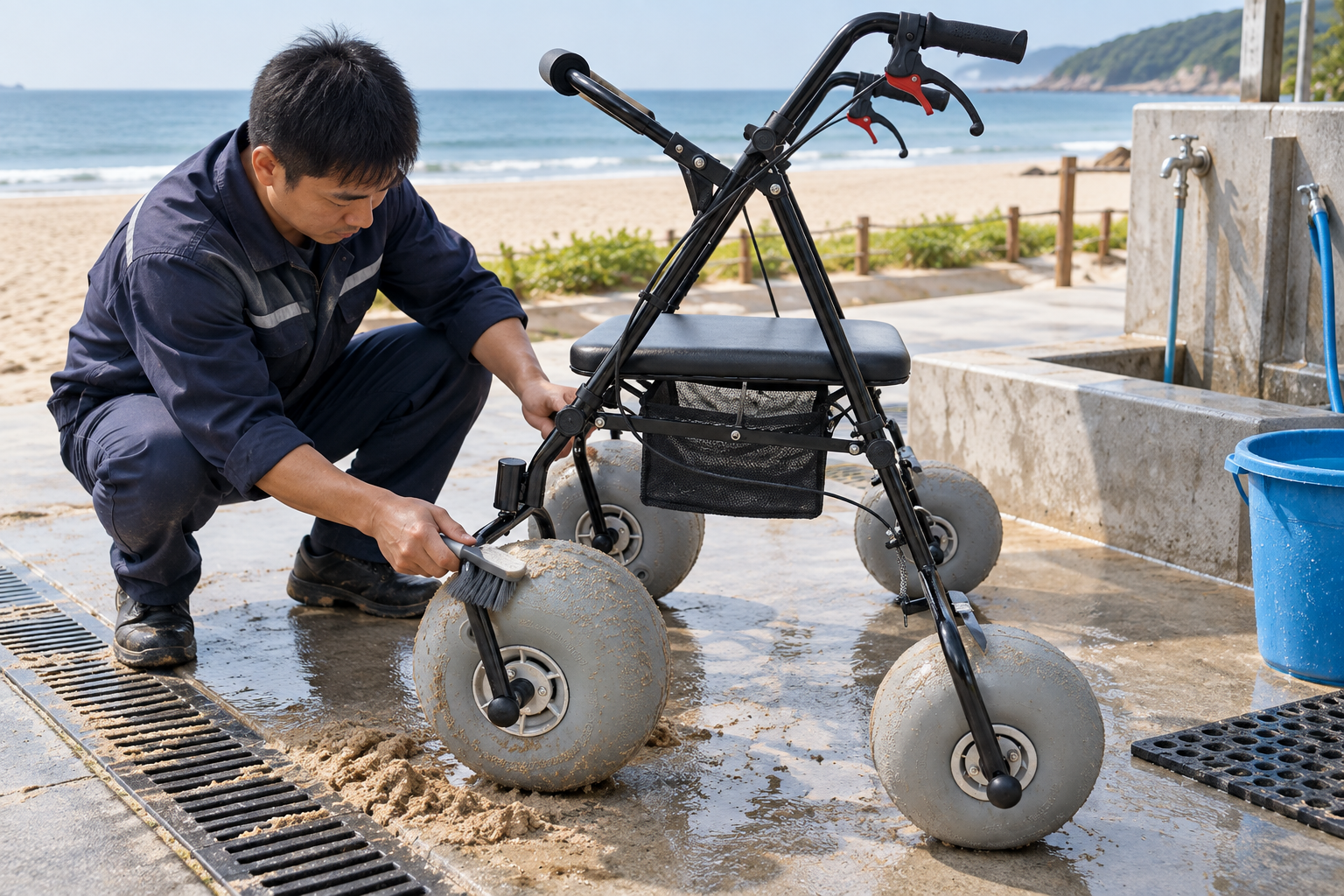
Clean the contact surfaces and the underside
Follow the permitted method for the grips, levers, seat surface, bag and frame. Pay attention to the underside of the seat and bag, where loose sand can fall back onto moving parts when the walker is folded. If rinsing is prescribed for coastal residue, apply the model-specific instructions to the affected areas and allow them to drain.
For shared equipment, ask the responsible hygiene lead which process applies to an unusual contamination event and whether the agent is compatible with each surface. Isolate the unit if those instructions are missing. Do not select chemicals, apply heat or claim a disinfected surface on the basis of visible cleanliness alone.
Dry before folding or covering
Arrange the unit in an authorised position that lets staff see and dry the contact surfaces, bag and frame joints. Check the grip area and places where a wheel assembly or folded part will meet fabric in storage. A dry upper seat can conceal moisture beneath it. Keep items awaiting drying physically separate from units released for issue.
Once the cleaned areas are visible, inspect for a cut tire, damaged finish, frayed fabric, insecure attachment or interference with the brake cable. Following the applicable procedure, check empty rolling and brake operation. The original finding remains open if the same wheel still drags. Daily pre-use inspection for the beach walker
Give the desk a usable return status
A concise entry might read, “Illustrative record: W-08 cleaned and dry. Right rear wheel still drags after brake release on firm ground. Held for technician.” This tells the next shift what work has finished and why the walker cannot be allocated. After authorised repair, record the affected functional recheck and the person who released the unit.
When the walker goes back to the person who will use it, return its complete, identified setup and the approved care instructions. For equipment going into a vehicle, make sure the dry parts and bag can be loaded without trapping handles or cables. Empty walker transport and reassembly