
A hotel guest asking for an accessible beach lounger needs to know which room or lobby exit leads there, whether the route stays on a firm surface and where the mat actually ends. A photograph of a blue path on the sand cannot answer those questions. Trace one complete guest trip, including the return after recreation staff change shifts, before adding the amenity to a booking page.
Follow the guest through the departments
Begin where a guest arrives or asks for directions. Check the route from the lobby or accessible accommodation to the terrace, the terrace gate, the hard-to-sand transition and the seating area. A service lift, keyed gate, breakfast trolley or row of umbrellas can change the journey during ordinary hotel operations. Visit during the hours the guest is being invited to use it.
Ask whether a guest plans to remain in their own mobility device or request a beach wheelchair at the recreation desk. The mat might reach a viewing point without reaching the agreed equipment handover area. Specify where a visitor can wait, transfer if appropriate, store their usual chair and find it on return. The beach operator confirms any additional assistance and chair availability. Beach wheelchair visitor booking questions
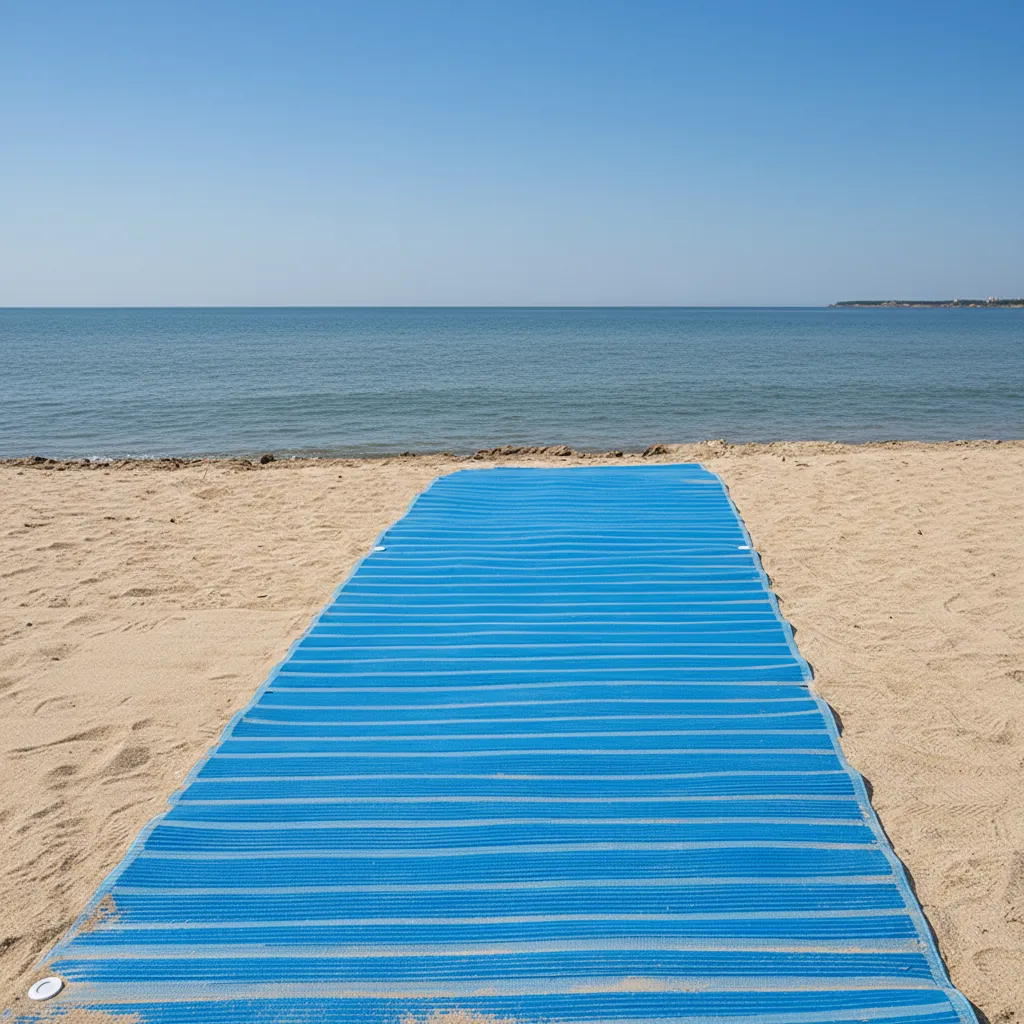
Make the offered mat serve the actual destination
Mark each turn at the entrance and each connection between mat sections. Ask the supplier for the offered width, effective coverage, edge and joint detail, fixing arrangement and removal method for that site. Price the transitions and seasonal handling alongside the material. A change to the sunbed layout can move the usable destination even if the mat itself stays in place. Matching mat materials and connections to the site
Inspect the last section with the beach team. Can the guest reach the reserved seating position and turn without moving onto unsupported sand? Is there room for accompanying family or an attendant without blocking the path? Ask food-and-beverage staff how they will reach nearby loungers. Confirm separately whether their loaded service carts may use the mat. A pedestrian route and a commercial cargo run have different demands. Resort beach cart dispatch and return
Assign one guest-facing answer for each shift
| Team | What it needs before confirming a visit |
|---|---|
| Reservations and concierge | Named entrance, reachable destination, staffed hours, current route status and the contact for a last-minute change. |
| Recreation or beach attendants | Released equipment, suitable handover area, agreed assistance and a covered return time. |
| Facilities and grounds | Installed layout, component references and who can clear sand, repair a joint or assess a change in support. |
| Beach service and housekeeping | When deliveries and furniture moves can occur, where wet equipment returns and who keeps the path clear. |
Consider a fictional morning service. Before breakfast, the field lead accepts the mat to the first row of shaded seating. A catering setup at midday narrows the gate used on the return. The supervisor must address the obstruction or review another complete journey before telling concierge that the afternoon visit is available. Calling the lounger “reserved” does not establish a return route.
Where a connection lifts or the beach profile changes, the field team checks the actual section and protects the affected approach. Arrange for visitors already at the destination to return under local procedures. Give reception the confirmed endpoint, the activity still available and the next update. Facility inspection and repair checks
Review the first operating week
Record missed or shortened outings with the reason. A guest unable to find the terrace gate needs better directions. A wheelchair that cannot reach the booked row points to layout or furniture placement. A late return after the equipment desk closes points to a staffing problem. Record care time, component damage, seasonal storage and changes in route availability alongside those observations. They give the resort a basis for adjusting the service before it buys more matting or advertises a longer route.