
At pickup, a beach wheelchair reservation becomes a particular unit in someone’s custody. The renter needs to recognise that unit, know what has been agreed and know whom to call if something changes. The rental business needs a signed or otherwise acknowledged issue record it can reconcile against the physical return.
Begin with the booking reference, the guest’s chosen means of communication and the actual equipment in front of you. If a different model is available, describe the change and give the renter time to consider it. A reservation category such as “all-terrain” does not specify seating, dimensions, the push arrangement or the support a particular person may need.
Show the condition while the chair is still at the counter
Read the fleet label together. Identify the model, the items supplied with it and any existing cosmetic marks the renter and staff can see. A dated photograph, taken with permission and focused on the equipment, can show an existing scuff more clearly than a liability clause. Explain where the renter can see their copy of the condition record. A new defect affecting operation goes to the shift lead before handover.
For the AY-ST-V2.0, the manufacturer identifies a removable upper backrest, five-position leg support and different front and rear wheel sizes. A staff member prepared on this model should identify the supplied components on the actual chair and answer questions using the applicable instructions. Agree who will provide any required assistance. If seating, assistance or handling remains uncertain, pause and resolve the issue with the renter. The model manual and pre-use inspection for staff cover the unit-specific checks.
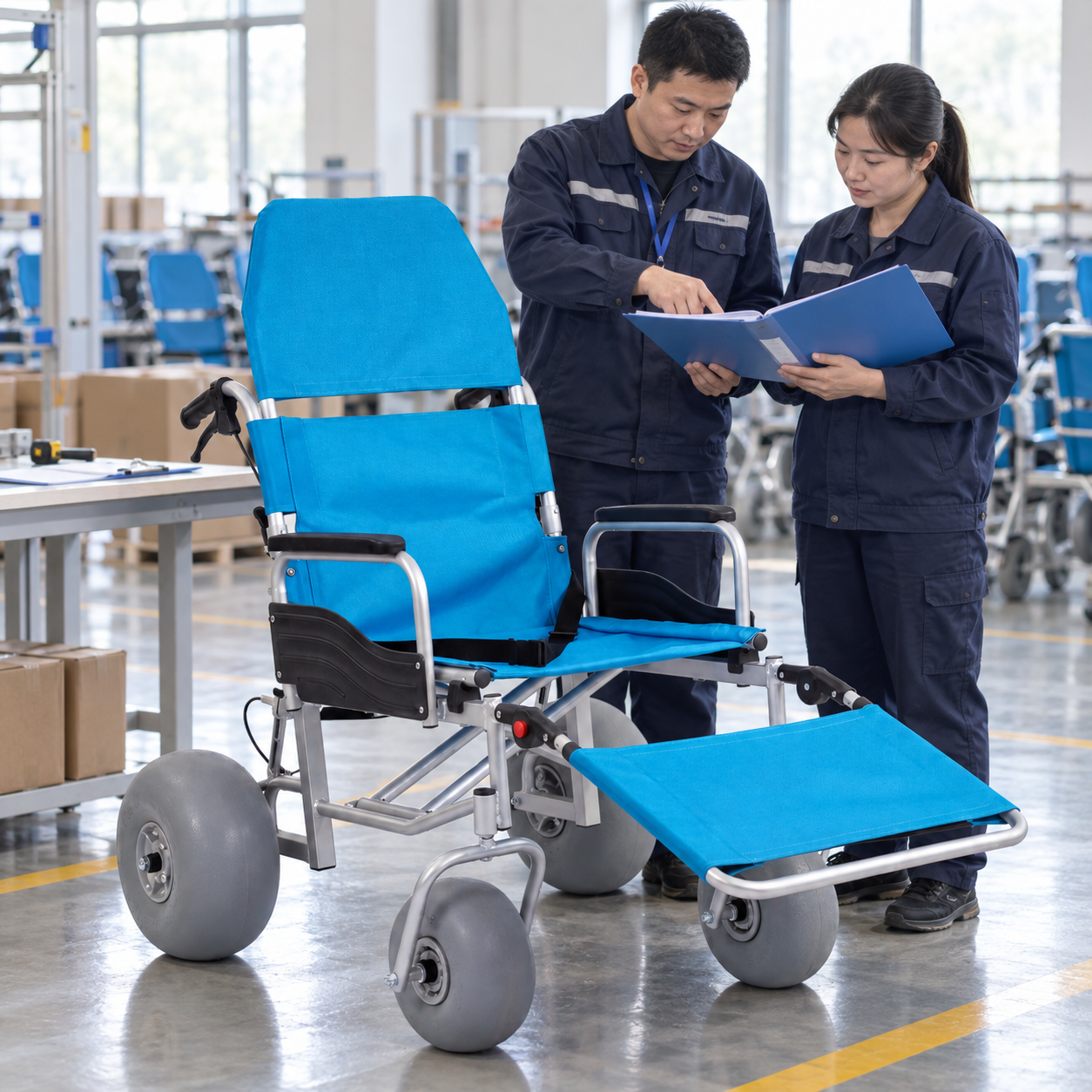
Make the return agreement before the renter departs
Write down the agreed return point, time or window, the desk number and what to do if the return point becomes unreachable. Show the land route the rental actually covers. Name its endpoint, and say if escort, collection or secure storage of the renter’s usual mobility equipment is included in the booking. Give the renter these details in a form they can use while away from the desk.
Read any agreed charge, deposit and late-return arrangements back to the renter before acceptance. Separate permission to contact the renter about today’s hire from any future marketing. Then enter the actual issue time and the name or role of the colleague releasing the unit. A paid online booking alone is an insufficient record of what left the counter.
Resolve a disputed mark against the original record
Suppose a returner brings back chair C-08 with a scrape on the left frame. The original condition photograph shows the same mark. Record the match and receive the chair without treating that scrape as new damage. If a fresh symptom is reported, write down the renter’s description and put the chair aside for inspection. The person receiving it can acknowledge its return before a technician determines a cause.
| What the desk may be able to close now | What can require a separate step |
|---|---|
| The identified chair and listed components are physically back | Inspection and cleaning before anyone rents it again |
| A reported problem has been recorded against this unit | Technical decision on repair and who may release it |
| The renter has a receipt with the actual return time | Deposit authorisation or refund processing under the stated terms |
If a chair comes back at a second desk, ask the receiving colleague to confirm the unit ID, time and condition directly to the original desk. Issue one acknowledgment and update the existing rental. Creating a second check-in can leave the first booking overdue and expose the next renter to the wrong availability information.
Close the day by comparing physical stock with open hires and the units waiting for care. Tell the renter who owns any outstanding payment question and when to expect a reply. A return receipt can settle custody immediately even when the chair or the payment still needs attention.