
An adaptive sports organiser may need a land wheelchair for the stretch between check-in and a participant’s activity. Start by asking where the person wants assistance and where they want it to end. A four-wheel beach wheelchair can be considered for an agreed land journey. Using it for competition, carrying sports equipment on it or taking it into the water would require a different basis from a request to reach the staging area.
The program has two journeys to arrange. The participant needs a way to reach the start, and they need a way back when they choose to leave. Their own mobility equipment may have to meet them at either end. Build those movements into the event plan before publishing a wheelchair-assisted arrival option.
Plan the meeting around the participant
Ask the participant how they would like to communicate, whether anyone will accompany them and which point at registration works for them. Explain the actual route surface, its length if measured, the destination and the help available. Let the person decide whether they want to explore the offered chair. A participant may prefer to use their own equipment, join at another entrance or visit the viewing area without competing.
The AY-ST-V2.0 manual lists a 45 cm seat width, 43 cm seat depth and 100 kg maximum load. These figures let the organiser identify the equipment accurately. A coach cannot use them alone to approve an individual’s seating, a transfer technique or use of the chair in a sport. Arrange any needed assistance with the participant and appropriately prepared staff in advance. Manufacturer’s model specifications
Walk the passage at competition time
Check the route with the access lead when timing gates, flags, cables, spectators and sports gear will be in place. A broad approach during setup can narrow once boats or team bags arrive. Identify where staff can pause clear of the field of play and where the land chair can turn around. Then trace the return journey while the next group is arriving. If the return crosses a live event lane, arrange a controlled crossing with event operations or select another path.
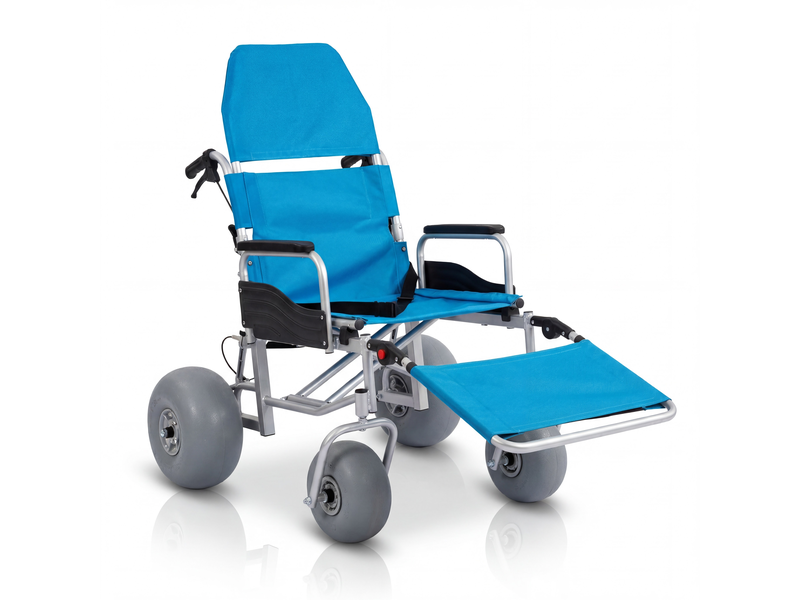
Assign a particular person to receive the participant at the staging point, with a second contact if the program changes. Ask the participant who may move their personal chair or sports equipment, where it should be kept and who can return it. Keep the personal chair, the event’s land wheelchair and any sport-specific equipment identifiable. Do not send the land chair off on the next assignment until the participant’s planned return has an alternative they have accepted.
Rehearse an early withdrawal
In a hypothetical beach event, a participant arrives at registration in their personal chair and requests the program’s land wheelchair for the journey to a shaded staging area. Their personal chair stays at registration under an arrangement they approve. At staging, the participant decides to leave before their heat. The coach tells the access lead and asks where the participant wishes to meet their companion. The lead arranges the land return and alerts registration so the personal chair is accessible on arrival.
Now change one detail. The equipment truck is due to block the original return lane. The access lead checks the designated alternative with event control before anyone departs and tells the participant where it goes. If there is no usable return, hold the outward journey until the problem is resolved. Calling for a volunteer after the participant has reached a dead end is too late.
Distinguish the sport handoff from the journey back
At staging, introduce the person responsible for the activity and let them confirm what comes next with the participant. Any sport-specific equipment, specialist support or water operation belongs to that separately organised activity. Ask the participant how to request their return, including if they decline the activity or if the schedule changes. Give them a named contact and a meeting point they can identify.
After their own equipment is restored and the loan chair is received, close the individual arrangement. Record practical improvements with the participant’s consent, such as relocating a bag rack that narrowed the turn. A separate event mat route plan can address shared surface layout and event traffic where a temporary pathway is also in use.