
An all-terrain beach wheelchair can make mixed coastal routes safer when a public beach or resort maps each surface, controls slopes and turning space, assigns staff roles, and checks the chair before every trip. Wide balloon wheels may move across sand more effectively than narrow wheelchair wheels, yet equipment alone cannot make an unsuitable path workable. A route can include parking, ramps, boardwalks, compacted sand, dry loose sand, rest zones, and return points, each with different operating demands.
A purpose-built all-terrain beach wheelchair gives access teams a land-based option for assisted travel through those surface changes. This B2B guide shows how municipalities, resorts, rental operators, and adaptive recreation teams can connect route surveys with staffing, guest setup, inspections, cleaning, storage, and buying evidence. It avoids unverified speed, capacity, corrosion, service-life, certification, and medical statements. The goal is a route plan that staff can apply during a real coastal shift.
Related operating decisions include lightweight beach wheelchair and floating beach wheelchair.
For broader destination-level context, consult the UN Tourism accessibility publications and guidelines. Apply local requirements and current product documents to the specific project.
Which Surfaces Belong in a Mixed Coastal Route?
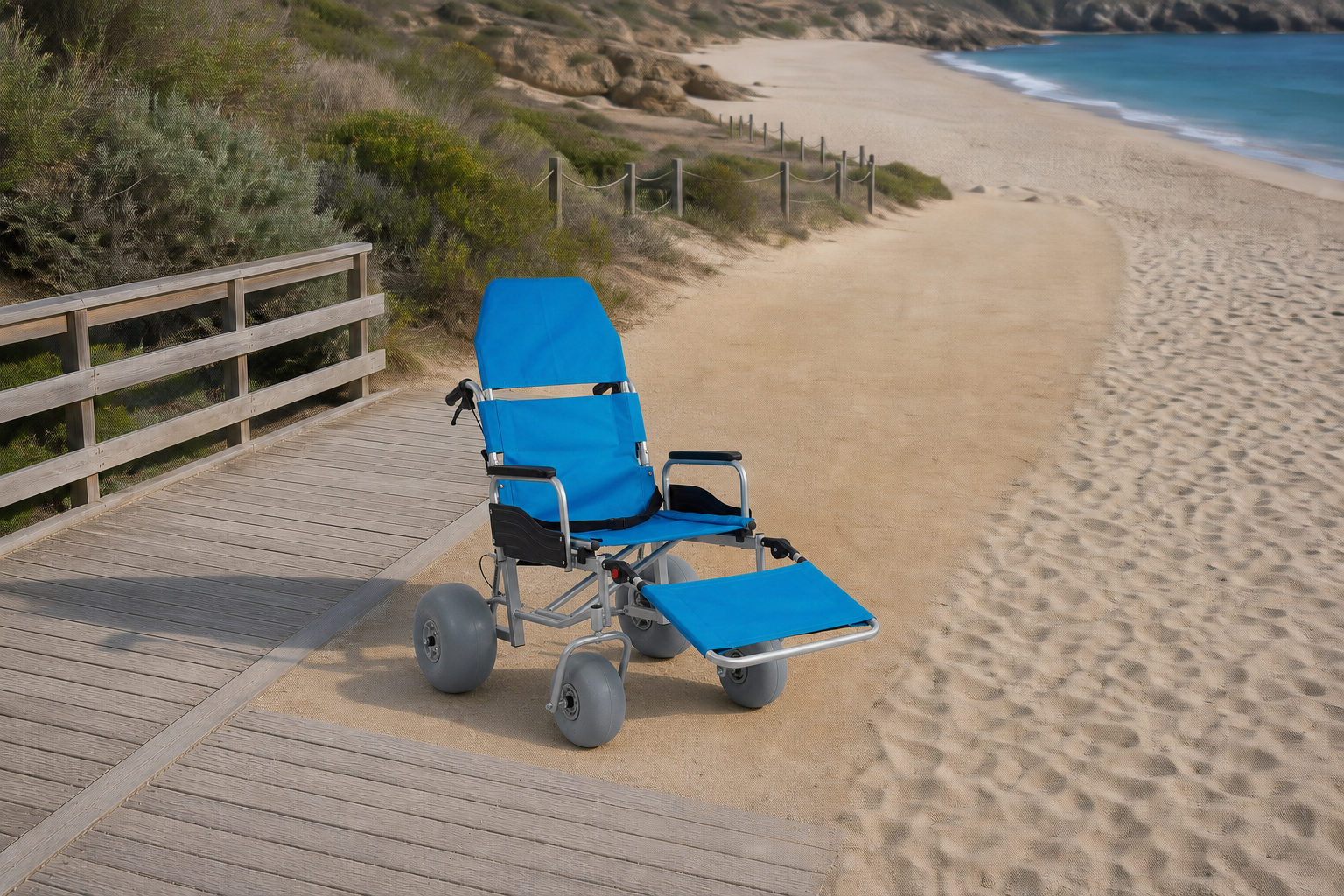
An all-terrain beach wheelchair route may include paved staging, ramps, timber boardwalks, firm surface handoffs, compacted sand, and managed stretches of loose sand. Each surface belongs in the route only when staff can see the path, control direction, and reach a planned turnaround or return option. Deep ruts, active vehicle lanes, sharp edges, water movement, or blocked sightlines call for a route change.
Build the Route From Connected Segments
Here’s the practical point: a safe-looking beach zone can hide one difficult handoff between surfaces. Staff should review every handoff rather than rating the route as one condition.
- Name each segment from reception through return.
- Record surface changes, turning areas, and staff access.
- Keep the planned route outside maintenance and vehicle lanes.
- Mark an alternate line for temporary closures or crowding.
Key Takeaway: An all-terrain beach wheelchair route works as a chain of manageable segments, not as one broad “beach” category.
| Route segment | Operating check |
|---|---|
| Paved staging | Clear setup and orientation space |
| Ramp or boardwalk | Width, edge, and turning control |
| Sand handoff | Straight approach without a sharp drop |
| Loose sand corridor | Visible path and nearby return option |
Use the table to review surface changes in order before each operating window.
How Do Balloon Tires Change Soft-Sand Handling?
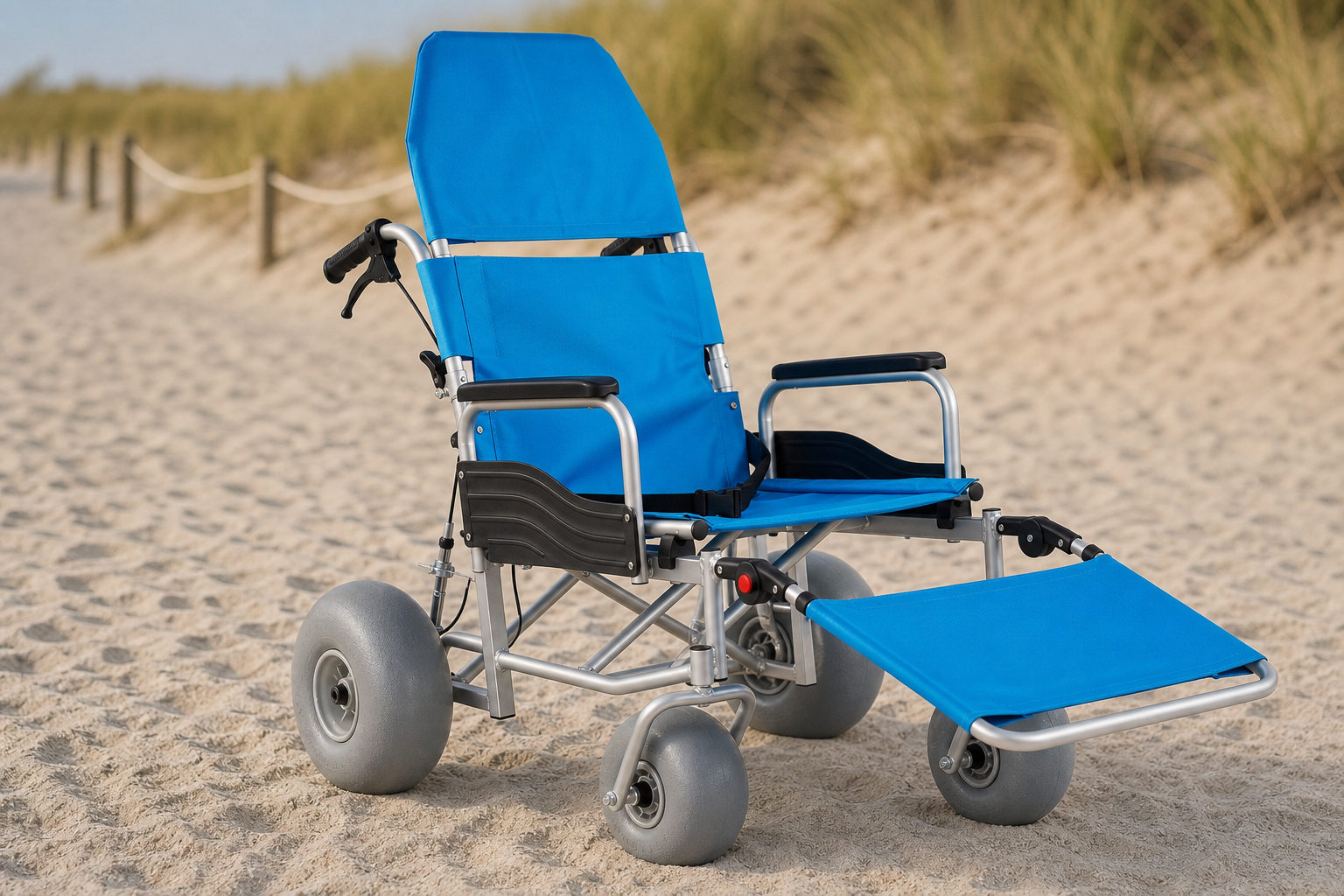
An all-terrain beach wheelchair uses wide balloon tires to spread contact over sand and reduce the digging behavior associated with narrow wheels. That shape can make assisted movement more manageable on a planned corridor, but it does not remove resistance, slope, crowd, weather, or staff factors. Operators should keep turns broad and travel pace controlled while watching the surface ahead.
Wheel Design and Staff Technique
What changes on the ground? Dry sand can become rutted or churned after heavy foot traffic. The same wheel may feel different across two nearby sections.
- Approach loose sand through a firm, straight handoff.
- Avoid abrupt turns that load a wheel sideways.
- Keep staff positioned where they can control direction.
- Stop before resistance changes sharply or the route narrows.
Key Takeaway: Wide tires help an all-terrain beach wheelchair move across managed sand, while route choice and staff technique remain part of control.
| Wheel situation | Staff response |
|---|---|
| Straight soft-sand line | Use steady assisted movement |
| Broad turn | Slow and maintain open space |
| Deep rut | Stop and redirect |
| Side slope | Return toward a flatter corridor |
Use these signals to guide movement without turning a wheel feature into a blanket terrain promise.
How Should Teams Survey Slopes and Turning Space?
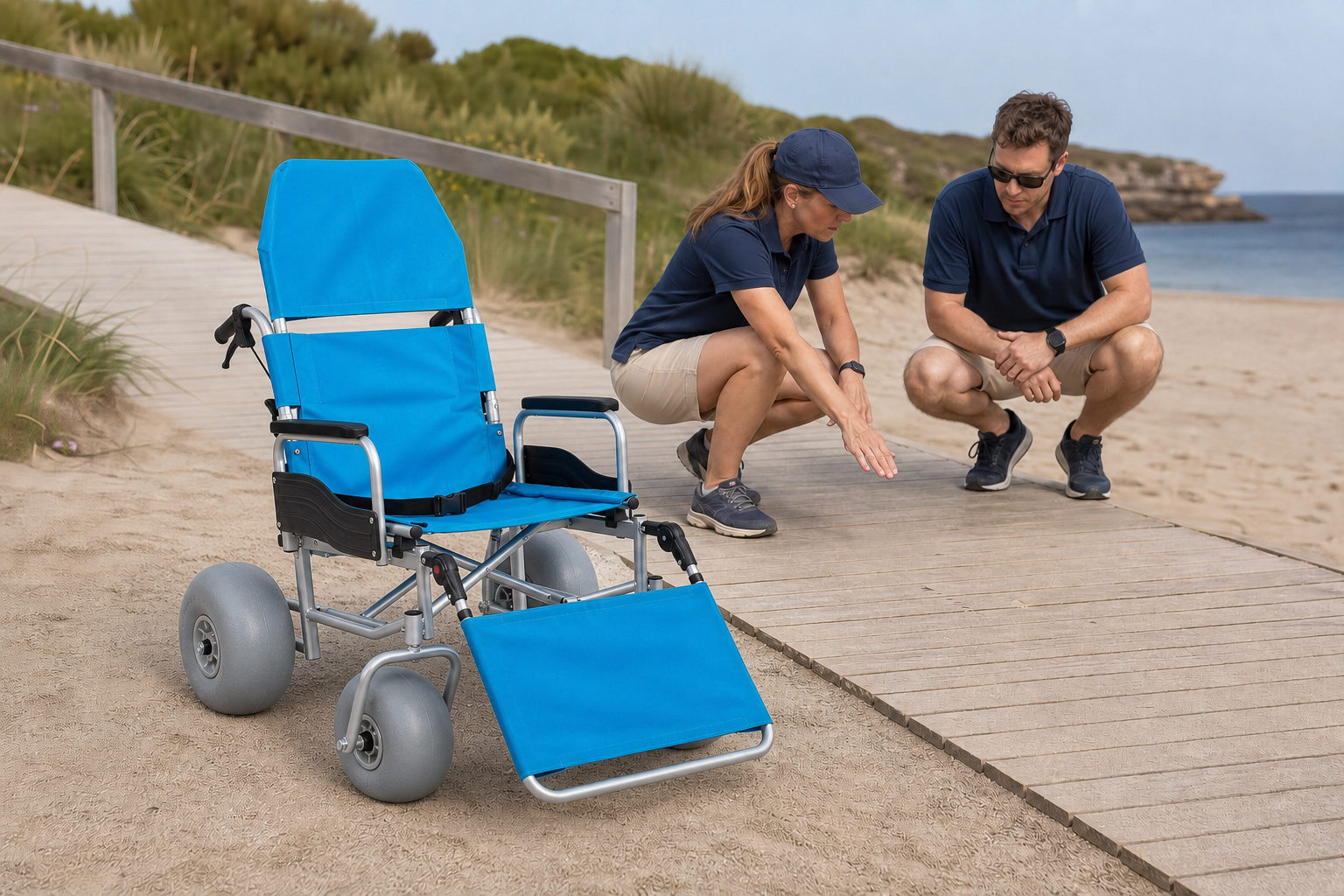
An all-terrain beach wheelchair route survey should identify gradients, side slopes, narrow gates, edge exposure, turning diameter, staff standing space, and the path back to firm ground. The all-terrain adventure application can help teams frame a surface review around an actual operating environment rather than a generic terrain label.
A Survey Staff Can Repeat
Keep this in view: route conditions can shift after grooming, wind, rain, tides, or public use. A reusable survey should be short enough for daily opening checks.
- Walk each slope in both travel directions.
- Confirm room for a broad turn without entering a drop-off or crowd.
- Check where an attendant can change position.
- Identify a stop point before every difficult segment.
Key Takeaway: Slope and turning review gives all-terrain beach wheelchair staff a clear go, redirect, or close decision before guest travel.
| Survey point | Question |
|---|---|
| Gradient | Can staff maintain steady control? |
| Side slope | Does the chair remain on a level line? |
| Turn area | Is there open space for a broad turn? |
| Exit | Can the team return without a long reverse move? |
Use the questions during opening walks and after any route disturbance.
Where Should Route Handoffs and Rest Points Sit?
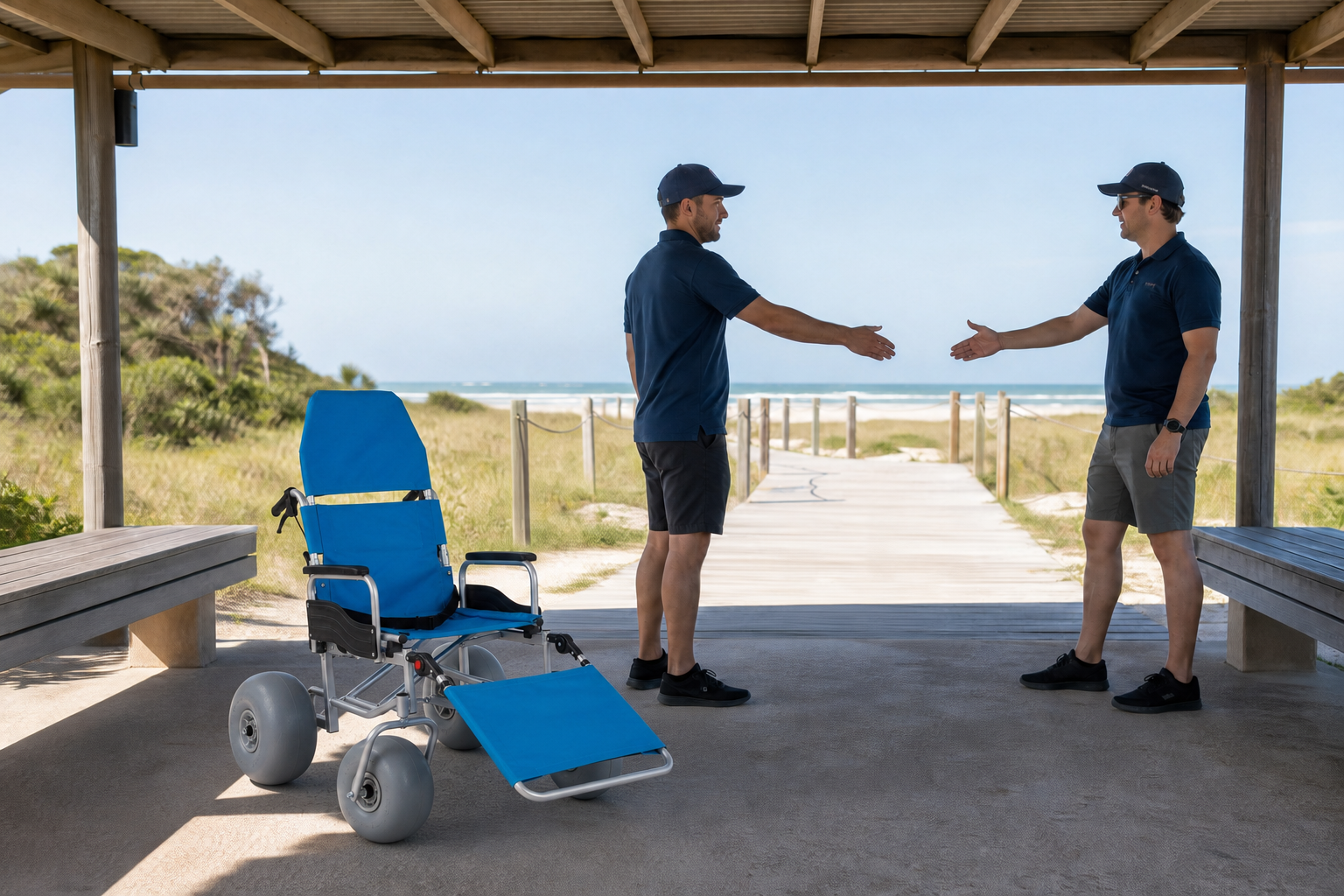
An all-terrain beach wheelchair handoff or rest point should sit on firm, level ground with clear perimeter space, staff communication access, and a direct return path. Handoffs on loose sand can increase movement and confusion at the moment control changes. A stable zone lets the incoming attendant review route status, guest cues, chair condition, and the next segment before continuing.
Treat Handoffs as Operating Checkpoints
Why does that matter? A shift change, route closure, or rest request can occur away from reception. A named checkpoint keeps the response organized.
- Choose level surfaces near route junctions.
- Leave space for attendants to stand without blocking others.
- Keep transfer decisions within trained staff scope and local policy.
- Confirm that shade or seating does not narrow the operating path.
Key Takeaway: Planned handoffs give all-terrain beach wheelchair teams a controlled place to pause, exchange information, and redirect.
| Checkpoint feature | Use |
|---|---|
| Firm level ground | Stable pause and positioning |
| Clear perimeter | Attendant movement and broad turn |
| Communication access | Route or staffing update |
| Return connection | Direct exit when conditions change |
Use checkpoint names in staff radios, maps, and trip records.
What Staff Roles Keep Assisted Travel Consistent?
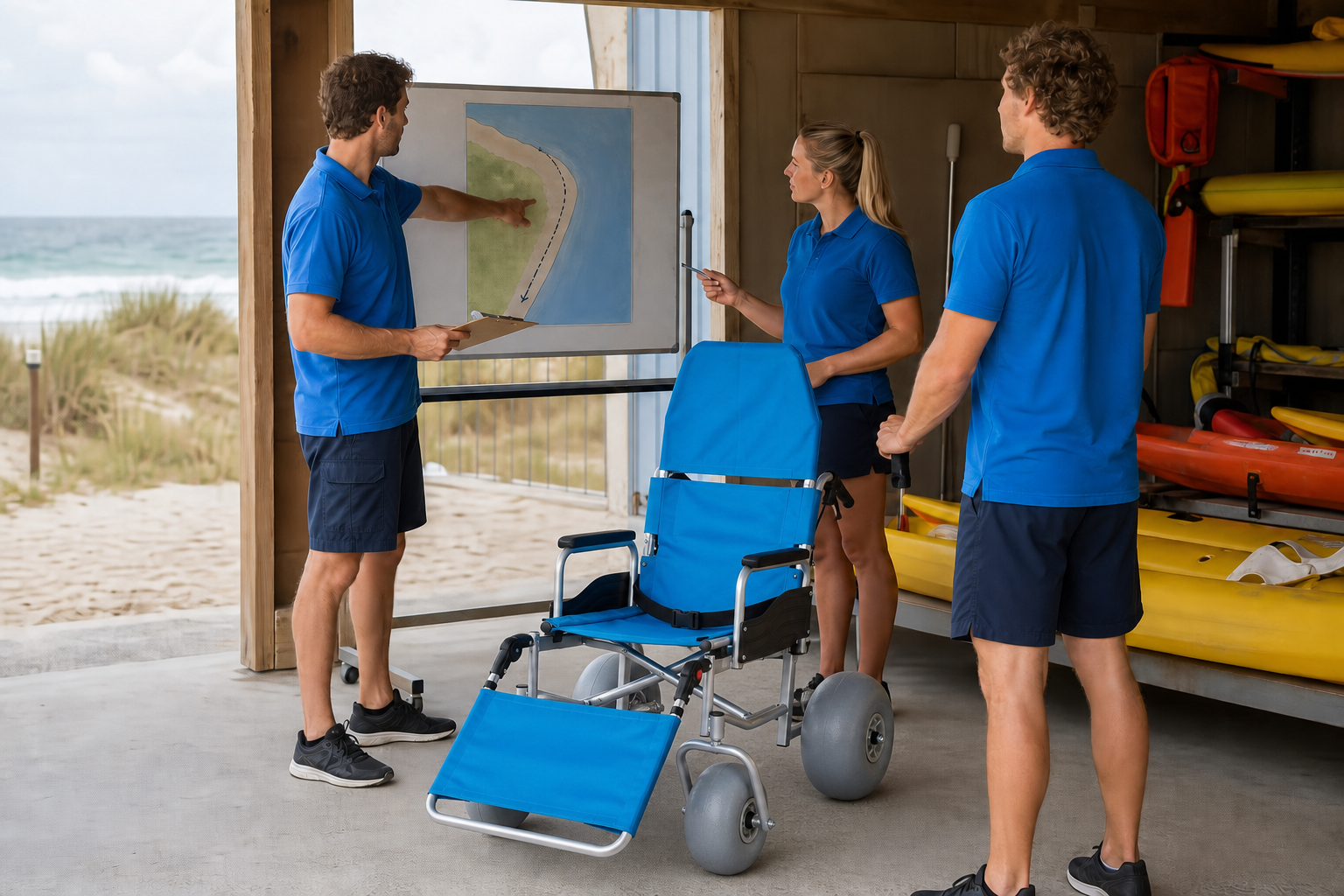
An all-terrain beach wheelchair program stays consistent when a route lead, equipment checker, operating attendant, and dispatch contact each know their tasks. One person may hold more than one role in a small program, yet responsibilities should still be named. Guests and caregivers need one clear contact rather than several people giving different route or setup directions.
Roles From Opening Through Return
The useful detail is this: role clarity helps a team stop work without argument when a route, chair, or staffing condition changes.
- Route lead opens, redirects, or closes the planned corridor.
- Equipment checker records chair condition before assignment.
- Operating attendant manages setup, movement, and guest cues.
- Dispatch contact tracks location, status, and return care.
Key Takeaway: Named roles make all-terrain beach wheelchair decisions traceable from route opening through storage.
| Role | Core decision |
|---|---|
| Route lead | Route open, changed, or closed |
| Equipment checker | Chair ready or held |
| Attendant | Guest and route movement can proceed |
| Dispatch contact | Location and return status are current |
Use the role table in training and shift handoffs, even when one person covers several tasks.
How Should Teams Match the Chair to Guest Needs?
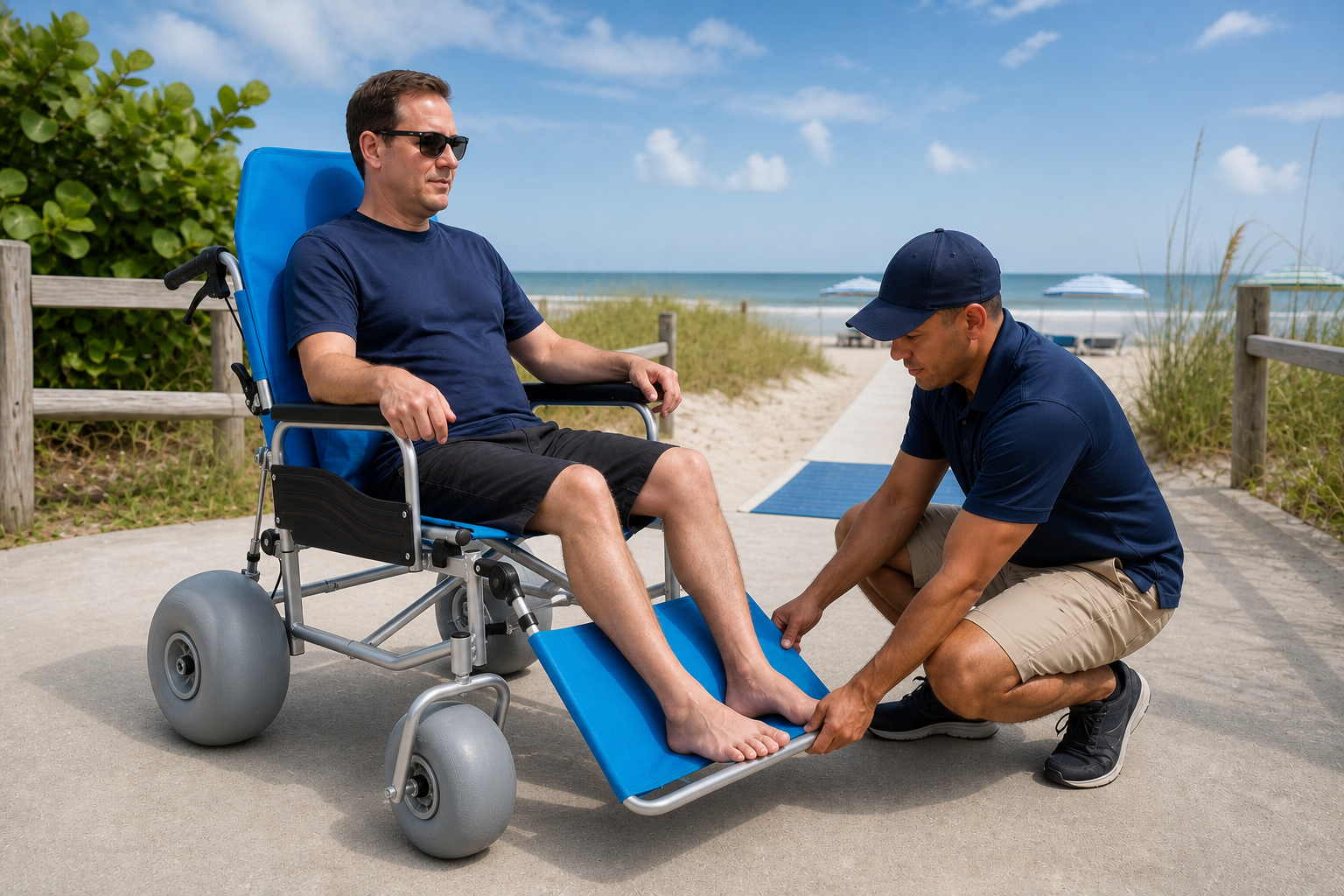
An all-terrain beach wheelchair should be matched on firm ground through guest feedback, seat and foot position, attendant reach, route goal, communication cues, and any professional guidance that applies. Product appearance cannot confirm personal fit. Staff should stay within training and refer clinical, transfer, or health questions to a qualified person.
A Firm-Ground Setup Review
Here’s the practical point: the route plan should change when guest comfort, communication, or attendant control changes. Completion of a planned route is never more valuable than a timely stop.
- Ask about destination, pace, duration, and rest preference.
- Check that the guest remains centered in intended seating areas.
- Confirm foot and arm position according to product guidance.
- Practice starts, stops, and broad turns before entering sand.
Key Takeaway: Guest fit joins personal feedback, observable position, attendant control, and the day’s route conditions.
| Setup area | Observable check |
|---|---|
| Seat and back | Position feels stable and comfortable |
| Feet and arms | Remain within intended areas |
| Attendant reach | Handles can be controlled naturally |
| Communication | Stop and pause cues are shared |
Use direct feedback and trained observation rather than a one-size setup assumption.
What Should Every Pre-Use Check Cover?
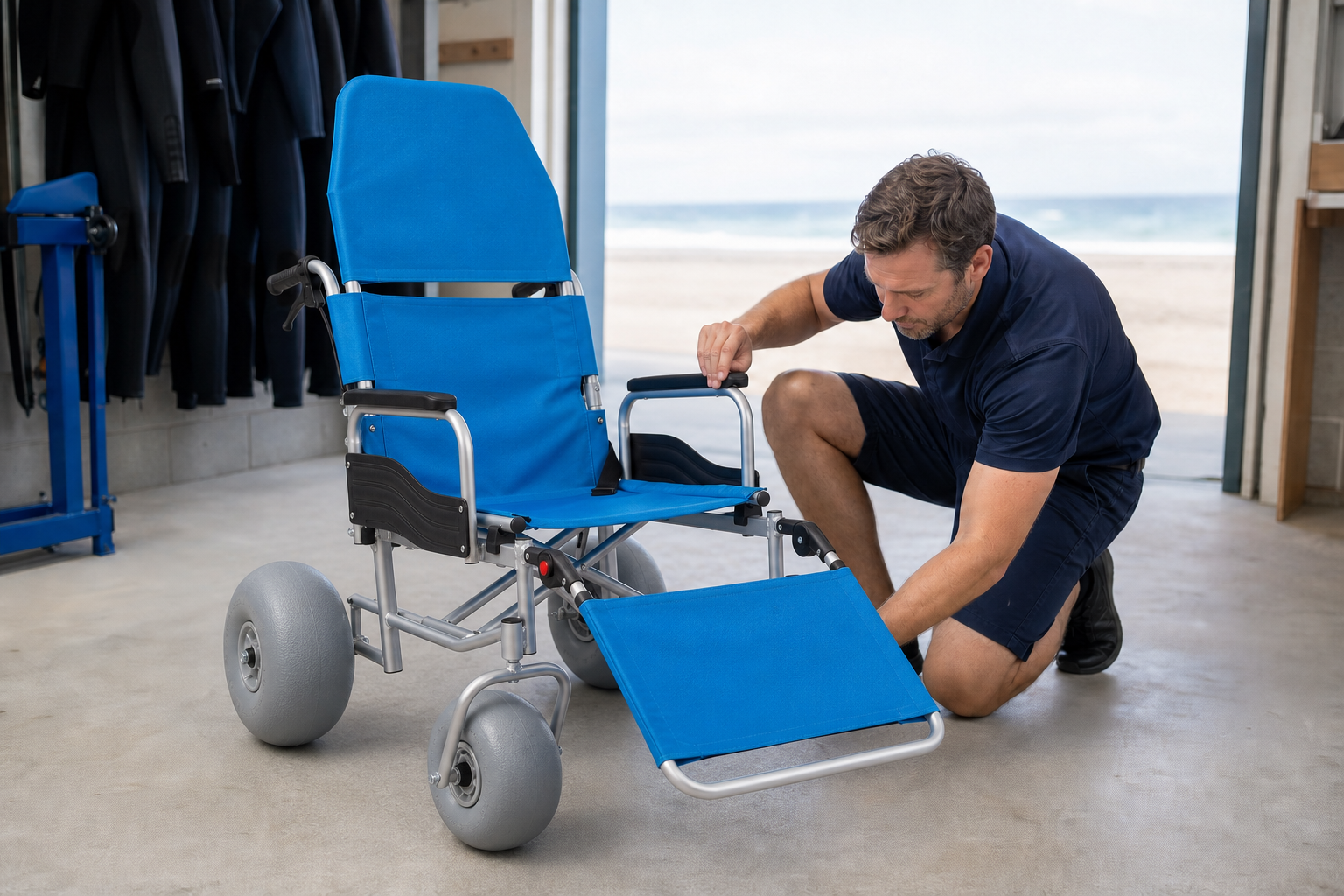
An all-terrain beach wheelchair pre-use check should cover frame position, wheel attachment, fasteners, seat, back, handles, foot area, supplied restraints, loose items, contamination, cleaning status, and route readiness. Inspection should happen before guest setup. A held chair must remain separate from ready equipment until an authorized service decision is recorded.
Clear Pass and Stop Signals
What changes on the ground? Sand can hide around wheel and frame areas, while transport may shift removable parts. A visual and movement check should follow both cleaning and vehicle travel.
- Confirm the frame sits in its documented operating position.
- Inspect each wheel and attachment point for obstruction or looseness.
- Review fabric, handles, foot area, and visible hardware.
- Stop use when staff cannot verify a secure condition.
Key Takeaway: A consistent all-terrain beach wheelchair check gives staff a clear reason to assign, hold, or service a unit.
| Inspection area | Pass signal | Stop signal |
|---|---|---|
| Frame | Stable operating position | Damage or unusual movement |
| Wheels | Secure and clear | Loose part or trapped debris |
| Seat and handles | Clean and stable | Tear, looseness, or contamination |
| Route | Open and reviewed | Closure or unknown condition |
Use the same wording across equipment records, training, and dispatch.
How Can Cleaning and Storage Reduce Downtime?
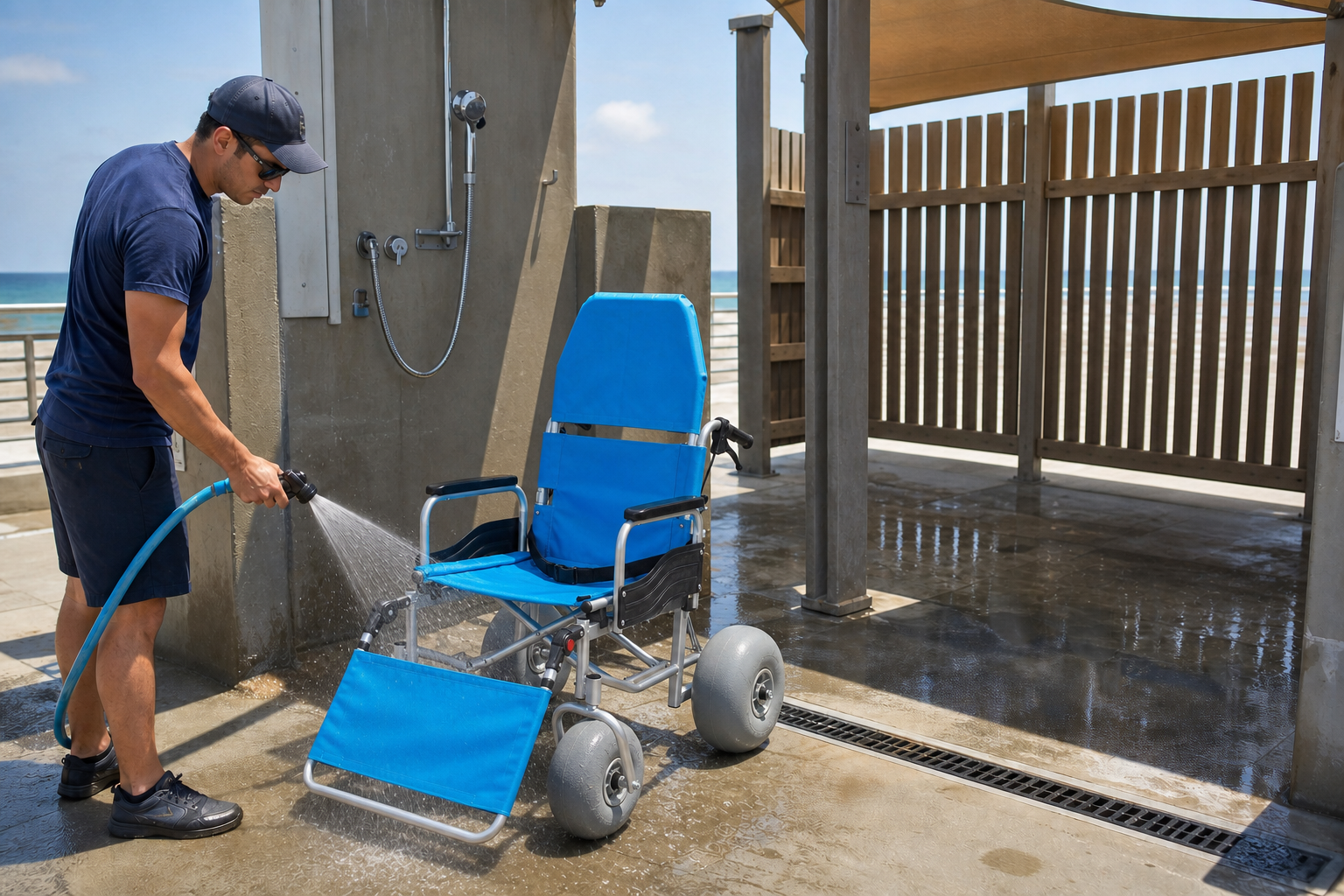
An all-terrain beach wheelchair cleaning and storage workflow can reduce downtime by connecting sand removal, approved rinsing, drying, inspection, condition records, and ready-or-held status. Coastal residue may collect at wheels, joints, fabric edges, or frame contact points. The user manual resource offers a reference for aligning local care with current product instructions.
One Return Process
The useful detail is this: a clean chair is not automatically a ready chair. The person completing return care should also record visible condition.
- Remove sand and moisture through approved methods.
- Dry fabric, frame, handles, wheels, and attachment areas.
- Record unusual movement, damage, or missing parts.
- Store ready and held equipment in separate marked zones.
Key Takeaway: Cleaning reduces missed service issues when it ends with inspection, status, and controlled storage.
| Return stage | Record |
|---|---|
| Sand removal | Completed care step |
| Drying | Chair ready for inspection |
| Condition review | Ready or held decision |
| Storage | Location and status |
Use the sequence after every route without claiming a fixed care interval.
How Should Buyers Compare Route Fit and Service?

An all-terrain beach wheelchair buyer should compare intended surfaces, route changes, product documentation, parts access, packaging, training materials, service communication, and local operating workload. A product page can describe design, but procurement still needs written evidence tied to its route. A public or rental team may also review an all-terrain rental project and the wider beach wheelchair category when defining its scorecard.
Evidence for a Route-Based Purchase
Keep this in view: broad terrain claims are hard to compare. Route photos, surface notes, packed dimensions, component guidance, and service contacts create a more useful supplier discussion.
- Share the planned surfaces and handoffs with shortlisted vendors.
- Request current setup, inspection, care, and storage documents.
- Ask how parts are identified and ordered.
- Compare response channels without assuming stock or delivery dates.
Key Takeaway: An all-terrain beach wheelchair purchase works better when product and service evidence answer the buyer’s real route questions.
| Review area | Evidence to request |
|---|---|
| Route fit | Written response tied to site surfaces |
| Product setup | Current component and operating guidance |
| Parts | Identification and ordering process |
| Service | Named after-sale communication path |
Use one scorecard across vendors so the decision remains tied to operating work.
Closing Note: Safer mixed routes come from connecting surfaces, wheels, slopes, checkpoints, staff roles, guest setup, inspection, care, and supplier service. If your team wants to review a coastal access plan, contact us today with route photos, surface notes, and staffing goals.
Which All-Terrain Beach Wheelchair Questions Come Up Most?
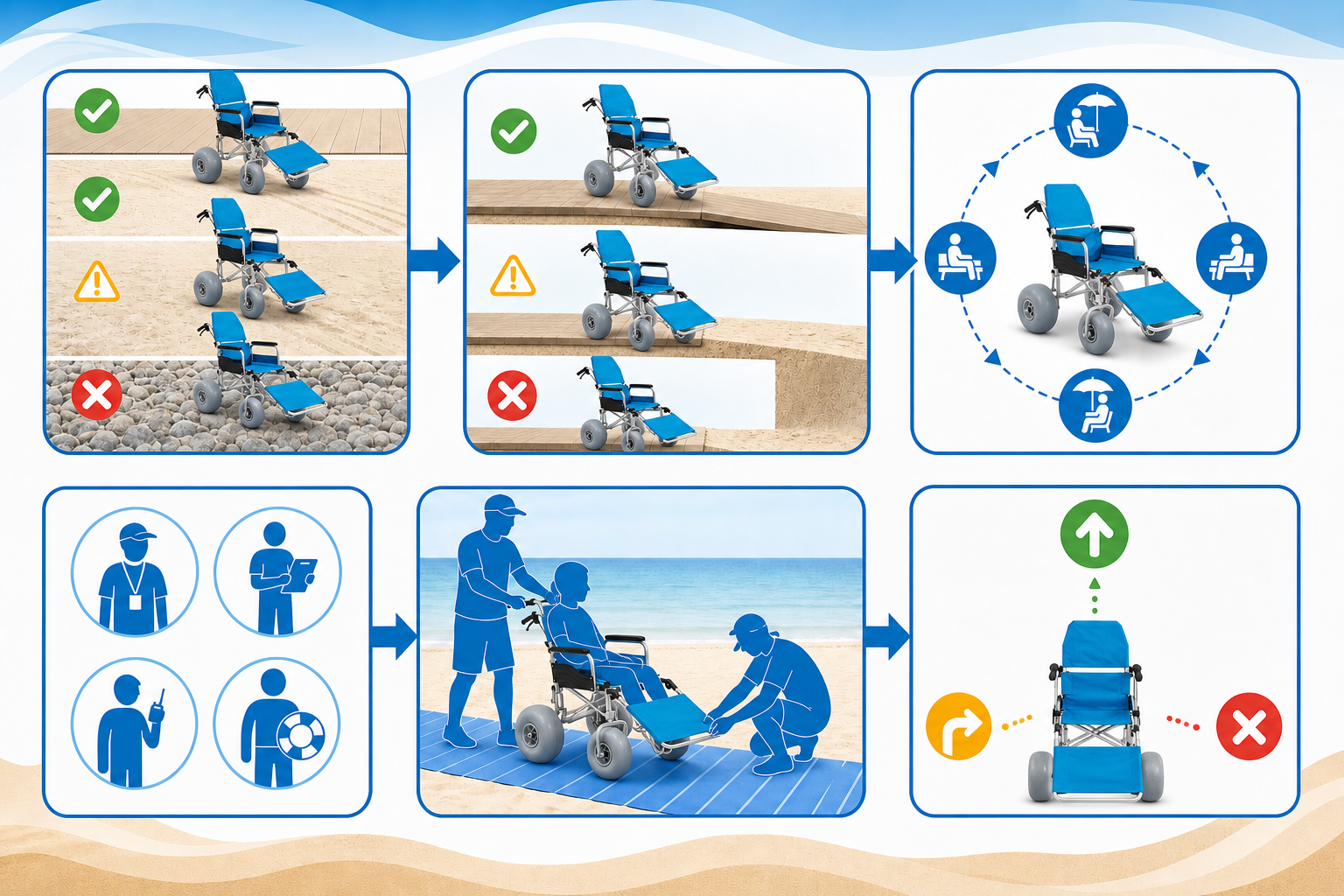
All-terrain beach wheelchair buyers usually ask about surface limits, slopes, staffing, inspection, and route evidence before selecting equipment.
Can I use an all-terrain beach wheelchair on every beach surface? No. Wide tires may suit managed sand routes, but ruts, steep side slopes, debris, water movement, narrow passages, or blocked exits may make a section unsuitable.
What’s the best way to survey a mixed route? Walk every segment in both directions, note each surface handoff, confirm turning and staff space, and identify a stop point before difficult areas.
How do I know if a slope is manageable? Use product guidance, local policy, a current site review, and staff control. Redirect whenever the team cannot maintain a steady, level line.
Can one attendant cover the whole route? It depends on chair guidance, guest needs, route conditions, and local staffing rules. Assign more help whenever control or communication would otherwise be uncertain.
What’s the best buying evidence for route fit? A written supplier response tied to route photos, surface notes, handoffs, packed dimensions, operating documents, parts, and service contacts.