
Bring the awkward item to a folding beach cart comparison. A rigid cooler that cannot sit on a shelf, a stack of chairs that blocks the handle, or a crate that will not pass the gate can eliminate a model before price enters the discussion. Start with the goods your crew intends to transport, the route to the destination and the space where the empty cart must go afterward.
What the three standard configurations actually offer
| Manufacturer’s model | Published cargo and running gear | First question for a buyer |
|---|---|---|
| Four-wheel folding cart | 29.5 × 16 in deck with mesh basket, two 12-inch balloon wheels and front swivel casters. Maximum listed load 220 lb. Adjustable handle, 35–53 in. | Does the largest rigid case sit securely on the deck, and can the casters negotiate the tight turn on approach? |
| Quick-Fold 30021-SIS | 20 × 14 in shelf, mesh and cooler bags, chair rack, two 12-inch TPU balloon tires and swivel casters. Maximum listed load 165 lb / 75 kg. | Do bundled chairs, bags and a cooler fit the particular shelf and attachments with access to the items needed first? |
| Two-wheel folding cart | Two wide balloon wheels, mesh sling deck and folding handle. The manufacturer provides its load limit on request. | Can the sling support the intended containers and can the operator control the loaded cart throughout this route? |
These figures describe the listed variants. Obtain the drawing and confirmed rating for the configuration being ordered. The 220 lb figure belongs to the four-wheel deck model. It cannot fill the blank for the two-wheel sling cart. All three are for goods. Manufacturer’s folding beach cart comparison
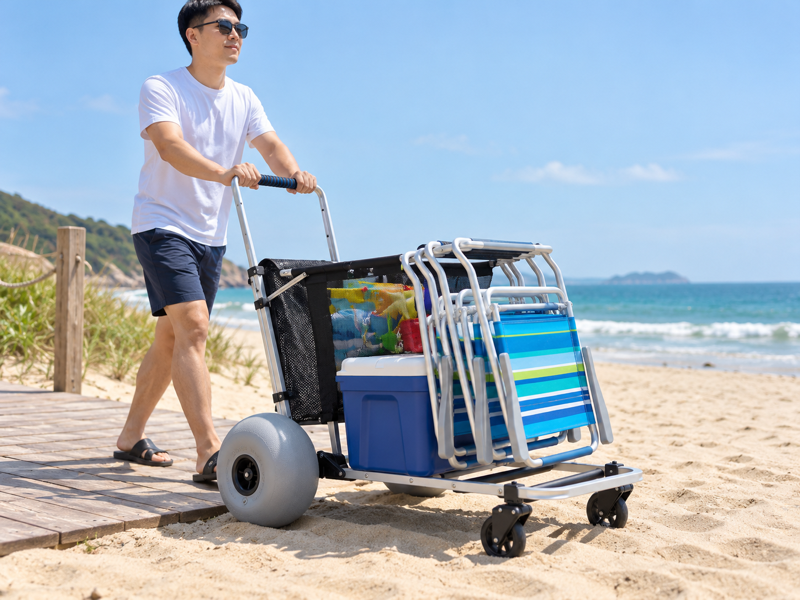
Put a real load on the shortlist
Suppose an equipment desk issues folding seats and a sealed box of event radios. The seats may suit the 30021-SIS chair rack, yet the buyer still needs to check where the radio box can sit without obstructing the rack, handle or release. Mark the order in which staff need the goods at the destination. If the radio box must come off first, the crew should be able to remove it without releasing the chairs around it.
If most trips carry one broad rigid crate, start with the deck model. Compare the crate’s base, protruding handles and packed mass with the actual support area and approved restraint arrangement. A nominal deck width that matches the crate exactly leaves no evidence that a strap or side frame will clear. For a lighter kit in several bags, trial the two-wheel sling cart with its proposed load and written limit before confirming the purchase.
Test the outward route and the empty fold
Take the shortlisted cart to the narrowest doorway, the tight turn and the first change from boardwalk to sand. Observe the wheels and the operator’s working space in both directions. Ask the staff who will actually use the cart to demonstrate loading and unloading under the supplied instructions. A pass with the cart empty establishes neither a loaded turn nor the ability to control a tall, awkward item.
After the trial, remove the cargo and fold the cart as instructed. Measure its widest protrusion, height and length in the configuration the store will receive. Check the opening as well as the space inside the locker or vehicle. Record whether any supplied item needs its own bag or shelf and who will reunite it with the cart.
Select a model against the jobs it completed and list any task that needs a different arrangement. Send the chosen model, approved sample configuration and exceptions to purchasing. The folding cart supplier review covers who can reproduce that configuration, confirm the quote and control later changes.