
A supplier has sent a folding beach cart sample that works for your team. On the bulk quotation, the line now reads “folding beach cart with balloon wheels.” Before paying against that description, ask the bidder to show which drawing, component list and shipment marks will connect the delivered carts to the sample. The business question is whether it can deliver that build again, including after a part changes.
If the route, deck size or type of cart is still undecided, start with the buyer’s folding cart model comparison. Once the purchaser has selected a configuration, send the following requests to each supplier bidding for the production order.
Find the person who can authorize a change
Ask the commercial contact to name who controls the drawing, approves components and answers a discrepancy after delivery. A distributor can give a credible answer by showing who at the production source can make those decisions and how its own team can trace goods by lot. A tour or a factory photograph by itself tells the buyer little about which wheel or lock a future shipment will contain.
Ary Beach’s published range includes a four-wheel deck cart with a red release button, the quick-fold 30021-SIS and a two-wheel sling model. The table lists different frames, fabrics and equipment. Use those distinctions when identifying the sample. A supplier quoting the same color and nominal wheel diameter has still to identify the open-position lock, axle and included hardware for the offered version. Manufacturer’s folding model table
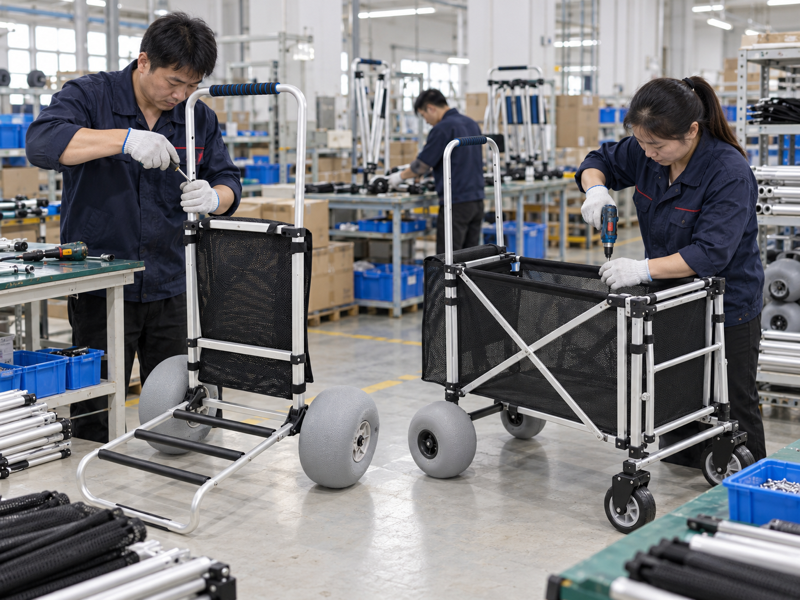
Put one plausible substitution to the bidder
Suppose the supplier proposes a different front caster after you accept the sample. Ask for the old and new part references, the reason for the change and the lots it might affect. A new caster assembly may change installed height or the clearance when the cart folds. Have the supplier show those interfaces on the affected drawing and give the buyer an assembled unit or documented check tied to that revision.
| Evidence the buyer requests | What it settles |
|---|---|
| Dated component list and approved sample ID | Defines the build the supplier is committing to deliver. |
| Change notice with affected unit or lot range | Identifies whether stock already packed contains the old part, the new part or an unresolved mixture. |
| First production check against the accepted revision | Shows which caster, frame and lock were actually checked and who addressed any discrepancy. |
| Spare-part and packing references for each version | Helps the distributor order compatible parts and identify which customer received an affected unit. |
A supplier should be able to say what remains unresolved. If it cannot identify where a changed part entered production, agree how it will isolate the affected lot and demonstrate the correct build before shipment. Identify who pays and who responds to an agreed remedy or field parts request. Put those commitments in the purchase terms.
Keep the repeat order tied to the same evidence
For each later order, ask the supplier to confirm the applicable revision and declare changes since the previous shipment. Attach agreed exceptions to the order and identify the packing reference the receiving team should use. Follow up on proposed changes before authorizing dispatch. Once a carton is on a distributor’s shelf, the buyer should still be able to identify its configuration and obtain the matching spare without relying on the salesperson’s memory.