
An opening check made at the start of the morning describes that moment. Before the next floating wheelchair enters the water, the duty lead needs to know whether the same team can bring that visitor back through the agreed exit. Start with the time and conditions needed for the return, then decide whether there is still a suitable entry window.
Check the actual entry and exit together
Identify the return point and the authorized shore contact. Review current local warnings, water movement, visibility, the ground beneath attendants’ feet and changes to the approach. Use the site’s approved method for checking conditions. Keep staff out of any reach the responsible authority has restricted. A tide table can help the lead plan a check. It cannot reveal a newly scoured step or drifting debris at the actual exit.
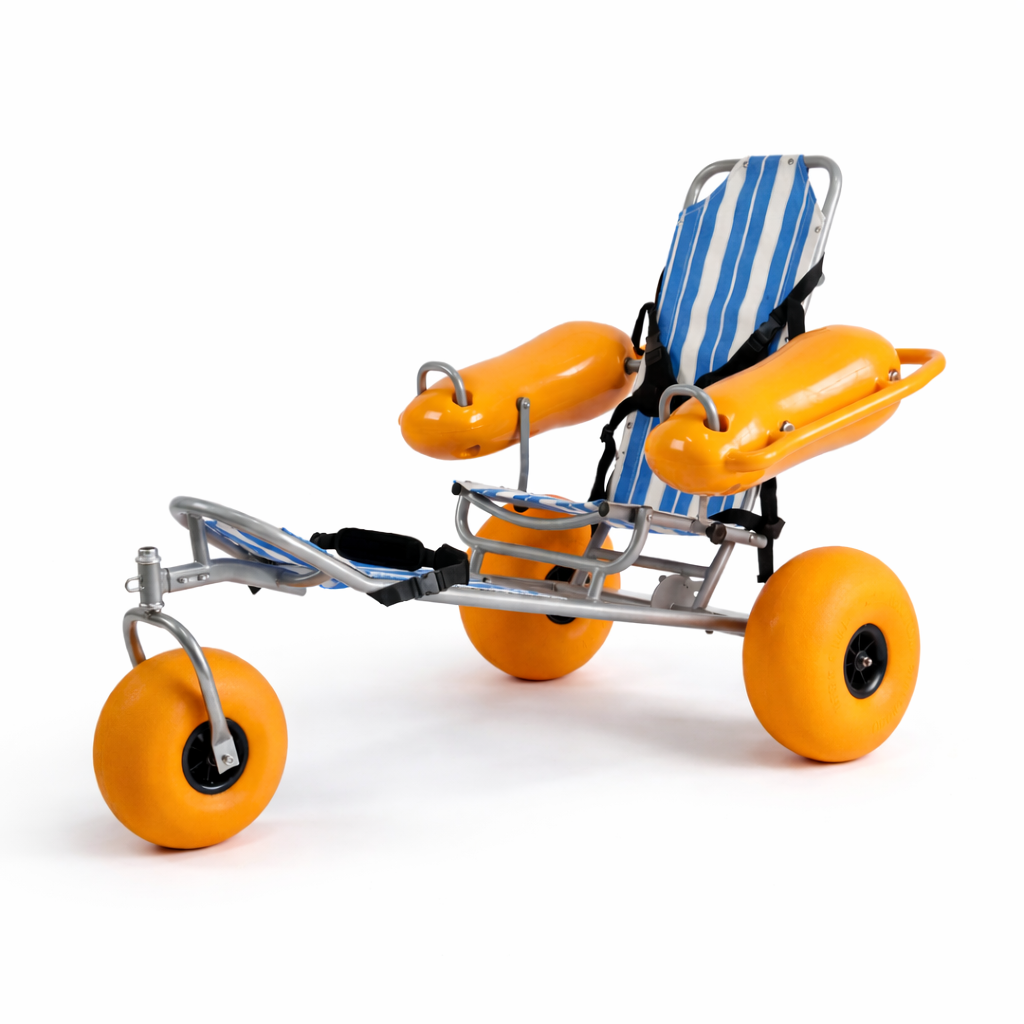
The AY-ST-V1.0 uses inflatable floating armrests and three inflatable wheels and is intended for calm water. Before issue, verify the correct unit was released with the armrests and wheels checked under the manufacturer’s instructions. For the outing, the operator also needs trained supervision, reliable attendant footing and an approved means of returning. The manual supplies no universal entry depth, tide window or staffing ratio.
Make one decision for the next departure
| What could change during this visit? | What to verify now |
|---|---|
| The beach profile or surface underfoot | Both the intended entry and exit remain within the approved limits for secure footing and handling. Refer an uncertain area to the site lead. |
| Waves, current, wind, debris or visibility | Current observations and the local plan support a supervised calm-water outing for the anticipated period. |
| Staff or communications | The assigned team can maintain contact with each other and with the visitor and remain available through handback. |
| The route back to the personal wheelchair | The exit, staging point and land connection remain available, with an identified person ready to receive the returning visitor. |
Record the time, observed conditions, intended exit, who authorized the departure and the conditions that require rechecking. A briefing from the previous shift can identify likely changes. Record who inspected the exit for this shift and when. If staff cannot confirm reliable footing or a clear return, hold entry and tell the visitor what is still being checked.
Close the window when the return no longer fits
As an illustration, suppose a site lead has confirmed the authorized area only until 10:45, when another local operation takes control of the exit. At 10:30 the team expects the visitor would reach the exit at 10:50, even before any allowance for delay. Hold the departure. The fact that the entry is calm at 10:30 cannot extend the authorized return window. If the conflicting operation is cancelled, the lead must still recheck site conditions before opening another slot.
If conditions change during an outing, the assigned team follows its approved response and return procedure. The land contact holds further entries, relays the agreed message and accounts for affected bookings. Recovery and emergency actions belong to trained personnel operating under local plans.
For each hold, give the desk a plain reason, the affected activity and the contact responsible for the next check. Offer a land-based arrival and return route only after the team verifies what remains usable. Record the new decision separately from the earlier opening check so another shift can see exactly which window applied.