
A visitor may arrive in their own wheelchair while the floating wheelchair comes from a locked equipment store across the promenade. Those two journeys must meet at a usable staging point. A third journey takes the visitor back to their personal equipment and transport. Mark all three on the site plan before choosing an arrival entrance or giving the visitor directions.
Follow each chair from its own starting point
Walk from the accessible parking bay, shuttle stop or designated drop-off in the direction a newcomer will approach. Look for the reception sign from that side. Record the actual surface, kerbs or grade changes, working gate width, places to wait and any toilet or changing facility the visitor information mentions. Check how to reach the return pickup. A shuttle that sets down at a beach gate may collect on the opposite side of the building.
Next follow the empty floating chair from storage. The AY-ST-V1.0 manual lists its assembled dimensions as 220 × 109 × 117 cm. Use those figures to identify doors and changes of direction that need measurement on site. A gate wider than 109 cm on a drawing gives little information about the turn immediately beyond it, a partly open leaf or a bin beside the latch. Check the whole movement with the released empty configuration before booking the route. AY-ST-V1.0 model dimensions
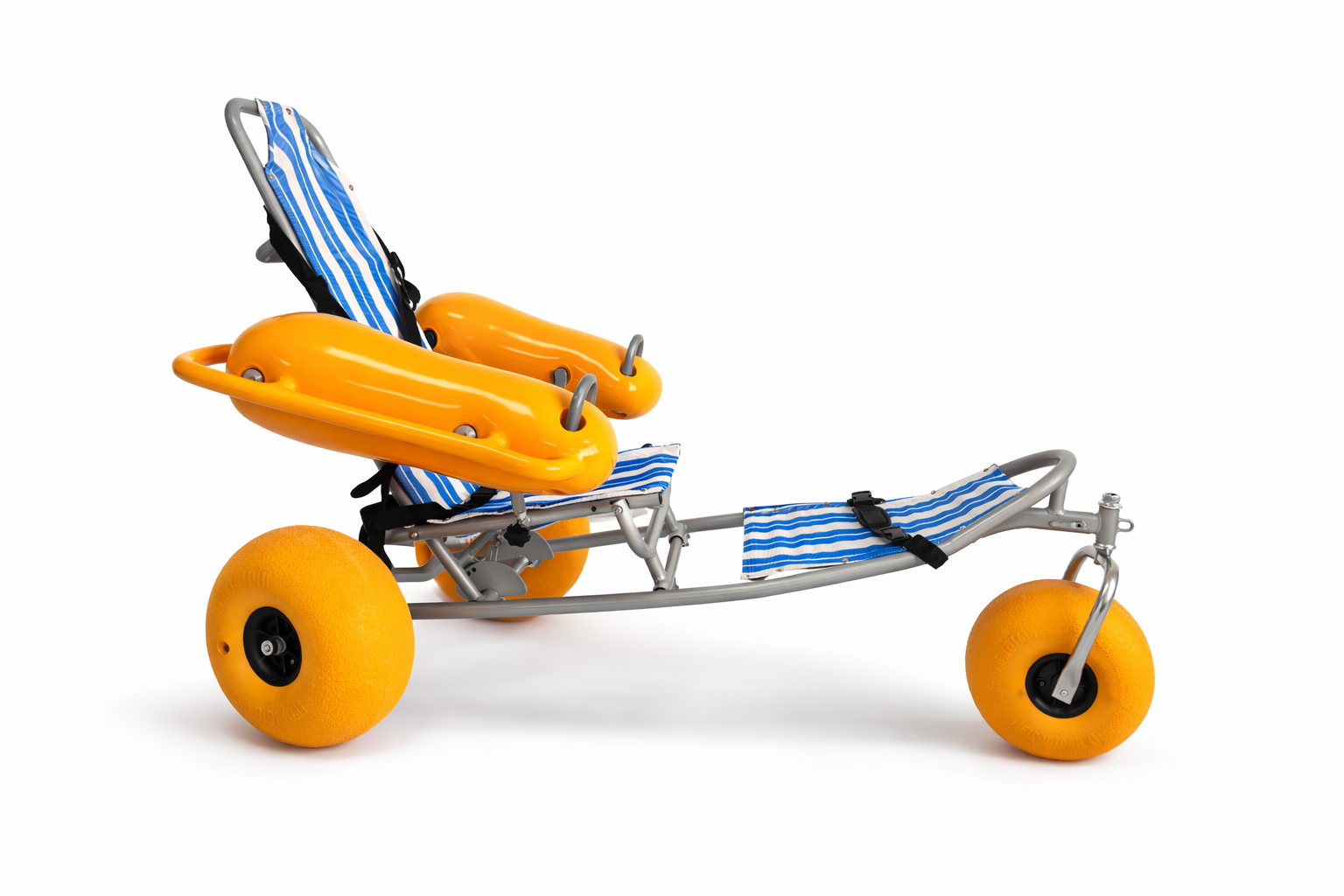
Mark the change in equipment at the meeting point
| Leg | Where to draw it | Question to settle at the site |
|---|---|---|
| Visitor arrival | Drop-off to reception and the agreed staging space | Can the visitor follow the signed route and wait with their companion without blocking the entrance? |
| Empty equipment delivery | Store to the same staging space | Can staff clear each gate, turn and threshold with the assembled chair, including after a delivery or event changes the layout? |
| Beach approach | Staging space to the approved land destination or shore boundary | Which mat joins, sand transitions or service crossings require a check before the next visit? |
| Return and pickup | Destination back to personal equipment, then to the collection point | Is the gate still unlocked, is the personal chair accessible and can transport meet the visitor on the correct side? |
Assign each leg to somebody who can verify it. A transport dispatcher can confirm the pickup but cannot release the shore activity. A beach attendant can report a buried mat join but may need the grounds team to correct it. Keep the transfer-point readiness check with the staff supervising that separate step. For the floating chair, verify the armrest attachments and all three inflatable wheels according to the manual before issue. Any water activity requires its own local release for supervised calm water and reliable attendant footing.
Test the route at return time
Suppose a visitor can arrive through the clubhouse at 14:00, but an event closes that passage before their planned 16:00 return. Walk the proposed alternative from the beach side with the same gates, furniture and vehicles expected at that hour. An accessible entrance at the other end of the car park helps only if the visitor can reach it and transport can collect them there.
Change the booking directions, arrange the working return or limit the trip to an endpoint the team can support. Give the desk two landmarks the visitor can recognize, one at arrival and one at pickup. Keep the dated route map, the unresolved obstruction and the person assigned to recheck it. Staff can then update the visitor’s confirmation without sending a guest toward yesterday’s exit.