
First attend to the person, summon help under the site’s emergency procedure and control access to the affected area. Assign someone else to notify the duty lead and support the return of visitors already on the route. The incident form can wait until the immediate response allows staff to record facts. Use the operator’s reporting rules for injuries, near misses, equipment faults and service interruptions, including any required escalation.
A useful account tells the next reviewer what happened, where it happened, which chair was involved and what the team did. Keep the original observation even if a later technical inspection finds a different cause. A wheel rubbing is an observation. A damaged axle is a diagnosis that needs its own evidence.
Record the scene while people can identify it
Use one incident reference and preserve the time of each significant event. Ask the visitor or witness how they wish to describe what happened. Record their words with permission and according to the site’s privacy procedure. If one staff member observed the chair and another received the report at the desk, identify which account came from whom.
| Field | Detail to enter |
|---|---|
| Location and direction | Named entrance or route, identifiable joint, surface or landmark, outward or return travel, and a time when the conditions were observed. |
| Chair and setup | Local asset ID, model, supplied configuration, visible wheel or support position and last known release reference. |
| Direct observation | What moved, caught, loosened or caused the outing to pause. Record any changes after the event. |
| Immediate response | Assistance requested, who responded, which asset or route was held, current visitor arrangements and who took over. |
| Follow-up evidence | Dated photographs of equipment or surface, work order, technical assessment, correction and release decision. |
Collect identifiable contact or health information only through the site’s designated restricted process. General maintenance and booking staff need the incident reference and an operational consequence, such as “W-08 held for inspection.” Photographs of the equipment and route interface can often document a condition without including the visitor.
Example of a near-miss entry
Hypothetical entry: “At 11:10, the attendant reported that the front wheel of land chair W-08 caught at the seaward edge of the first mat joint while returning towards the west ramp. The visitor asked to pause. The duty team arranged the agreed supported return, stopped new trips using the affected joint and removed W-08 from allocation for inspection.”
That entry preserves the location and recorded actions without deciding whether the wheel, the joint or both contributed. The field inspector should examine the first mat connection in the return direction, including the supporting sand and the hard approach. The technician should identify the chair and inspect its wheels, attachment and clearance under the prescribed procedure. Document the condition as found before authorised work alters it. Ramp-to-mat inspection and asset history for the individual chair
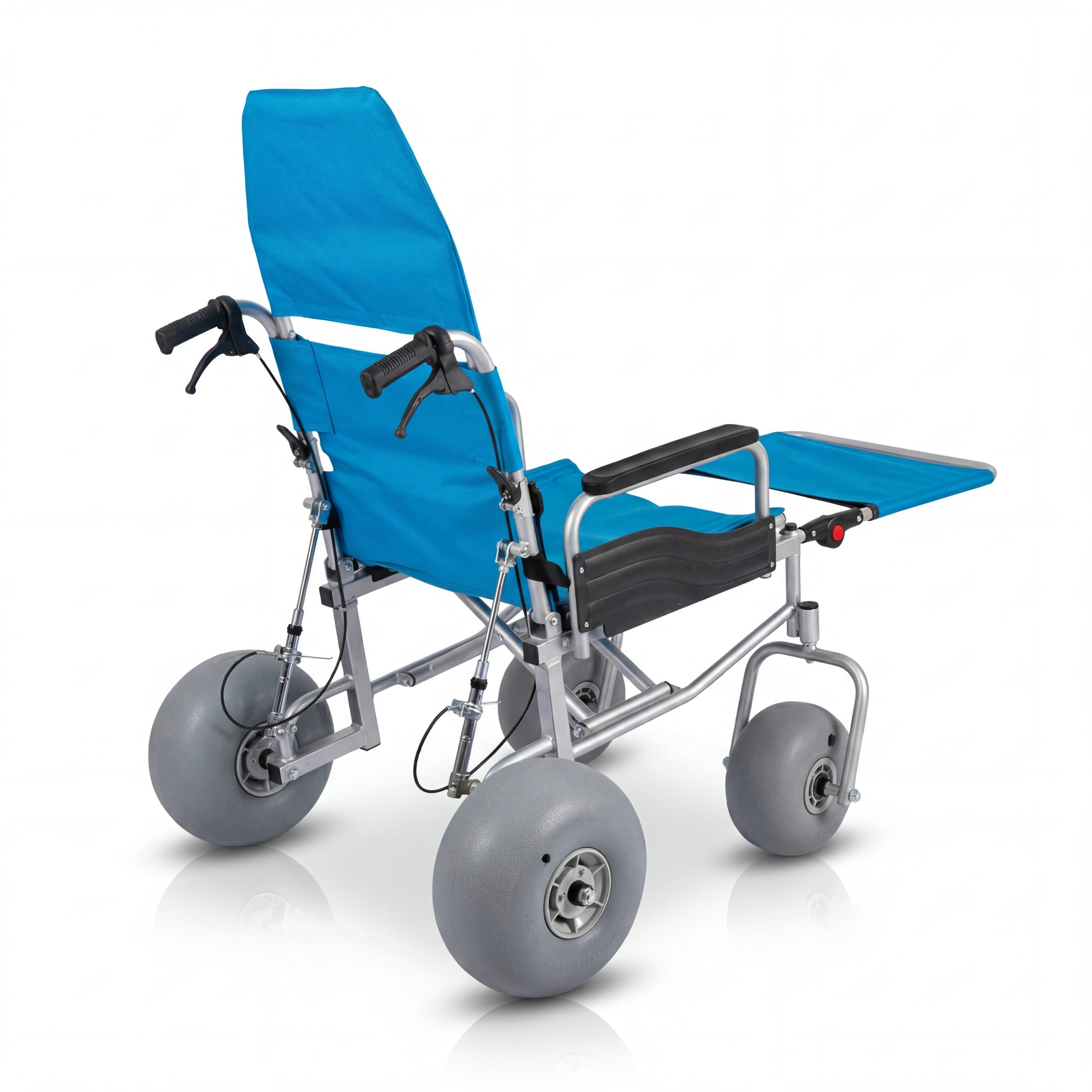
For a floating-chair event, distinguish a device fault from an environmental or staffing change. The AY-ST-V1.0 has three inflatable PVC wheels and two detachable inflatable PVC armrests. Name the actual component if the event involves an attachment or air loss. Record the observed water and footing conditions if they affected the outing. Its permitted service requires trained supervision and controlled calm-water conditions. Use the responsible site’s emergency arrangements for an event in progress. Corrected AY-ST-V1.0 manual and water-service closure procedure
Close the actions that prevented another issue
Give each action an owner, deadline, evidence and effectiveness check. A mat repair can resolve the route finding while the chair remains held. A technician can return the chair to its approved configuration while a site closure remains in force. Record each authorised decision and tell the desk which asset and route it may offer afterwards. Where multiple units or joints may share the problem, have the responsible person define and document the extent of the further review.
Review dated reports for repeat locations, configurations or shift conditions. A cluster of wheel catches at one return edge directs attention to that interface. It does not by itself prove the equipment failed. Check whether the agreed correction prevented recurrence under comparable conditions and carry any unresolved action into the next shift.