
A resort may own two floating beach wheelchairs and still be able to offer only one supervised water outing at a time. Before putting “water access available” on the guest activity calendar, run one proposed operating block with the people who will actually deliver it. Include the journey from the accommodation area, guest handover, return, care and preparation for the next visit.
Decide what one booking includes
Give the recreation manager a defined service to open. Name the guest meeting point, land route, agreed transfer arrangement, protected water zone if approved, assistance and final return. Guests who want to join family at a shore-side viewing space may need a suitable land service only. Record their intended destination before allocating a water appointment.
The AY-ST-V1.0 has a three-wheel arrangement, two detachable inflatable PVC armrests and a manufacturer-listed product weight of 28 kg. Ask the team to retrieve the empty chair from its actual store, bring it through the restricted service doors and prepare it at the named station under the applicable instructions. The weight helps plan the trial; it does not prescribe a one-person lift. Corrected V1.0 model manual
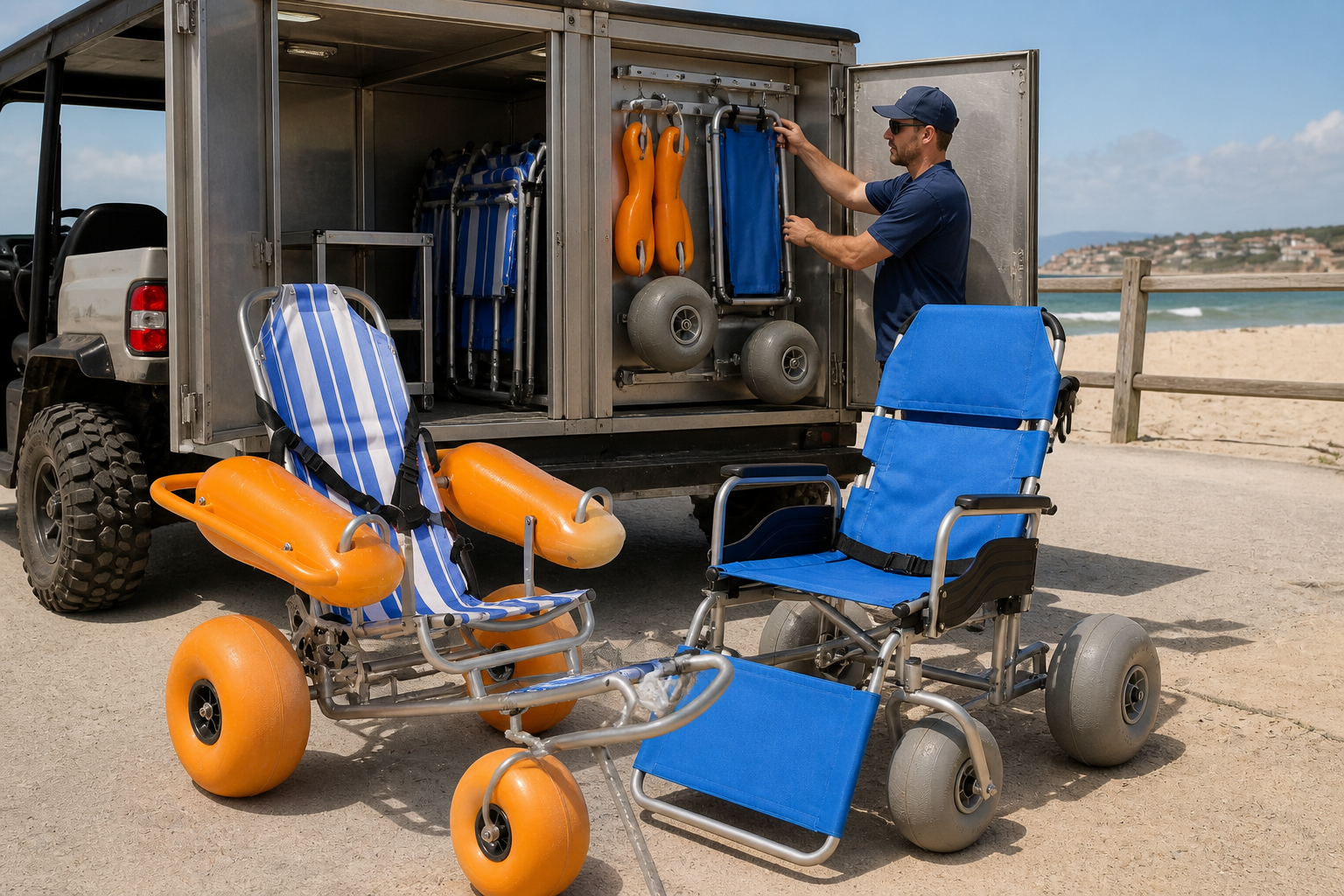
Put a proposed session on the resort clock
Count the time a visitor uses the chair and the time needed to return it to a checked, ready state. Then place the responsibilities of the shore team alongside those intervals. If the same trained people are supporting the first guest’s return, they cannot simultaneously start a second guest’s water session.
For a hypothetical two-hour block, allow 35 minutes for one accompanied visit and return, followed by 25 minutes for hand-back, care and preparation. One chair can supply at most two complete 60-minute cycles in that window under these assumptions. A second chair waiting at the station may reduce an equipment-preparation constraint. It will not support two simultaneous water outings if the operator has only one qualified team for the entire activity. Use the resort’s observed times, staffing requirements and actual conditions before accepting reservations.
Reserve room in the schedule for the last return. Include access to the changing or transfer area after the recreation desk stops new starts. If the guest’s personal equipment is kept at reception and reception closes earlier, the proposed service block does not yet support a complete visit.
Set the water decision apart from the hotel calendar
The model’s published water scope is controlled, calm and shallow, with trained supervision and stable attendant footing. The manufacturer excludes wave action and open-ocean deployment. A sheltered entrance on the resort plan still needs current assessment of the approach and the return, including changes caused by tide, weather, boats or an event occupying the staging space. Manufacturer’s water-use conditions
| At the start of the operating block | What recreation can tell guest services |
|---|---|
| Land route usable; shore team has not cleared water access | Offer the checked land option where supported. Give a time for a new water update if the team can meet it. |
| Chair released and water zone suitable; team is still with another guest | Confirm only appointments with sufficient cover throughout the visit and return. |
| The designated water team and zone are available; a named chair is held | Consider another independently checked and suitable chair. Keep the faulty unit out of allocation. |
| The zone changes after the first guest departs | Prioritise that guest under the site’s authorised return or emergency arrangements and suspend affected new starts. |
Choose the next operational change from the pilot
Record the number of distinct requests, completed land and water visits, requests that changed destination, and reasons for missed sessions. A persistent queue for a fully covered time block may justify another compatible unit. A queue caused by staff moving equipment through the main laundry corridor may respond better to revised storage or preparation space. Keep those explanations beside the numbers.
Give reservations one current service description and ask the shore manager to test what happens when an appointment changes midway through a busy check-in. The hotel front-desk guide covers the individual enquiry and confirmation. The resort purchasing guide covers model selection and receiving when the pilot supports an order.