
A tour company can reserve a floating beach wheelchair and a provisional time. The aquatic operator still has to decide whether the activity can take place at that location on the day. Before selling a water session, ask who will inspect the actual entry and exit, who can stop the activity and what the traveler can choose if the water portion is withdrawn.
Name the activity and the exact chair
The AY-ST-V1.0 is a three-wheel amphibious chair with inflatable PVC armrests and wheels. Its corrected manual describes use in calm water. It lists a 46 cm seat width, a 150 kg maximum load and three backrest positions. Those are equipment facts for the provider and traveler to review. They do not establish personal suitability, a permitted water depth or an arrangement for transferring someone. AY-ST-V1.0 corrected manual
The manufacturer describes controlled calm-water use with trained supervision, shallow conditions and stable footing for the attendant. Exclude wave action and open-ocean conditions from this offer. A photograph of a quiet bay or the word “shallow” in a brochure cannot establish what the team will encounter there. A land beach wheelchair or walker is a different device and cannot replace the confirmed floating chair for this service. Manufacturer’s floating wheelchair guidance
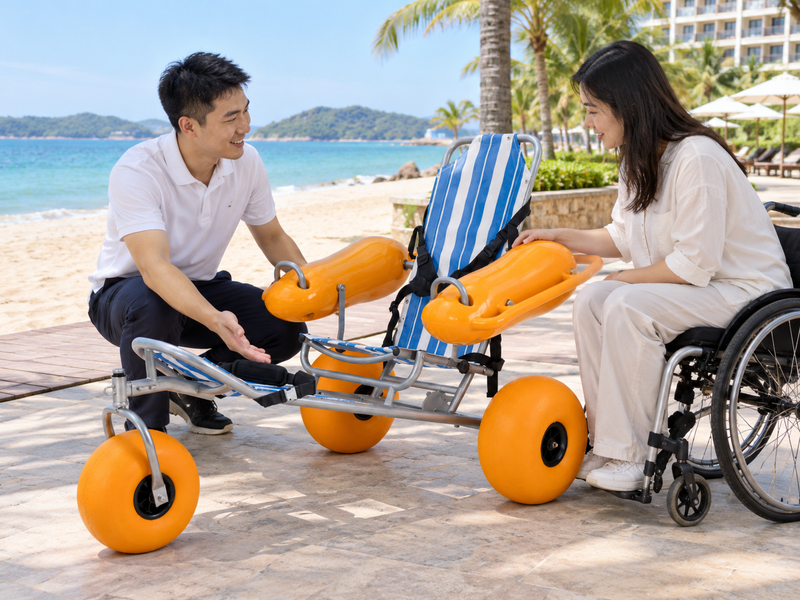
What must the local operator decide at the shore?
| Decision | What the tour lead needs from the responsible provider |
|---|---|
| Can the team use the designated area today? | Confirmation that it is permitted and open, conditions are calm, and the trained attendant has a stable footing throughout the intended shallow area. |
| Can the traveler get in and back out by the agreed route? | A usable approach, a checked exit and an identified place for the traveler to recover their usual mobility equipment. |
| Are the chair and supervision ready for this session? | The correct inspected V1.0, familiar staff, the agreed assistance and the venue’s separate emergency arrangements. |
| Does the traveler still want to proceed? | A clear description of today’s activity and constraints, a way to decline or stop, and a private opportunity to discuss individual support needs. |
Record who made the local decision, the time and the area it covered. A previous group’s release does not extend to another entry point or a later change in conditions. The tour leader can coordinate the itinerary and communicate the decision. Only the venue personnel responsible for aquatic operations should decide on local water use. A driver or booking agent cannot make that assessment from a photograph.
An available chair and an unsuitable exit
Suppose the aquatic lead finds calm water at the planned meeting point but a changed underwater surface at the return edge prevents the attendant from maintaining stable footing. Keep the water session closed. A different exit becomes an option only after the responsible operator has checked the complete arrangement there, including how the traveler will return to their own device. Moving farther into the water to bypass a difficult edge is outside this plan.
Explain the change before asking the traveler to prepare for the activity. They might prefer a checked dry viewing point beside their group, another provider-confirmed time, or to skip that stop. Offer the actual choices and state any changes to the return arrangements and booking terms. A substitute land outing needs its own suitable equipment and acceptance.
Keep the booking accurate after the decision
An excursion listing can promise that the travel team will request an identified, supervised session and confirm its status. A same-day message can then say which zone is available, who will meet the traveler and when the provider will reassess. Avoid promising water entry at the booking stage. If conditions change after release, the aquatic team applies the venue’s own stop and response procedures.
At the end of the session, confirm that the traveler and their usual equipment are reunited and the aquatic team has received the chair. Give the group guide only the information needed for the agreed return. The excursion equipment itinerary addresses the transport and timing surrounding that local decision.