
A picnic table overlooking the lake can be a better wheelchair destination than the nearest strip of beach. It may give the visitor the view they want, a place beside their group and a dependable way back. Mark the last dry, usable stopping place before describing a lakeside outing. For an AY-ST-V2.0 land wheelchair, keep the entire trip on land. Swimming, boat boarding and water entry require their own arrangements.
Read the lakefront from the parking area outward
Start at the place where the visitor will actually receive the chair. Walk the route to the shore and back with the site operator. Describe the surface in order, including the point where the maintained path ends. A gravel path that looks level from the parking area can reach a narrow turn at a bench, then a soft bank that has lost material since the last visit.
At each possible endpoint, establish what someone can do there. Is there room to turn or remain beside a companion while others pass? Can the visitor reach the picnic table or see the lake over the bank? Where is the last firm place to turn back if the shoreline has changed? Put the answer on the route map in ordinary language. A pin marked only “beach access” can send a family down the wrong branch.
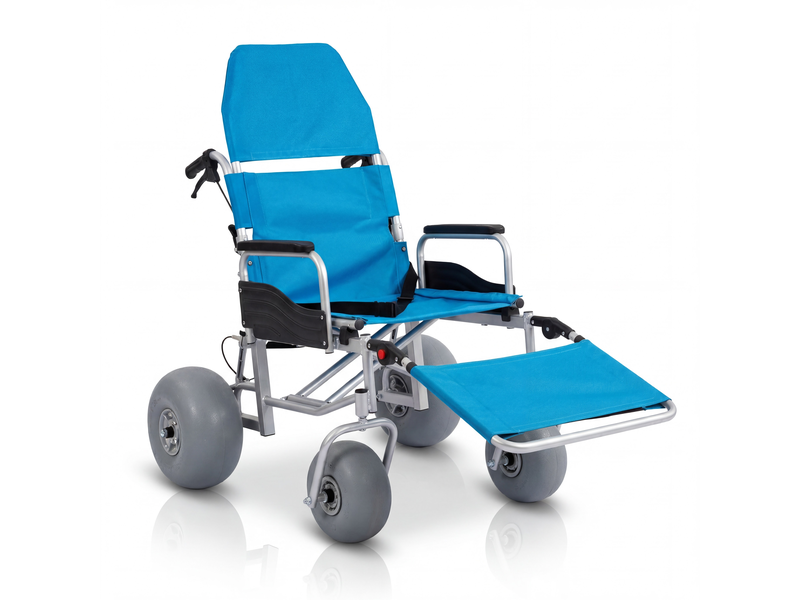
The AY-ST-V2.0 has four inflatable PU wheels, a high back and a listed overall width of 110 cm. Review gates and narrow turns with the configured chair. On the return, inspect the approach to each change of surface from the lake side. A firm approach below a platform on the outward trip can be a raised lip on the way back. AY-ST-V2.0 manual
What Echo Lake tells a visitor in advance
At Echo Lake Beach in Acadia National Park, the National Park Service describes a paved path from the parking area, facilities along the way and a wooden walkway across the sand. Its August 2026 listing also describes a summer loan chair with large inflatable tires. Visitors are asked to email at least five days ahead so a staff member can meet them. The same listing says the beach has no lifeguard. These details identify the approach, the booking lead time and the swimming arrangements separately. The park does not identify the chair as an Ary Beach model. National Park Service guide to Echo Lake
When the shore moves, choose the destination again
Imagine a lakeside park where a dry turnout usually sits between the end of the paved path and a picnic grove. On the morning of a visit, lake water has covered that turnout. The chair is available, but the operator cannot offer the grove by that route. If the upper terrace has a checked approach and suitable turning room, give visitors that choice before pickup. Explain the different view, surface and distance from the meeting point so they can decide whether the alternative meets their plans.
A practical route note names the meeting place, the last usable landmark, assistance available on the return and who can confirm conditions on the visit date. Guests planning to swim need a separate answer from the venue about the water activity they have in mind. A staffed land-chair appointment is useful information in its own right.