
A charity can pay for a beach wheelchair. The organization accepting the gift still needs a place to keep it, people to lend it out and authority to take it out of service. Before raising money for a particular model, ask the intended operator which trip residents have requested and whether it can offer that trip through the season.
Put the requested trip in the grant
“Help local residents reach the picnic area from the visitor centre” gives a recipient something to test. Ask residents who have requested the service which entrance they use, where their personal equipment would stay and whether the picnic site is the destination they actually want. Invite feedback without making participation or publicity a condition of borrowing.
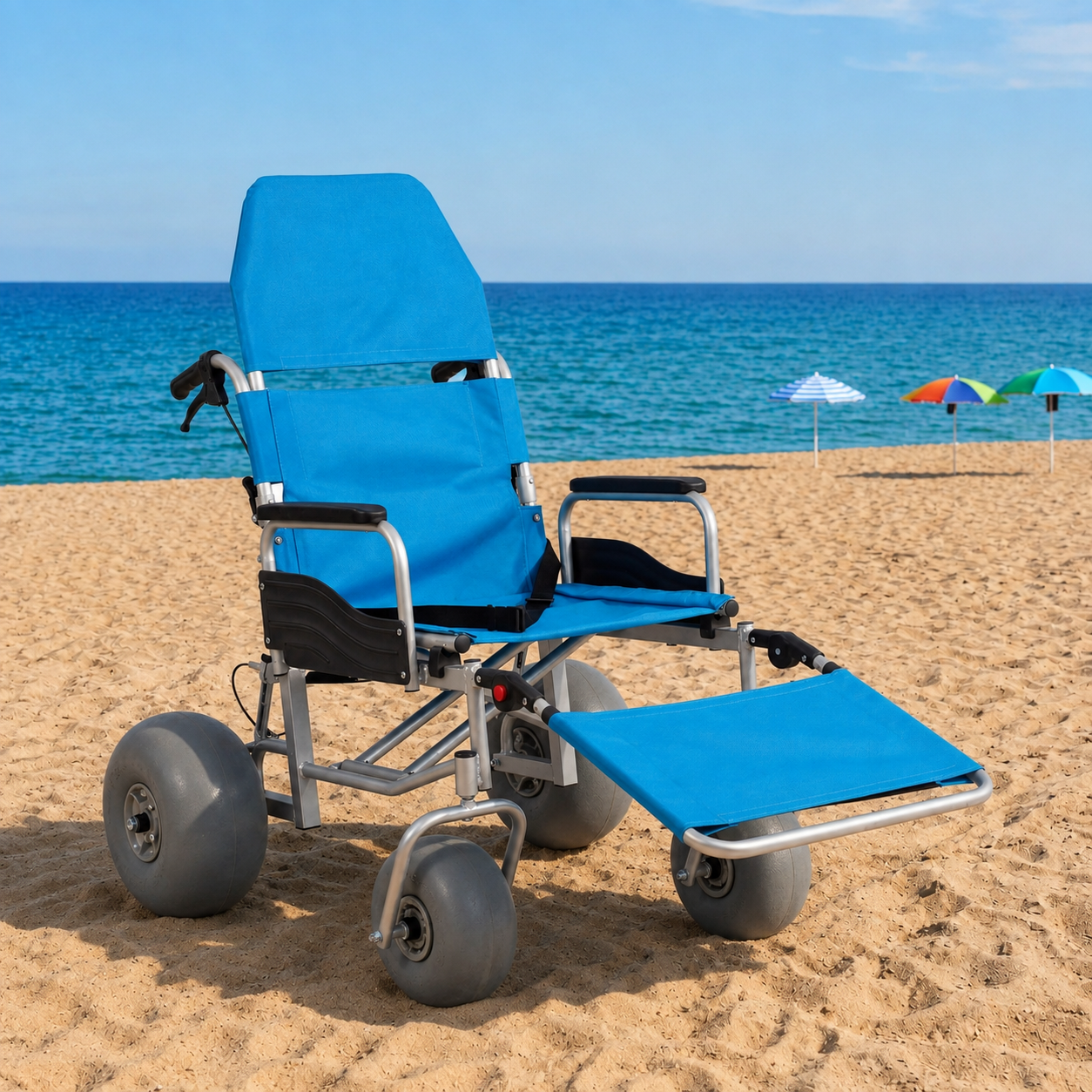
Take the proposed chair to the narrowest gate and the turning area beside the picnic tables for a site trial. If the recipient is considering the AY-ST-V2.0, the manufacturer lists a 110 cm overall width, 45 cm seat width and 100 kg capacity. Its four-wheel, high-back configuration is for a land outing in this project. Give the operator the model manual so its team can compare the proposed unit with the route and with the equipment guests have requested.
Split the gift into purchase, custody and service
| Question before the appeal opens | Who supplies the answer? |
|---|---|
| What will the money buy? | The charity identifies the chair and included components, freight, and any expressly funded setup or training against written quotations. |
| Who can accept the delivery? | The recipient names its asset owner and a receiving contact who can check the package against the order and retain the documents. |
| Who meets a borrower on Saturdays? | The site operator sets a timetable around trained people, the checked route and access to storage. It owns the public availability notice. |
| Who pays when a wheel needs attention? | The parties name a repair contact and budget holder, including who can approve costs after grant funds have been spent. |
In a small grant, freight alone can change the decision. Suppose a donor has agreed to pay the chair invoice and delivery to a central warehouse, while the park can store the chair only at a separate beach entrance. Ask who will fund and arrange the second journey. Show that cost separately in the appeal or agree that the recipient will cover it before ordering. The empty-chair cargo guide can help the receiving team plan that leg.
Decide when the charity can announce availability
Delivery closes a purchasing task. Opening the loan service requires the operator to accept the assembled chair, check a route and arrange a staffed pickup and return. If the chair arrives while the park is between seasonal contracts, the charity can accurately announce that it funded and delivered the chair. Give a collection point and start date only when the operator has confirmed both.
Agree how the operator will report back. Count completed loans separately from requests turned away because the chair was already out, the route was unsuitable that day or a staff member was unavailable. Those distinctions help the charity decide whether a future grant should pay for another chair, longer service hours or an improved approach. A photo from the presentation does not answer that funding question.