
If one wheel feels soft again after inflation or moves unexpectedly at the hub, take the chair off loan and identify the affected corner. Telling maintenance that “the beach chair has a bad wheel” leaves three other wheels, and possibly several chairs, in question. Record the chair’s asset number and describe the position from the seated user’s perspective.
Start with the wheel specified for that end
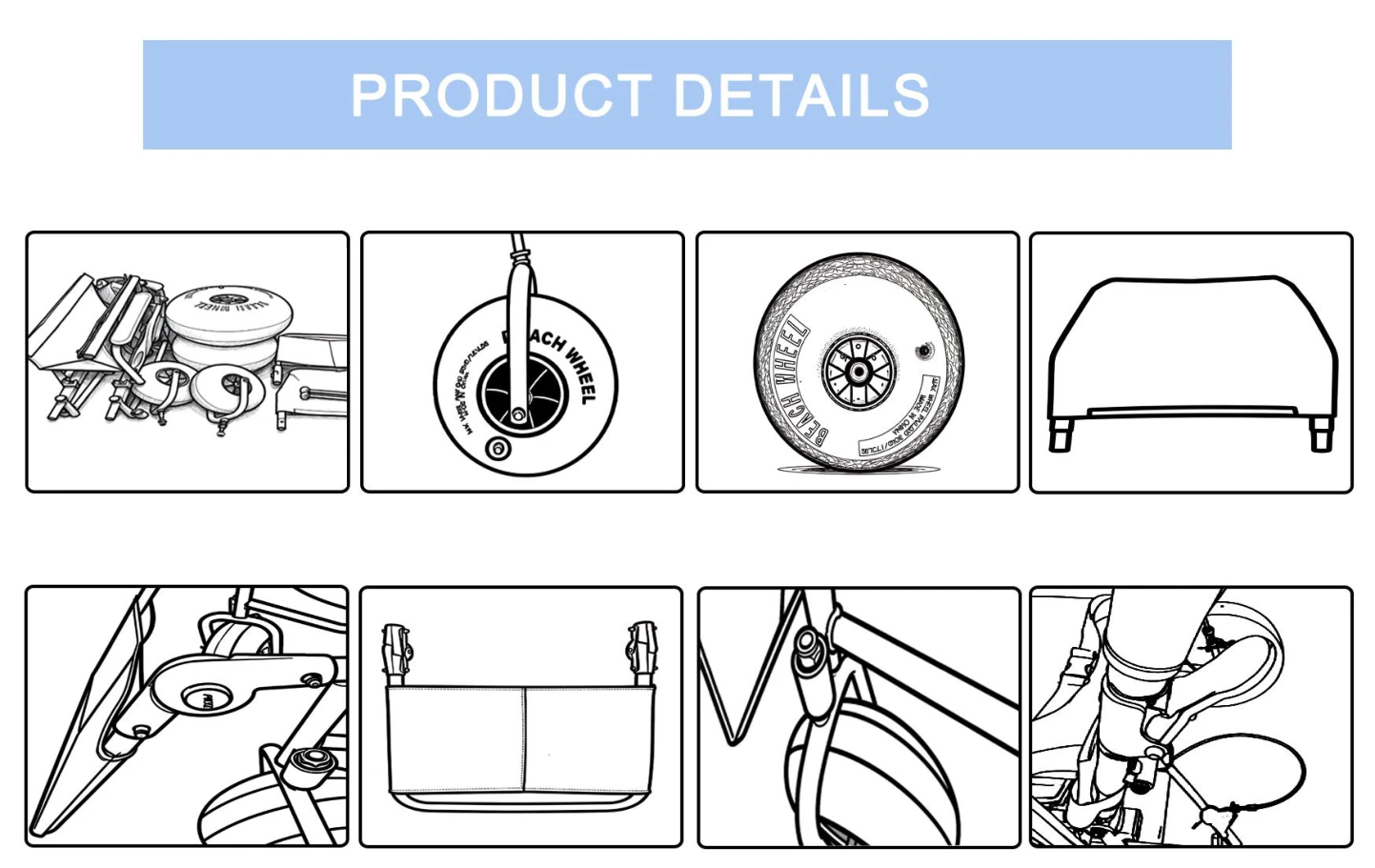
The AY-ST-V2.0 manual lists hollow inflatable PU wheels in two sizes. The front is 9 × 4.5 inches and the rear is 12 × 5.5 inches. The recommended pressure for both is 2–4 psi. Match those figures to the version on the chair and use a gauge readable at low pressures. Keep the pressure reading with the wheel position. Feel or appearance alone cannot establish what pressure the tire holds. AY-ST-V2.0 manual, product definition and assembly diagrams
A tire marked with the same dimensions as the original can have a different hub, fixing or axle interface. If a replacement has been fitted, check the part reference and retention hardware against the unit’s supplier documentation. Where the reference is missing, send the supplier the asset identification, wheel position and clear views of the hub and fixing. Keep the chair out of circulation until the part can be identified.
Look at the empty chair before the next loan
| Observation | What the team needs to establish |
|---|---|
| One front tire appears softer than its partner | Check both readings. If a tire loses pressure again after adjustment, mark the position and refer the loss to maintenance. |
| A wheel rubs or tracks unevenly on a clear, firm surface | Remove loose surface debris if permitted by the care instructions. If the symptom persists on the empty chair, report where contact occurs. |
| Retention hardware is missing, displaced or of uncertain identity | Hold the unit. A short roll without a wobble cannot demonstrate that a missing or incorrect fixing will retain a wheel. |
| Damage to the tire, valve, fork or hub is visible | Photograph the affected component and its position. Have a qualified service contact determine the necessary action. |
Start on a clean surface where rubbing and unusual movement can be seen without sand masking the cause. Use the attachment check shown for the supplied wheel. Leave disassembly and repairs to the people authorized for that work. Keep an undamaged wheel on the opposite side available for comparison, without treating a mirror image as a parts specification.
What closes a wheel fault?
Suppose the right rear measured below the manual range at opening. A staff member adjusted it within range, but it was low again at the next check. Record both readings and when they were taken. Maintenance now has evidence of repeated loss and the booking desk knows to offer a different checked chair. Repeated topping up would conceal the history from the next shift.
To release the chair, the designated person needs the cause addressed, the correct part and hardware confirmed where work was done, and an empty-chair check showing the reported symptom has cleared. For a pressure-loss complaint, follow the service contact’s guidance on when to remeasure. Attach those results to the equipment record before restoring its booking status. The next borrower should receive a chair with the fault resolved.