
Start planning before the final public operating day. Set a last departure that leaves time for every visitor to return, recover their personal equipment and speak to the receiving team. The shift responsible for that last return also needs access to the store, the asset register and someone authorised to deal with a fault. Closing the booking calendar ends departures. There may still be chairs with visitors, contractors or another beach station.
Give booking partners the same last issue and return times as the local desk. Contact anyone whose reservation overlaps the shutdown. If the land-chair season ends before a separately managed water service, name the affected service and entrance precisely on the website, signs and phone message.
Bring all issue points onto one list
Pull the open loans, station transfers, repair orders and store inventory together by asset ID. A chair lent by the north desk and returned to the south store should have one entry showing both events. Ask each receiving location to confirm physical custody, the time of return, supplied accessories and any new concern. An open loan stays open until the chair is found and received under the operator’s process.
For a hypothetical six-chair fleet, the main store counts four chairs. The satellite station confirms one more against its transfer record. The sixth chair is still on an open loan. Five chairs now have confirmed locations. If one of the four chairs in the main store has a damaged support, its location is known and its condition remains on hold. Call the loan contact about the missing return and assign the support fault to maintenance as two separate actions.
Check returned condition against the model issued
Ask about damage or changes in handling while the attendant can identify where they occurred. Compare the returning chair with its issue entry and the correct component list. Mark a displaced part or a missing retainer before equipment from several sites enters a shared cleaning area.
| Fleet item | What the closeout team verifies | What the next team needs |
|---|---|---|
| AY-ST-V2.0 land chair | Identity of the four-wheel high-back unit, back and leg supports present as issued, any reported movement at an attachment. | Asset ID, component location, photographs and the unresolved service issue or completed recheck. V2.0 manual |
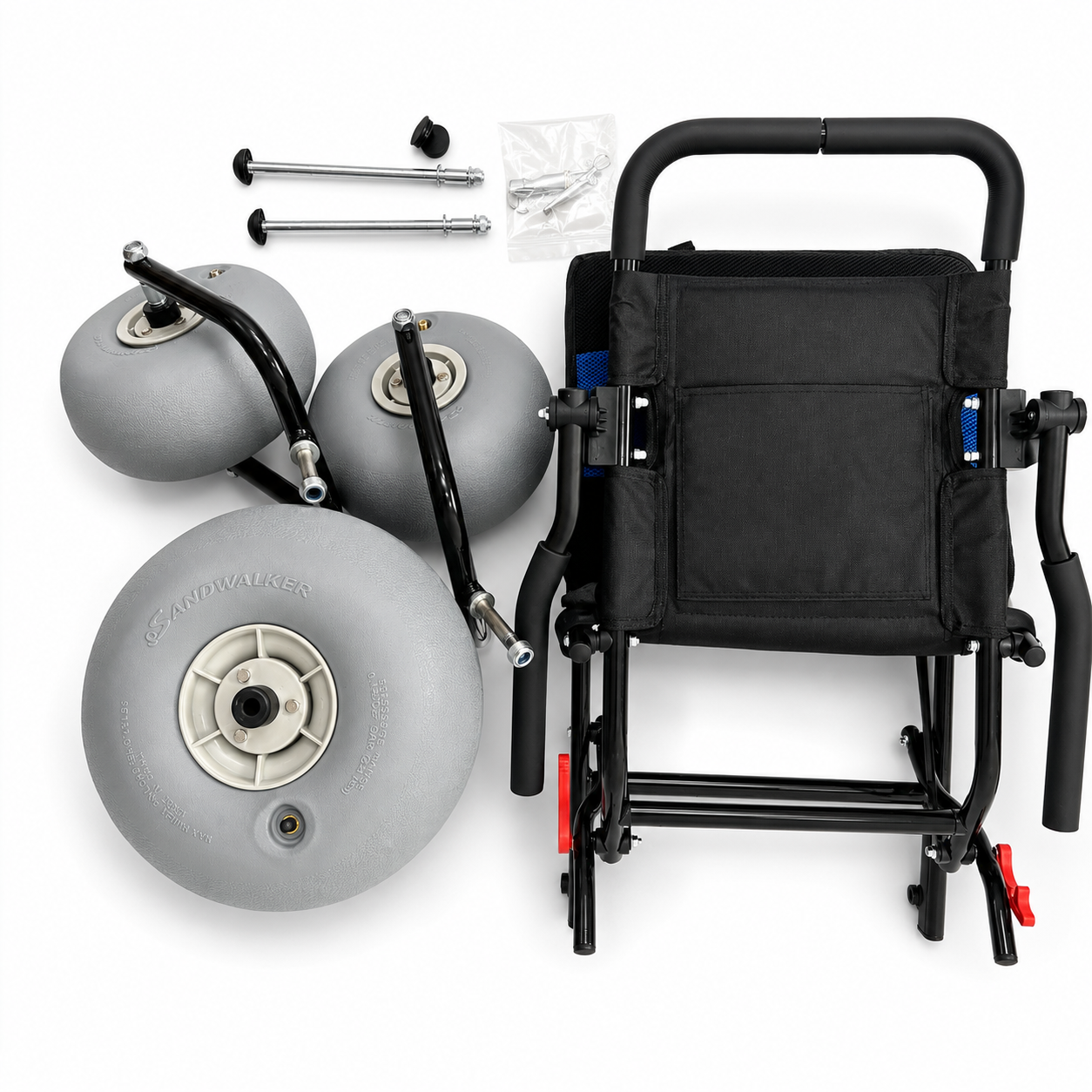
| AY-ST-V1.0 floating chair | Identity of its three wheels and two detachable inflatable PVC armrests, condition reported after the last outing, any parts already removed. | Matching storage set, instructions, original fault and remaining work. Single-chair storage and return to service |
| Loose equipment or spares | Whether the piece came off a named unit, remains unused in stock or is being returned under a supplier agreement. | Part reference, quantity, location, allocation and supplier correspondence if needed. |
Follow each model’s approved cleaning and drying instructions and leave a clear status for equipment awaiting service. Preserve incident and maintenance records under the operator’s policy. Keep a visitor’s personal details in the appropriate restricted record and use the chair and issue references for routine fleet work.
Reconcile the stock before placing winter orders
Count parts on the shelf and list those already assigned to a repair. A replacement wheel reserved for one held unit cannot also count as a free spare for the next season. Keep removed or unidentified parts in a marked location until someone can approve their disposition. Ask the supplier to confirm the offered part and revision against the affected asset.
For each repair, record whether the team is awaiting diagnosis, a quote, a part or reinspection after fitting. Put the committed cost beside the accepted quote. Keep estimates for possible replacements in a separate budget line. This gives the person placing orders a reason and a deadline for each purchase, even after seasonal staff leave.
Hand the operator an opening list
Reconcile issued units, accessories, documents and open issues before staff leave. Give the incoming lead a dated list showing where every unit is, who confirmed it, which parts belong with it, and whether it is prepared for storage, held, off site or still awaiting return. Include the route plan, parts orders, training changes and the dates when someone will inspect the store during closure.
Ask the next lead to retrieve one chair and its file from that list. Can they find its parts and see exactly what must happen before it can be offered again? Record any missing return, unresolved repair or site work with the person who will follow it during the closed period. The beach wheelchair program handover guide covers the rehearsal and service checks needed when the site is ready to reopen.