
“I could see the beach chair, but I couldn’t reach the desk to collect it” is the sort of comment a service manager can act on. It identifies a stage of the visit and suggests where to look. A positive overall rating from visitors who completed their trips could easily miss that barrier.
Start with a decision the service can change. Is the pickup location difficult to find? Is a declared destination farther into loose sand than visitors expect? Is the collection handover rushed when another chair returns? Ask about the particular journey and invite people who made an enquiry but did not complete a booking to respond if appropriate.
Match the question to the visitor’s stage
| When to ask | Question the visitor can answer | Who can act on the answer |
|---|---|---|
| After enquiry or booking | “Could you tell which entrance to use, what chair was offered and what assistance to arrange?” | Booking or information lead checks the page, confirmation and phone wording. |
| At a supported handover | “Do the chair and the assistance available here match what you expected?” | The appropriately trained team resolves setup or assistance questions before departure. |
| After return | “Where did you get to, and where did you first need more help or decide to turn back?” | Route and service leads inspect the named segment or reconsider what the desk offers. |
| After a cancellation | “Did the notice reach you in time, and did the offered alternative work for you?” | Duty lead checks message timing, affected bookings and alternatives. |
Offer a short conversation, a written response and an accessible remote contact where practical. Explain what the review will change and how to request a reply. Collect only information needed for the stated review and follow the operator’s privacy process. A companion may have a useful observation about pushing effort. Ask the visitor how they would like their own experience recorded.
Investigate the location or chair behind a comment
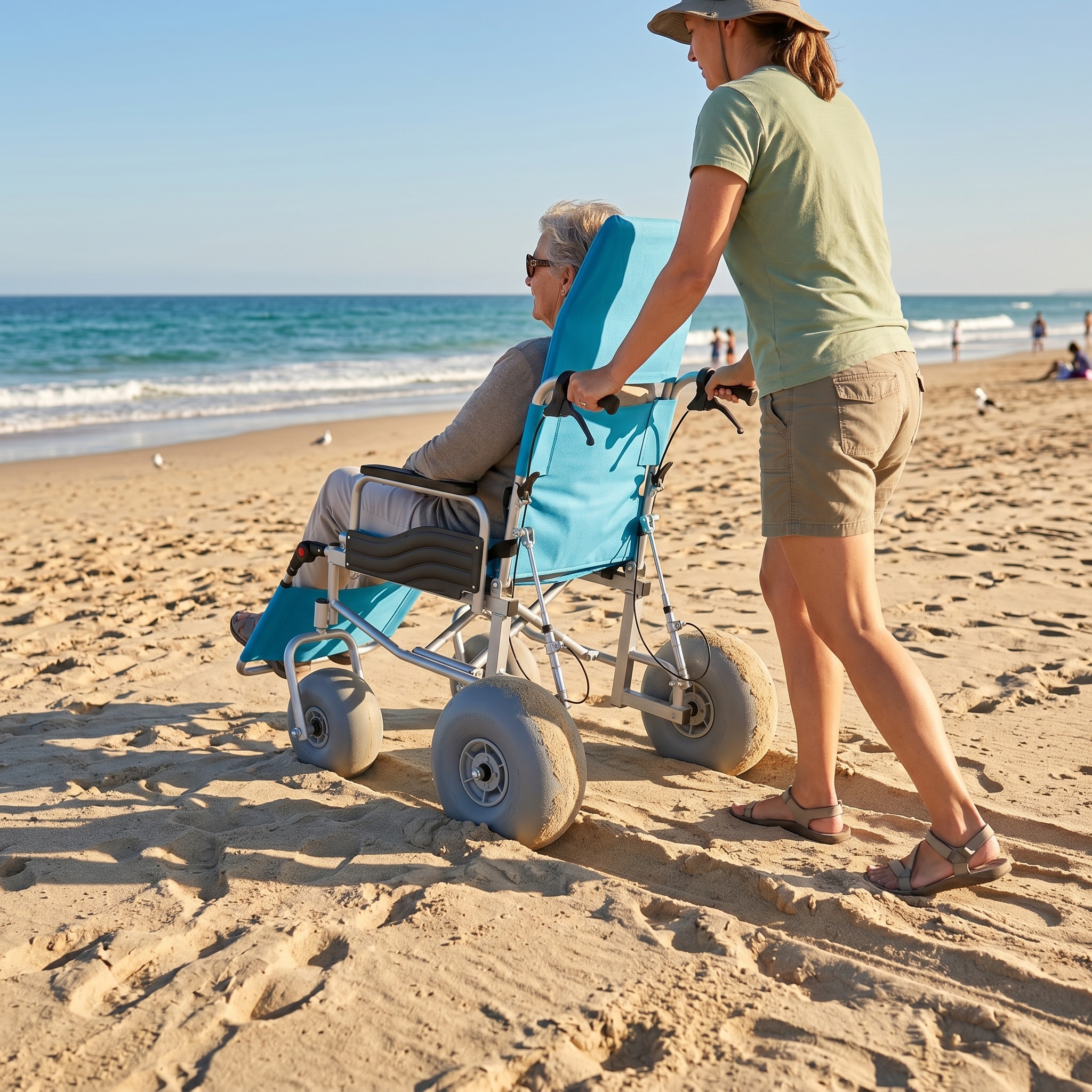
A visitor may say, “The foot support felt wrong as we turned.” Record the visitor’s words, the direction of travel, the named turn, the chair asset and the configured support. Ask the equipment lead to inspect the relevant assembly and ask the route lead to check clearance at the turn. Individual comfort and fit belong with the qualified person handling those questions. For AY-ST-V2.0, the manual describes the high backrest and adjustable leg support. It helps staff identify the correct component for inspection. AY-ST-V2.0 manual
A mechanical fault or an event requiring immediate assistance should enter the appropriate safety and maintenance procedure straight away. The feedback review can retain its reference for later analysis. Staff can act on the problem without asking the visitor to repeat a difficult manoeuvre or demonstrate how a defect occurred. Beach wheelchair incident report
For example, in a fictional service review, three visitors say they could not find the return desk. Two staff report that the old sign still points towards a desk moved during site works. The service manager checks the sign from the beach side and follows the return instructions in the booking confirmation. If the two point to different places, correct both and give the next shift the same landmark. These five accounts concern a single possible information failure. They do not represent five separate equipment faults.
Check the change with the people who encounter it
For a revised return sign, ask a willing visitor where they would now go and check that staff can still receive a chair at that location. For a changed mat endpoint, inspect it from the return direction and describe the actual destination in the public guide. If only the service wording changes, confirm the revised text reflects a route and assistance the operator can deliver. Writing a beach wheelchair visitor information page
Tell respondents or the public what changed, what remains open and why. Use a brief dated update that preserves privacy. At review time, show how comments were invited, which groups or stages are missing and how many responses concern each barrier. The denominator for a feedback rate is the eligible people offered that channel during the period, if the team actually counted them. Outside that scope, report the comments as observations.
A dashboard can point the team to recurring issues. Keep the original words, location and follow-up beside its metric so that a reader can see what a change means for a visitor’s next trip. Beach wheelchair program metrics