
A beach wheelchair safety checklist becomes practical when it links route status, chair identity, visible inspection, staff roles, communication, handoff, return, care, storage, stop rules, and a named release decision. A generic tick sheet can look tidy while missing model revisions, wheel positions, folding points, changing beach conditions, or held equipment. Resorts, public beaches, rental fleets, hotels, distributors, and recreation teams need a checklist based on current supplier instructions and local policy. A visible state record also helps separate routine checks from service work. This article answers ten operational questions without promising risk-free use, medical suitability, regulatory compliance, performance results, prices, stock, or staffing outcomes.
Teams can connect this topic with beach wheelchair for adults and beach wheelchair for resorts.
For broader destination-level context, consult the UN Tourism accessibility publications and guidelines. Apply local requirements and current product documents to the specific project.
What route checks belong before chair release?
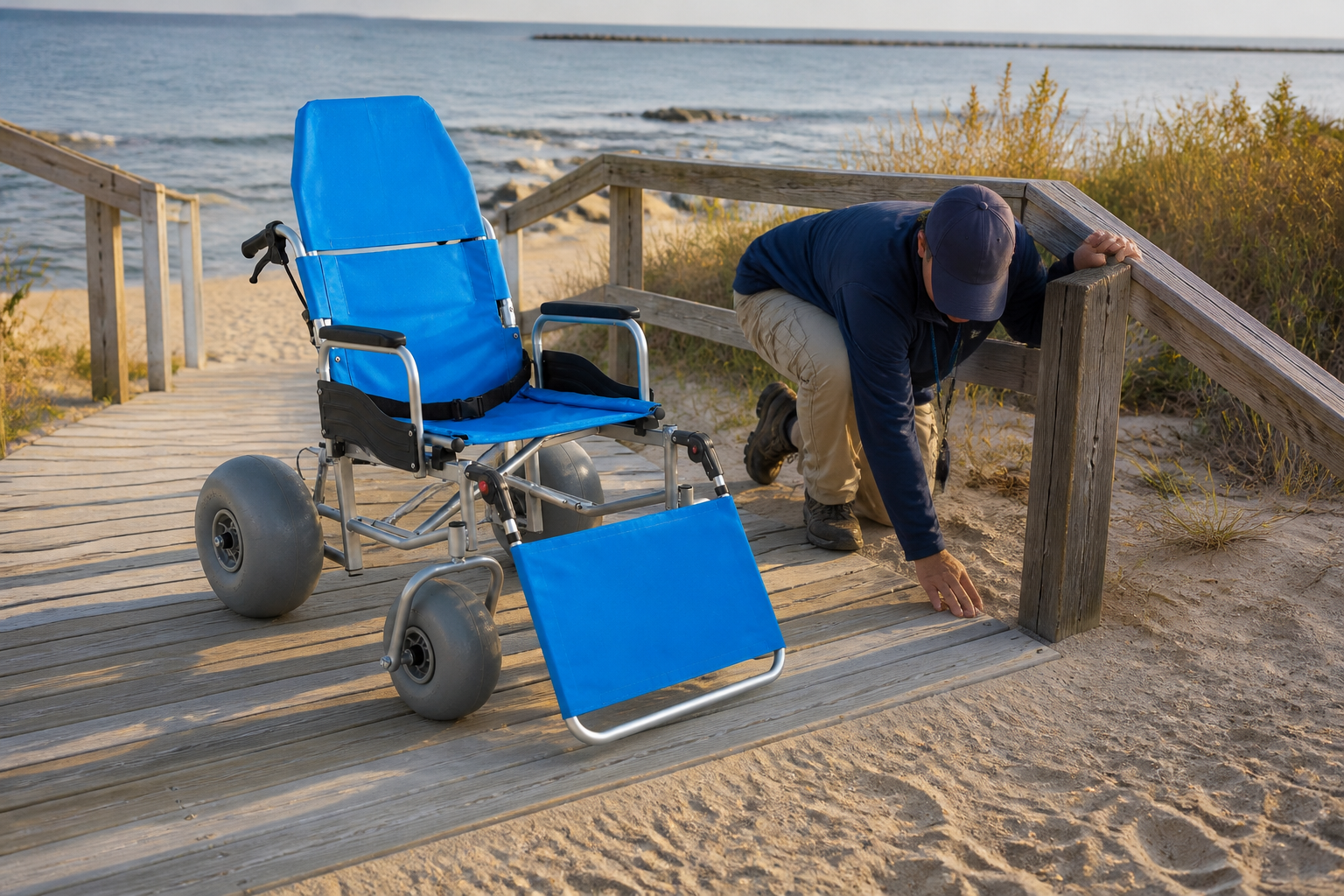
A beach wheelchair safety checklist should verify the complete route and current beach conditions before a chair receives release status. The route record should cover storage exit, corridor, doorway, ramp, boardwalk, gate, surface handoffs, turning areas, pause points, service zone, return path, care access, and storage entry. Fixed features such as width, slope, edge, and seam need their own fields. Weather, debris, crowd flow, construction, closures, and seasonal barriers should sit in a changing-condition group with a named review time.
Separate fixed access from changing beach conditions
Here’s the route rule: a chair can be ready while a route is not, so keep equipment status and site status separate. Use the applications page to frame program settings, while local observations and policy control the release. Give staff a clear change, postpone, reroute, or stop option. Record who checked the route, which area was reviewed, and when the status must be checked again.
- Map storage through return and care.
- Record fixed and changing conditions.
- Keep chair and route status separate.
- Name reroute and stop authority.
Key Takeaway: Route release needs current site evidence rather than yesterday’s assumption.
| Review area | Working record |
|---|---|
| Fixed route | Width, slope, edge, seam, turn, and handoff |
| Changing site | Weather, debris, crowd, closure, and work |
| Decision | Proceed, change, postpone, reroute, or stop |
Separate statuses show whether the chair or the site caused a hold.
What chair identity should staff verify?
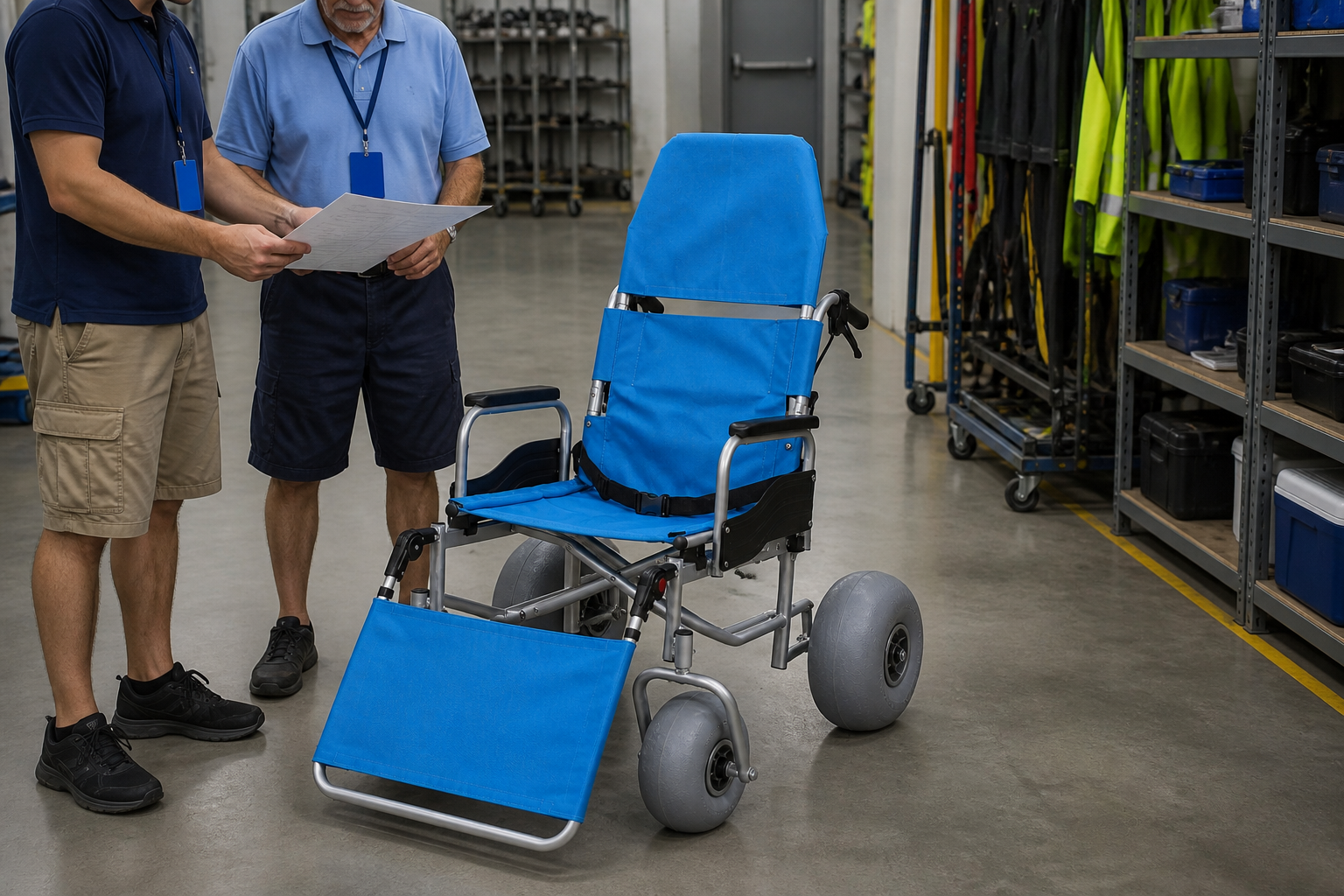
A beach wheelchair safety checklist should verify chair ID, model, option set, document revision, wheel configuration, and current status before inspection continues. Identity keeps the team from using instructions, parts, or pass criteria from another chair. The visible configuration should match the record: silver folding cross-braced frame, blue high back and seat, black armrests and side guards, waist belt, two larger rear balloon tires, two smaller front balloon tires, black hubs, push handles with levers, and blue foot support. Any mismatch creates a question or hold.
Match chair, configuration, records, and status
The identity checkpoint: place model and status where staff can read them before movement, while keeping private guest information elsewhere. Match the chair with the current all-terrain chair page only for category context; use the exact model file for inspection. Record ready, returned, cleaning, drying, hold, service, or retired status. Do not let a booking calendar or storage location substitute for chair-level identity.
- Confirm chair ID and model.
- Match visible configuration with records.
- Check current instruction revision.
- Record chair-level operating status.
Key Takeaway: Inspection begins only after chair and document identity agree.
| Review area | Working record |
|---|---|
| Identity | Chair ID, model, option, and revision |
| Configuration | Frame, seating, wheels, handles, and foot support |
| Status | Ready, care, hold, service, or retired |
This checkpoint blocks cross-model instructions from entering the process.
Which frame and folding points need inspection?
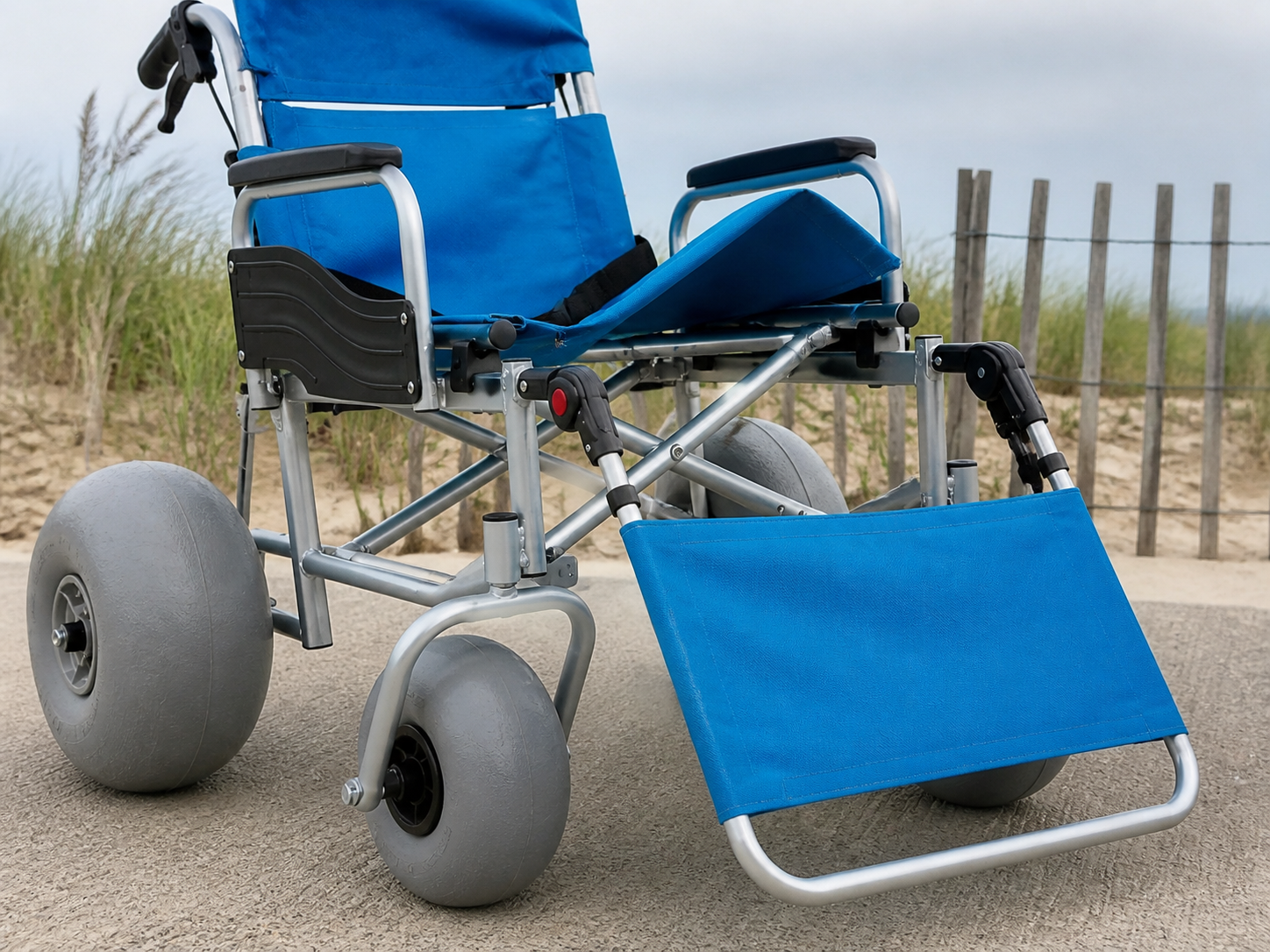
A beach wheelchair safety checklist should inspect the frame tubes, cross braces, folding points, joints, supports, handles, visible fasteners, and clearances named in current instructions. Staff need enough light and space to see whether parts are present, aligned, seated, clean, and free from visible damage under the stated criteria. The checklist should not invite tightening, adjustment, lubrication, or dismantling unless those actions fall within an approved role. A silver frame may hide movement at a joint, so the condition method belongs with the exact chair rather than a color-based visual guess.
Follow model-specific visible checks and staff boundaries
What keeps the check controlled: use a fixed inspection order from handles and high back through side frames, cross braces, lower supports, foot-support frame, and visible hardware. Record any movement, obstruction, missing part, or uncertain folding step. Keep fingers and clothing outside moving areas named by current instructions. If setup cannot be completed through the documented method, stop and move the chair to hold for supplier or service review.
- Inspect tubes, braces, joints, and supports.
- Check handles, levers, and visible hardware.
- Stay inside approved staff actions.
- Hold any unclear folding condition.
Key Takeaway: Frame checks need a repeatable order and a clear service boundary.
| Review area | Working record |
|---|---|
| Upper frame | Handles, back supports, arms, and joints |
| Lower frame | Cross braces, folding points, and supports |
| Decision | Pass, clean, question, service, or hold |
A fixed order reduces skipped joints during busy handoffs.
How should tires, hubs, and axles be checked?
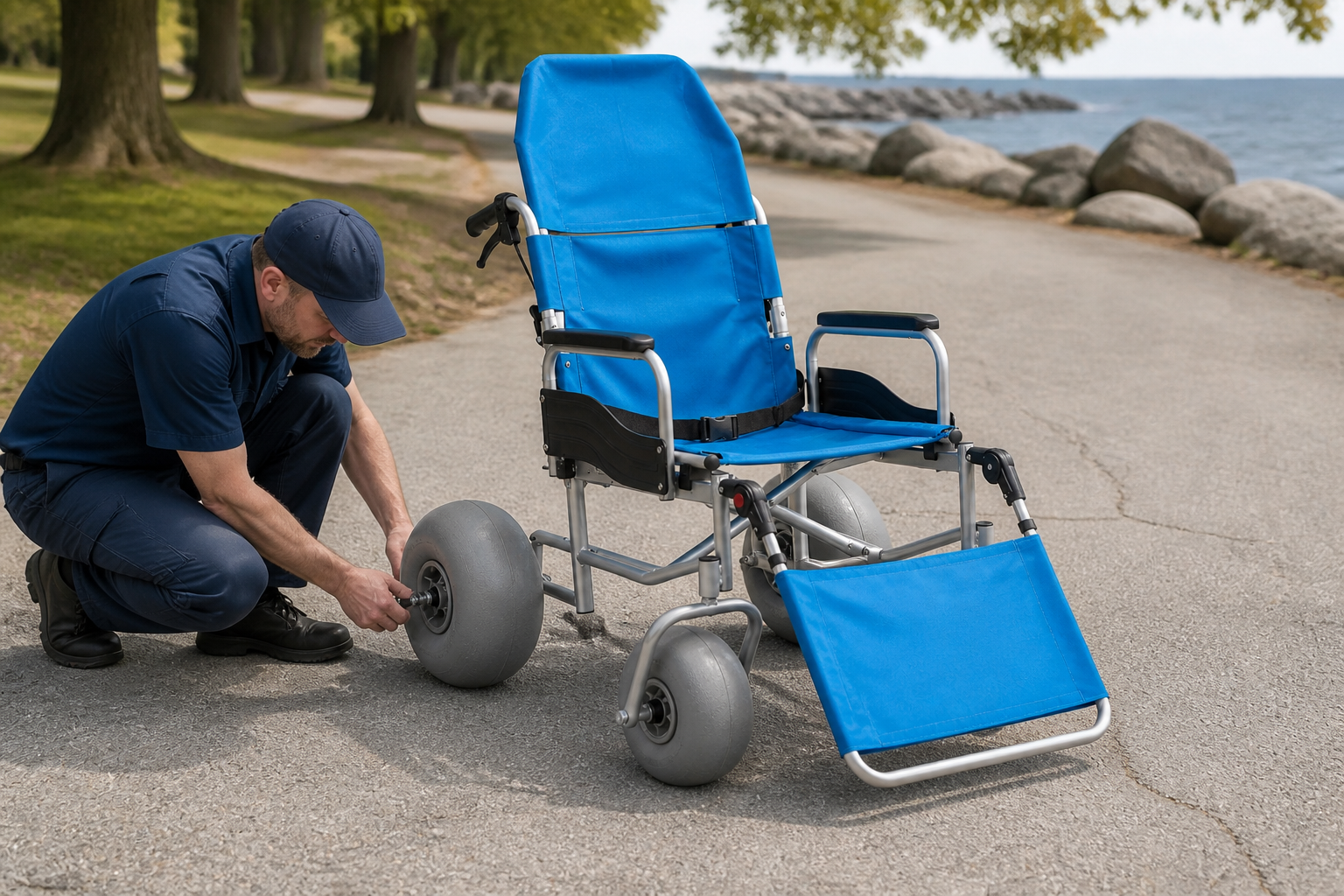
A beach wheelchair safety checklist should check every tire, hub, axle, attachment, fastener, rotation point, and clearance through current model criteria. The reference configuration uses two larger rear and two smaller front gray balloon tires with black hubs. Staff should confirm wheel position and identity before reviewing visible surface condition, form, contamination, attachment, axle end, surrounding frame, and foot-support clearance. Where inflation or another internal condition applies, the supplier’s method and value control the check. No general article should invent a pass figure.
Inspect all four positions through one repeatable loop
The practical loop: start at a named front or rear position and move around the chair in the same direction. Record an issue against chair and wheel position, not merely as “tire problem.” Keep cleaning, service, and release actions separate. Do not rotate parts between positions or chairs without approved compatibility records. An uncertain hub, axle, fastener, or clearance sends the chair to hold before an empty-chair movement check.
- Confirm two rear and two front tires.
- Inspect tire, hub, axle, and attachment.
- Check frame and foot-support clearance.
- Record wheel position with every issue.
Key Takeaway: A wheel check remains traceable when every issue names chair and position.
| Review area | Working record |
|---|---|
| Position | Rear left, rear right, front left, or front right |
| Check | Tire, hub, axle, attachment, and clearance |
| Status | Ready, clean, question, service, or hold |
The position loop makes missing or swapped components easier to spot.
What seating and foot-support checks belong?
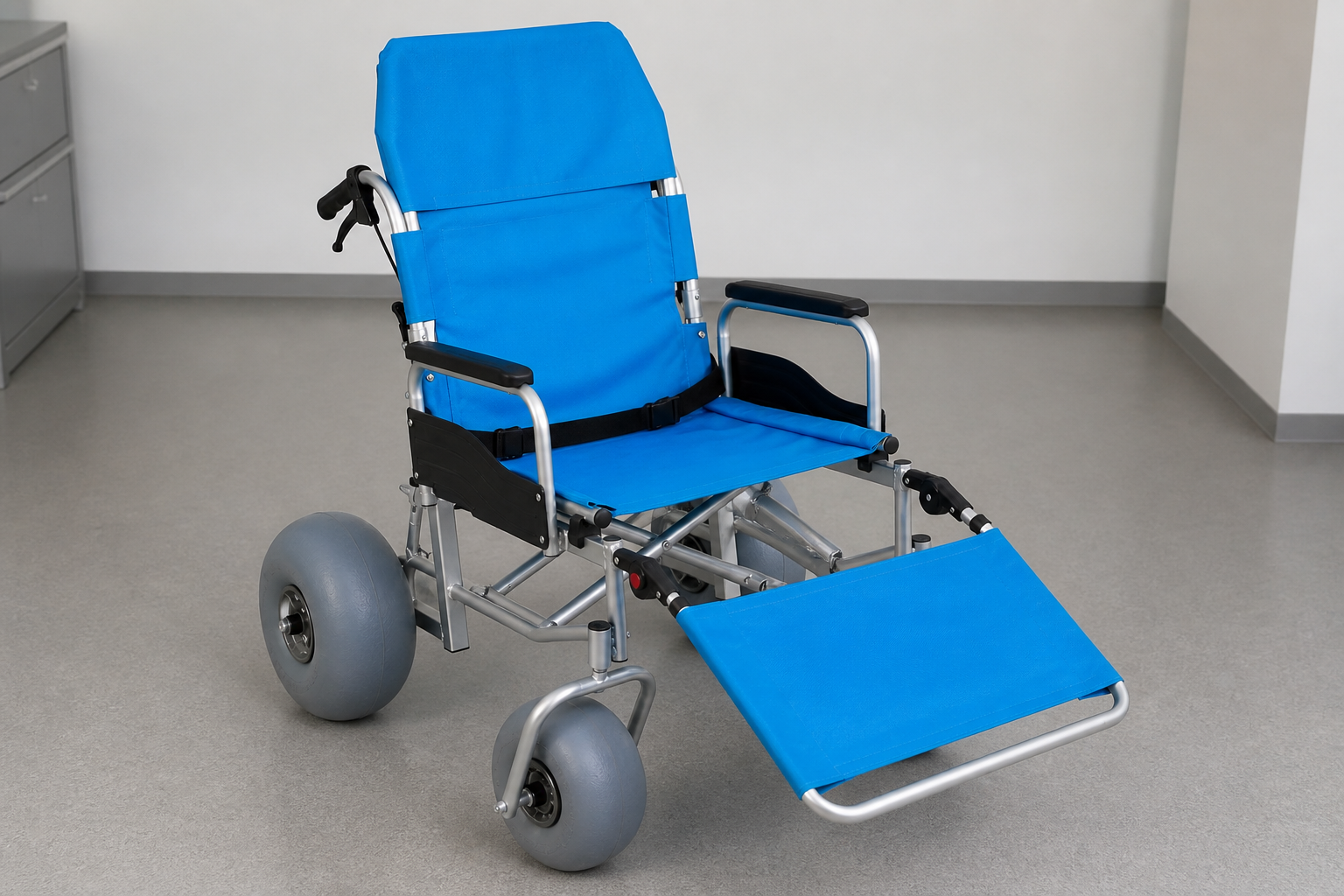
A beach wheelchair safety checklist should review the blue seat and back, fabric attachment, waist belt, armrests, side guards, foot support, and related hardware. Staff need model-specific criteria for presence, visible condition, attachment, position, cleanliness, dryness, clearance, and approved adjustment. A checklist should never convert these checks into a promise about posture, comfort, restraint, or medical suitability. Guest-specific support decisions remain with local policy and qualified guidance. An uncertain attachment or substitute component keeps the chair outside ready status.
Review fabric, belt, arms, guards, and foot support
The component sequence: check the high back from top to lower attachment, then seat fabric, side guards, armrests, belt, foot support, and rounded support frame. Confirm that no fabric or strap interferes with folding parts, wheels, or staff grips. Record cleaning or service needs against chair identity. Do not add cushions, straps, pads, or hardware unless the exact configuration and procedure are approved for that model.
- Inspect seat, back, and attachments.
- Check belt, arms, and side guards.
- Review foot support and frame clearance.
- Block undocumented accessories or substitutes.
Key Takeaway: Support-component checks protect configuration control and visible chair condition.
| Review area | Working record |
|---|---|
| Fabric | Seat, back, attachment, cleanliness, and dryness |
| Support | Belt, arms, guards, foot area, and hardware |
| Decision | Ready, clean, question, service, or hold |
The sequence keeps a small attachment issue from disappearing inside a broad check.
What staff roles and signals should be confirmed?
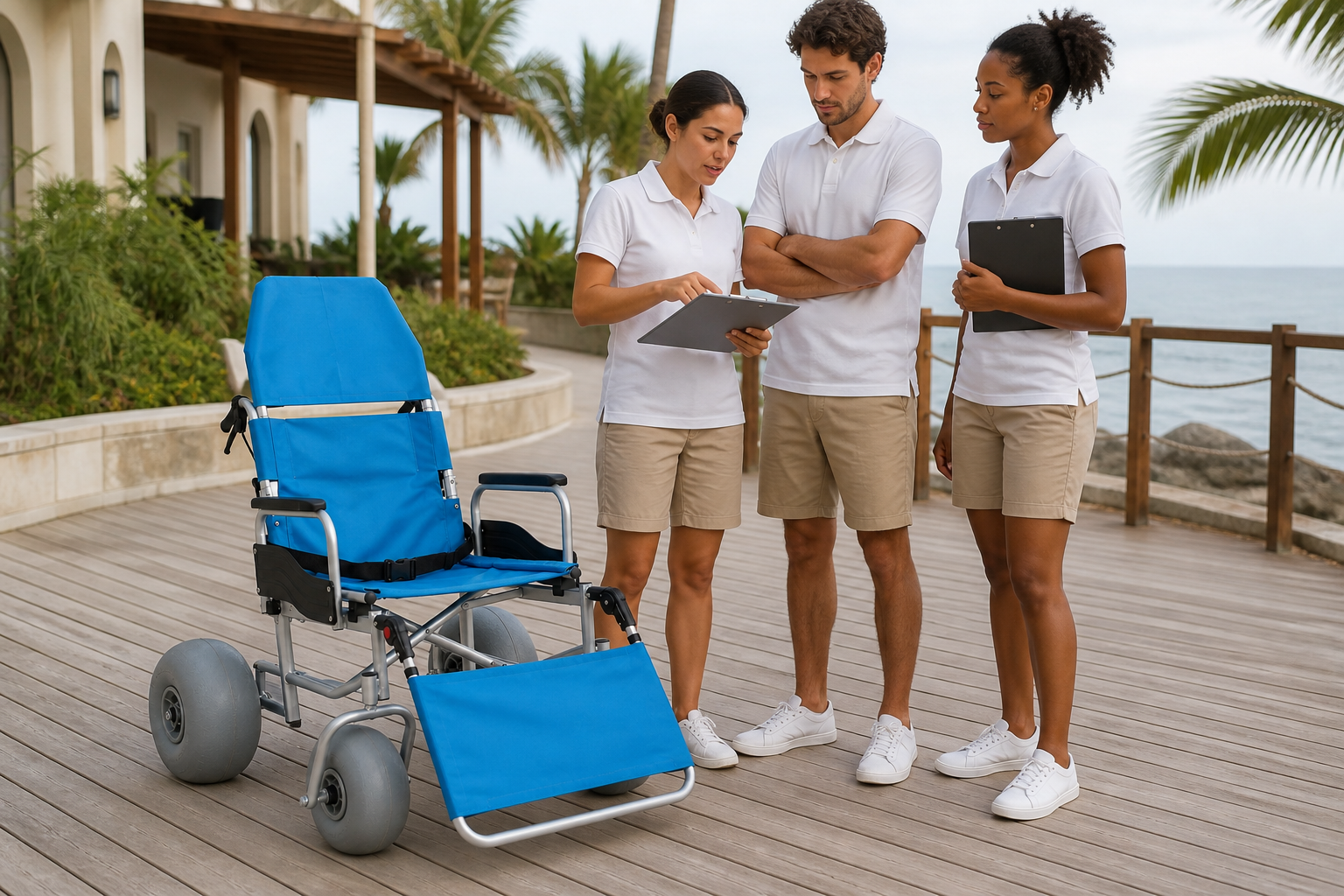
A beach wheelchair safety checklist should confirm staff roles, communication signals, route authority, handoff tasks, and stop responsibility before movement. The team should know who checks route status, who releases the chair, who leads movement, who watches wheel and frame clearance, who communicates with the guest and support person, and who records return status. Small programs may combine roles, but responsibility still needs a name. Plain start, pause, stop, change, and return signals should match local policy and guest communication needs.
Name who checks, leads, observes, communicates, and stops
The role check: review duties at the service point rather than assuming everyone remembers a prior shift. Keep private information outside public view and record only permitted operational notes. Practice the route and signals with an empty chair before guest service. If required staff, communication, or supervision are unavailable, keep the booking pending or change the plan rather than asking one person to improvise beyond the documented method.
- Name route, chair, movement, and record roles.
- Confirm start, pause, stop, change, and return signals.
- Keep private details controlled.
- Pause when required roles are unavailable.
Key Takeaway: Roles and signals make pause authority visible before the chair moves.
| Review area | Working record |
|---|---|
| Role | Route check, chair release, lead, observer, and record |
| Signal | Start, pause, stop, change, and return |
| Gap | Pending, changed plan, reassignment, or stop |
Clear role names reduce rushed assumptions during handoff.
What empty-chair function check belongs?
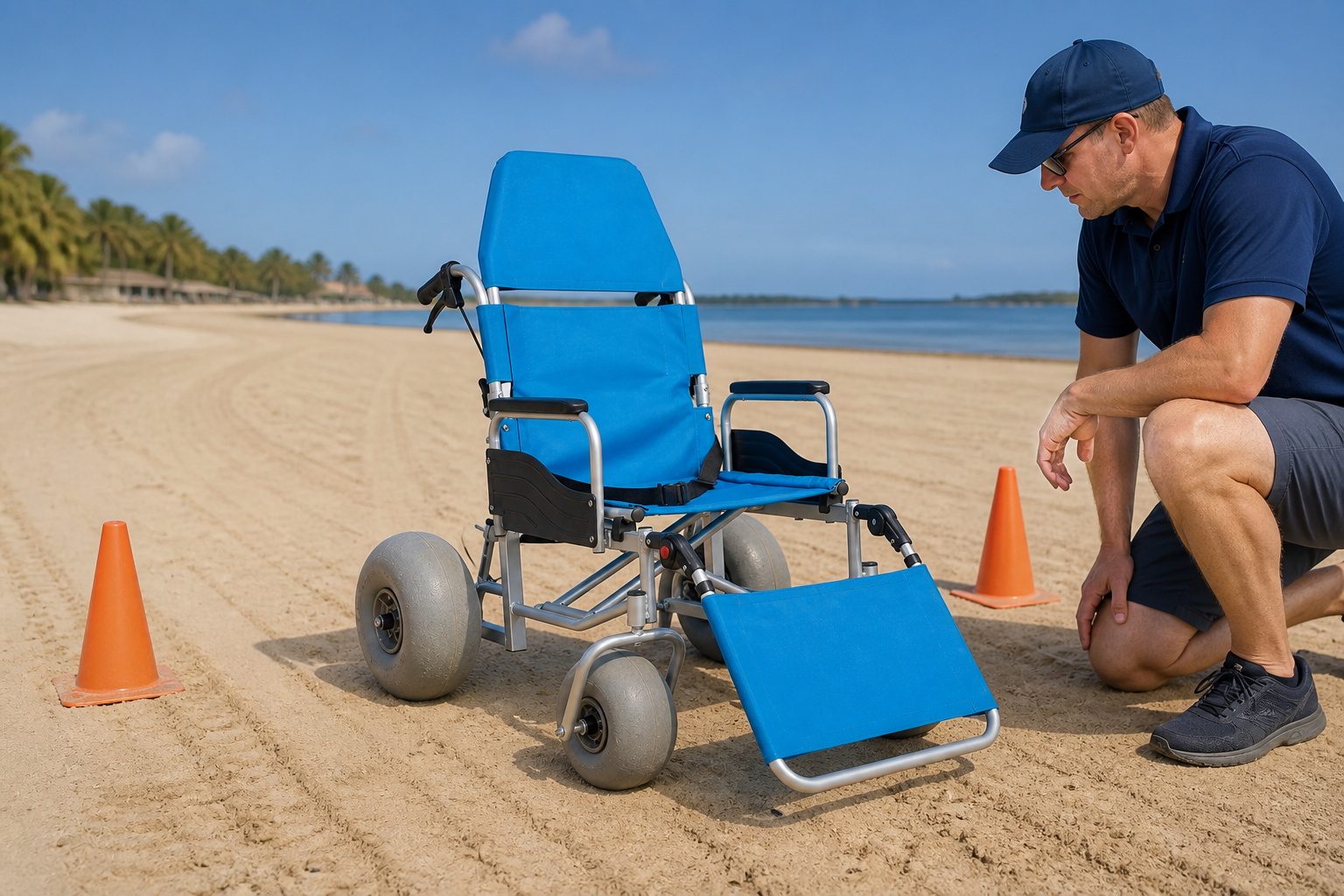
A beach wheelchair safety checklist should include an empty-chair setup and movement check on firm ground through the method named in current instructions. The check can confirm folding setup, frame position, visible clearances, wheel rotation, straight movement, gradual turns, handles, brake levers where applicable, foot-support position, and unusual contact or sound under stated criteria. It does not prove behavior with a person, on every surface, or under every condition. The observer should record only what happened with the identified chair and route point.
Observe setup and movement on firm ground before release
The useful test boundary: define the start, movement, turn, pause, and stop points before beginning. Give one staff member responsibility for observing tires, hubs, frame, fabric, and foot-support clearance. Stop if the chair needs force, adjustment, or an action outside current instructions. Record pass, clean, question, service, or hold status with chair ID, date, document revision, and reviewer.
- Check setup and visible clearances.
- Observe straight movement and gradual turns.
- Watch all four wheels and foot support.
- Record chair-specific results and status.
Key Takeaway: An empty-chair check supports release without claiming universal performance.
| Review area | Working record |
|---|---|
| Setup | Frame, fabric, foot support, handles, and wheels |
| Movement | Straight, gradual turn, pause, and stop |
| Record | Chair, revision, reviewer, result, and status |
A bounded test produces useful evidence without exceeding its scope.
How should handoff and return status be recorded?
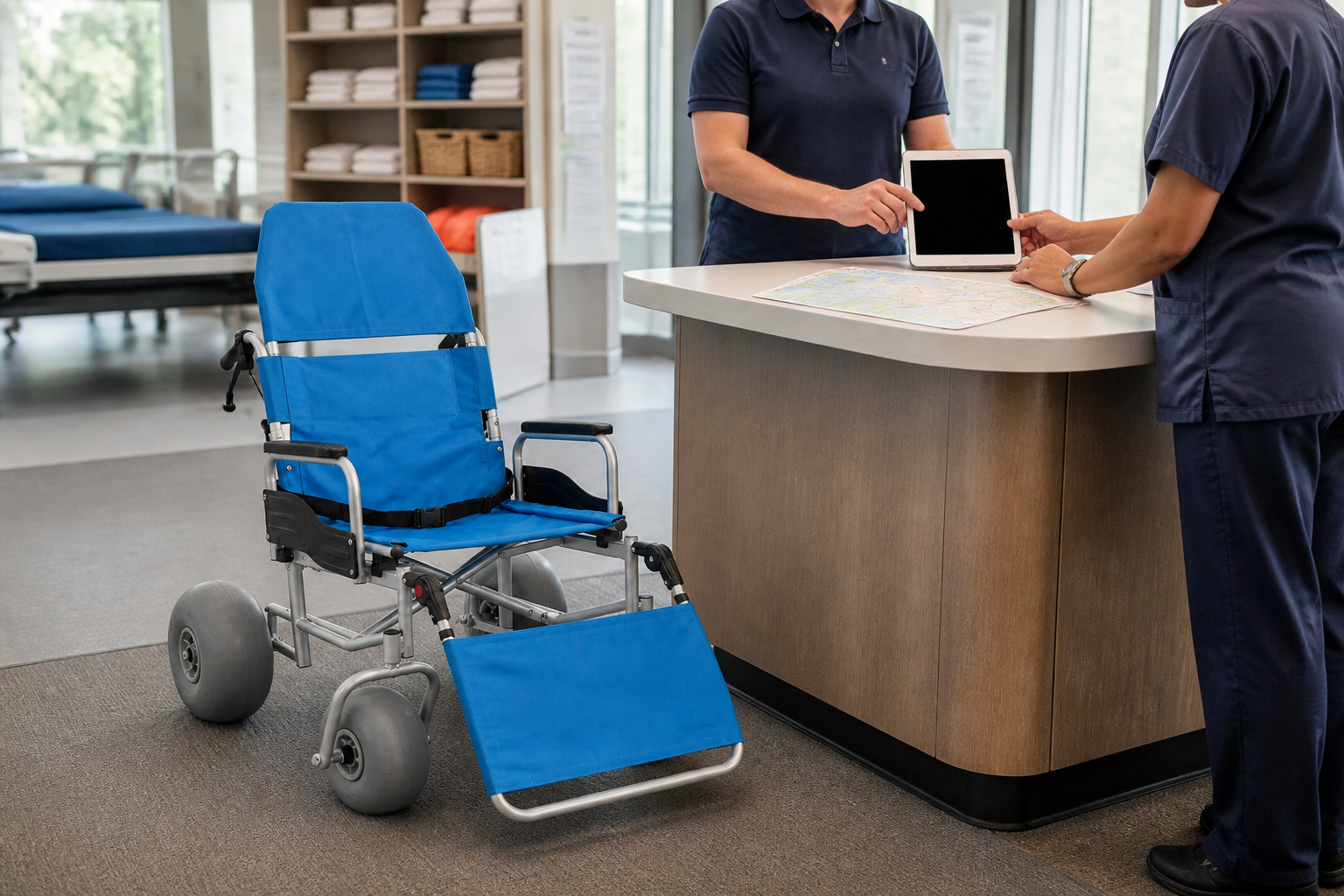
A beach wheelchair safety checklist should record chair release, route status, handoff plan, agreed signals, return, reported issues, and next equipment state. A booking or verbal handoff cannot replace chair-level status. The record should identify the chair, location, named staff roles, current instruction set, planned route, time, communication method, and any approved operational notes. On return, staff should capture changed condition, route issue, late handoff, guest question, or reported concern without adding a diagnosis or unsupported cause.
Link chair, route, people, time, and operating state
The status chain: use pending, ready, out, returned, cleaning, drying, hold, service, and ready-again states. Keep the projects page as general program context while local records control real handoffs. If a returned chair reports an issue, move it directly to hold or another named non-ready state. Never erase that history simply because a different chair covers the next booking.
- Link chair, route, staff, and time.
- Record agreed signals and return method.
- Capture issues without unsupported causes.
- Move returned chairs into a named state.
Key Takeaway: Handoff records keep service events connected with equipment condition.
| Review area | Working record |
|---|---|
| Release | Chair, route, roles, time, and signals |
| Return | Condition, issue, route change, and notes |
| Next state | Care, hold, service, storage, or ready |
A linked chain stops the calendar from hiding a chair issue.
What cleaning, drying, and storage checks belong?
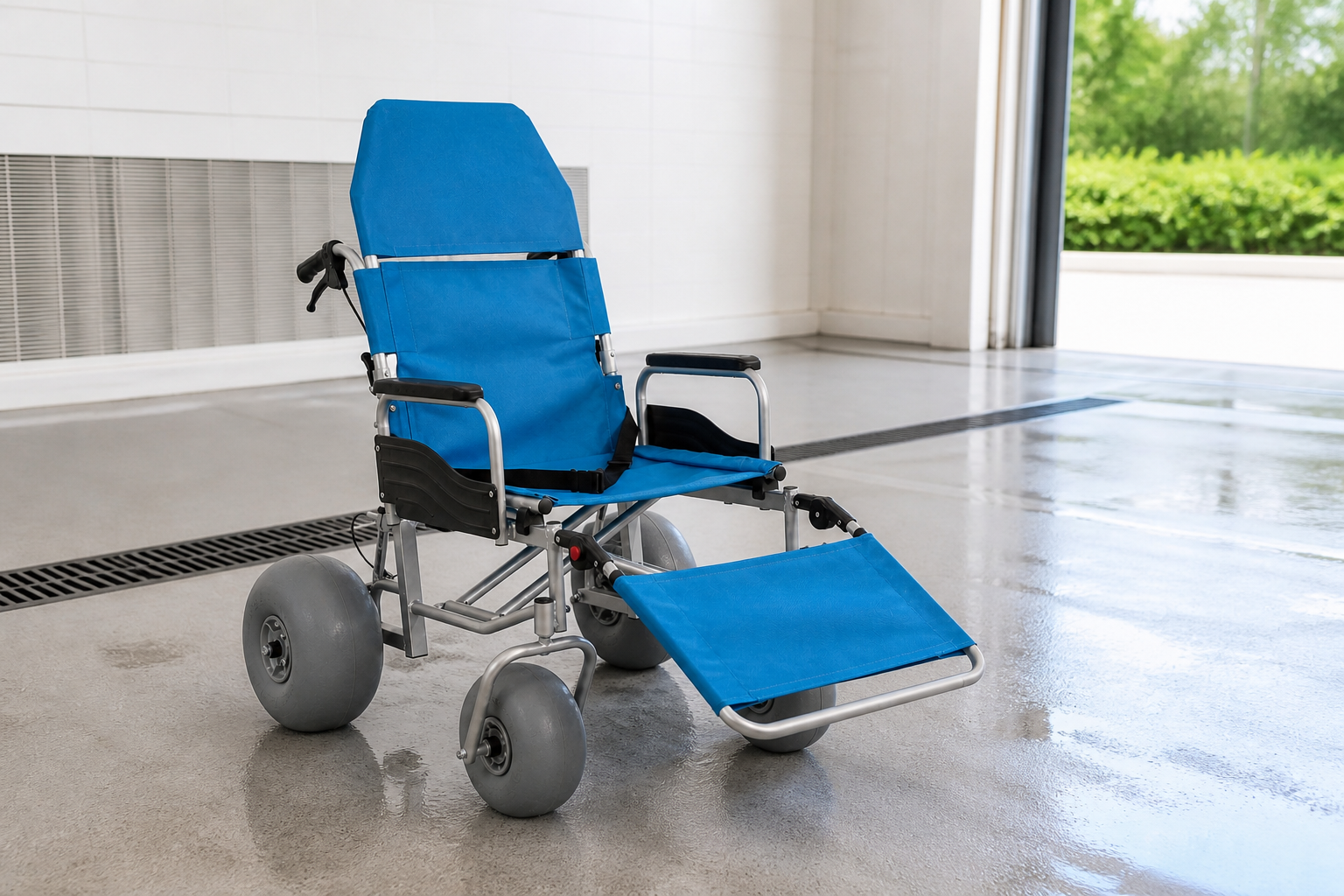
A beach wheelchair safety checklist should cover supplier-approved cleaning, drainage, drying, inspection, storage orientation, spacing, and release. Returned equipment may carry sand, salt, moisture, sunscreen, or debris around tires, hubs, axles, frame joints, fabric, belt, armrests, side guards, handles, levers, and foot support. A quick rinse or dry-looking surface does not establish ready status. The checklist should keep cleaning, drying, hold, service, storage, and ready states distinct and require a named inspection after care.
Close care before restoring ready status
Here’s the closeout: move the chair through the stated care method, dry it in the approved position, inspect it in good light, and place it in a bay that protects all components. Keep wet or held units away from ready chairs. Confirm that tires and fabric are not pressed by neighboring items and that status remains visible during retrieval. Record the person, time, instruction revision, condition, and final state.
- Follow approved cleaning and drainage steps.
- Dry before inspection and enclosed storage.
- Protect wheels, frame, fabric, and foot support.
- Restore ready status through named release.
Key Takeaway: Care closeout requires drying, inspection, protected storage, and a release decision.
| Review area | Working record |
|---|---|
| Care | Clean, drain, dry, inspect, and record |
| Storage | Orientation, spacing, airflow, and status |
| Release | Named reviewer, result, and next state |
The closeout prevents moisture or a hidden issue from crossing into another service cycle.
When should the checklist stop a release?
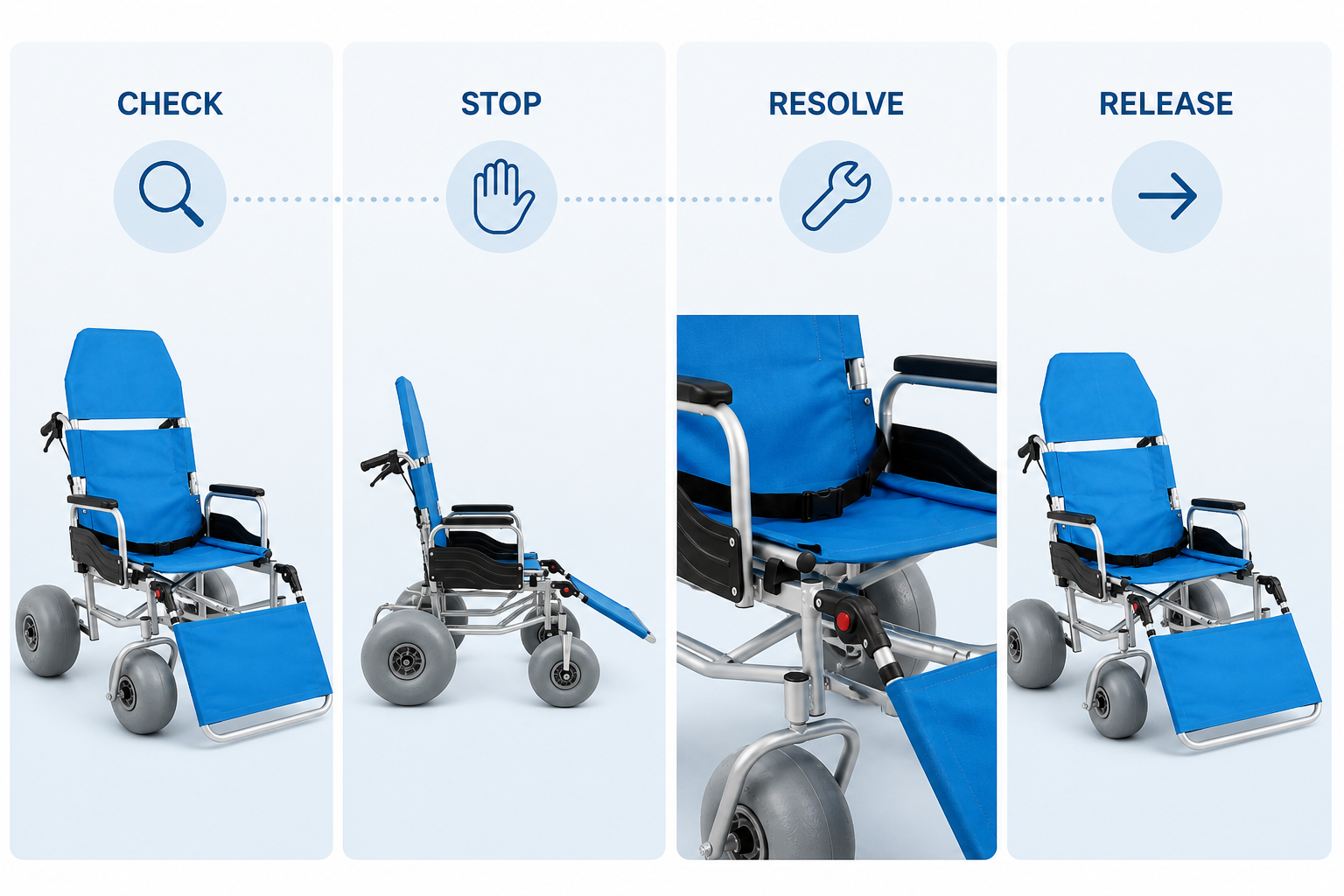
A beach wheelchair safety checklist should stop release whenever a required item fails, remains unclear, lacks current instructions, or falls outside local policy. Stop conditions can include route closure, changed surface, missing chair identity, configuration mismatch, visible damage, wheel or frame question, wet equipment, incomplete care, missing staff role, unclear communication, unsupported setup step, or absent release authority. The checklist should name the next state and owner rather than leaving a blank box that busy staff may overlook.
Turn every failed or unclear item into a visible hold
The hold flow: use four stages labeled CHECK, STOP, RESOLVE, and RELEASE. Record the failed item, observed evidence, chair or route status, source, owner, next action, review date, and required release check. Keep held equipment physically separated or clearly controlled under local procedure. Do not return it to service because demand is high or another team cannot see the original issue.
- Name every stop condition.
- Link failed item with chair or route status.
- Assign source, owner, action, and date.
- Require a new release check.
Key Takeaway: A practical checklist makes both stopping and restarting traceable.
| Review area | Working record |
|---|---|
| Check | Required item and current evidence |
| Stop | Chair or route hold with owner |
| Resolve and release | Approved action and new decision |
The flow gives staff permission to pause without losing the path back to service.
Closing Notes
A practical checklist connects route review, chair identity, frame and wheel checks, seating and support components, staff roles, empty-chair movement, handoffs, return care, storage, stop rules, and documented release. Keep each item tied to current instructions and local policy. To discuss a checklist brief for a coastal program, contact us today with your chair type, route, staff handoffs, care station, storage setting, and status process.
Frequently Asked Questions
Can I use one checklist for every beach chair?
No. Keep a shared framework if useful, but match inspection points, instructions, parts, routes, and stop rules with each exact chair and site.
What’s the best time to complete the checklist?
Use it at the program stages named by local procedure, including route review, chair release, handoff, return, care closeout, and storage release.
How do I know if staff should stop a release?
Stop when a required check fails, a condition is unclear, instructions are missing, the route changes, or local policy names another hold condition.
Can a signed checklist replace staff practice?
No. A record supports the process, while staff still need current instructions, role practice, supervision, and authority to pause.
What’s the best way to record a held chair?
Link chair identity, issue, source, owner, next action, physical status, review date, and final release decision in the same control chain.