
A beach wheelchair for resorts is practical when its documented configuration fits the property route, guest handoffs, staff roles, care station, storage bay, and purchasing process. A resort team may see wide gray tires, a folding silver frame, blue seating, and a broad foot support, yet those visible details do not answer model dimensions, stated limits, assembly steps, approved care, or replacement-part questions. Hotels, beach clubs, rental partners, distributors, and coastal recreation teams need a buying review built from current documents and a local route walk. The ten questions below turn a busy shoreline service into a traceable equipment brief without inventing capacity figures, certifications, prices, stock, guest outcomes, or medical benefits.
For a connected planning step, compare beach wheelchair safety checklist with beach wheelchair storage.
For broader destination-level context, consult the UN Tourism accessibility publications and guidelines. Apply local requirements and current product documents to the specific project.
What should a resort define before comparing chairs?
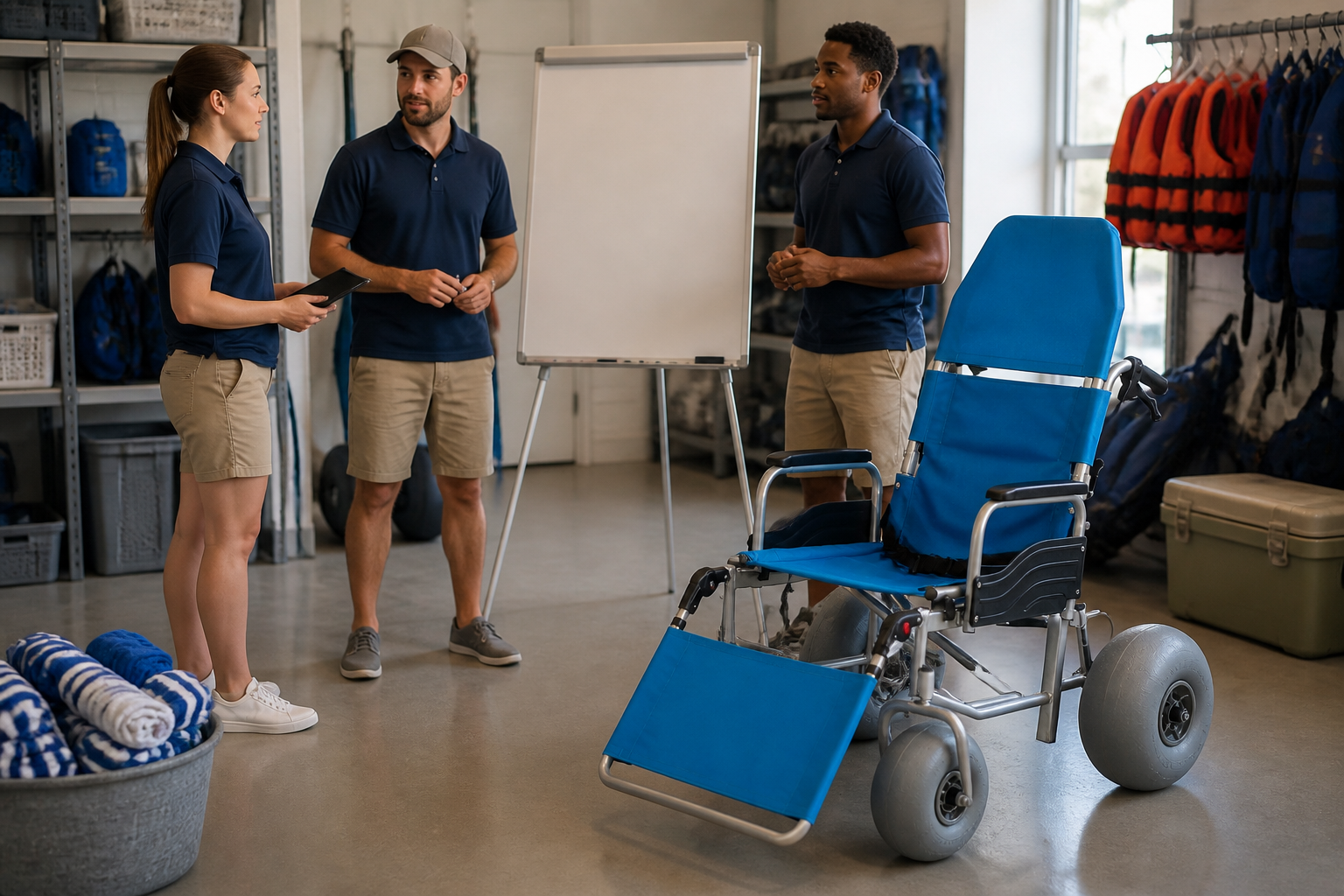
A beach wheelchair for resorts should be compared only after the property defines its service scope, route, staff method, handoffs, care, transport, and storage. The review connects guest service policy with purchasing scope and the exact locations where the chair will move. A product image may show wheel size, frame form, seat fabric, armrests, belt, handles, and foot support, but it cannot confirm dimensions, limits, instructions, parts compatibility, or site fit. Record service hours, starting point, destination, pause areas, staff roles, return point, care station, and storage bay with one owner and review date.
Write a property-specific equipment brief
Start with the operating question: Walk through one planned service cycle with an empty chair and write each unresolved point as a supplier question rather than a favorable guess. Compare the observation with current model documents and the local operating plan. Place a mismatch on hold until the named source answers it. Keep chair identity, route identity, document revision, decision, and owner in one record so later handoffs do not depend on memory.
- Name every service location and planned chair role.
- List staff, guest, purchasing, and care handoffs.
- Mark questions that require model-level records.
- Set a hold rule for missing evidence.
Key Takeaway: A property brief gives product comparison a clear route, workflow, and evidence standard.
| Review area | Working record |
|---|---|
| Scope | Route, service, staff, care, and storage |
| Evidence | Local record and current model file |
| Decision | Match, question, change, or hold |
This brief shows where a chair record supports the service plan and where another answer is still needed.
Which route details shape a resort specification?
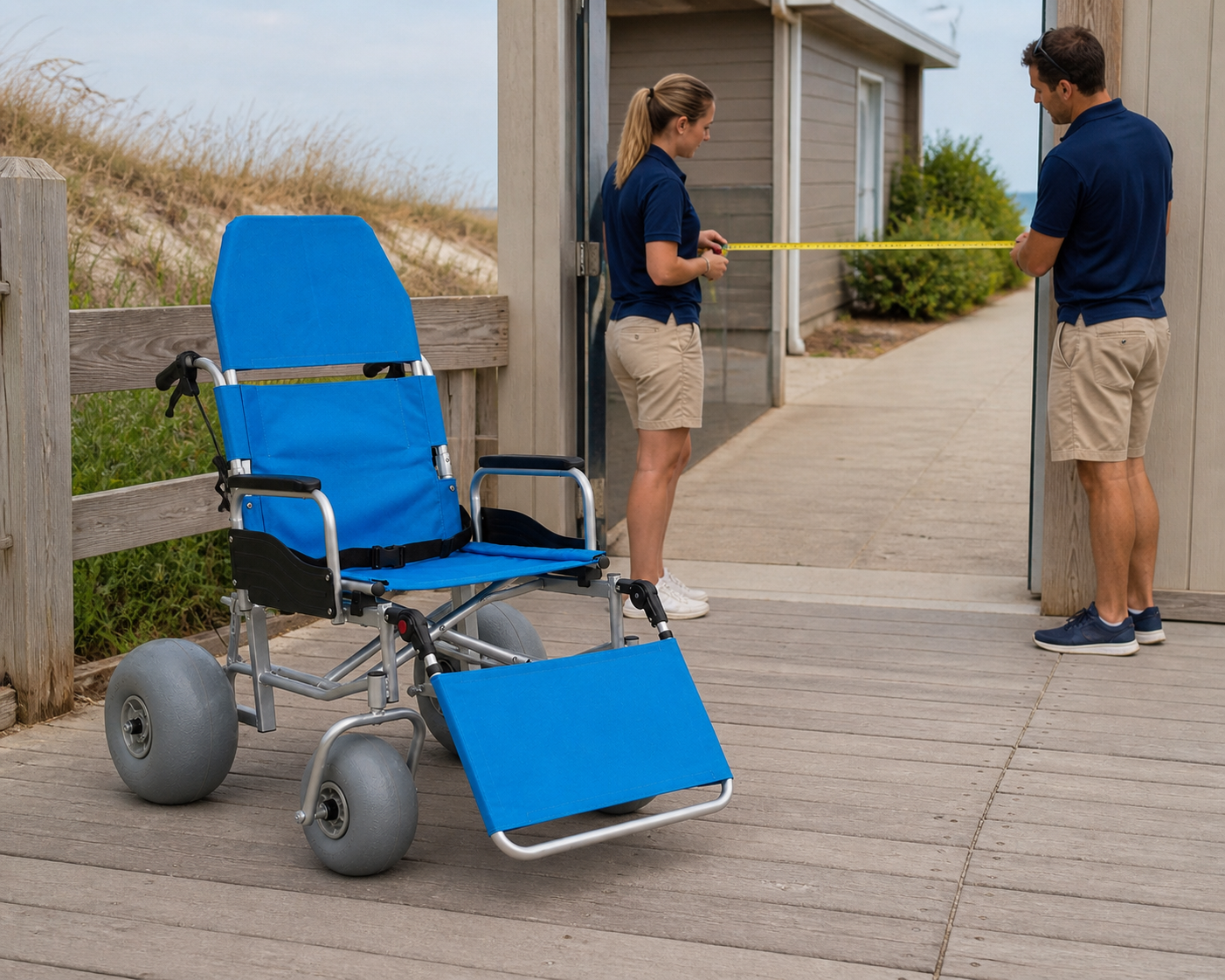
A beach wheelchair for resorts needs a specification based on doors, corridors, ramps, boardwalk seams, gates, turns, sand zones, pause points, and the return path. The review connects fixed route measurements with changing beach conditions and the all-terrain application. A product image may show a wide wheel stance and open frame, but it cannot confirm clearance through gates, turning method, staff grip, or behavior at each surface change. Record clear width, slope, surface, turn area, handoff point, rinse access, and alternate route with one owner and review date.
Map the full storage-to-shore service loop
Use one route identity: Map the exact service loop in both directions and note which conditions staff must check before a planned handoff. Keep local observations tied to date and place. Compare the observation with current model documents and the local operating plan. Place a mismatch on hold until the named source answers it. Keep chair identity, route identity, document revision, decision, and owner in one record so later handoffs do not depend on memory.
- Measure doors, gates, turns, and storage entry.
- Mark firm, loose, damp, and uneven surface zones.
- Record pause, handoff, rinse, and return areas.
- Name an alternate route or stop point.
Key Takeaway: A route audit converts a broad resort request into chair questions that a supplier can answer.
| Review area | Working record |
|---|---|
| Fixed feature | Width, slope, seam, gate, and turn |
| Changing condition | Crowd, debris, weather, and route status |
| Chair question | Geometry, handling, care, and clearance |
The map makes route evidence visible before the buying team accepts a chair configuration.
What chair features support resort operations?
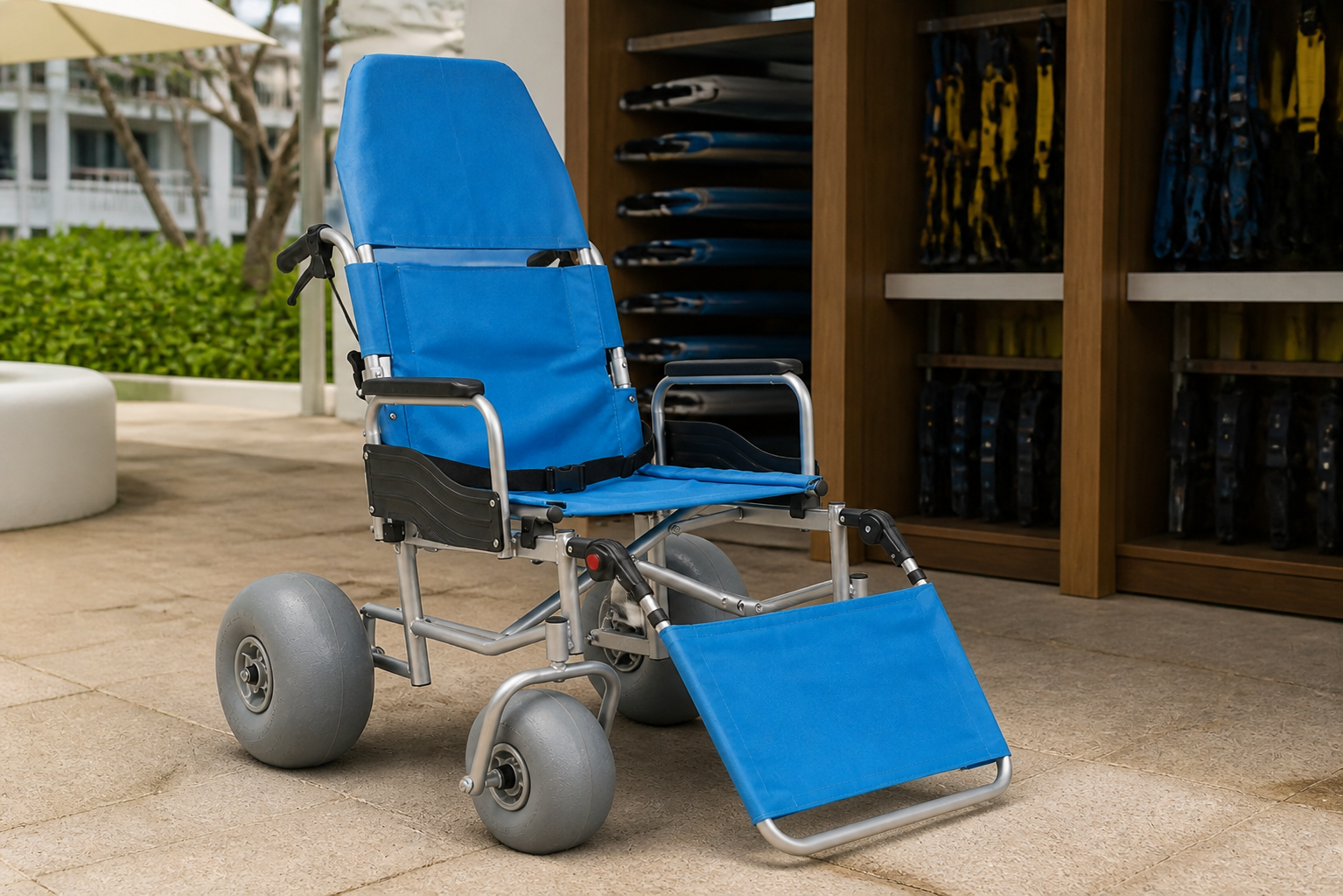
A beach wheelchair for resorts supports operations when its frame, wheel layout, seating, belt, arms, foot support, handles, and folding method match documented staff tasks. The review connects visible product form with setup, movement, pause, transfer-space, care, and storage records. A product image may show four gray balloon tires, a cross-braced frame, blue fabric, black arm pads, and push handles, but it cannot confirm approved setup, permitted use, component limits, care steps, or replacement method. Record each visible component, its operating purpose, its inspection point, and its source document with one owner and review date.
Read visible features as operating questions
Turn a feature into a check: Ask what staff must do with each component during setup, movement, return, cleaning, drying, and storage. Request the matching instruction when the answer affects the service plan. Compare the observation with current model documents and the local operating plan. Place a mismatch on hold until the named source answers it. Keep chair identity, route identity, document revision, decision, and owner in one record so later handoffs do not depend on memory.
- Identify wheel, frame, seat, belt, arm, and foot parts.
- Link each part with a staff task.
- Request setup, inspection, and care instructions.
- Reject feature claims that lack a current source.
Key Takeaway: A useful resort feature is one that fits a documented task, not one that merely looks suitable.
| Review area | Working record |
|---|---|
| Visible area | Operating question |
| Frame and wheels | Setup, route, turning, and care |
| Seat and supports | Handoff space, inspection, and parts |
The feature map helps buyers separate product form from claims that still need written proof.
How should teams review guest handoffs?
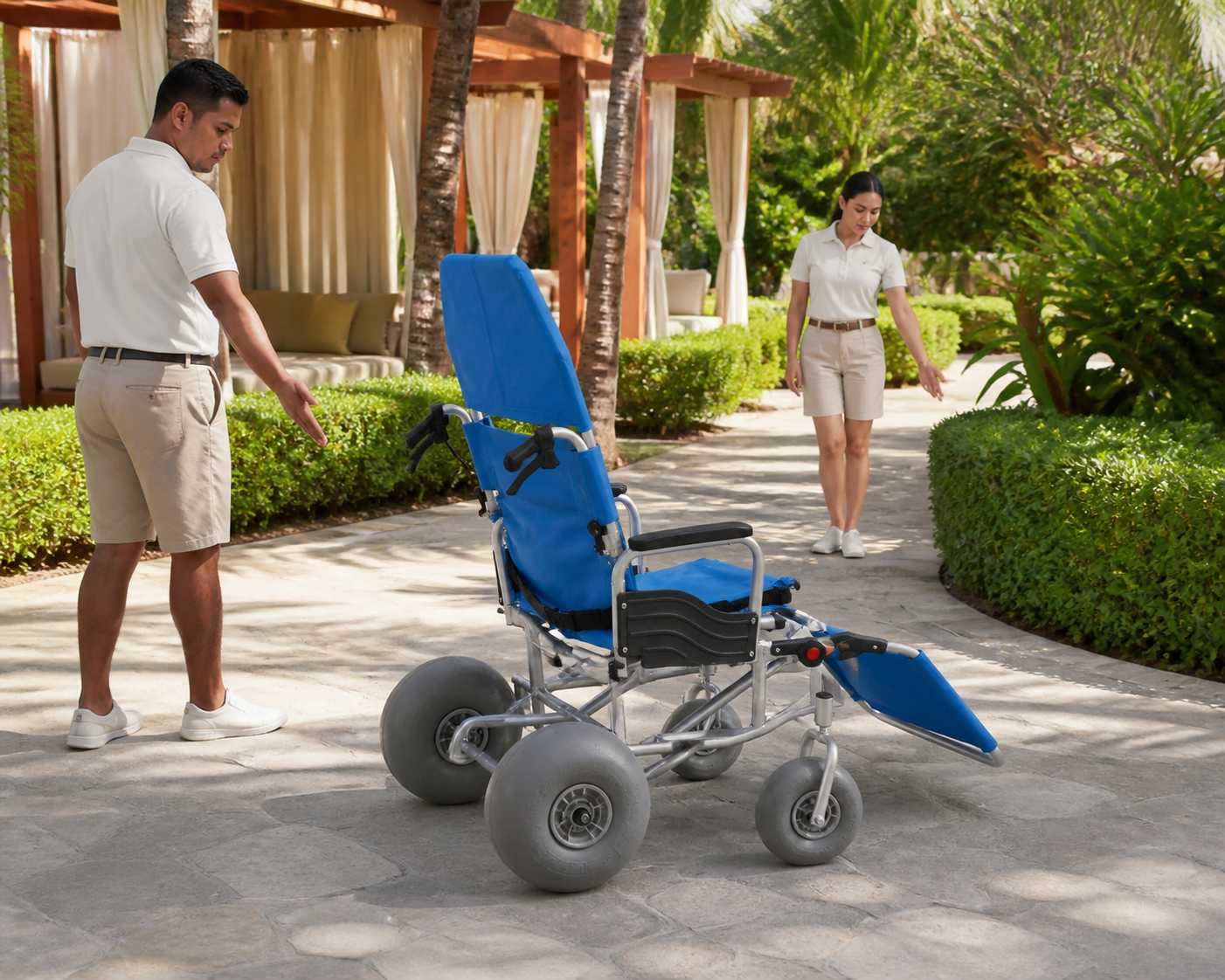
A beach wheelchair for resorts should enter a guest handoff only through a local policy that defines space, staff roles, chair status, communication, and stop conditions. The review connects property procedure with the beach wheelchair manual page and current model instructions. A product image may show armrests, belt, seat, foot support, handles, and wheel stance, but it cannot confirm guest-specific fit, assistance needs, transfer method, or clinical suitability. Record handoff location, permitted staff task, chair check, communication cue, stop condition, and escalation contact with one owner and review date.
Plan space, roles, and stop points
Keep product copy out of personal guidance: Review the empty-chair workflow in the planned space, then route individual questions through local policy or qualified guidance. Do not convert a chair photograph into advice for a person. Compare the observation with current model documents and the local operating plan. Place a mismatch on hold until the named source answers it. Keep chair identity, route identity, document revision, decision, and owner in one record so later handoffs do not depend on memory.
- Use a clear, level handoff area under local policy.
- Confirm chair status before each handoff.
- Assign staff roles and communication points.
- Stop when space, condition, or instructions are unclear.
Key Takeaway: A handoff plan joins chair status, space, staff roles, and local policy without making personal promises.
| Review area | Working record |
|---|---|
| Handoff area | Space, route status, and chair status |
| Staff record | Role, cue, stop point, and escalation |
| Guest question | Local policy or qualified guidance |
The review keeps procurement evidence separate from guest-specific decisions.
What supplier records should purchasing request?
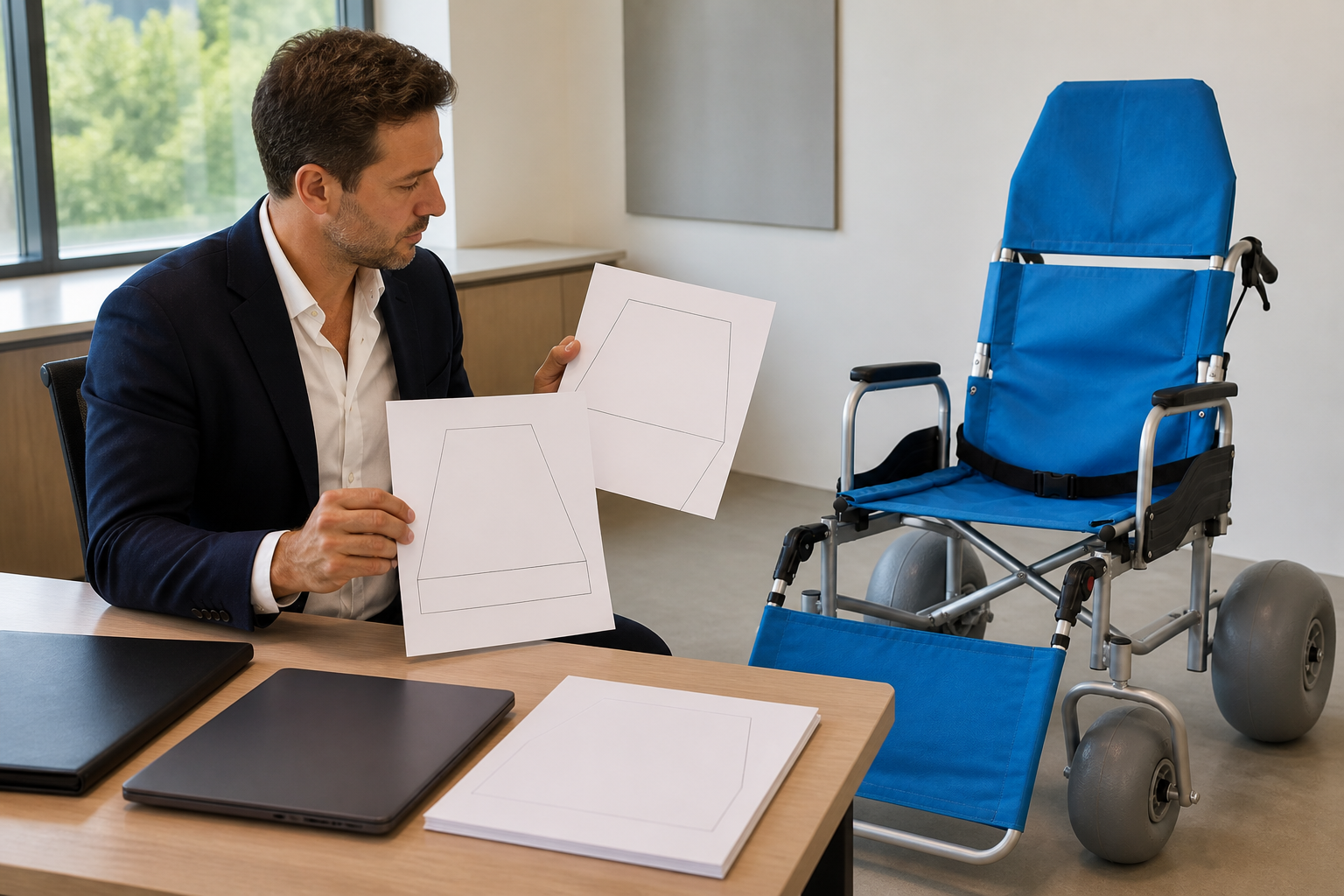
A beach wheelchair for resorts needs current model identity, drawings, component lists, instructions, care guidance, packaging details, parts references, and service contacts. The review connects the quoted chair, chosen options, document revisions, delivery scope, and planned resort workflow. A product image may show the visible frame, tires, fabric, supports, handles, and folding form, but it cannot confirm whether the image matches the quote or which revision governs assembly, use, care, and parts. Record model name, configuration, revision date, source, open question, reply, owner, and buying status with one owner and review date.
Match every file with the quoted configuration
Run the document test: Ask whether receiving and operations teams can complete their work without guessing. Track every missing answer against the quoted configuration before approval. Compare the observation with current model documents and the local operating plan. Place a mismatch on hold until the named source answers it. Keep chair identity, route identity, document revision, decision, and owner in one record so later handoffs do not depend on memory.
- Confirm model and option identity on every file.
- Request drawings and component references.
- Request setup, use, care, storage, and parts records.
- Keep service contacts with the decision file.
Key Takeaway: Supplier records should let each resort team work from the same chair identity.
| Review area | Working record |
|---|---|
| File | Buying use |
| Drawing | Configuration and component identity |
| Instructions | Setup, operation, care, and storage |
| Service record | Parts, contacts, and open questions |
A complete file chain exposes gaps before a shipment reaches the property.
How should a resort plan receiving and setup?

A beach wheelchair for resorts should move through order match, package review, component count, condition check, stated setup, empty-chair check, and recorded release. The review connects loading-area work with purchase records, assembly instructions, care status, and the next operations handoff. A product image may show cartons, tires, frame, seating, hardware, foot support, and removable items, but it cannot confirm hidden damage, missing parts, correct assembly, or ready status. Record delivery identity, package condition, component count, setup source, fault note, action owner, and release status with one owner and review date.
Create visible delivered, hold, and ready states
Separate receipt from release: Use a bright receiving area and keep all components with the matching chair. Do not force a joint or replace a missing item with an unapproved part. Compare the observation with current model documents and the local operating plan. Place a mismatch on hold until the named source answers it. Keep chair identity, route identity, document revision, decision, and owner in one record so later handoffs do not depend on memory.
- Match delivery with order and model records.
- Count and inspect every named component.
- Follow only the current setup instructions.
- Record ready, hold, damage, or service status.
Key Takeaway: Receiving ends with a documented release rather than an opened carton.
| Review area | Working record |
|---|---|
| State | Required evidence |
| Delivered | Package, order, and model identity |
| Checking | Components, condition, and setup |
| Ready or hold | Decision, owner, and next action |
Visible states keep an unchecked chair from moving into guest service.
What staff roles belong in the operating plan?
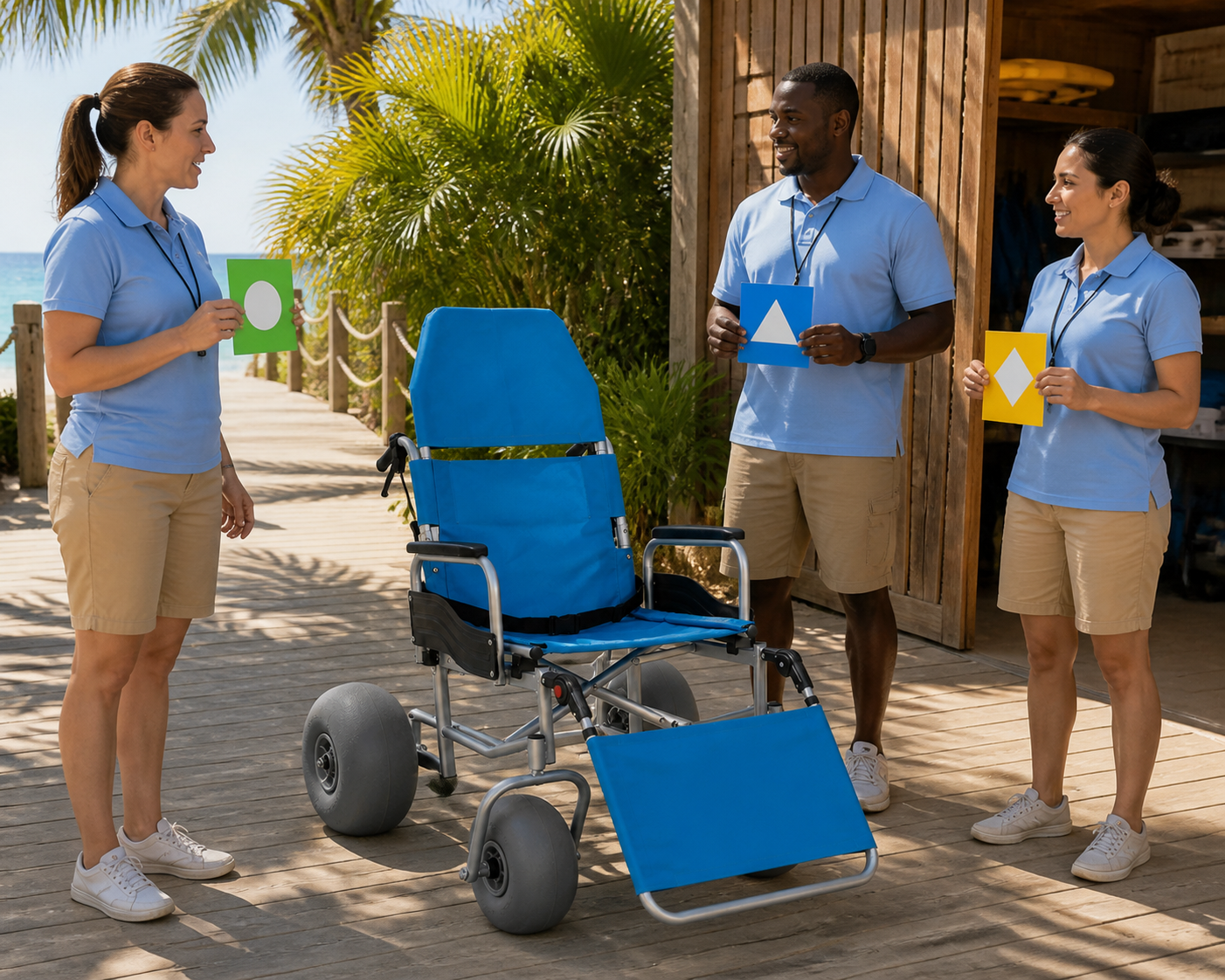
A beach wheelchair for resorts needs named roles for booking, release, route check, handoff, movement, return, care, inspection, storage, and fault escalation. The review connects daily staffing with property policy, current chair instructions, shift handoffs, and management review. A product image may show push handles, brake levers, belt, wheels, folding frame, and care points, but it cannot confirm who may operate, inspect, clean, approve, or place the chair on hold. Record each task, authorized role, required source, completed check, fault path, and shift handoff with one owner and review date.
Assign ownership across the full service cycle
Give every status one owner: Rehearse an empty-chair cycle across two shifts and note where responsibility becomes unclear. Adjust the role card before staff use the equipment. Compare the observation with current model documents and the local operating plan. Place a mismatch on hold until the named source answers it. Keep chair identity, route identity, document revision, decision, and owner in one record so later handoffs do not depend on memory.
- Assign the booking and release role.
- Document the route and chair check roles.
- Define the return, care, and storage roles.
- Name the fault escalation and release authority.
Key Takeaway: Clear roles let staff stop, record, escalate, and restart work without an informal handoff.
| Review area | Working record |
|---|---|
| Service stage | Named role |
| Before use | Booking, route, chair check, and release |
| During service | Movement, communication, pause, and return |
| After use | Care, inspection, storage, and fault action |
The role map reveals gaps that product specifications alone cannot show.
How should cleaning and storage fit daily work?
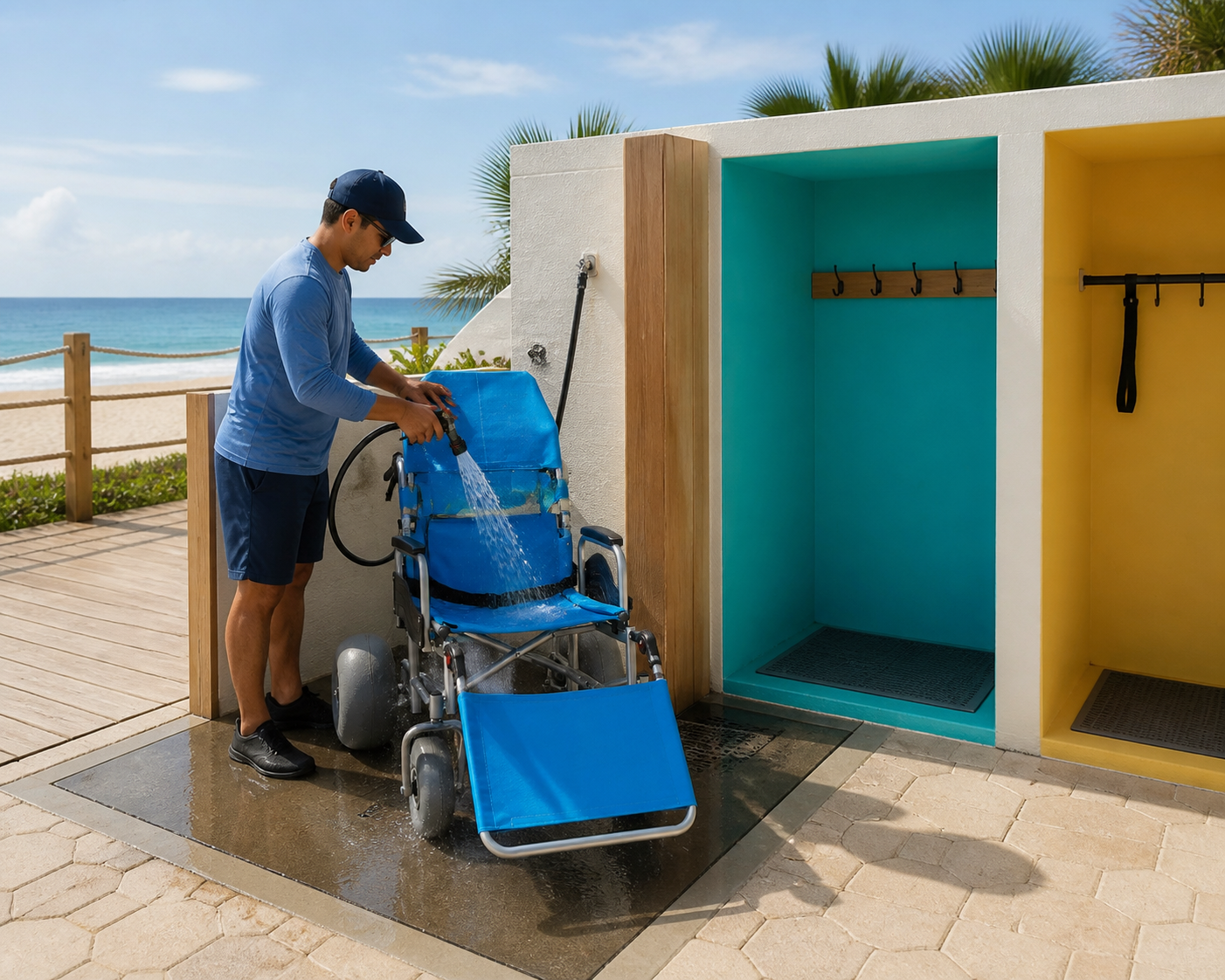
A beach wheelchair for resorts should enter storage only after the stated cleaning, drying, inspection, and status-record steps are complete. The review connects the return path with a dedicated care station and the portable chair application. A product image may show sand on tires, fabric, frame joints, hubs, handles, and foot support, but it cannot confirm approved water exposure, cleaners, tools, drying position, support points, or storage conditions. Record return time, care method, chair identity, drying status, inspection result, fault action, and storage location with one owner and review date.
Connect return, care, drying, and release
Treat care as a status change: Move returned equipment into a marked care zone, follow the current instructions, and keep wet or unchecked chairs away from ready units. Release only after the recorded check. Compare the observation with current model documents and the local operating plan. Place a mismatch on hold until the named source answers it. Keep chair identity, route identity, document revision, decision, and owner in one record so later handoffs do not depend on memory.
- Remove loose material through the stated method.
- Clean and dry every named component.
- Inspect in good light before storage.
- Record ready, drying, hold, or service status.
Key Takeaway: Daily care closes only when the chair has a visible status and a recorded storage location.
| Review area | Working record |
|---|---|
| Care state | Meaning |
| Returned | Awaiting the stated care process |
| Drying | Release check remains open |
| Ready | Inspection and storage location recorded |
The state record stops a returned chair from being mistaken for a ready chair.
What should a resort track across a season?
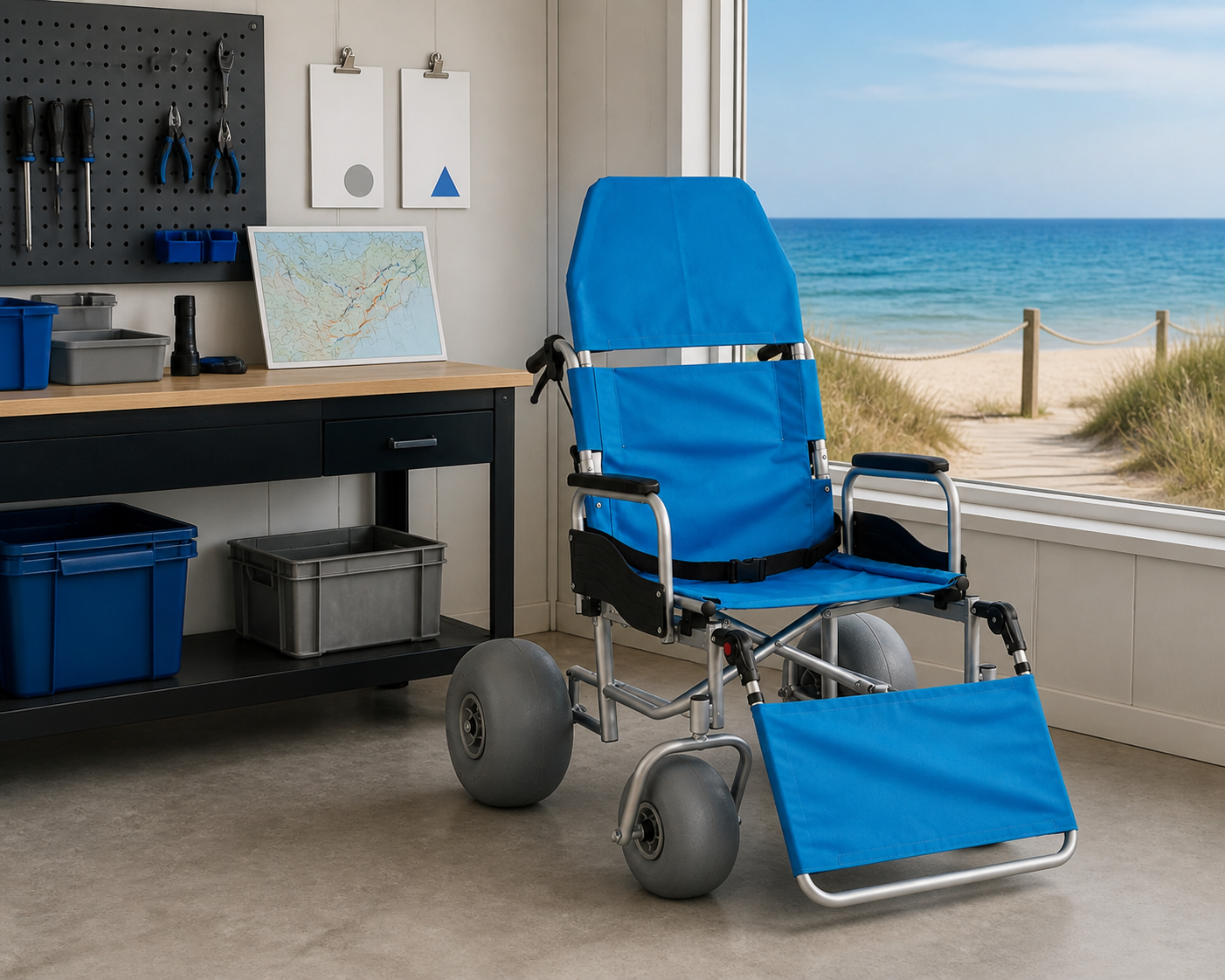
A beach wheelchair for resorts should have a season record covering service cycles, route closures, chair status, care work, faults, parts, staff refreshers, and supplier contacts. The review connects day-to-day operations with purchasing records, management review, and current supplier contacts. A product image may show normal wear points, removable parts, tires, fabric, fasteners, handles, and support areas, but it cannot confirm fault cause, remaining service life, or a universal maintenance interval. Record dated observations, chair identity, route identity, action, source, owner, release status, and unresolved question with one owner and review date.
Use records to guide service and buying reviews
Track facts rather than impressions: Review records at a regular management meeting and group recurring questions by chair, route, task, or document gap. Ask a qualified source to resolve technical issues. Compare the observation with current model documents and the local operating plan. Place a mismatch on hold until the named source answers it. Keep chair identity, route identity, document revision, decision, and owner in one record so later handoffs do not depend on memory.
- Log each release, return, hold, and service action.
- Link faults with chair and route identity.
- Record parts and document revisions.
- Use open questions in the next supplier review.
Key Takeaway: Season records support traceable operating changes without inventing product results.
| Review area | Working record |
|---|---|
| Record group | Review use |
| Operations | Release, return, route, and staff notes |
| Care | Cleaning, drying, inspection, and faults |
| Supplier | Parts, documents, replies, and open items |
The record pattern shows where workflow, training, or source documents need attention.
How can a resort reach a buying decision?
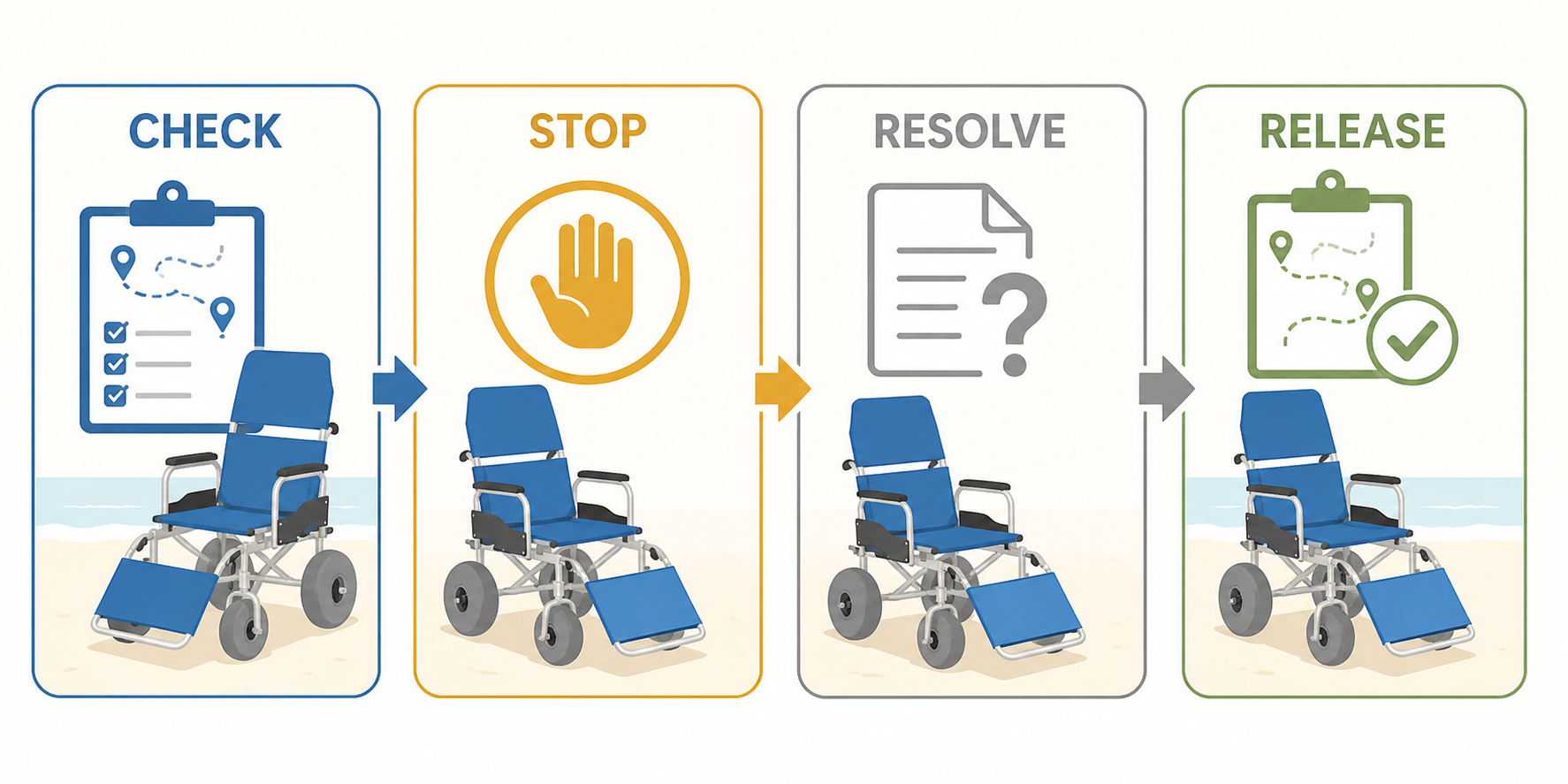
A beach wheelchair for resorts reaches a buying decision when route needs, chair records, workflow checks, open questions, and approval status are linked in one file. The review connects purchasing, operations, care, and management evidence across the full property service plan. A product image may show the selected chair form and a set of completed check records, but it cannot confirm whether every requirement is met or which issue still blocks approval. Record requirement, source, local check, result, open question, owner, due date, and final decision with one owner and review date.
Close the review through a traceable decision flow
Use a check-to-release flow: Review each requirement, stop on a missing or conflicting item, obtain the named answer, update the file, and release only the approved configuration. Compare the observation with current model documents and the local operating plan. Place a mismatch on hold until the named source answers it. Keep chair identity, route identity, document revision, decision, and owner in one record so later handoffs do not depend on memory.
- Check route and workflow requirements.
- Match the exact chair and current files.
- Resolve or document every blocking item.
- Approve, revise, or hold the purchase brief.
Key Takeaway: A buying decision is defensible when every accepted requirement points to current evidence.
| Review area | Working record |
|---|---|
| Check | Requirement and source |
| Stop | Missing or conflicting evidence |
| Resolve | Named answer and updated file |
| Release | Approved configuration and status |
The flow gives the resort a clear pause point and a documented path back to approval.
Closing Notes
A practical resort brief connects route evidence, configuration records, handoff space, staff roles, receiving, care, storage, seasonal records, and a written buying decision. Keep every statement tied to the quoted chair and a current source. To discuss a documented coastal equipment brief, contact us today with your route, storage setting, staff handoffs, care station, and open supplier questions.
Frequently Asked Questions
Can I select a resort chair from photos alone?
No. Photos show visible form, while current drawings, instructions, component records, and a local route review support a buying decision.
What’s the best chair for every resort beach?
No single chair fits every property. Match the exact configuration with route surfaces, handoff space, staff method, care access, and storage limits.
How do I know if staff can manage the workflow?
Run a controlled empty-chair rehearsal. Record setup, route, pause, return, care, and storage steps under current instructions.
Can a resort change parts between chair models?
Not without approved records. Use only the configuration and replacement items identified for the exact chair.
What’s the best evidence for purchase approval?
Use a linked decision file. It should match route needs, chair records, local checks, open questions, owners, and approval status.