
A wheel that pulls to one side does not automatically need replacement. Sand trapped at the frame, the position of the cargo or a displaced spacer can produce a similar complaint. Identify the equipment, the affected wheel position, what the operator observed and when it happened. Stop using the unit if retention, tire condition or control is in doubt. Keep that report available to the technician before anyone removes the wheel.
Identify what is fitted today
Start with the equipment’s asset number and latest service record. A cart may have received a later axle, or a supplier may have changed the insert on a replacement assembly. Photograph the tire markings, both hub faces and the visible retention arrangement before authorized disassembly. Label the position from a stated viewpoint. A photograph of the opposite wheel may help show a difference, but does not prove either side is correct.
Match the actual parts to the applicable equipment and wheel drawings. Ary’s beach balloon wheel guide asks for the axle diameter, working length, tire clearance and a photograph or drawing of the interface. Measure those points as instructed and record the units. Identify any bushing or bearing, the hub length and which spacers or retainers belong to the supplied assembly.
Decide whether the wheel is the part to replace
| Observation | Decision for the service contact |
|---|---|
| The tire loses air again after adjustment | Record readings, elapsed time and the pressure specified on the fitted tire. Have the cause assessed before choosing a tire, valve or full wheel assembly. |
| The tire rubs after a wheel change | Check the substituted wheel’s inflated envelope, hub length, spacers and mounting position against the correct configuration. |
| A retainer has moved or cannot engage | Hold the asset. Inspect the matching axle end and retention hardware as well as the wheel. |
| Several carts have trouble at one new sand transition | Check the route and load observations alongside the asset inspection. A recurring site problem can persist after a wheel change. |
Suppose a spare with the right nominal diameter slides over the axle but covers the retaining hole. More air, a thinner improvised spacer or running briefly without the retainer would not resolve the missing engagement. Remove the proposed spare from issue and send the supplier its part reference with a photograph of where the hub finishes. Preserve the unit’s hold until an approved combination is available.
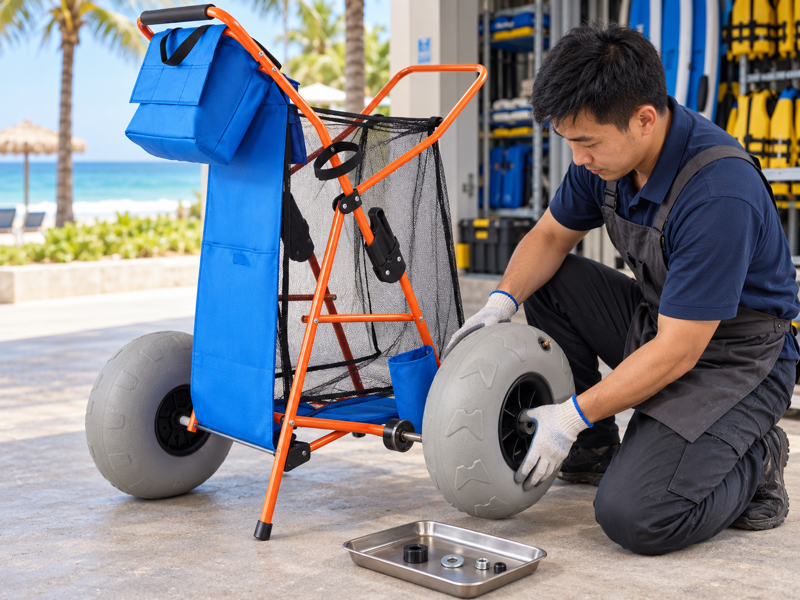
Install the confirmed assembly and check the original finding
Give the authorised technician the supplied assembly instructions, approved part reference and disposition of the original hardware. Do not assume an old retainer is reusable, or that a supplied spare fits another position. After refitting, check retention, free movement, clearance and any neighbouring function affected by the work under the instructions for that equipment. A wheel fitted to a wheelchair or walker also needs that model’s service and return-to-use procedure. A cargo-cart test cannot release it for a person to use.
Compare the result with the initial complaint. If rubbing first appeared on a turn, include the prescribed turn check once the equipment is safe for that stage. Keep a suspected fault investigation unoccupied. A pressure-loss complaint may require a later recheck at the interval advised for the particular wheel. The cart wheel care guide gives operators examples of observations they can hand to maintenance.
Record who completed the work, which part and revision were installed, which check cleared the original concern and who can release the asset. If a confirmed replacement still produces the same symptom, link the result to the original fault record and investigate the adjoining parts or route before ordering another wheel.