
A note saying “cart pulls badly” can describe at least three things: a wheel fault, a load resting against the tire or a patch of sand that has changed since yesterday. The person opening a beach cart issue should record what they actually observed and where. The technician can then investigate without inheriting a diagnosis nobody has checked.
Capture the report while the cart and reporter are together
Give the case its own reference and attach it to the cart’s asset number. Record the time, route location, travel direction and what cargo was being carried. Describe the shape and position of the load where relevant. Ask whether the problem also occurred with the cart empty, but leave any repeat test to the responsible technician if a defect is suspected. Identify which side by looking from the pull handle, so the next shift can find the same wheel.
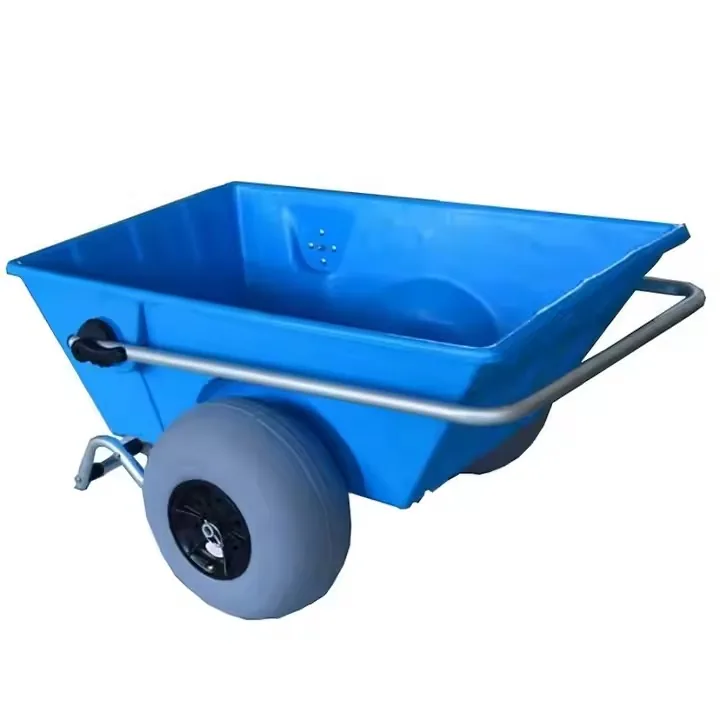
The Ary Beach molded cart has a rigid cargo tub, two balloon wheels and a metal pull handle. Those give the reporter useful landmarks: “inside the right wheel next to the tub” is considerably more informative than “wheel area.” A folding cart may have a different frame, a basket and front casters. Copy the actual model or order reference from the asset record. Molded cargo cart components
One example ticket, from first call to follow-up
The following entries describe a fictional service-cart complaint. They illustrate what changes as more evidence becomes available.
| Entry | What a useful note says |
|---|---|
| Report | “Cart T07, 09:40, west kiosk to picnic shelter. Repeating scrape at the right wheel on the paved section. Two closed kit boxes in tub. Driver stopped and called the desk.” |
| Immediate action | “T07 held at kiosk. Goods reassigned to a checked cart. Dispatch and the service lead notified. Photograph shows contact marks on inner face of right wheel.” |
| Investigation | “Technician found the fitted wheel assembly differed from the current order drawing. Supplier confirmed the correct reference and spacer arrangement. Copy attached to T07.” |
| Repair and check | “Correct assembly fitted under supplier instructions. Retention, clearance and wheel movement checked. Original scrape absent on the approved empty-cart check. Release recorded by duty lead.” |
| Later recurrence | “Same symptom reported again on T07. Linked to earlier job and T07 held for review. New cargo position, route and time recorded.” |
The reporter did not have to identify the wrong assembly to open a useful ticket. The repair entry does have to say what the technician found and what showed the symptom had cleared. A wheel inspection can support that result. “Fixed” by itself gives the next shift no basis for deciding whether the second complaint resembles the first.
When the evidence points to the route
If several carts encounter difficulty at the same boardwalk edge, tell the site lead about the location and link the reports. Keep the individual issues open until the equipment findings are resolved. Conversely, a fault that follows T07 across two different routes deserves unit-specific investigation. Keep the date and conditions for each occurrence.
Record the person who owns the next action and when dispatch should ask for an update. When the cart is released, close the equipment hold in the fleet availability record and return any held parts to the correct disposition. The case history should remain searchable by asset, symptom and location after the cart is working again.