
Start a beach cart wheel complaint by asking the operator what changed. Did one tire become soft again after inflation? Did a wheel rub once per turn on a clear path? Did the wheel move along the axle? These observations point a technician toward different checks. Note which side is affected as seen from the handle and label the cart before its next cargo run.
A 12-inch marking identifies only one dimension
The standard Ary Beach molded tub cart uses two 12-inch balloon wheels. The manufacturer also offers OEM wheel options in PU or PVC. Confirm the material, wheel reference and axle arrangement supplied with the unit. The wheel guide lists other equipment with 12-inch tires, including carts with swivelling front casters. The shared nominal diameter does not identify the bore, hub length or retaining hardware. Tub cart specifications and manufacturer’s wheel and axle matching guide
For a replacement enquiry, record the tire markings, clear photos of both faces of the hub and the original spacer and retainer arrangement. A technician can measure the axle diameter, usable axle length, hub width and tire clearance under the applicable instructions. The supplier needs to confirm the bore or bushing and the agreed retention parts. A wheel that slides onto the axle can still leave too little room for the retainer to engage.
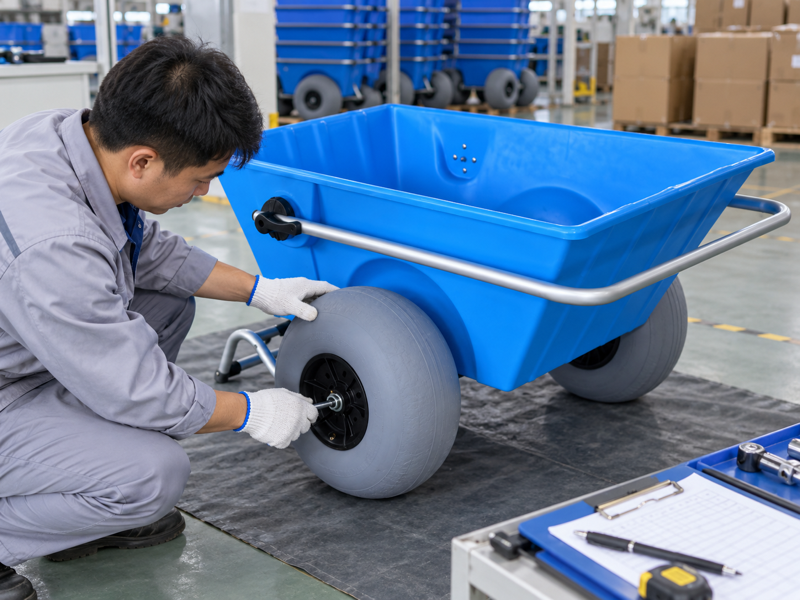
Follow the reported symptom
| What the operator noticed | How to narrow the question |
|---|---|
| Tire loses air between runs | Read the fitted tire marking and use its stated pressure range and a suitable low-pressure gauge. Record the initial and later readings and elapsed time. Refer recurring loss, valve damage or an unreadable specification. |
| Tire contacts the cart once per turn | With the cart empty, inspect for debris, visible tire distortion and contact marks on the frame or tub. Report the exact location and side. |
| Wheel moves unexpectedly along the axle | Keep the cart off dispatch. Compare the hub, spacer and retaining arrangement with the supplied drawing before considering a replacement. |
| Wheel remains stiff after sand is removed | Identify the affected hub and send the observation to maintenance. Confirm the applicable hub, bearing and care instructions before adding lubricant or opening anything. |
The manufacturer’s wheel-care directions call for following the pressure printed on the tire and rinsing away sand and salt after use. They give no single setting for every tire in a mixed fleet. A wheelchair pressure range or a setting written on an unidentified pump is a poor basis for a cart adjustment. Use the order-specific instructions if the sidewall cannot be read. Balloon wheel inflation and care
What to record after the repair
Suppose the original wheel sits correctly between its spacers but a proposed replacement leaves the retaining hole partly covered. Photograph the difference and record the two hub widths. Hold the replacement for the supplier’s decision. Modifying the axle or dispensing with a spacer would introduce another configuration before the original question has been answered.
Once an authorized technician completes the instructed work, check the correct part identity, secure retention, free movement and clearance on the empty cart. For a pressure complaint, recheck at the interval the supplier specifies. Link the result and part reference to the cart issue record. Spare stock can then be matched to a confirmed assembly for the next repair.