
At a busy rental desk, “three walkers in the building” and “three walkers available at noon” can be different numbers. One may still be issued, one drying after a return, and one ready for collection. Give each unit an asset ID and let the booking system show which physical walker, staff cover and handover slot support a confirmation.
Keep a permanent asset record for the model, revision, normal component set, location and instructions. A separate booking record identifies the requested walking-support service, time, collection point, contact method and actual handover. The asset links them when a suitable unit is allocated. Collect only the details needed to arrange the visit and follow up on a change.
Make a return create preparation work
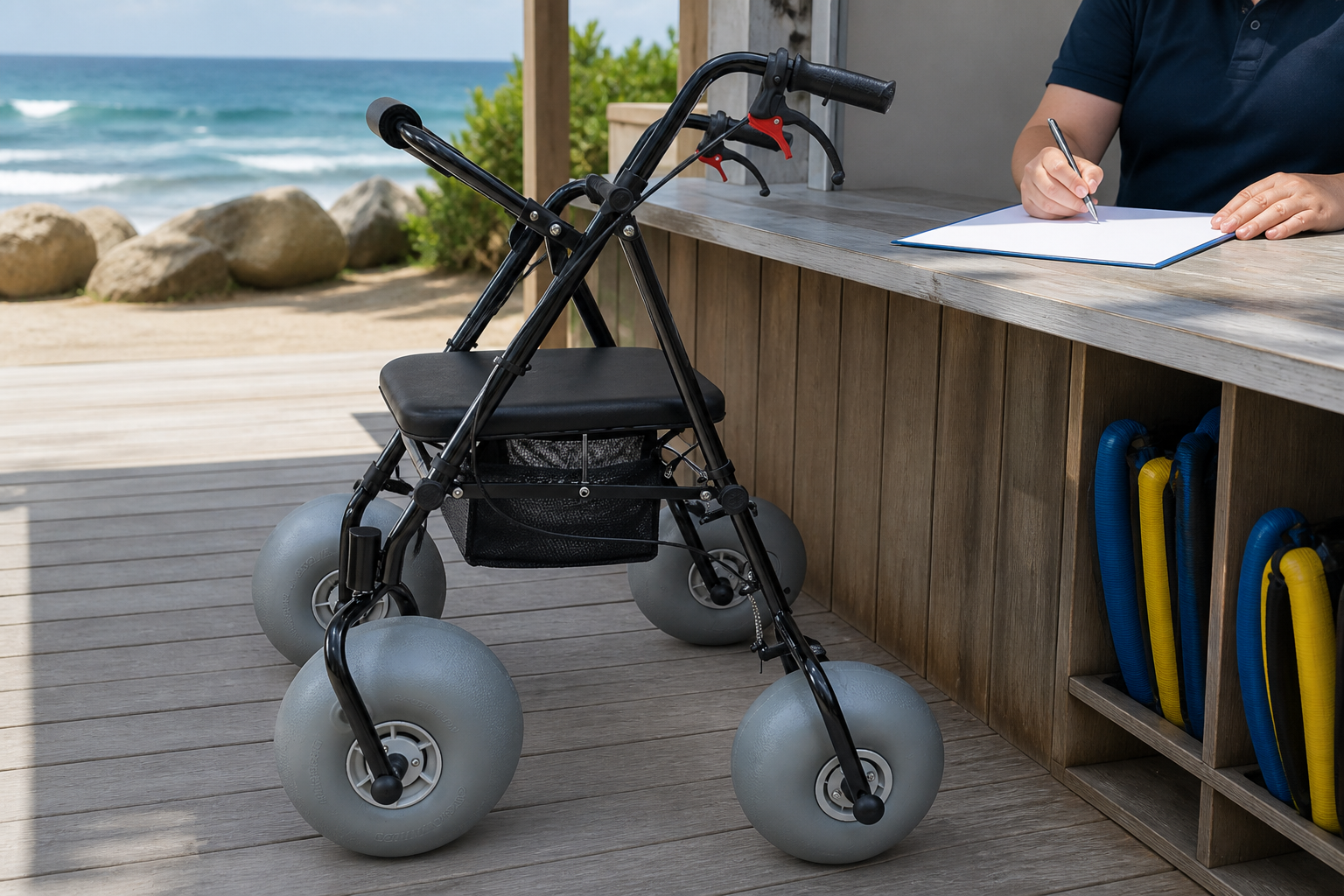
For AY-STZ1.0, receiving staff should recognise the four-wheel frame, adjustable handles with brakes, seat and under-seat bag. Count the components and accessories actually issued and record a reported difficulty before placing the walker in the cleaning area. The unit’s current instructions govern its checks and care. AY-STZ1.0 manufacturer manual
| Asset state | What puts the walker there | Can the desk issue it now? |
|---|---|---|
| Ready | Inspection and care complete, unit in its assigned bay | Yes, subject to an agreed suitable booking and service conditions. |
| Issued | Custody transferred to the visitor or agreed custodian | No. Keep the actual due time and follow-up owner visible. |
| Returned, preparing | Staff have received it and identified remaining inspection, cleaning or drying work | No. Record expected readiness separately from actual release. |
| Held | A fault, missing component or unresolved condition requires assessment | No. Block allocation and show the hold on the physical unit. |
| Out of active stock | Seasonal storage, transfer or approved retirement | Only after an authorised change of status and applicable checks. |
The operator can still take a request for a later date when an individual unit is held. Avoid confirming that specific asset until there is a supportable allocation. A pending repair, a parcel of replacement parts or an empty space on a booking calendar is insufficient.
Protect turnaround when bookings overlap
Consider a hypothetical noon collection. Walker A has returned with a report that a brake catches. Walker B is still issued and due back at noon. Walker C is ready. If C is suitable and the handover team is available, it can be assigned to one noon booking. A stays on hold, and B must be received and prepared before it can fill another slot. Two other names on the waiting list do not create extra ready stock.
Use actual return-to-ready times to reserve a preparation window. If B is late, staff should assess its next booking before sending a collection reminder. Where C changes sites, record who accepted custody and when it arrived. A transfer listed at the sending desk can otherwise appear available at both locations.
Connect a fault with the asset and the visitor response
Record the unit, time, affected component and what the visitor or receiver observed. Assign technical assessment separately from any decision about charges or warranty. Provide the visitor with the desk’s next contact point and keep an unsuitable walker unavailable even when a new booking is waiting. Managing a beach walker warranty claim
If the route closes while all walkers are ready, leave the equipment status accurate and close the affected service slots. Staff may offer a verified alternative route or another appointment. This keeps future purchasing decisions from treating a closed route as a shortage of walkers.
At the end of each shift, compare ready, issued, preparing and held IDs with the units in their bays. Carry overdue returns and open faults forward with an owner. For seasonal planning, separate unserved requests caused by a lack of suitable walkers from those caused by staffing, preparation or a route closure. Visitor pickup and return questions