
Give the sample an evaluation ID before anyone adjusts the handles or removes a wheel. Photograph it as it arrived, list the supplied parts and identify the model, revision and instruction set. Ask whether the supplier sent a production unit, an early sample or a unit with a proposed alternative component. The answer determines which features a future purchase order may reproduce.
Write acceptance questions before delivery. For example, can the site’s team prepare the walker from the offered packing state, use it on the planned land route, clean it and store it with all its parts accounted for? Add the requirements that would change a purchase decision. An observation without a requirement is useful feedback, but it gives the buyer little basis for accepting a deviation.
Identify the reference configuration
The AY-STZ1.0 manual shows a four-wheel walking aid with a folding frame, adjustable handles and brakes, a seat and a bag. Page 2 lists 9-inch front and 12-inch rear wheels, 13.5 kg net weight and 100 kg capacity. Mark the wheel position and actual interface when comparing the received sample with the drawing. Record measurements made by the buyer separately from the listed values. AY-STZ1.0 manufacturer manual, pages 2–5
Check both sides for visible damage and incomplete attachments before starting any functional evaluation. Where a supplied part differs from the agreed configuration, photograph it and obtain the supplier’s identification. Decide whether it can be evaluated for the original requirement or needs its own review. Walker construction and sample checks
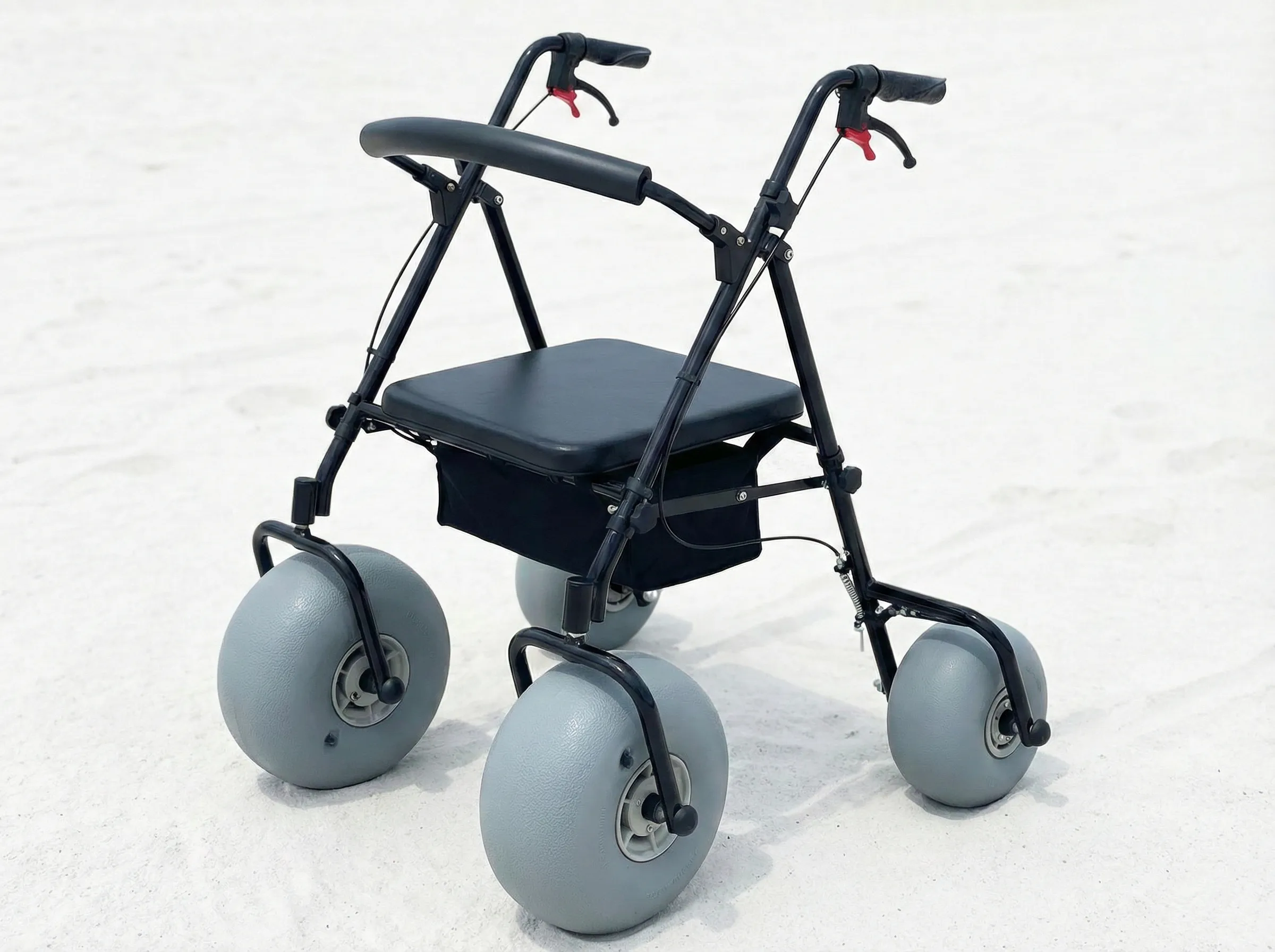
Record what the sample does
On a suitable firm, level area, use the supplier’s instructions for setup. Observe the frame opening, fitted wheel retention, handle adjustment and brake operation. Fold and reopen the empty sample as directed and repeat the affected checks. Note where the bag and cables sit during the sequence. An uncertain connection or a control that fails its instructed check should be resolved before any route trial.
| Buying question | Evidence to keep |
|---|---|
| Can the sample be set up in the offered configuration? | Parts list, instructions, operator observations and any missing or substituted item. |
| Can the site move and store it? | Actual dimensions in the permitted storage state, limiting doorway or vehicle opening, and handling observations. |
| How does it move on the intended route? | Named section, surface condition, equipment setup, support arrangements and the point where an issue occurred. |
| Can staff prepare it for the next use? | Cleaning and drying method, post-trial condition and any function needing a recheck. |
When an evaluation includes a visitor, arrange an appropriate individual assessment, assistance and an agreed stopping point. State which surfaces were tried. A successful crossing at one firm boardwalk exit cannot predict handling on a different stretch of loose sand.
Document a correction and choose the retest
Suppose a brake cable catches during folding on the sample. Record the original routing and the stage at which contact occurs. Ask the supplier for the approved correction. Record who made it, its effect on the sample configuration and whether the proposed production method will match. Repeat folding, reopening and the relevant brake checks under the same agreed method. A replacement photograph alone cannot close an unresolved functional result.
Finish with a decision tied to the evaluation ID. Approval should name the configuration, test conditions, documents and permitted next commercial step. A hold needs the missing evidence or unresolved fault identified. If the buyer accepts a cosmetic difference, describe its location and acceptance basis so production and receiving staff can recognise it. Preserve the controlled reference and require review of later substitutions. Transferring sample decisions into a wholesale order