
A 12-inch wheel can match the outside diameter of a beach utility cart wheel and still be impossible to secure on its axle. Start a replacement enquiry with the cart ID, configuration and a picture of the installed wheel from each side. Give the supplier the wheel or assembly reference whenever it exists. The useful answer identifies which wheel, hub and retention hardware fit that particular cart.
The standard two-wheel beach cargo tub has 12-inch balloon wheels. The same product page lists PU or PVC balloon wheels in different sizes as OEM options. An option offered during manufacture is different from a retrofit cleared for an existing cart. On a folding cart, check which wheels are load wheels and which are swivel casters before ordering. Two-wheel tub cart · Folding cart configurations
Send measurements from both sides of the connection
Start with the actual axle and usable mounting length. The manufacturer’s wheel-fit guide explains how the bore, bushing or bearing is selected. Send the cart drawing and wheel reference so the supplier can confirm the matching assembly.
| Record from the actual cart | Ask the supplier to confirm |
|---|---|
| Outside wheel diameter and widest section, with measurement condition stated | Overall size of the proposed wheel and clearance through a full rotation at the tub or frame |
| Axle outside diameter and the marked bearing, sleeve or bush if fitted | Actual mating bore and bearing or sleeve specification for that axle |
| Hub length between its seating faces | Position of the wheel on the axle, any required spacers and enough exposed length for the prescribed retainer |
| Close views of the inner shoulder, outer washer and retainer | Correct installation order, retention type and all components included in the proposed kit |
| Wheel position and identity of the opposite wheel | Whether the manufacturer permits a single replacement or specifies a matched set for this configuration |
Have an authorized person take dimensions with appropriate tools. A bore measured through a loose sleeve is a different measurement from the axle diameter. Label the sketch so the supplier knows which was measured. If the existing wheel has distorted or the markings cannot be read, send the cart details and ask for the original drawing. Avoid inferring PU, PVC or another material from color or tread appearance.
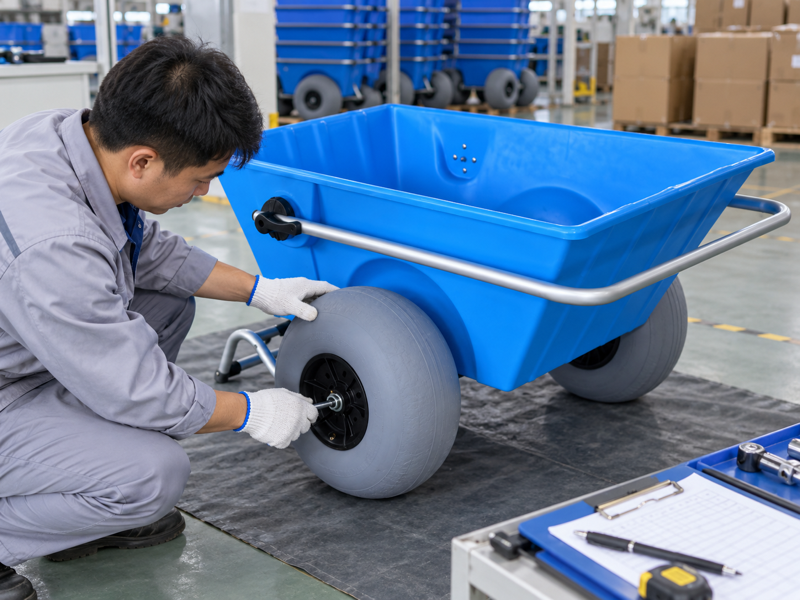
Reject the close fit that leaves no room for retention
Suppose a proposed wheel slips over the axle and clears the tub, but its hub is longer than the original. The retaining feature is now partly covered. Stop the fit check there. Ask for the approved assembly or a documented alternative that preserves the complete retention arrangement. Cutting a spacer or substituting an unapproved clip changes the configuration the supplier was asked to confirm.
Diameter and material also affect what the buyer needs to test on its route. Check the proposed assembly empty before a representative goods-only trial under the supplier’s instructions. Observe rubbing, side clearance, retention and how the pair tracks on the site’s actual path and sand transition. Obtain inflation guidance for the exact tire where applicable. A pressure figure printed for a wheelchair tire or a different cart belongs to that other assembly.
Save the approved part reference, revision, photos and written compatibility answer under the cart’s asset ID. Where stores support both tub and folding carts, label stock by approved application and axle assembly. Use the complete cart sample record if the supplier proposes a different wheel on a later production order.