
A promenade, a dune crossing and a shifting sand apron can call for three different design decisions. Mark them separately before comparing a beach access mat with a boardwalk. The structure that works for a fixed approach may have no practical way to follow a changing shoreline. A removable mat can extend a route on sand while depending on a sound, well-detailed connection to the structure behind it.
Compare the ground and the visitor journey
Walk from drop-off to the planned destination, then return through the same gates and turns. Identify the part where the existing surface first stops supporting the intended trip. Note where ground levels change, sand accumulates or erodes, water drains across the proposed line, or service vehicles intersect it. Include space for a companion, a turn and staff handling of removed sections.
A boardwalk proposal needs qualified design of its structure, supports, approaches and interfaces for the site. A mat proposal needs a suitable supporting surface, the supplied edge and connection details, a site-approved securing method and an operator who can inspect it as the sand changes. Neither option can be selected from material name or a photograph alone.
| Route question | A mat proposal must explain | A boardwalk proposal must explain |
|---|---|---|
| Where does the trip start and finish? | Effective installed coverage, start and end treatments, usable width and return space. | Fixed alignment, access at both ends, changes in level and room at gates or turns. |
| What supports the route? | How the selected system works on the expected substrate and how staff will detect loss of support. | How the designed structure and its supports accommodate the actual site conditions and loading requirements. |
| What can move or change? | Whether removal, realignment or replacement is authorised, and the tools, staff, storage and time involved. | How the fixed approach remains usable if the adjacent sand or destination changes and which alterations would need professional review. |
| What would close the trip? | Displaced edges, failed joins, unsuitable underlying sand or an unavailable return. | A damaged structure, unavailable access, an unsafe transition to sand or a closed destination. |
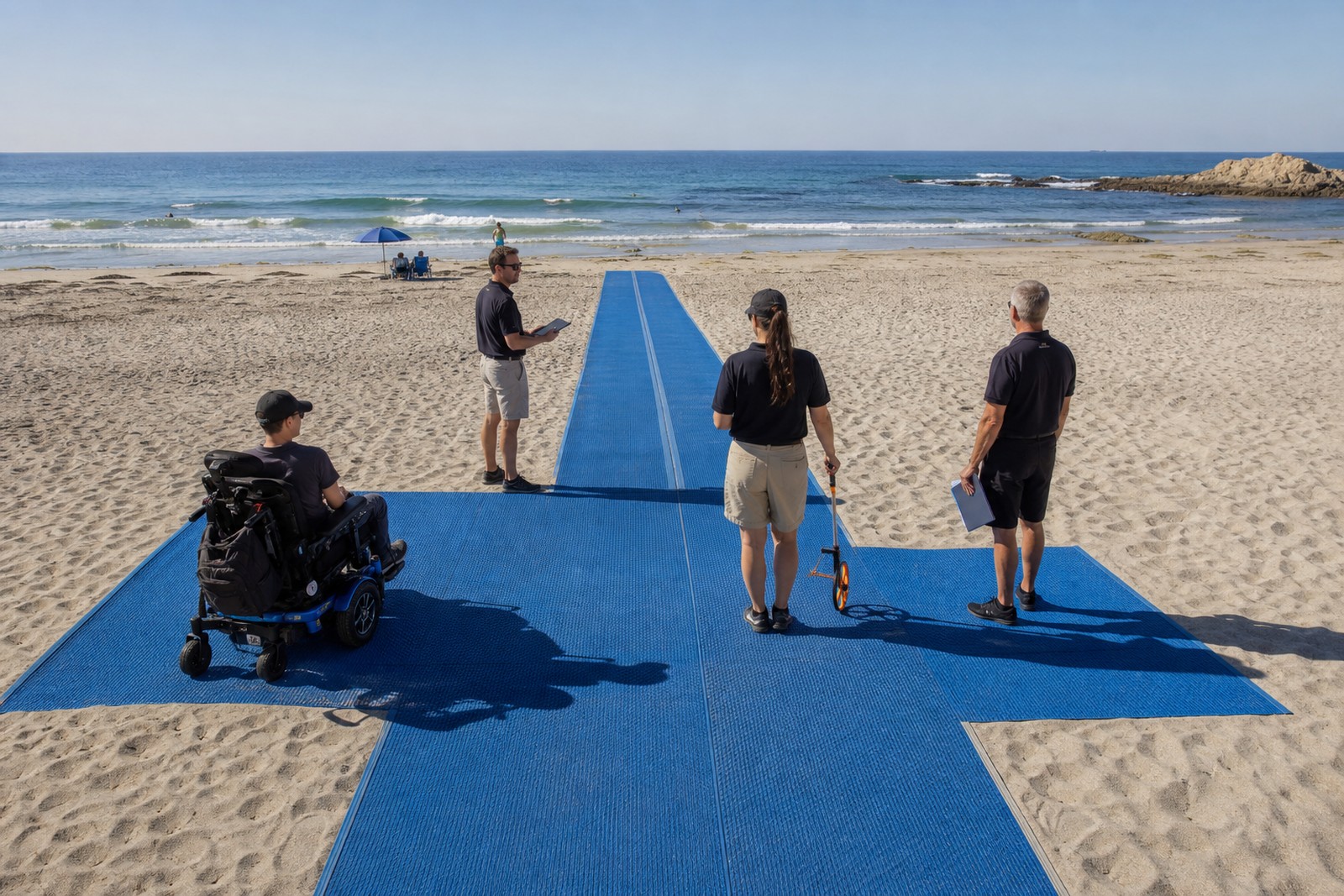
Examine the joint if a combined route is proposed
A boardwalk may continue across part of a site and meet a removable mat at its beach end. Assign one party to coordinate that interface with both designers or suppliers. The boardwalk detail must identify the finished edge and level. The mat offer must identify how the first piece meets it, which component forms the transition and what supports it after sand movement.
For example, consider a hypothetical viewing route where the boardwalk reaches the dune crossing but ends above an area of loose sand. Purchasing a longer mat alone leaves the step at that fixed end unresolved. Ask the qualified team to show a workable transition and confirm its permitted installation before choosing the combined option. Include the return direction in the check: a chair that descends from a boardwalk may have to meet the same edge head-on to get back.
For U.S. projects, establish which standards apply to the actual site and work. The U.S. Access Board guide describes beach access routes, including permanent and removable routes, in the federal outdoor-developed-area context. The applicable project requirements belong in the route and interface design. A product purchase cannot establish compliance for the completed journey. Access Board guide to outdoor developed areas
Compare what must happen after the works are finished
For a mat, ask how often the operator expects to remove or reposition it, where it will be stored, which section or roll can be replaced and how quickly the transition can be rechecked. Obtain the actual offered construction and instructions. Modular product coverage can be assembled from section quantities, but their connection and anchoring method depends on the offered system and site. Beach mat configuration information
For a boardwalk, include inspection and maintenance of the structure and approaches, access for corrective work, and the effect of closing a fixed segment. In a combined route, a sound boardwalk with an unusable mat may still provide a viewing destination if there is an approved place to stop and turn. Be clear about what visitors could reach during each closure.
Compare options over the same service period and destination. Include construction, local site work, installation or seasonal deployment, inspection, repairs, storage, renewal and expected interruption. Where an option only works if extra people or equipment turn up after a storm, identify who will provide them. Take the preferred alignment back to the access, resource and operating teams before issuing the site procurement brief.