
At a beach access mat handover, the installer needs to show the duty supervisor exactly which route the site is taking over. Walk it together, starting where a visitor leaves the firm approach. Use the drawings to find each transition, joint, change of direction and endpoint. Carry a marked-up copy. If a joint moved inland during installation, the person responding to a call next week needs the installed location.
A signed delivery note records what arrived. Save it with the receiving inspection. The handover records who controls the installed route, which reaches the operator accepts and which work still belongs to the installer.
Bring the drawing up to date on the beach
Label the route and each distinct reach so a worker can report a particular problem from either end. Put a fixed landmark on the map where practical. Loose beach furniture gives poor directions once staff move it. Record the mat type and section layout, the connection to the firm approach, and the authorized endpoint. Note the date, drawing revision and names of the people who checked the installation. Photograph both sides of an unusual transition and key the photos to the map.
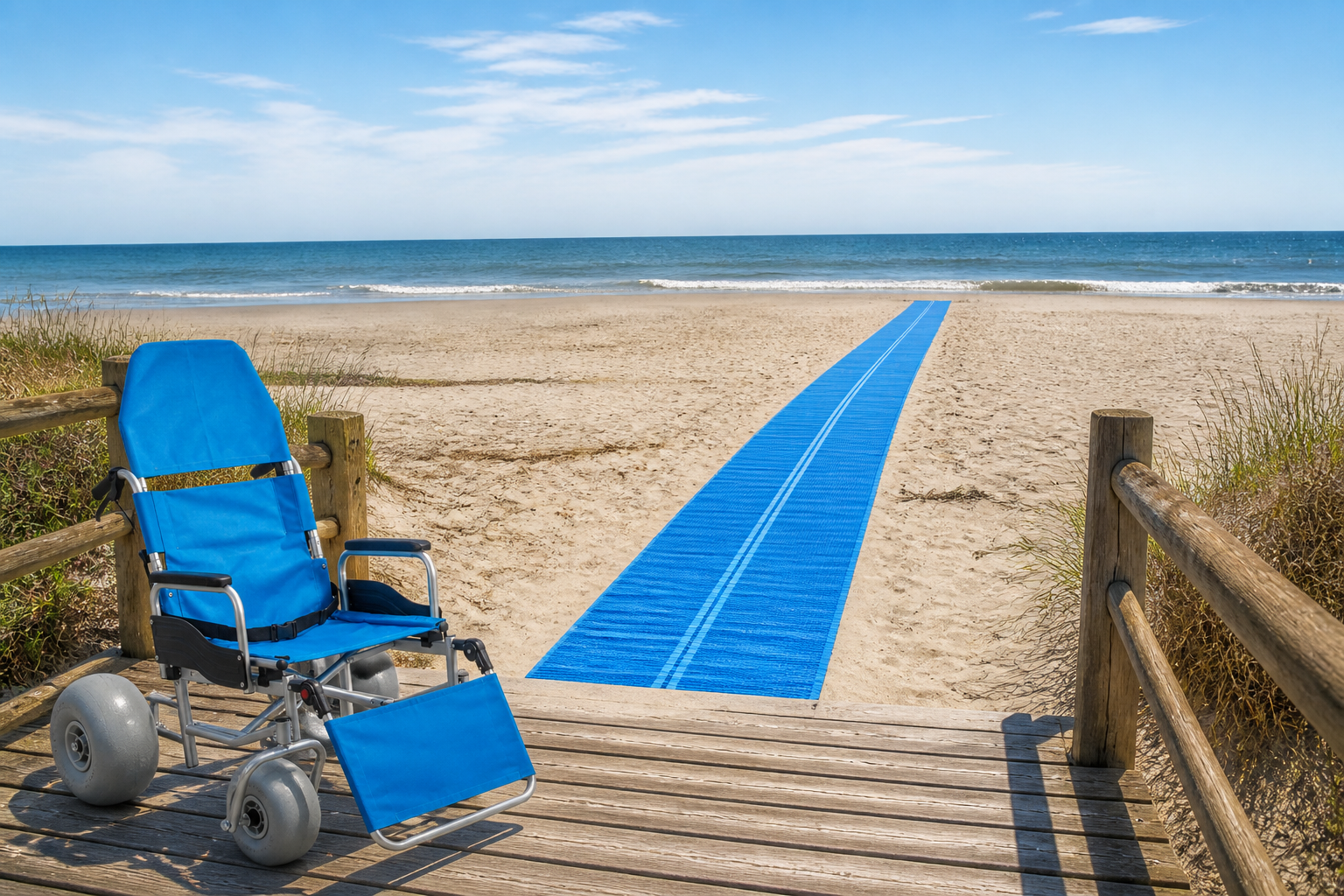
Ask the receiver to identify the place where a crew can approach with an empty cart and where to put sections taken out of service. Where landowner controls or environmental boundaries limit work, include the approved access route. Give the team a current copy it can open at the site. Store the signed version where the next supervisor can retrieve it.
Hand over parts and tasks together
List mat sections, connectors, edge parts, tools, spares and labels. Make that list specific to the delivered system. A listed spare should have a part reference, a quantity physically counted and a storage location in the spare parts register. Keep the supplier’s current instructions for that configuration with the route file. A generic mat brochure gives the next shift little help with a loose connector.
| Ask the receiver to do this | Evidence to record before the installer leaves |
|---|---|
| Locate a joint from a visitor’s description | Map location and the section or connection reference used by the crew |
| Find the correct spare and its fitting instructions | Bin location, part reference and instruction revision, including any work reserved for the supplier |
| Show how the site isolates a damaged reach | Person who can order a hold, location of the barriers and how the visitor desk receives the change |
| Explain who checks the work before service resumes | Named site role, check required and place to record the decision |
Use the equipment and records actually supplied. If a replacement requires supplier intervention, have the receiver find the contact and identify the photos or part reference needed for a request. Leave the task with the responsible party.
Record partial acceptance precisely
Suppose the installed approach is complete, but the final transition sits above the adjoining surface and the agreed finish remains outstanding. Identify the last accepted section on the drawing. Enter the defect, installer action, owner, due date and evidence needed to close it. The operator should only open a shorter reach if the site has checked the new endpoint and visitors can complete the stated trip and return. If they cannot, keep the route closed and update the visitor desk.
At signature, distinguish custody of delivered components, acceptance of installed work and authority to open the route. List unresolved items against the relevant decision. Give both parties the same signed revision and schedule the first follow-up against those entries. At that visit, have the site supervisor locate one reported issue and its work record without the installer’s help. That tells the project team whether the next shift can actually use what it received.