
Write the first line of a beach mat risk register at an identifiable spot on the route. “Trip hazard, inspect daily” gives the duty team little to act on. “Boardwalk end, joint J1, return direction. Wind-blown sand has raised the edge where small front wheels meet the timber” tells the crew where to look and what could happen. This is an illustrative entry. Use the equipment, ground conditions and visitor movements observed at your site.
Give each exposure a location and an owner
On a marked plan, number the firm-surface transitions, section joints, service crossings and endpoint. Walk them in both directions and watch the route during normal operations. A delivery cart crossing an empty mat before opening presents a different exposure from the same cart turning through a queue. Include who might be affected, when the condition occurs and which part of the route the duty team can isolate.
For the assessment, use one agreed method for likelihood, consequence and current exposure. Keep the definitions with the register. Include the conditions under which you made the judgment, such as recent rain or a particular delivery schedule. A risk score cannot tell a crew whether a joint is properly seated. Use the supplier’s fitting instructions and the site’s opening criteria for that check. The UK Health and Safety Executive outlines the general process of identifying hazards, assessing risks and reviewing controls in its risk assessment guidance.
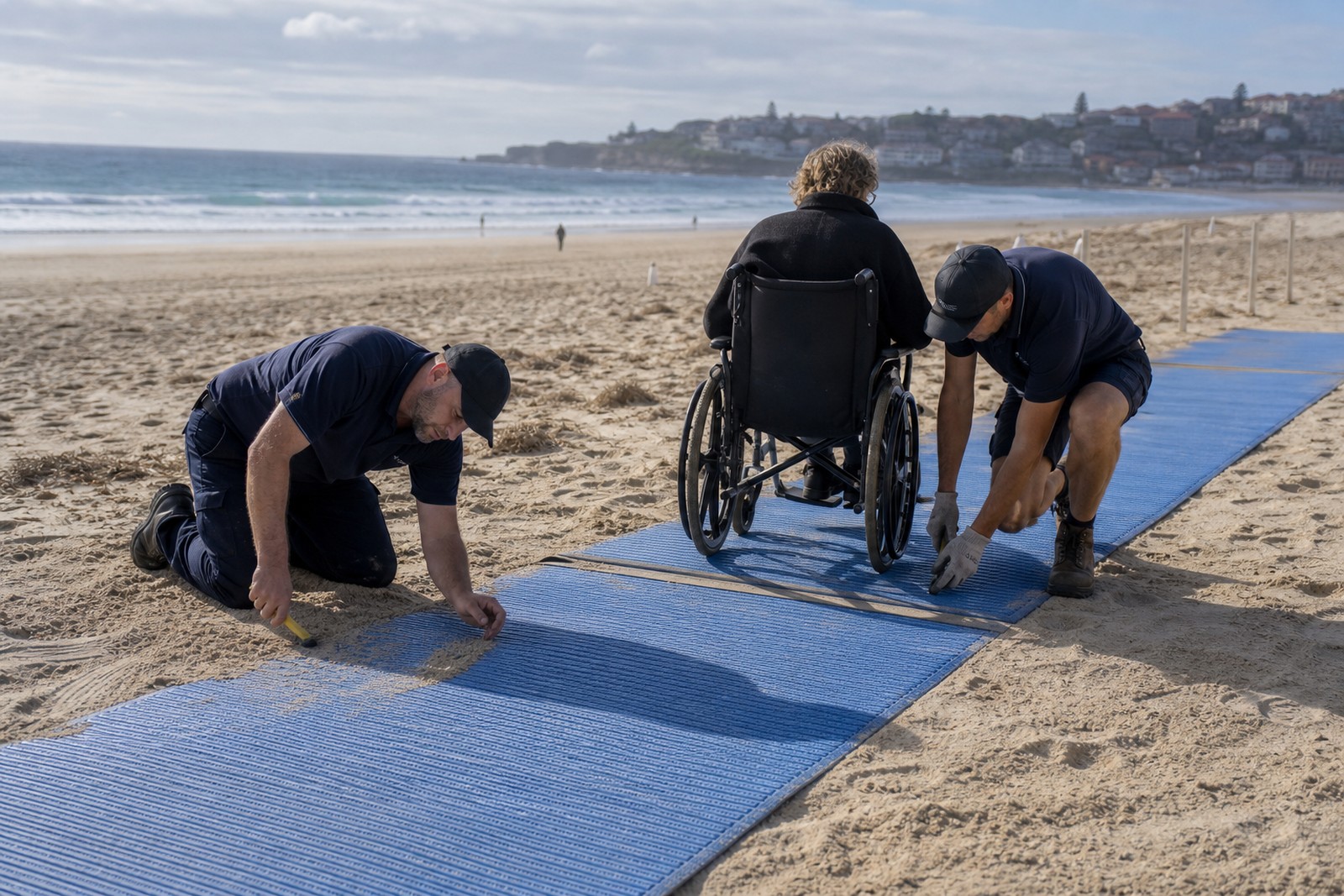
Work one entry through to a field decision
| Field | Example for the joint at the boardwalk |
|---|---|
| Who and how | A returning visitor’s front wheels could catch at the raised mat edge. A walking companion also uses this line. |
| Existing control and its limit | The opener checks the transition before service. A delivery crew later passes through the same point. The register has no check after that crossing. |
| Immediate decision | The duty supervisor closes the affected reach, arranges barriers and sends the changed endpoint or closure to the visitor desk. |
| Corrective work | The maintenance lead investigates the support and connection against the supplied detail. The supervisor and delivery lead agree how to protect the crossing. |
| Verification | Record the work, the two-direction field check, who checked it and what must trigger the next check. Leave the entry open if the defect recurs. |
In a live register, add the date, responsible person, due date, residual exposure and next review. Track an outstanding action separately from the status of the route. A purchase order for a new connector can be open for days while the affected reach stays closed. A shortened route also needs a usable endpoint and return path before staff direct visitors to it.
Identify the conditions that change the decision
Give each high-consequence entry a field trigger and somebody on duty who can act. For a mat edge it might be a gap or movement outside the accepted installation detail. For a service crossing it might be the loss of the agreed separation during delivery. For a weather exposure, use the triggers and authority in the local operating or emergency plan. Record what staff saw, the source of any alert and the action taken.
Review the entry after a near miss, a moved endpoint, a change of section type or a recurring defect. Compare the current site with the drawing and earlier route audit. If the fix worked only until the next vehicle crossing, retain that observation and change the control or the delivery arrangement. Reopen on the responsible person’s recorded field decision and keep the history attached to the same location.