
A broker asks about the beach mat listed on the equipment schedule. Is it stored, installed for the season or operated by a concessionaire? Those are three different descriptions of the same asset. Date the answer, identify the route and name the person who can confirm the current arrangement. Build the insurance file around what the site owns, where the mat goes and who looks after it.
Put the policy documents beside the site description
Keep the applicable policy schedule, wording and endorsements together. Identify the insured entity as written, the policy period, the broker or insurer contact and the channel for questions or notices. Record where staff can find any relevant deadlines and instructions in those documents. Ask the broker or insurer to resolve uncertainty in writing, including how it wants to receive changes. An inspection log documents work performed. It cannot establish what a policy covers or how the insurer will handle a claim.
Describe the installed route, opening season, off-season storage and any shared responsibilities. If a hotel bought the sections while a municipality opens the route, show the written allocation of custody and daily duties. If the operator also loans wheelchairs, identify that activity separately with its own provider and equipment. Give the reviewer enough detail to ask about either service.
Make the records traceable to one installation
| File item | Useful contents |
|---|---|
| Asset and value schedule | Actual sections, connectors and end pieces, supplier reference, quantity, purchase basis, location and custodian. Mark values as invoiced or estimated. |
| Installation record | Dated as-installed plan, section references, interface photographs, instructions for the supplied version and sign-off or outstanding work. |
| Operations evidence | Opening and closure procedure, who may use it, observed staff instruction and dated checks covering the identified reach. |
| Change history | Moved endpoint, replaced part, new storage location, transfer of custody or changed hours. Record the decision and any notification or acknowledgment. |
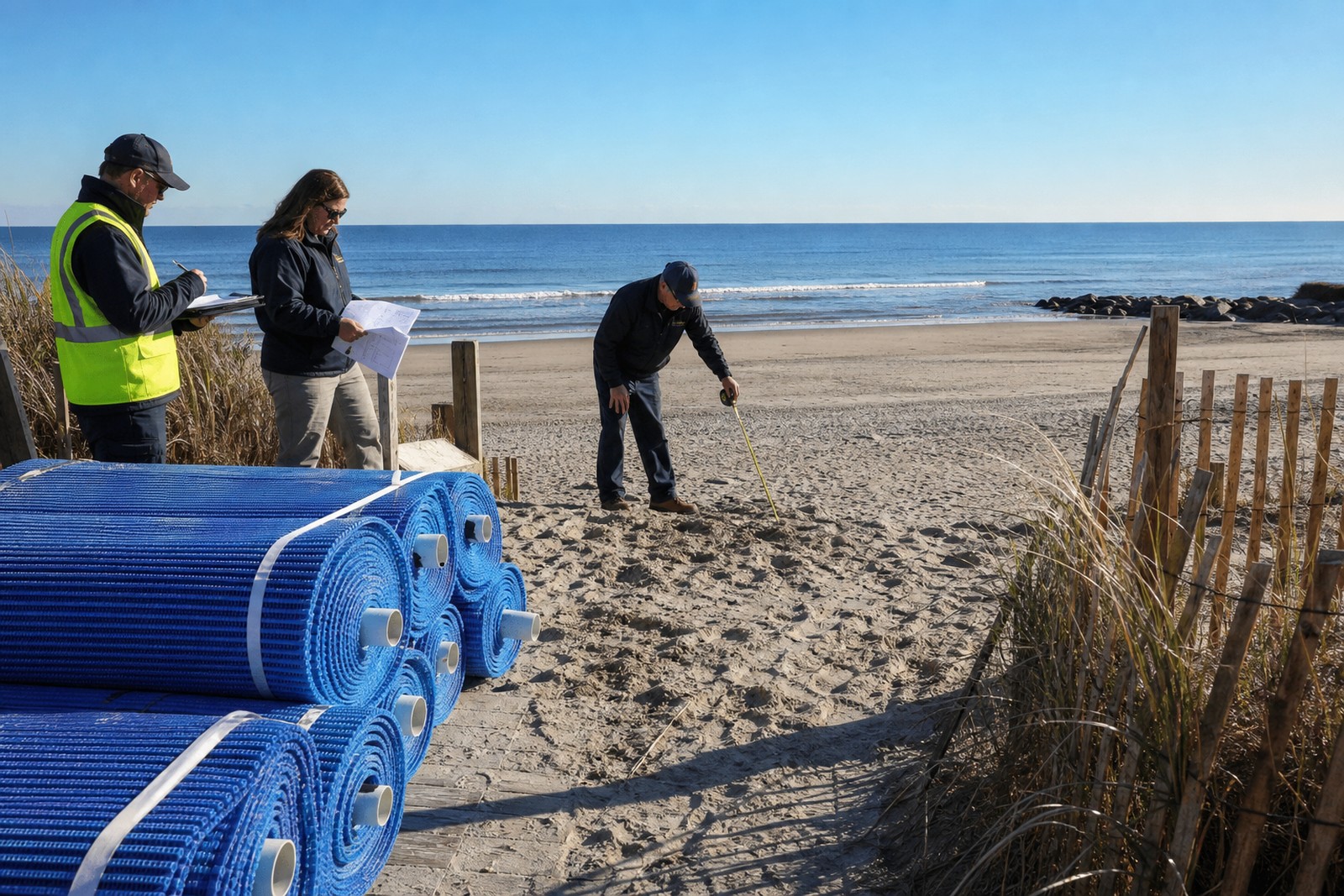
A photo of a worker examining the route can illustrate an inspection. For the actual insurance file, keep the site’s original dated photograph, a location reference, the condition observed and the action taken. A generic product image cannot show the condition of a particular mat on a particular morning. File the installed-route handover and repair records under the same asset reference.
When a change or incident needs attention
Use the site’s incident procedure for immediate assistance and protection. Follow policy terms and broker or insurer guidance for material changes and events. Keep a factual chronology with event time, reported time, location, who observed what, actions taken, and who received the notice. Where photographs, statements or contact details include personal information, restrict access to the appropriate records and share through the agreed channel.
For example, after an endpoint move, the supervisor might discover that the drawing sent at renewal shows the old reach. Preserve that drawing in the dated history and add the new version, the reason for the move and the approval record. Ask the insurance contact what further information it needs and record the response. A supplier’s response to a mat warranty question belongs in the equipment file and can be referenced if relevant.
Before renewal, reconcile the schedule with the sections physically in store and in service. List unresolved repairs, pending claims and changes awaiting a response. Send a dated index showing which version the reviewer received and what remains open.