
Count a storage position only if staff can put a beach cargo cart there and retrieve it again. Start at the loaded storeroom doorway, follow the turn between the racks and park the actual empty cart in the proposed spot. Then take out the cart at the back. That last movement often decides whether the space works for daily rentals or only for end-of-season storage.
Work from the cart in its stored configuration
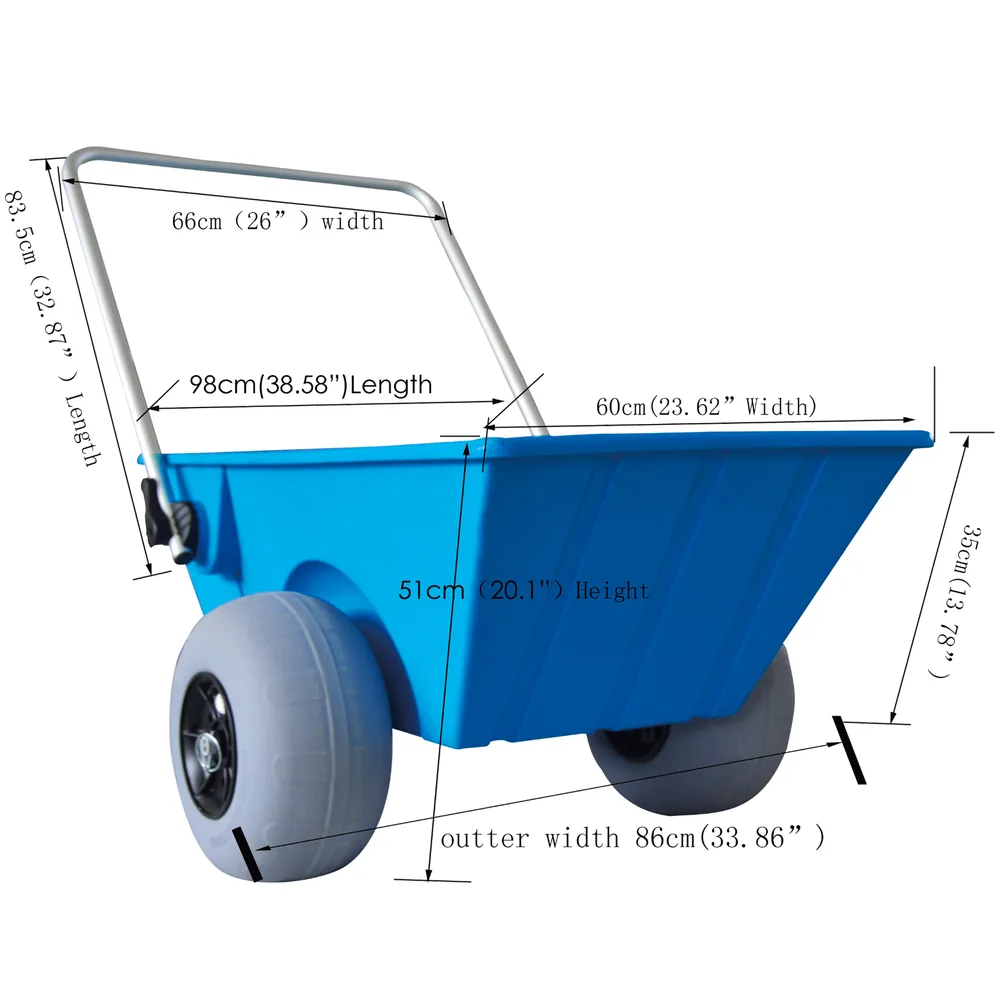
Ary Beach lists the assembled two-wheel molded cart at 98 cm long, 86 cm wide across its wheels and 51 cm high. The handle is 66 cm wide. A door measured against the handle alone may still be too narrow for the wheels. The manufacturer lists a different size for the export carton and confirms final dimensions for each OEM order. Measure the unit that will actually stay in the store, including any fixed accessory. Manufacturer’s cart dimensions
For example, two standard carts side by side occupy 172 cm across their wheels before allowing any clearance. An alcove 180 cm wide would leave only 8 cm in total across both sides and the gap between them. That arithmetic gives the manager a reason to trial the layout. It does not establish room to turn, use the handles or retrieve either unit independently. Check the aisle and door swing with the adjacent bays occupied.
Make room for the carts that cannot go straight back out
A cart that arrives wet needs space to drain and dry before returning to a clean storage bay. A cart with a cracked tub or uncertain wheel fixing needs a clearly identified hold location, with the asset number and issue reference visible. Storing either at the front of the ready line invites the next shift to pull the wrong unit. If space is limited, give each bay a named purpose and show which cart is parked there.
Keep the empty tub clear of unrelated stock. A store used for chairs, umbrellas and surf equipment can gradually fill its carts with loose supplies. The morning crew then has nowhere to put those items when someone needs a cart. Provide separate shelves or labelled containers for supplies and for any parts authorized for removal, with the correct parent asset ID.
For a folding beach cart, measure the actual folded body, wheel projection and handle position. Use the supplier’s storage instructions for the frame and fitted fabric. Leave room to unfold it for a check outside the aisle. The molded cart’s published dimensions cannot predict the number of folded units a shelf will hold.
Restart after a long closed period
At seasonal close, record the bay, cart ID, condition, any outstanding repair and the next person responsible for review. Keep a supplier-approved storage position, protect wheels from sharp edges and follow the wheel care instructions for storage away from heat. Confirm the unit is dry before covering it. Avoid assuming that tubs or assembled carts can be stacked unless the supplier authorizes that arrangement.
At reopening, retrieve one cart through the normal exit and complete its departure inspection. If adjacent supplies now obstruct the route or two asset numbers share one parts box, correct that before counting the whole row as available.